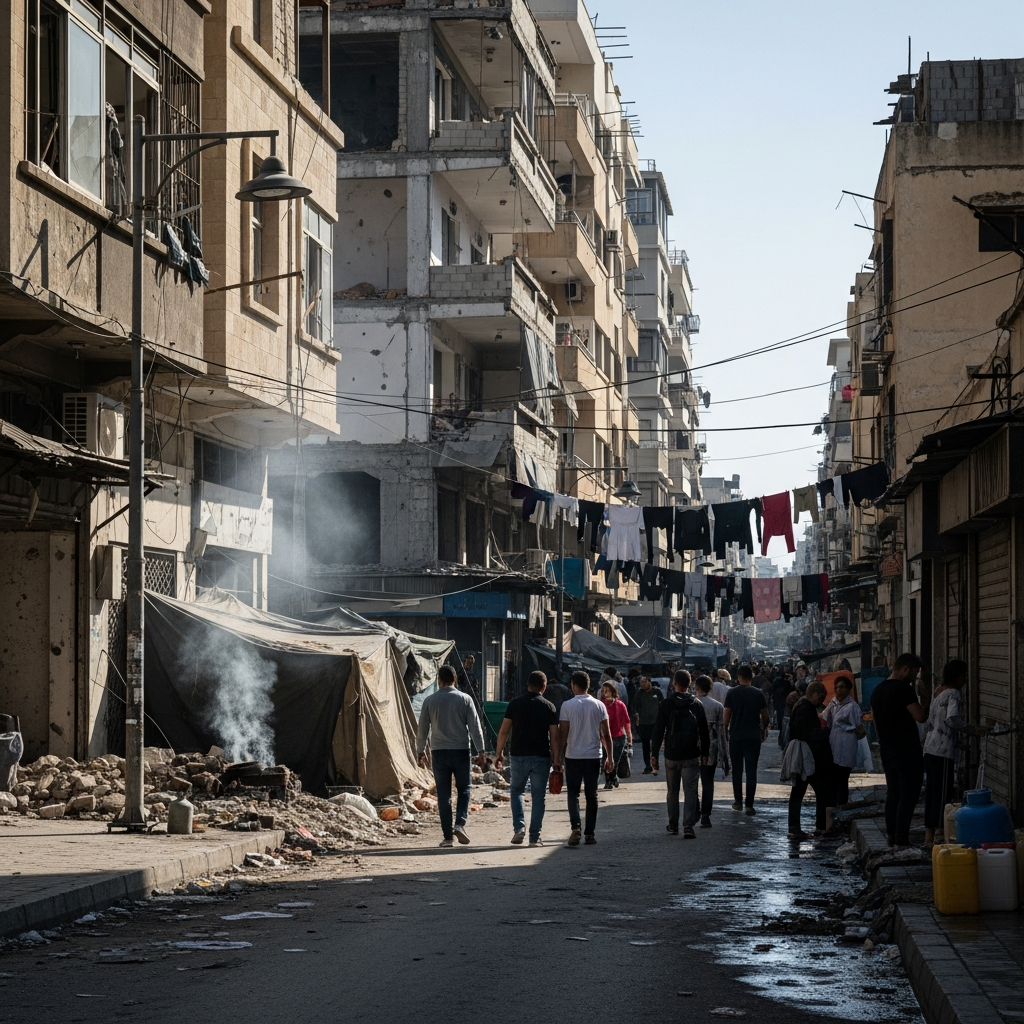
Beirut, Lebanon’s vibrant capital, is facing an unprecedented humanitarian catastrophe as over a million people seek refuge within its bounds. A month after a devastating escalation in conflict between Hezbollah and Israel, triggered by a U.S.-Israeli attack on Iran, the country is reeling. Southern and eastern Lebanon, along with Beirut’s southern suburbs, have been depopulated by Israeli bombardment and extensive evacuation orders. This mass movement, representing roughly 20% of Lebanon’s entire population, is placing an unbearable strain on Beirut’s infrastructure and fragile social fabric, raising urgent alarms about the city’s future and the well-being of its displaced residents.
The Unfolding Exodus: A City Transformed
The scale of displacement is unlike anything Beirut has witnessed before, even surpassing previous conflicts like the 2024 Israel-Hezbollah war. More than a million individuals have poured into the capital, desperately seeking safety from the ongoing strikes and ground invasion. Humanitarian agencies estimate that these evacuation orders encompass approximately 15% of this tiny nation’s territory, leaving once-bustling villages in south Lebanon deserted. This rapid influx has dramatically shifted Beirut’s demographic landscape, pushing the city’s “center of gravity” and sparking profound anxieties among its diverse communities.
The sheer volume of new arrivals has forced an immediate, visible transformation of Beirut. Makeshift settlements now dot the urban landscape. A vast tent encampment, for instance, has appeared between a yacht club and a popular nightlife venue along the Beirut waterfront. Families improvise shelters in storefronts, mosques, and even their cars, creating crowded convoys that line thoroughfares. Sheets of tarp form temporary homes along the curving coastal corniche and around Horsh Beirut, a significant pine park bordering the Dahiyeh suburb.
Voices from the Crisis: Stories of Despair and Resilience
The human cost of this crisis is immeasurable. Zahra, a six-year-old girl from Dahiyeh, now lives in a beachfront tent, her childhood interrupted by conflict. Noor Hussein, another displaced resident from Dahiyeh, fled in early March after the first airstrikes. She settled at the waterfront, observing the surreal scene of well-to-do joggers navigating a maze of tents and soiled mattresses. “It’s horrid because we feel this tension, that we’re not wanted here,” she conveyed, her three youngest children clinging to her. “We don’t want to be here. We have nothing here and nowhere to go.” Her words echo the despair of countless others yearning for the stability they once knew.
Urban researchers highlight the unprecedented number of people living in open, vulnerable spaces. Mona Harb, an urban studies professor at the American University of Beirut, points out, “This is relatively new, that you have so many people spending time in these open spaces, who are very vulnerable, living in very precarious conditions.” This constant visual confrontation with suffering impacts ordinary residents, stirring a mix of strong, unregulated emotions across the city. The raw reality of the Beirut humanitarian crisis is visible on every street corner.
Strained Resources and Insufficient Response
The Lebanese government has converted hundreds of public schools into temporary shelters. Under the bleachers of Beirut’s main sports stadium, more tents now house displaced families. Charitable organizations have also stepped up, with one group repurposing an abandoned slaughterhouse, damaged in the 2020 Beirut port explosion, into a dormitory for almost 1,000 people. Despite these efforts, the immense scale of the displacement means resources remain critically insufficient.
Many families report struggling to find space in official government shelters. They often prefer to brave the elements in Beirut rather than travel north to cities where accommodations might be better but where they lack crucial family connections or support networks. Hawraa Balha, 42, articulated this sentiment after her family of four squeezed into their car from the devastated southern village of Duhaira. “The further away we go, the more we’ll lose hope about finding our way back,” she explained, highlighting a powerful desire to remain close to their original homes, however tenuous the hope of return.
Residents from Dahiyeh, in particular, often stay in Beirut, making furtive dashes back to check on their homes and retrieve belongings under the constant threat of bombardment. Noor Hussein’s children, desperate for a shower after nearly a month without proper facilities, risked the constant buzz of Israeli drones just to wash up at home. This desperate need for basic amenities underscores the profound challenges faced daily.
A Looming Societal Transformation
The rapid displacement of hundreds of thousands, predominantly Shiite Muslims from southern Lebanon and Dahiyeh, is igniting deep-seated anxieties about Lebanon’s delicate sectarian balance. Since its bloody 15-year civil war, the country has relied on a fragile power-sharing agreement among its largest religious groups: Christians, Shiite Muslims, and Sunni Muslims. These communities historically represent roughly equal shares of the population.
Maha Yahya, director of the Beirut-based Carnegie Middle East Center, observes, “It’s generating anxieties in Beirut, where the bulk of the displacement is, that this may cause a significant transformation in the demographic balance within the country, or within certain spaces and cities.” This profound demographic shift presents a unique challenge, extending the Beirut humanitarian crisis beyond immediate needs to threaten the very societal fabric of the nation. The political and social implications could be long-lasting and severe, impacting future stability and resource allocation.
Deteriorating Conditions and Future Outlook
The humanitarian situation is worsening daily. More tents continue to appear along the waterfront. Children are developing skin rashes, a stark indicator of poor hygiene and living conditions. Recent heavy rainfall flooded the grassy lots, soaking clothes and leading to increased instances of sore throats among the displaced. Tensions are also rising, with one incident of a fight breaking out among volunteers distributing aid, reflecting the immense stress and competition for scarce resources.
“We’re not used to living like this — we had a house, we had normal lives,” said Lina Shamis, 51, warming herself by a fire near a billboard advertising luxury watches. She and her three adult daughters, along with their small children, set up camp after evacuating Dahiyeh in a panic, carrying almost nothing. “Now the kids are out of school and hungry, and our neighborhood is gone. All I feel is despair.” Her statement encapsulates the profound loss and emotional toll on those uprooted by the conflict.
The future looks bleak. With Israel pushing deeper into Lebanon and threatening to seize territory as far as the Litani River, 20 miles north of the Israeli border, the situation for displaced people in Beirut is projected to deteriorate further. Dalal Harb, spokesperson for the United Nations refugee agency in Lebanon, warns, “The needs will continue to increase. It’s an imminent humanitarian catastrophe.” The ongoing Beirut humanitarian crisis demands a swift and comprehensive international response to avert an irreversible tragedy.
Frequently Asked Questions
What is the current scale of the displacement in Beirut?
Beirut is currently hosting over one million displaced individuals who have fled Israeli attacks and evacuation orders in southern and eastern Lebanon, including the capital’s southern suburbs. This massive influx represents approximately 20% of Lebanon’s entire population and is considered an unprecedented exodus, placing immense pressure on the city’s resources and social structure.
Where are displaced people finding shelter in Beirut?
Displaced individuals are seeking shelter in various informal and formal settings across Beirut. Many are living in large tent encampments that have sprung up along the waterfront and in public parks like Horsh Beirut. Others are squatting in storefronts, mosques, or sleeping in their cars. The Lebanese government has converted hundreds of public schools into temporary shelters, and charities have repurposed buildings, such as an abandoned slaughterhouse, into dormitories for hundreds.
What are the major challenges facing displaced families in Beirut, and what is needed?
Displaced families in Beirut face critical challenges including inadequate shelter, lack of access to basic hygiene facilities (leading to health issues like skin rashes), insufficient food, and a pervasive sense of insecurity and unwelcomeness. The rapid demographic shift is also straining Lebanon’s fragile sectarian balance, causing broader societal anxieties. Experts stress that current aid efforts are insufficient, highlighting an urgent and critical need for comprehensive international humanitarian response and sustained support.
Conclusion
The unfolding Beirut humanitarian crisis is a testament to the devastating human cost of conflict. Over a million people, driven from their homes by violence, now face a precarious existence in Lebanon’s capital. This rapid displacement is not only a humanitarian emergency but also a profound societal challenge, testing the city’s resilience and threatening its delicate demographic equilibrium. Without immediate and comprehensive international intervention, the needs of these vulnerable populations will continue to escalate, potentially leading to an irreversible tragedy. The world must acknowledge the severity of this crisis and act swiftly to provide aid, protection, and a pathway to stability for the people of Beirut.