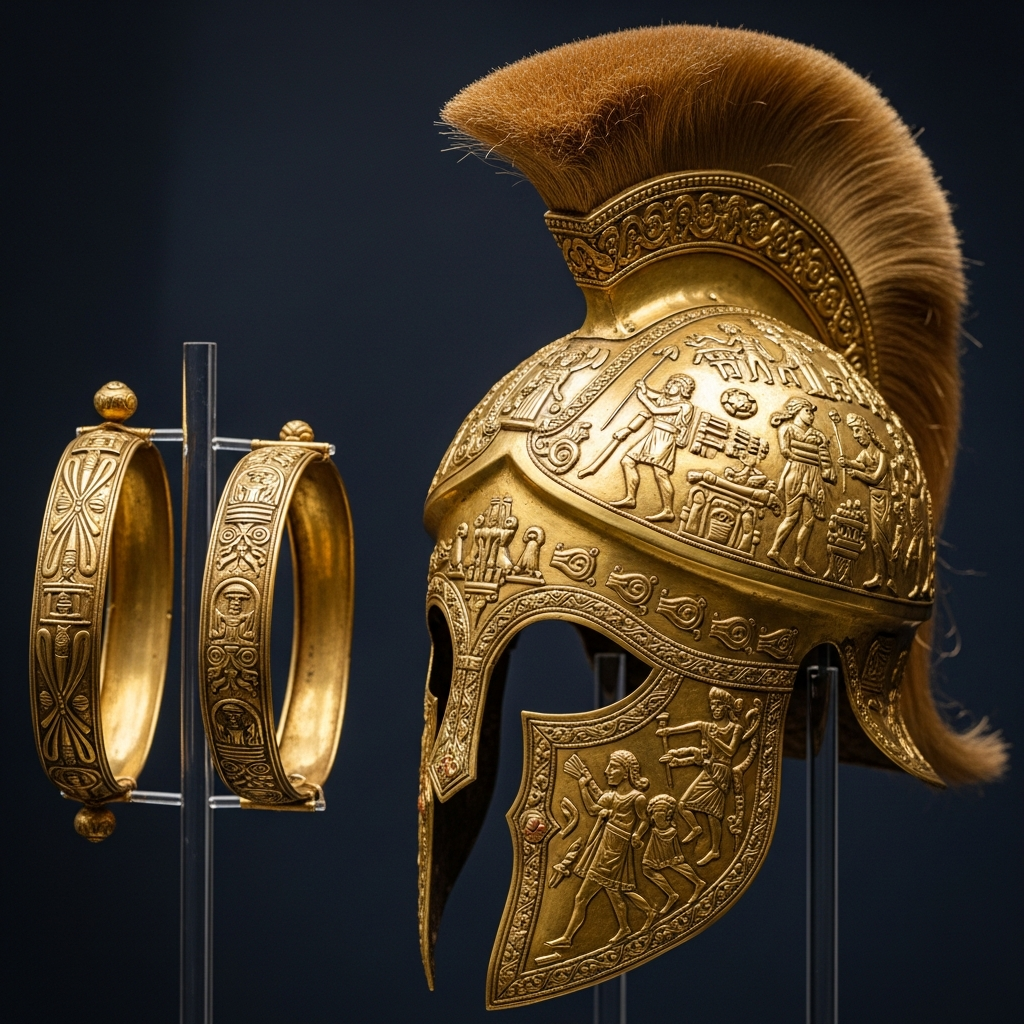
The global art community is celebrating a significant victory: the recovery of Romania’s revered Coțofenești helmet. This extraordinary 2,500-year-old gold artifact, a crucial link to the enigmatic Dacian civilization, has been returned following an international treasure hunt sparked by its theft from a Dutch museum. Its dramatic recovery, alongside two valuable gold bracelets, marks a powerful moment for cultural heritage, igniting hope for the ongoing fight against art crime. This article delves into the daring heist, the intricate recovery efforts, and the profound historical significance of these priceless relics.
A Stolen Legacy: The Drents Museum Heist
In a “smash and grab” operation that sent shockwaves through the art world, the Coțofenești helmet and three golden bracelets vanished from the Drents Museum in the Netherlands. The theft occurred in January of last year, during an exhibition designed to showcase the rich history of the lost Dacian civilization. These artifacts, on loan from the Romanian National History Museum in Bucharest, represent an irreplaceable part of Romania’s national identity. The brazen robbery quickly escalated into an international incident, causing diplomatic tensions between Romania and the Netherlands and launching a widespread search for the missing treasures.
The helmet, dating from around 450 BC, is often likened to Romania’s “Night Watch” due to its profound cultural importance. The accompanying bracelets, dated to around 50 BC, further underscore the advanced metallurgical skills of the ancient Dacians. Their disappearance was not merely a loss of monetary value but an attack on shared human heritage, prompting an immediate and forceful response from authorities across Europe.
The Intricate Hunt: Pressure, Plea Deals, and Undercover Operations
Following the heist, Dutch police moved swiftly, arresting three suspects within four days. Despite these early arrests, the whereabouts of the stolen artifacts remained a mystery, as the suspects largely maintained their silence during pre-trial hearings. Romanian authorities exerted immense pressure, driving Dutch investigators to employ a variety of tactics to locate the hidden treasures.
The investigative efforts were intense and multifaceted. Police reportedly offered to halve the sentence of one suspect in exchange for information leading to the helmet’s recovery. In a more dramatic move, an undercover officer, posing as a criminal mastermind, allegedly offered another suspect €400,000 to reveal the items’ location. This relentless pursuit, driven by the inestimable historical value of the objects and the diplomatic urgency, ultimately paid off. Corien Fahner, the chief public prosecutor for the Noord-Nederland region, confirmed that the helmet and two of the bracelets were recovered on April 1st as part of a plea deal. She wryly remarked that if it had been an April Fool’s joke, it would have been a very bad one.
A “Wow Moment” for Cultural Heritage
The return of the artifacts was met with immense relief and joy. Robert van Langh, the director of the Drents Museum, described the recovery as a “wow moment,” a sentiment resonating with the concept of truly unique and unforgettable experiences. Similar to how a private, exclusive tour or a personalized cultural immersion can create a deeply emotional “wow,” the unexpected return of such irreplaceable items evokes powerful feelings of relief and triumph.
Van Langh highlighted a striking feature of the Coțofenești helmet: two eyes intricately depicted on its surface. These eyes, he explained, were traditionally believed to protect both the wearer and the helmet from the “evil eye” and misfortune. “They have done so successfully for centuries,” he noted, “and even today they seem to prove their value.” This ancient symbolism, meant to guard against loss, now takes on renewed meaning after the helmet’s tumultuous journey. Renowned Dutch art detective Arthur Brand also praised the recovery as “fantastic news,” affirming that the quick arrests had suggested the items were unlikely to have been melted down for their gold.
Unveiling the Dacian Legacy: An Enigmatic Ancient Culture
The Coțofenești helmet and the accompanying bracelets are more than just exquisite gold objects; they are invaluable windows into the lost Dacian civilization. This ancient culture, which flourished in the region of modern-day Romania, holds a fascinating position at the crossroads of the Greek, Scythian, and later Roman worlds. Tragically, very few written records from the Dacians survive, making their material culture – particularly high-quality artifacts like these – extraordinarily precious for historical understanding.
Van Langh emphasized that the exceptional quality and meticulous craftsmanship of the golden helmet “speak volumes” about the advanced culture that produced it. The precision and detail in their manufacture reflect a sophisticated society with profound artistic and technological capabilities. Art and antiquities expert Bianca Frölich underscored their rare value, describing them as “exceptionally rare witnesses of a culture that sits at a crossroads of the ancient world,” much of whose heritage remains only partially understood. The recovery of these items thus represents a crucial opportunity to further explore and appreciate a civilization that left an indelible, if largely unwritten, mark on European history.
Assessing the Condition and Future
Upon their return, the artifacts underwent a careful assessment. Van Langh reported that the helmet sustained minor damage, including a dislodged previous glue repair and a small dent. However, he optimistically stated that these issues could be fixed within “an hour” of restoration, confirming the helmet’s overall good condition. The two recovered bracelets, in contrast, were found to be in “perfect state.”
The former director of the National History Museum of Romania, Ernest Oberländer-Târnoveanu, who had approved the loan and was subsequently fired after the theft, expressed immense relief and happiness at the news. He steadfastly defended his decision to send the artifacts abroad, arguing that the exhibition was vital for showcasing Romania’s rich history internationally and countering stereotypes.
The Lingering Questions: Compensation and the Missing Bracelet
While the recovery is a triumph, several questions remain unresolved. The Dutch culture minister had previously paid €5.7 million in compensation to Romania in January for the stolen cultural objects. At the time, Romania’s ministry indicated that if the artifacts were recovered, the insurance company would be fully or partially reimbursed, depending on the items’ condition and the number returned. The financial implications of this compensation will now need to be carefully navigated.
Furthermore, the investigation is far from over. Rareș Stan, the Romanian prosecutor on the case, confirmed that authorities are still actively searching for the third missing bracelet. He expressed confidence in its eventual return, affirming the commitment to repatriating all of Romania’s stolen cultural heritage. The continued search highlights the complex, long-term nature of art recovery efforts.
Frequently Asked Questions
What is the Coțofenești helmet and why is it so significant?
The Coțofenești helmet is a priceless 2,500-year-old gold artifact, dating from approximately 450 BC, deeply linked to the ancient Dacian civilization of modern-day Romania. It is considered a cultural icon, often referred to as Romania’s “Night Watch,” symbolizing the nation’s rich historical heritage. Its significance stems from its extraordinary craftsmanship and its role as an invaluable primary source for understanding the Dacian culture, as very few written records from this civilization exist. The helmet also features unique eye depictions believed to protect the wearer and the artifact from misfortune.
How was the ancient gold helmet recovered after its theft?
The Coțofenești helmet, along with two gold bracelets, was recovered as part of a plea deal negotiated with three suspects arrested shortly after the “smash and grab” heist from the Drents Museum in the Netherlands. Dutch authorities, under significant pressure from Romania, employed various tactics to locate the hidden treasures. This included offers to reduce a suspect’s sentence and an undercover officer reportedly offering a substantial sum for information. The recovery, confirmed by prosecutors on April 1st, was the culmination of an intense international investigation following the theft last year.
What are the broader implications of this art recovery for cultural heritage and museums?
The recovery of the Coțofenești helmet carries profound implications for cultural heritage and museums worldwide. It underscores the importance of international cooperation in combating art crime and sends a strong message that stolen artifacts will be relentlessly pursued. This success provides hope and motivation for institutions to continue fighting for the repatriation of looted treasures. It also highlights the need for robust museum security protocols and comprehensive insurance, while reinforcing the argument for allowing international loans of invaluable artifacts to promote global understanding of shared history, despite the inherent risks.
A Symbol of Resilience and Heritage
The return of the Coțofenești helmet is a powerful testament to the unwavering commitment to protecting global cultural heritage. It celebrates not just the recovery of a magnificent gold artifact, but the resilience of a nation’s identity and the dedication of international law enforcement. While the search for the final missing bracelet continues, this momentous recovery serves as a beacon of hope, reminding us that with persistent effort and collaboration, even the most challenging battles against art crime can be won, ensuring that priceless legacies endure for future generations to explore and cherish.