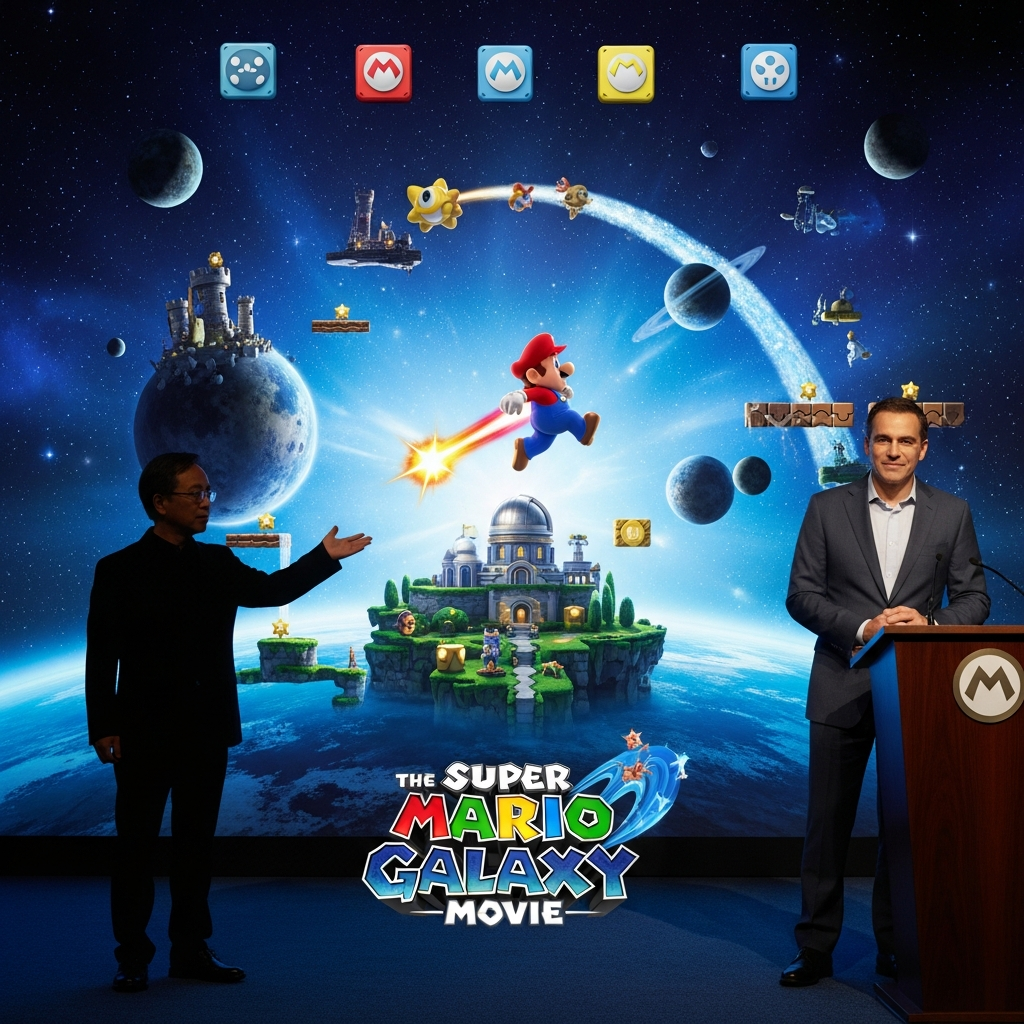
The cinematic universe of Nintendo is rapidly expanding, and “The Super Mario Galaxy Movie” stands at the forefront of this ambitious vision. Following the groundbreaking success of its predecessor, this highly anticipated sequel invites audiences on an intergalactic adventure that promises more than just dazzling visuals. With legendary creators Shigeru Miyamoto and Chris Meledandri guiding the helm, the film is poised to redefine what a video game adaptation can be, intertwining beloved characters and teasing a broader, interconnected world. This deep dive explores the film’s creative process, its reception, and what it means for Nintendo’s burgeoning Hollywood presence.
From Pixelated Past to Cinematic Powerhouse: The Mario Movie Phenomenon
Just a few years ago, skepticism shrouded the idea of a successful Super Mario film. Decades after a disappointing live-action attempt in 1993, and a long history of mediocre video game adaptations, fans were understandably wary. However, 2023’s “The Super Mario Bros. Movie” shattered expectations, grossing over $1 billion globally. This monumental success, alongside HBO’s “The Last of Us,” ushered in a new era for gaming adaptations, filling a void left by declining interest in the superhero genre. Mario’s triumphant return to the big screen not only vindicated Nintendo’s iconic brand but also laid a robust foundation for future projects, including 2024’s “A Minecraft Movie.”
Now, “The Super Mario Galaxy Movie,” released on April 1, is set to capitalize on that momentum. It arrives with a critical advantage: the continued oversight of Shigeru Miyamoto, Mario’s original creator, and Illumination CEO Chris Meledandri. These visionary producers, instrumental in the first film’s triumph, ensure the sequel remains true to the essence of the Mario universe while pushing its boundaries.
The Guiding Lights: Miyamoto and Meledandri’s Unified Vision
Shigeru Miyamoto, the creative genius behind Donkey Kong (1981) and Super Mario Bros. (1985), is more than just a producer; he is the living embodiment of the Mario franchise. His deep involvement extends to every facet of the brand, from Universal theme parks to the Nintendo Museum in Kyoto. Miyamoto’s meticulous attention to detail and profound understanding of Mario’s history and tone serve as the ultimate creative compass. Working alongside him is Chris Meledandri, whose animation studio, Illumination, boasts a track record of family-friendly blockbusters like “Despicable Me” and “Minions.” Together, they form a formidable duo dedicated to translating the magic of Nintendo games into captivating cinematic experiences.
Miyamoto humorously admitted to initial nervousness despite trusting Meledandri’s team, highlighting the immense responsibility he felt. His philosophy for game design focuses on player interactivity and engagement, prompting questions like, “What should I do?” or “What do I want to do?” For movies, however, the approach shifts to captivating the audience with visual spectacle and compelling storytelling. This distinction, Miyamoto explained, became an engaging challenge. Meledandri echoed this commitment, emphasizing that every brand extension—be it a film, a theme park, or even a toy—must stem from the same creative DNA, rejecting the outdated industry notion of “ancillary” products being less important than the primary film.
A Universe Unfolding: Expanding Scope and Character Dynamics
For their second cinematic outing, Miyamoto and Meledandri deliberately chose to amplify the scope. Drawing inspiration from the beloved 2007 Wii platformer “Super Mario Galaxy,” the film plunges audiences into a grand, expansive world. Miyamoto stressed that it’s not just about vastness but about crafting a “truly Mario-like space,” complete with unique gravitational principles that create exciting cinematic opportunities. This decision allowed the creative team to introduce a wealth of new locations and Easter eggs, banking heavily on Nintendo nostalgia.
The sequel sees the return of core voice talents, including Chris Pratt as Mario, Charlie Day as Luigi, Jack Black as Bowser (now shrunken and attending a book club), Anya Taylor-Joy as Princess Peach, and Keegan-Michael Key as Toad. However, “The Super Mario Galaxy Movie” also introduces a vibrant array of new characters and intriguing dynamics. Donald Glover lends his voice to the beloved dinosaur Yoshi, whose dialogue is playfully limited to variations of “Yoshi.” Oscar-winner Brie Larson joins as Princess Rosalina, an otherworldly princess whose kidnapping by Bowser Jr. drives a significant part of the plot. Critically, Glen Powell surprises as Fox McCloud, the charismatic leader of the long-dormant Star Fox franchise, a move that ignited considerable fan excitement.
Beyond the Mushroom Kingdom: Star Fox and Interconnected Worlds
The inclusion of Fox McCloud marks a significant step towards a broader Nintendo Cinematic Universe. Miyamoto revealed that the idea for Star Fox’s integration came from screenwriter Matthew Fogel. As the creator of the Star Fox IP, Miyamoto himself had always been curious about a film adaptation. He felt the cosmic setting of “The Super Mario Galaxy Movie” provided a natural fit for the character. However, he emphasized that the goal wasn’t just a surprising crossover but ensuring audiences understood “how the world of Mario and Star Fox connect.”
Meledandri reiterated this sentiment, explaining that the intent was to create “surprises and discoveries” for the audience, respecting their prior associations with these characters. He highlighted Miyamoto’s crucial role in greenlighting such ideas, ensuring that any new character inclusion resonates authentically with the established universe. This strategic move suggests a deliberate long-term plan to weave Nintendo’s diverse IPs into a cohesive narrative fabric, sparking speculation about future adaptations for franchises like “Metroid” or “Zelda.”
Critical Reactions and Box Office Triumphs
“The Super Mario Galaxy Movie” arrived with immense pressure, tasked with replicating—or even surpassing—its predecessor’s colossal success. Early box office projections were staggering, anticipating a North American debut of $175 million to $180 million over its first five days, with some tracking services pushing estimates to $190 million to $200 million. Globally, the film was expected to rake in $350 million to $375 million during its opening, matching the original’s worldwide debut. With a production budget of $110 million (excluding promotional costs), the film is well-positioned for financial triumph.
Critically, the film garnered a mixed but generally positive reception. Reviewers like Clint Gage of IGN rated it “OK” (6/10), praising its “packed wall-to-wall with Easter eggs and references” and “visually appealing design.” Bryan Tyler’s musical score, riffing on iconic Mario themes, was lauded as a “cheat code” for joy. Action sequences, particularly Peach and Toad’s casino fight and Bowser Jr.’s debut, showcased Illumination’s animation prowess. Lindsey Bahr of AP News called it a “sequel that glows,” appreciating its adherence to game elements while delivering surprising new character details like Bowser and Bowser Jr. being painters. The Hollywood Reporter noted its “relentless pace” and abundance of content, catering directly to its target audience of youngsters and nostalgic adults. The Verge acknowledged its “visually stunning set pieces” and reliance on nostalgia.
However, critics also identified areas for improvement. A common theme was the film’s “lack of an engaging emotional core” compared to the first movie’s simple, relatable sibling story. The sheer volume of “Easter eggs and references,” while appreciated, sometimes “intrude on the story” and overshadow character development, leading to an “overcrowded plot.” Some felt the film sacrificed character focus for universe-building, introducing many new characters without giving existing ones deeper dimensionality. Lindsey Bahr pointed out an “inherently cynical” aspect: the overt integration of merchandising within the narrative, with characters shown wearing Mario pajamas or collecting villain toys, which she felt pulled audiences out of the escapist fantasy. Despite these narrative critiques, the film’s undeniable charm, visual splendor, and clear love for the source material ensured its appeal.
Frequently Asked Questions
What vision do Miyamoto and Meledandri have for the Nintendo Cinematic Universe, as hinted by The Super Mario Galaxy Movie?
Shigeru Miyamoto and Chris Meledandri envision an “expansive world” for Nintendo films, moving beyond mere adaptations to a connected cinematic universe. Their strategy, evident in “The Super Mario Galaxy Movie,” involves significantly broadening the narrative scope and naturally integrating characters from other Nintendo franchises. Miyamoto emphasized creating a “truly Mario-like space” infused with originality, while Meledandri stressed that all brand extensions must share the same creative DNA. The inclusion of Fox McCloud from “Star Fox” explicitly teases a future where various Nintendo IPs can coexist and intertwine, establishing a foundation for a rich, interconnected narrative tapestry.
How does The Super Mario Galaxy Movie expand the character roster and integrate other Nintendo franchises?
“The Super Mario Galaxy Movie” greatly expands the character roster, introducing beloved figures like Yoshi (Donald Glover), the ethereal Princess Rosalina (Brie Larson) and her Luma star children, and Bowser Jr. (Benny Safdie). Most notably, it integrates another major Nintendo franchise through the surprise inclusion of Fox McCloud (Glen Powell) from “Star Fox.” This move, guided by Miyamoto and Meledandri, aims to organically connect different Nintendo worlds, setting the stage for potential future crossovers and establishing a broader cinematic universe. The film also showcases a vast array of cameo appearances and Easter eggs from across Nintendo’s history, delighting long-time fans.
How has The Super Mario Galaxy Movie performed at the box office, and what are critics saying about its narrative balance?
“The Super Mario Galaxy Movie” is a projected box office titan, with opening weekend estimates of $175-200 million domestically and a global debut reaching $350-375 million, positioning it as one of the year’s biggest films. Critically, the film is praised for its stunning visuals, abundant fan service, iconic musical score, and exciting action sequences. However, many critics noted a struggle with narrative balance, arguing that its overwhelming focus on Easter eggs and expanding the universe sometimes overshadowed a compelling emotional core. While visually spectacular and brimming with nostalgic charm, some reviews suggested the plot felt “overcrowded” and that character development was occasionally sacrificed for the sake of introducing new elements and teasing future cinematic connections.
The Future of Nintendo on the Big Screen
“The Super Mario Galaxy Movie” represents a critical step in Nintendo’s cinematic ambitions. While critics might debate its narrative depth versus its spectacle, its undeniable box office performance and fan engagement underscore the immense appeal of its universe. By successfully expanding the scope and introducing characters like Fox McCloud, Nintendo and Illumination are not just creating sequels; they are meticulously building a foundation for a sprawling, interconnected entertainment empire. This film is more than just a joyride through space; it’s a confident declaration that the golden age of video game adaptations has truly arrived, and Nintendo is ready to lead the charge into an “expansive world” of cinematic possibilities.