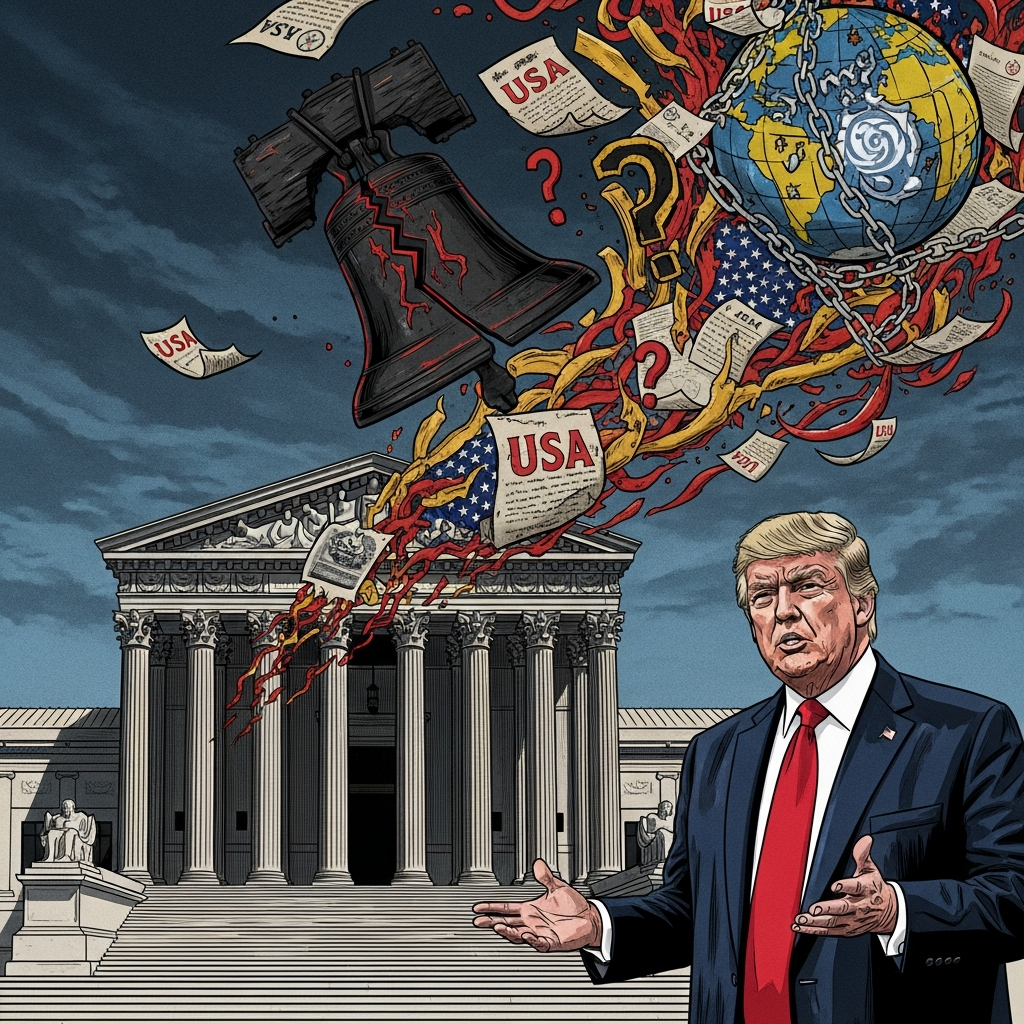
The United States Supreme Court is poised to tackle one of the most profound questions of American identity: the future of birthright citizenship. At the heart of this landmark debate lies Trump v. Barbara, a pivotal case slated for argument during the 2025–26 term. This legal challenge seeks to redefine who is automatically a U.S. citizen, stirring a constitutional discussion that could reshape the nation’s fabric. The core issue involves President Donald Trump’s Executive Order 14160, an ambitious attempt to end birthright citizenship for children born to non-citizens or non-permanent residents within U.S. borders.
This case promises to be a battle over constitutional interpretation. It pits a traditional understanding of the Fourteenth Amendment against a more recent, restrictive viewpoint. The outcome holds immense implications for millions of families and the very definition of American citizenship. Understanding this complex legal landscape requires a deep dive into history, legal precedents, and the current political climate surrounding immigration.
The Enduring Principle of Birthright Citizenship
Birthright citizenship, often known as jus soli, is a cornerstone of American law. It asserts that anyone born on U.S. soil is automatically a citizen, regardless of their parents’ immigration status. This principle is enshrined in the Citizenship Clause of the Fourteenth Amendment, ratified in 1868. The clause states, “All persons born or naturalized in the United States, and subject to the jurisdiction thereof, are citizens of the United States.” For over a century, this language has been widely interpreted to grant birthright citizenship.
This constitutional provision emerged from a post-Civil War context. Its primary aim was to ensure that formerly enslaved persons and their descendants were recognized as full citizens. However, its broad language has historically been applied universally. This interpretation was further solidified by subsequent legislation in 1952. The long-standing consensus views the clause as a clear directive. It offers a straightforward path to citizenship for those born within the nation’s geographic boundaries.
President Trump’s Executive Order and Its Challenge
On the first day of his second term in 2025, President Trump issued Executive Order 14160. Titled “Protecting the Meaning and Value of American Citizenship,” the order aimed to prohibit the federal government from granting citizenship to individuals born in the U.S. whose biological parents were not citizens or permanent residents at the time of birth. This executive action directly challenged the prevailing interpretation of the Fourteenth Amendment.
The Trump administration argued that the original intent of the Citizenship Clause was narrower. They claimed it applied only to formerly enslaved persons and their descendants. This view excluded children of “illegal aliens” or temporary residents. Immediately, federal district court judges across the country issued nationwide injunctions against the order. They deemed it unconstitutional. These legal challenges quickly escalated, pushing the controversial issue to the Supreme Court.
Path to the Supreme Court
Initially, the Trump administration disputed the authority of lower courts to issue sweeping nationwide injunctions. After the Supreme Court limited the scope of such injunctions in cases with few plaintiffs, new nationwide injunctions emerged. These came from lawsuits filed by states, organizations, and class-action plaintiffs. In September 2025, the administration formally petitioned the Supreme Court. They sought review of a New Hampshire district court’s nationwide injunction. Their petition focused squarely on the proper interpretation of the Citizenship Clause itself. The Court then agreed to hear the case, setting the stage for a monumental legal showdown.
The Constitutional Heart of the Debate
The core legal question in Trump v. Barbara is fundamental. Does the Citizenship Clause of the Fourteenth Amendment, combined with the 1952 legislation, mandate birthright citizenship for all persons born in the U.S.? Or can an executive order validly restrict this right based on parental status? The administration’s argument hinges on a strict originalist view. This perspective seeks to interpret constitutional text based on its presumed meaning at the time of its adoption.
Proponents of the traditional view argue that “subject to the jurisdiction thereof” refers to being subject to U.S. laws, not necessarily political allegiance or parental status. They highlight that the phrase was intended to exclude children of foreign diplomats and invading armies, not the children of immigrants. Overturning this long-held understanding would require the Court to disregard decades of precedent. It would also ignite a fierce debate about judicial activism versus deference to established law. The implications for constitutional interpretation could extend far beyond birthright citizenship.
The Broader Immigration Context: A Nation of Immigrants
The debate over birthright citizenship does not exist in a vacuum. It is deeply intertwined with the broader immigration landscape in the United States. The U.S. has long been known as a “nation of immigrants” and a “melting pot.” Yet, its history is also marked by periods of xenophobia and nativism. These contrasting sentiments shape the current policy debates. Millions of undocumented immigrants contribute significantly to the American economy. They pay taxes and form an integral part of the workforce. Data shows that many have lived in the U.S. for over a decade. Millions are married to U.S. citizens or lawful permanent residents. They are also parents to millions of U.S. citizen children.
The economic arguments for integrating undocumented immigrants are compelling. Reports suggest that a path to citizenship could substantially boost GDP and create new jobs. Many undocumented individuals serve as “essential workers” in critical sectors. This economic contribution often occurs despite their limited access to public benefits. The discussion around birthright citizenship directly impacts these communities. It addresses who belongs and who can fully participate in American society.
The Plight of “Dreamers”
A significant part of the immigration debate centers on “Dreamers.” These are individuals brought to the U.S. as children. They have grown up and been educated in the country. Often, they know no other home. The Deferred Action for Childhood Arrivals (DACA) program, established by President Barack Obama, offers temporary protection from deportation and work permits for qualifying Dreamers. However, DACA does not provide a path to citizenship. Public opinion polls consistently show strong support for DACA and for a pathway to citizenship for these individuals. A ruling against birthright citizenship could complicate the future for future generations of Dreamers. It would deepen the uncertainty already faced by many.
The Supreme Court’s Ideological Divide and Justice Kavanaugh’s Stance
The 2025–26 Supreme Court term is marked by several high-profile, ideologically charged cases. These include issues ranging from tariffs (Learning Resources v. Trump) to voting rights (Louisiana v. Callais) and independent federal agencies (Trump v. Slaughter). The birthright citizenship case fits squarely within this pattern. The Court’s conservative majority has often favored a strict constructionist approach. This contrasts with the liberal justices’ tendency towards a more expansive interpretation of constitutional rights and governmental powers.
Justice Brett Kavanaugh, nominated by President Trump, is a key figure on the Court. He has generally maintained a reliable conservative voting record. In a related 2025 case, Trump v. CASA, Inc., et al., Justice Kavanaugh filed a concurring opinion. He agreed with the Court’s ruling to stay injunctions halting enforcement of an executive order eliminating birthright citizenship. While this particular concurrence focused on the procedural aspects of injunctions rather than the merits of birthright citizenship, it signals his engagement with the issue. His jurisprudence, often emphasizing textualism and originalism, will likely play a crucial role in the Trump v. Barbara decision. The outcome could hinge on how closely he and other justices adhere to or diverge from historical precedent.
Potential Implications of a Ruling Against Birthright Citizenship
A Supreme Court decision redefining or ending birthright citizenship would trigger monumental consequences. It would fundamentally alter immigration policy and the legal status of potentially millions of individuals. Such a ruling would create a class of people born in the U.S. who are not citizens. This could lead to complex legal and social challenges.
For families, the impact would be profound. Children of non-citizens would no longer automatically share the same nationality as their U.S.-born parents (if applicable) or their U.S. citizen siblings. This would exacerbate family separation issues and create new legal categories for individuals. It would also place the United States in a more exclusive club of nations. Most countries in the Americas grant birthright citizenship. A change would move the U.S. away from this norm. It would raise questions about the nation’s commitment to fundamental human rights and international legal standards. The long-term societal and economic ripple effects could be enormous, reshaping American demographics and identity for generations.
Frequently Asked Questions
What is birthright citizenship, and what is its constitutional basis?
Birthright citizenship, or jus soli, is the legal principle that anyone born within a country’s borders is automatically a citizen. In the United States, it is primarily based on the Citizenship Clause of the Fourteenth Amendment to the Constitution, ratified in 1868. This clause states: “All persons born or naturalized in the United States, and subject to the jurisdiction thereof, are citizens of the United States.” This has been widely understood for over a century to confer citizenship regardless of parental immigration status.
How did President Trump’s executive order on birthright citizenship reach the Supreme Court?
President Trump issued Executive Order 14160 in 2025, attempting to end birthright citizenship for children born in the U.S. to non-citizens or non-permanent residents. Federal district courts immediately issued nationwide injunctions, deeming the order unconstitutional. After the Supreme Court clarified the limits of nationwide injunctions in certain cases, new injunctions were issued by lower courts following lawsuits from states and class-action plaintiffs. The Trump administration then petitioned the Supreme Court in September 2025 to review a New Hampshire district court’s injunction, which the Supreme Court agreed to hear in its 2025–26 term.
What are the potential consequences if the Supreme Court redefines birthright citizenship?
If the Supreme Court rules against the traditional interpretation of birthright citizenship, it would fundamentally redefine American citizenship. Millions of individuals born in the U.S. to non-citizen parents would no longer automatically be citizens, creating a distinct class of residents. This would have profound legal, social, and economic consequences, including potential family separations, complex legal challenges regarding status, and a significant shift in U.S. immigration policy. It could also set a precedent for altering other long-standing constitutional interpretations.
A Defining Moment for American Citizenship
The Trump v. Barbara case represents a pivotal moment for the United States. It is more than just a legal dispute; it is a profound discussion about national identity, constitutional interpretation, and the enduring principles that define American citizenship. The Supreme Court’s decision will either uphold a century-and-a-half-old understanding of who is an American or chart a radically new course. Regardless of the outcome, this case will undoubtedly leave an indelible mark on the nation’s legal landscape and its future generations. Readers are encouraged to follow this developing story closely, as its implications will resonate for years to come.