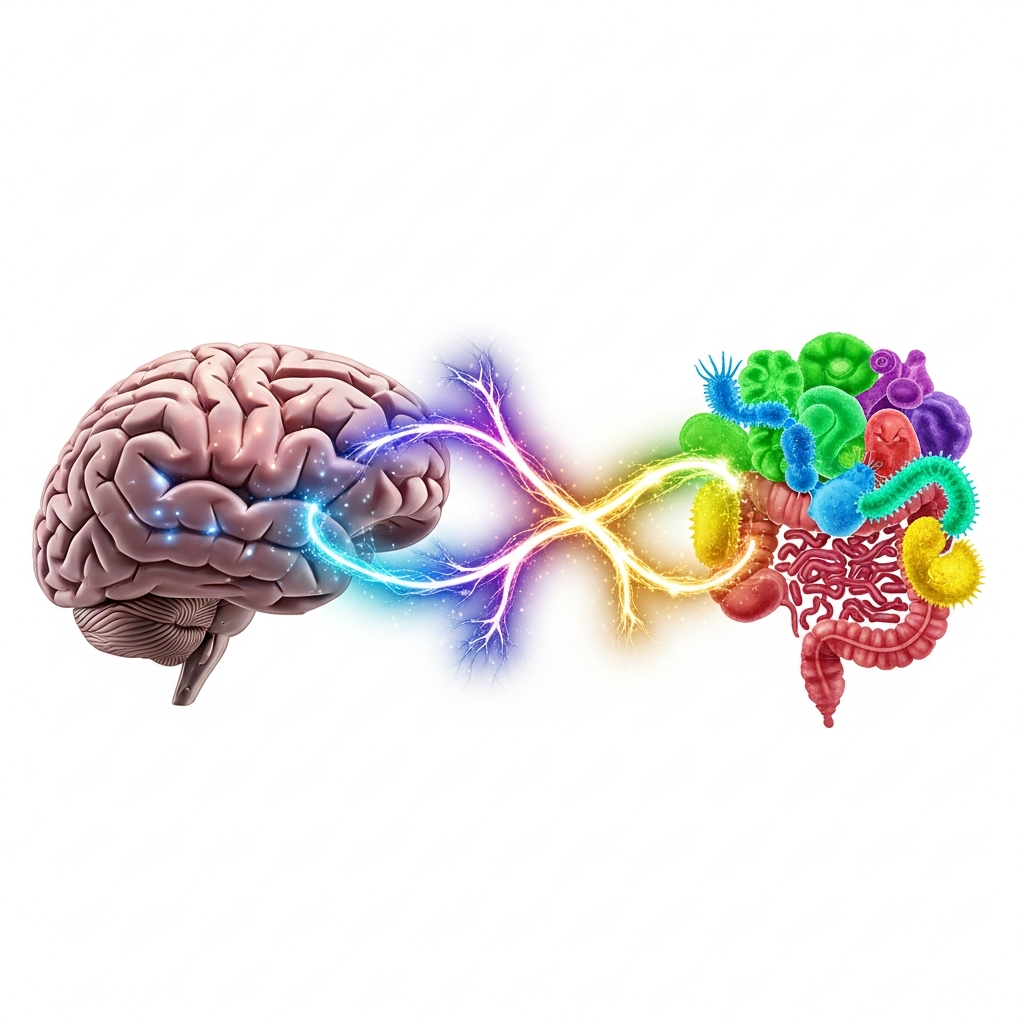
Imagine if the key to unlocking sharper memory in later life didn’t lie solely within your brain, but deep within your gut. Groundbreaking research is challenging traditional views of cognitive aging, suggesting that age-related memory decline might stem from changes in the body, particularly the gut microbiome, rather than just the brain itself. This exciting discovery reveals a specific biological pathway, offering a powerful new target for memory loss reversal and a beacon of hope for enhancing cognitive function as we age.
This revolutionary insight, published in Nature, highlights how signals from the gut can interfere with vital brain circuits involved in memory. It posits that interventions targeting these gut-brain connections could restore more youthful cognitive performance. As the National Institutes of Health (NIH) continues to champion diverse research into Alzheimer’s and related dementias, this gut-centric approach represents a significant expansion of our understanding and a promising frontier in therapeutic development.
The Gut-Brain Axis: A Deeper Connection Than Imagined
For decades, cognitive decline was largely viewed as an exclusive brain phenomenon. However, a growing body of evidence, including this recent study, reveals that the entire body plays a profound role in how our brains function. Our internal senses, collectively known as “interoception,” constantly monitor bodily states – from the heart and lungs to the intestines – sending crucial information to the brain via the vagus nerve. This internal feedback loop is essential for maintaining balance and optimal cognitive function.
The research in mice unveiled a critical finding: signals traveling from the intestine to the brain through the vagus nerve are vital protectors against cognitive decline. As these internal sensory systems weaken with age, so too does their protective effect. Remarkably, scientists found that by activating specific sensory neurons in the gut that connect to the vagus nerve, they could restore youthful cognitive abilities in older mice. This suggests that the decline of our internal senses, much like our external ones (sight, hearing), directly contributes to age-related memory issues.
Unmasking the Microbiome’s Role in Memory Loss
The composition and activity of our gut microbiome — the trillions of microbes living in our intestines — undergo significant changes over time. To investigate if these shifts drive age-related memory loss, researchers conducted experiments where they transferred microbiomes from older mice into younger ones. The results were striking: young mice receiving the “aged” microbiomes displayed impaired memory, mirroring the cognitive issues seen in older animals. Conversely, removing the microbiome using antibiotics restored cognitive function. Even more tellingly, mice raised without any microbiome experienced slower cognitive decline as they aged compared to normal mice. These findings strongly implicate factors produced by aging gut microbes as contributors to memory loss.
The study identified a key culprit: a bacterium named Parabacteroides goldsteinii. This microbe produces medium-chain fatty acids (MCFAs), which are observed to increase with age. Elevated MCFAs activate immune cells in the gut, triggering a cascade that releases inflammatory molecules like IL-1β. This inflammatory response then disrupts the critical function of vagal sensory neurons, effectively blocking the gut-brain pathway. This intricate chain of events — from microbial activity in the gut, through immune signaling, into the vagus nerve, and finally to the hippocampus (a brain region crucial for memory) — directly contributes to age-associated cognitive decline. This intricate biological interplay underscores the profound impact of the gut on our neurological health, much like how specific gut bacteria can lead to conditions like Auto-brewery Syndrome, causing involuntary intoxication, as identified by researchers at Mass General Brigham.
Pioneering Strategies for Memory Reversal
Encouragingly, the research demonstrated several interventions capable of restoring cognitive function in mice already experiencing decline. While broad-spectrum antibiotics offered a temporary improvement, they aren’t a practical long-term solution. A more targeted approach involved using a bacteriophage — a virus specifically designed to eliminate P. goldsteinii. This precision intervention successfully reduced MCFA levels and significantly improved memory performance in the mice.
Even more promising was a strategy focused on directly stimulating the vagus nerve. Treatments utilizing the gut hormone CCK or GLP-1 receptor agonists (a class of drugs that includes medications like Ozempic, also known as semaglutide) successfully reversed memory deficits in older mice. This aligns with recent high-quality clinical trial evidence highlighted by New Scientist, which suggests that GLP-1 drugs like semaglutide can not only slow but potentially reverse biological aging by an average of 3.1 years. These drugs showed significant effects on delaying biological aging in the inflammatory system and, notably, the brain by almost five years, likely by impacting fat distribution and reducing low-grade inflammation. Such findings lend powerful support to the potential for repurposing existing drugs for age-related conditions like memory loss.
Reframing Brain Aging Through the Body
These groundbreaking findings compel us to reconsider the traditional view that cognitive decline is solely driven by changes within the brain. Instead, they strongly suggest that processes in other parts of the body, particularly the gut, profoundly influence — and could potentially reverse — age-related memory loss. The ability to achieve this reversal using treatments that are already available or under development, such as GLP-1 agonists and vagus nerve stimulation (VNS), opens up exciting new avenues for human health.
The NIH’s ongoing Alzheimer’s research progress report emphasizes a precision medicine approach, tailoring interventions based on unique biological pathways and disease stages. This new gut-brain pathway fits perfectly into that framework. Vagus nerve stimulation is already utilized in humans to treat conditions like severe epilepsy and post-stroke recovery. Patients undergoing VNS have often reported improvements in cognitive function, providing early human evidence that enhancing vagus nerve activity could indeed help counter memory loss. This broader view of aging isn’t unique to the brain; a Stanford Medicine-led study, for instance, found that inhibiting the “gerozyme” protein 15-PGDH could reverse cartilage loss and promote regeneration in osteoarthritis, demonstrating that age-related decline in various body systems can be targeted and reversed through novel biological pathways.
Future Research and Clinical Implications
This research marks a pivotal shift in understanding age-related memory loss. While the primary study was conducted in mice, further human studies are actively underway to determine the translatability of these mechanisms to clinical use. It is plausible that other factors, such as chronic inflammation or infection, might also impair vagus nerve function through similar pathways, making VNS a potentially versatile therapeutic target.
The implications are vast, extending beyond typical age-related memory issues to more severe conditions like neurodegeneration and dementia. The NIH continues to fund a diverse portfolio of therapeutic trials, exploring new and repurposed drugs for Alzheimer’s and related dementias, including small molecules, gene therapies, and non-pharmacological interventions. Identifying new biomarkers and understanding protective genetic variants also contribute to a more comprehensive approach. This integrated research effort promises to pave the way for more effective, personalized treatments that leverage the body’s own intricate systems to restore and protect cognitive health.
Frequently Asked Questions
How does the gut microbiome contribute to age-related memory loss?
New research indicates that changes in the gut microbiome directly impact age-related memory loss. Specifically, an increase in the bacterium Parabacteroides goldsteinii as we age leads to higher levels of medium-chain fatty acids (MCFAs). These MCFAs activate immune cells in the gut, triggering the release of inflammatory molecules like IL-1β. This inflammation then disrupts the function of vagal sensory neurons, which are crucial for transmitting signals from the gut to the memory-forming regions of the brain, ultimately impairing cognitive function.
What are the most promising strategies to potentially reverse age-related memory decline discussed in the research?
The study identified several promising strategies for memory loss reversal. These include targeted interventions against the problematic gut bacterium Parabacteroides goldsteinii using bacteriophages (viruses that specifically attack bacteria) to reduce inflammatory MCFA levels. Another highly promising approach involves directly stimulating the vagus nerve, which can be achieved through treatments using gut hormones like CCK or, notably, GLP-1 receptor agonists (a class of drugs including Ozempic). These agonists have shown remarkable potential not only in reversing memory deficits in mice but also in slowing and even partially reversing biological aging in humans, particularly in the brain and inflammatory systems.
Are there human treatments for memory loss emerging from this gut-brain research?
While the primary findings are from mouse studies, early human evidence and existing treatments offer hopeful signs. Vagus nerve stimulation (VNS) is already used for conditions like epilepsy and stroke recovery, with some patients reporting improved cognitive function. The success of GLP-1 receptor agonists (like Ozempic) in reversing memory deficits in mice, coupled with clinical trial evidence showing their ability to slow biological aging in humans (including in the brain), suggests a strong potential for repurposing these drugs for age-related memory loss. Ongoing human trials, many funded by the NIH, are actively exploring these and other interventions, highlighting a future where personalized medicine targets these complex gut-brain pathways.
The Future of Cognitive Health
The revelation that our gut plays such a critical role in memory loss is nothing short of revolutionary. It offers a new lens through which to understand and, crucially, to combat age-related cognitive decline. As scientists delve deeper into these intricate gut-brain pathways and leverage existing therapeutic options like GLP-1 agonists, the promise of memory loss reversal moves closer to reality. This represents a significant step forward in our quest for lifelong cognitive vitality, heralding a future where a healthy gut truly means a sharper mind.