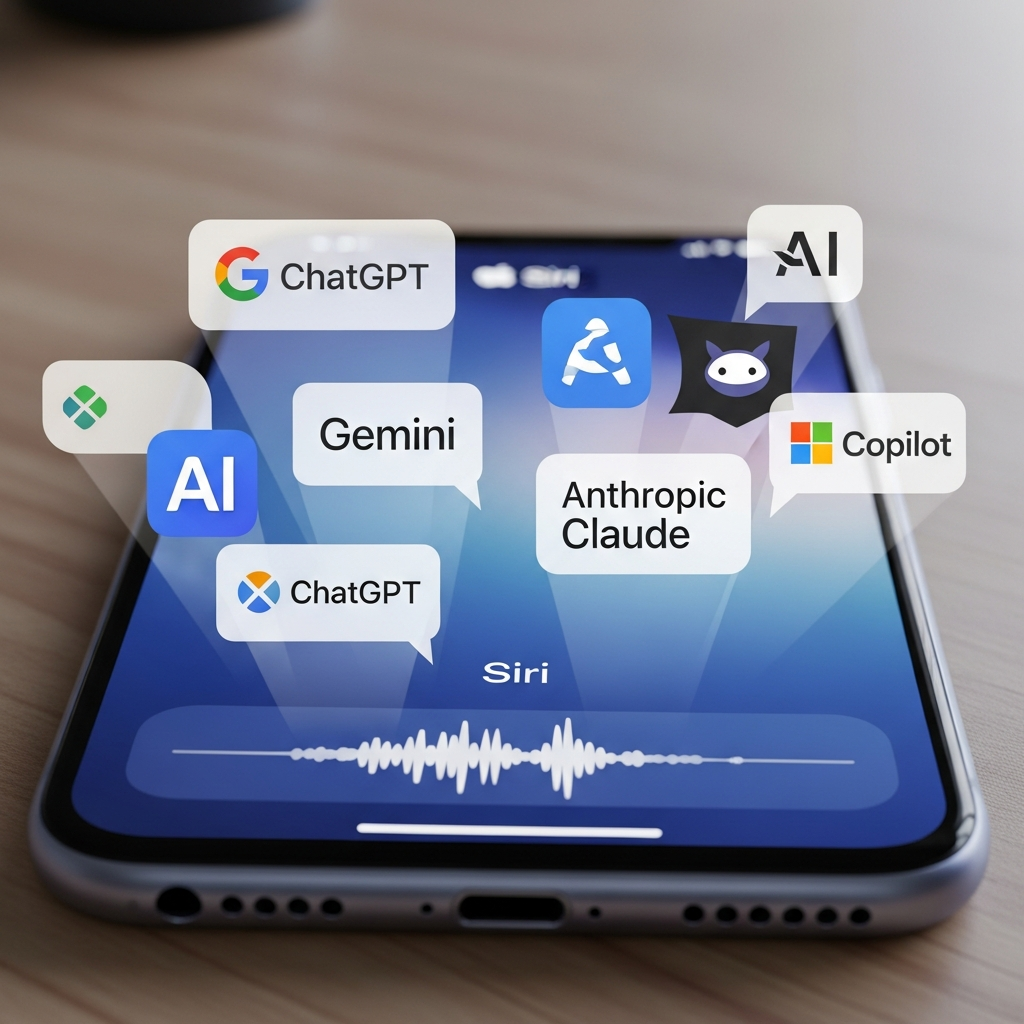
Apple is fundamentally changing Siri, opening its voice assistant to a universe of third-party AI chatbots. The upcoming iOS 27 update promises to empower users like never before, allowing them to choose their preferred AI model, from Google’s Gemini to Anthropic’s Claude, directly within Siri. This pivotal shift, revealed in recent reports, marks a new era for Apple Intelligence. It signals a strategic move to democratize AI access on iPhone, iPad, and Mac devices. Get ready for a smarter, more customizable Siri, set to be unveiled at the highly anticipated Worldwide Developers Conference (WWDC) on June 8th.
Apple’s Bold New Vision for Siri: Open AI Integration
Siri, Apple’s long-standing voice assistant, is about to undergo its most significant transformation yet. For years, Siri’s capabilities have been largely constrained to Apple’s internal framework or limited direct integrations. However, with the rumored iOS 27 release, Apple plans to implement a groundbreaking “Extensions” system. This new architecture will allow external AI chatbots downloaded from the App Store to seamlessly plug into Siri’s functionality. This move expands Siri’s intelligence far beyond its current scope.
The “Extensions” Revolution: How it Works
The new “Extensions” system is a game-changer for Siri AI chatbots. It will enable users to select and activate various AI models, essentially turning Siri into a universal interface for top-tier generative AI. Imagine asking Siri a complex question, and it routes your query to Google Gemini for a nuanced answer, or to Anthropic’s Claude for creative writing assistance. This flexibility is expected to apply across your Apple ecosystem. It will support iPhones, iPads, and Mac devices running their respective iOS 27, iPadOS 27, and macOS 27 updates.
This system means Apple won’t need individual deals with every AI provider. Instead, developers will update their apps to support the Siri extension framework. Users will discover and add these AI services via a dedicated section in the App Store. A test version of an upcoming operating system reportedly displayed a message confirming this, stating: “Extensions allow agents from installed apps to work with Siri, the Siri app and other features on your devices.” This streamlines the integration process for both users and developers.
Beyond ChatGPT: A New Era of Competition
Until recently, Siri’s most prominent third-party AI integration was with OpenAI’s ChatGPT, a non-exclusive agreement established with iOS 18 in 2024. This partnership provided Apple with immediate advanced chatbot functionality. It also gave OpenAI access to a massive user base. However, the new “Extensions” system signifies a clear departure from any single AI’s potential monopoly. Apple is opening the gates. This encourages competition and offers unparalleled user choice within its Apple AI integration.
This strategic pivot is not just about user options; it’s also about monetization. By facilitating integrations with multiple AI chatbots, Apple aims to drive subscriptions to these services through its App Store. The company stands to collect a commission of up to 30% on these transactions, creating a significant new revenue stream from the booming AI market. This positions Apple as a crucial intermediary in the generative AI space.
Unpacking the User Experience: What You Can Expect
The upcoming enhancements promise a dramatically different interaction with Siri. This isn’t just an update; it’s a redefinition of what a voice assistant can be. Users will gain unprecedented control over their AI experience. This makes Siri more powerful and more personal.
Unprecedented Customization
The ability to choose your preferred AI chatbot introduces a level of customization previously unavailable. Users can set their primary AI model within the Apple Intelligence and Siri section of Settings. This means you can tailor Siri’s underlying intelligence to your specific needs. Do you prefer Gemini for factual queries or Claude for creative tasks? The choice will be yours. This move directly addresses what users are truly searching for: a personalized digital assistant that truly understands and adapts to their preferences. This flexibility could significantly enhance productivity and user satisfaction.
The Standalone Siri App & CarPlay Integration
Alongside these integrations, Apple reportedly plans to launch a standalone Siri application for iOS 27. This dedicated app could serve as a central hub for managing and interacting with your chosen AI chatbots. It suggests a more robust, actionable Siri, capable of taking proactive steps on your behalf across various applications. Imagine Siri not just answering questions, but completing multi-step tasks.
In a related development, Siri AI chatbots are also making their way to CarPlay. Starting with the iOS 26.4 release (prior to the comprehensive iOS 27 update), AI chatbots can now integrate with CarPlay for the first time. This means you could soon access advanced AI capabilities directly from your car’s dashboard. Developers will need to update their applications to take advantage of these new features. This expands the reach of Apple’s AI ecosystem even further.
Apple’s AI Ambition: Challenges and Future Prospects
Apple’s journey into advanced generative AI has not been without its challenges. The new strategy reflects both a pragmatic approach to rapidly enhance Siri and a long-term vision for its proprietary AI. The company is actively working to overcome internal hurdles while also leveraging external innovations.
Overcoming Internal Hurdles
Apple has reportedly faced significant internal struggles and delays in developing its own large language model (LLM)-powered Siri. These challenges have led to internal conflicts and corporate reorganizations. The strategy of integrating third-party chatbots appears to be a “short-term solution.” It allows Apple to rapidly inject cutting-edge AI capabilities into Siri. This ensures it remains competitive in the fast-evolving AI landscape. It buys Apple time to refine its own foundational AI models.
Training On-Device Models: The “Distillation” Strategy
Beyond external integrations, Apple is also pursuing a sophisticated “distillation” strategy. The company plans to leverage information obtained from powerful third-party AI chatbots like Google Gemini. Specifically, Apple intends to use the answers and inference data generated by these external models to train its own smaller, more efficient, and less expensive in-device AI models. This enhances Apple’s proprietary “Foundation Model.” This on-device model will operate entirely locally, boosting privacy and responsiveness. This dual approach signifies Apple’s commitment to both immediate improvements and long-term, privacy-focused AI development.
The Road Ahead: WWDC and Beyond
The grand unveiling of these new features, including iOS 27 Siri and its AI enhancements, is expected at Apple’s Worldwide Developers Conference. The keynote address is set for June 8th. Developers and users alike eagerly anticipate a detailed roadmap for Apple’s AI future. This event will likely showcase how these new integrations will work and what new possibilities they unlock. This makes WWDC 2026 a landmark event for Apple’s AI ambitions.
Frequently Asked Questions
What is Apple’s new “Extensions” system for Siri, and how will it work with third-party AI chatbots?
Apple’s “Extensions” system for Siri is a new framework within iOS 27, iPadOS 27, and macOS 27 that allows users to integrate various third-party AI chatbots. Instead of a single AI powering Siri, users can download AI chatbot apps from the App Store and then select their preferred model to work with Siri. This means Siri can route user queries to external AI services like Google Gemini or Anthropic’s Claude, leveraging their unique capabilities for more diverse and powerful responses. The system liberates Siri from a limited set of integrations, making it a customizable hub for advanced AI.
Which specific AI chatbots are expected to integrate with Siri through the new iOS 27 “Extensions”?
Reports from Bloomberg and other sources indicate that popular AI chatbots like Google’s Gemini and Anthropic’s Claude are expected to integrate with Siri via the new “Extensions” system. While Siri already has an integration with OpenAI’s ChatGPT, the new framework opens the door for a much broader range of AI applications to connect seamlessly. This means users will likely see many more options appear in the App Store, allowing them to choose from a diverse selection of AI models based on their specific needs and preferences.
How will the upcoming Siri AI integrations in iOS 27 benefit Apple users and impact the broader AI ecosystem?
The upcoming Siri AI integrations in iOS 27 offer significant benefits to Apple users by providing unprecedented choice and customization. Users will gain access to a wider array of advanced AI capabilities, making Siri more intelligent, versatile, and personalized. For the broader AI ecosystem, this move represents a major opening from Apple, encouraging innovation among third-party AI developers who can now reach a vast user base. It also signifies Apple’s intent to monetize AI usage through App Store commissions, potentially reshaping how AI services are distributed and consumed on mobile devices.
The Future of Voice Assistance is Here
Apple’s decision to open Siri to third-party AI chatbots with iOS 27 is a monumental strategic shift. It transforms Siri from a largely closed system into an open, customizable AI platform. This move promises unprecedented choice and enhanced intelligence for millions of Apple users worldwide. From monetizing AI services to training its own on-device models, Apple is strategically positioning itself at the forefront of the generative AI revolution. As WWDC approaches, the tech world watches intently for the detailed reveal of how Apple AI integration will redefine the future of voice assistance. The era of personalized, powerful AI is about to begin.