Denmark faces an intricate political stalemate following a pivotal general election where Prime Minister Mette Frederiksen’s left-wing bloc failed to secure a clear majority. This unexpected outcome, despite Frederiksen’s high international profile, plunges the Nordic nation into weeks of complex coalition negotiations. Voters delivered a fragmented parliament, leaving the centrist Moderates, led by Lars Løkke Rasmussen, in a powerful “kingmaker” position crucial for forming the next government. This result reflects a striking shift in voter priorities, with domestic concerns overshadowing international crises that once boosted Frederiksen’s popularity.
A Nation Divided: No Clear Mandate Emerges
The early hours of Wednesday saw the final votes tallied, confirming a hung parliament. Mette Frederiksen’s “red bloc” of Social Democrats and other left-leaning parties secured 84 seats, falling short of the 90 needed for an outright majority in the 179-seat Folketing. Simultaneously, the “blue bloc” of right-leaning parties also failed to reach the threshold, winning 77 seats. This outcome has left both traditional blocs without a clear mandate to govern.
Frederiksen’s Social Democrats, while remaining the largest single party, recorded a historically poor performance, capturing just under 22% of the vote. This marks their weakest showing in over 120 years, a significant drop from their previous election results. The prime minister had reportedly hoped to leverage a “Greenland bounce” in the polls, capitalizing on public support for her firm stance against former US President Donald Trump’s threats to acquire Greenland earlier in the year. However, this anticipated boost did not translate into the decisive majority she needed for a third term.
The Kingmaker’s Ascendancy: Lars Løkke Rasmussen’s Pivotal Role
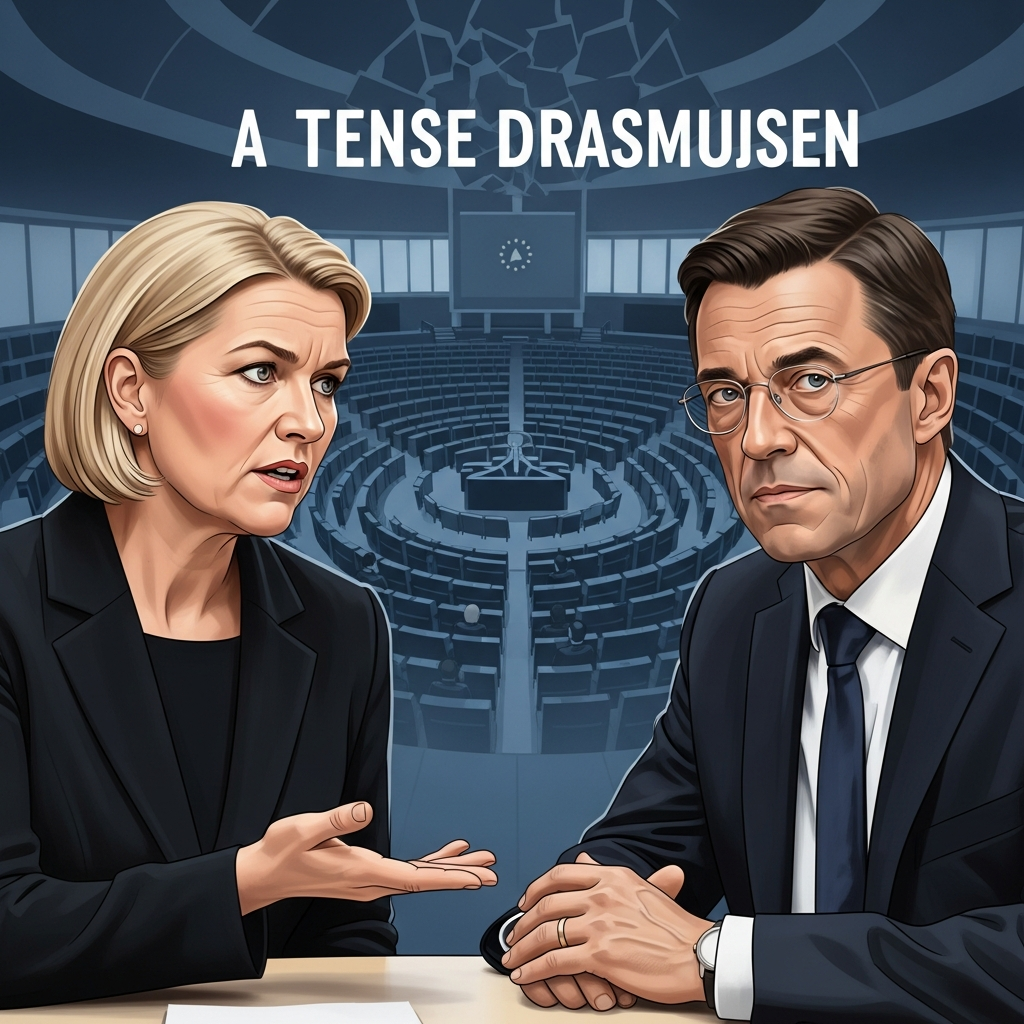
Amidst the political gridlock, the Moderates party, founded and led by Foreign Minister Lars Løkke Rasmussen, emerged as the undeniable “kingmaker” with 14 crucial seats. Rasmussen, a seasoned politician and former two-time prime minister, now holds the balance of power. He has urged both the left and right blocs to move towards the political centre, advocating for a broad, cross-party coalition.
Rasmussen famously spent much of election night smoking his pipe before calling on Frederiksen and Liberal party leader Troels Lund Poulsen to “come down from the trees” and engage in compromise. He emphasized that neither the red nor the blue bloc held a clear majority, making a collaborative approach essential. Despite his influential position, Rasmussen has publicly stated he does not wish to serve as prime minister again, instead expressing interest in the traditional “royal investigator” role—a facilitator for government formation.
Shifting Alliances and Firm Stances
The path to a new government is further complicated by strong declarations from other key players. Troels Lund Poulsen, whose Liberal Party is part of the blue bloc, emphatically ruled out forming a new coalition with Frederiksen’s Social Democrats. He declared himself still a candidate for prime minister and highlighted his party’s standing as the largest within the blue bloc. This firm position signals a challenging road ahead for Frederiksen in piecing together a governing alliance.
Conversely, the Green Left party, led by Pia Olsen Dyhr, celebrated a “historic” strong result, solidifying its position as the second-largest left-wing party. Dyhr has indicated her party’s readiness to negotiate, but with clear prerequisites: any government they join must prioritize welfare initiatives and the green transition. These conditions will add another layer of complexity to the upcoming talks.
Domestic Issues Trump Geopolitics
While the Greenland crisis garnered significant international attention, the election was largely fought on domestic battlegrounds. Voters prioritized internal concerns over geopolitical tensions, a factor that ultimately undermined Frederiksen’s “Greenland bounce” strategy. Key issues dominating the campaign included:
Cost of Living Crisis: Rising inflation and economic pressures were top-of-mind for many Danish households.
Wealth Tax Proposal: The Social Democrats proposed a 0.5% wealth tax on individual assets exceeding 25 million kroner (approximately £3 million) to fund smaller primary school class sizes. This policy faced fierce opposition from Denmark’s business elite, with prominent figures like Henrik Andersen (CEO of Vestas) threatening to leave the country and Robert Mærsk Uggla (Chair of Maersk) deeming it “harmful to Denmark.”
Immigration Laws: Denmark’s already stringent immigration policies were a hot topic, with calls for further tightening. Prime Minister Frederiksen, despite her left-wing affiliation, has consistently advocated for a tough stance on immigration, believing it enjoys broad parliamentary support and helps mitigate the rise of far-right parties.
Animal Rights and Clean Drinking Water: These environmental and ethical concerns also played a role in the political discourse.
The emphasis on these domestic issues reflects a broader European trend where economic hardship and migration concerns often fuel populist movements and challenge established centre-left parties.
Greenland’s Lasting Impact
Despite the election’s domestic focus, the geopolitical tensions surrounding Greenland left a lasting impression on Danish voters and the autonomous territory itself. Prime Minister Frederiksen’s resolute rejection of Donald Trump’s offer to buy Greenland in January was seen as a strong display of national sovereignty. She asserted that “Greenland is not for sale,” praising the territory’s “grace, determination and strength” in the face of “unreasonable and unacceptable pressure” from the US. Reports even surfaced of Denmark flying blood bags to Greenland in preparation for a potential US action, underscoring the severity of the perceived threat.
Greenlandic Prime Minister Jens-Frederik Nielsen highlighted the historic importance of this election for the Arctic island, describing it as the “most important election for the Danish parliament in Greenland in history.” He spoke of a “superpower trying to acquire us, take us, control us,” underscoring the serious and ongoing nature of the situation for Greenlanders. The two seats representing Greenland (along with two from the Faroe Islands) in the Danish parliament could prove critical in a tight post-election environment.
The Road Ahead: Complex Coalition Negotiations
With no single bloc securing a majority and key party leaders holding firm stances, Denmark now faces a period of intense and potentially protracted coalition negotiations. The political landscape is more fragmented than ever, with 12 parties contesting the election. Frederiksen, despite her Social Democrats’ historic low, still remains a frontrunner to assemble a parliamentary majority, albeit through complex and drawn-out discussions. The most likely scenario points towards a centre-left coalition, but the exact composition and policy compromises remain highly uncertain.
The rise of the far-right Danish People’s Party, which more than tripled its vote share to 9.1%, further complicates the political calculus. This resurgence, mirroring similar trends across Europe, highlights a strong mandate for stricter immigration policies and nationalist sentiments. The next few weeks will test the negotiation skills of Denmark’s political leaders as they attempt to forge a stable government capable of addressing the nation’s diverse challenges.
Frequently Asked Questions
What were the key outcomes of the recent Danish election?
The Danish general election resulted in a hung parliament, meaning neither the left-leaning “red bloc” nor the right-leaning “blue bloc” secured an outright majority. Prime Minister Mette Frederiksen’s left-wing bloc won 84 seats, falling short of the 90 required. Her Social Democrats recorded their weakest performance in over 120 years. The centrist Moderates, led by Lars Løkke Rasmussen, emerged as “kingmakers” with 14 pivotal seats, setting the stage for complex coalition negotiations.
Who is Lars Løkke Rasmussen and why is he called a “kingmaker”?
Lars Løkke Rasmussen is a veteran Danish politician who has served as prime minister twice. He leads the centrist Moderates party, which secured 14 seats in the recent election. This number of seats is crucial because neither of the two main political blocs (left or right) achieved a majority on their own. Consequently, Rasmussen and his party hold the balance of power, making them the “kingmakers” whose support will be essential for any party attempting to form a stable government.
How did the Greenland issue and domestic policies shape voter decisions?
While Prime Minister Frederiksen hoped her strong stance against Donald Trump’s threats to acquire Greenland would boost her support (“Greenland bounce”), domestic issues ultimately dominated the election. Voters were primarily concerned with the cost of living crisis, the Social Democrats’ proposed wealth tax (which faced strong business opposition), and tightening immigration laws. These internal issues, rather than international geopolitics, significantly influenced voter behavior and contributed to the Social Democrats’ historic electoral low.