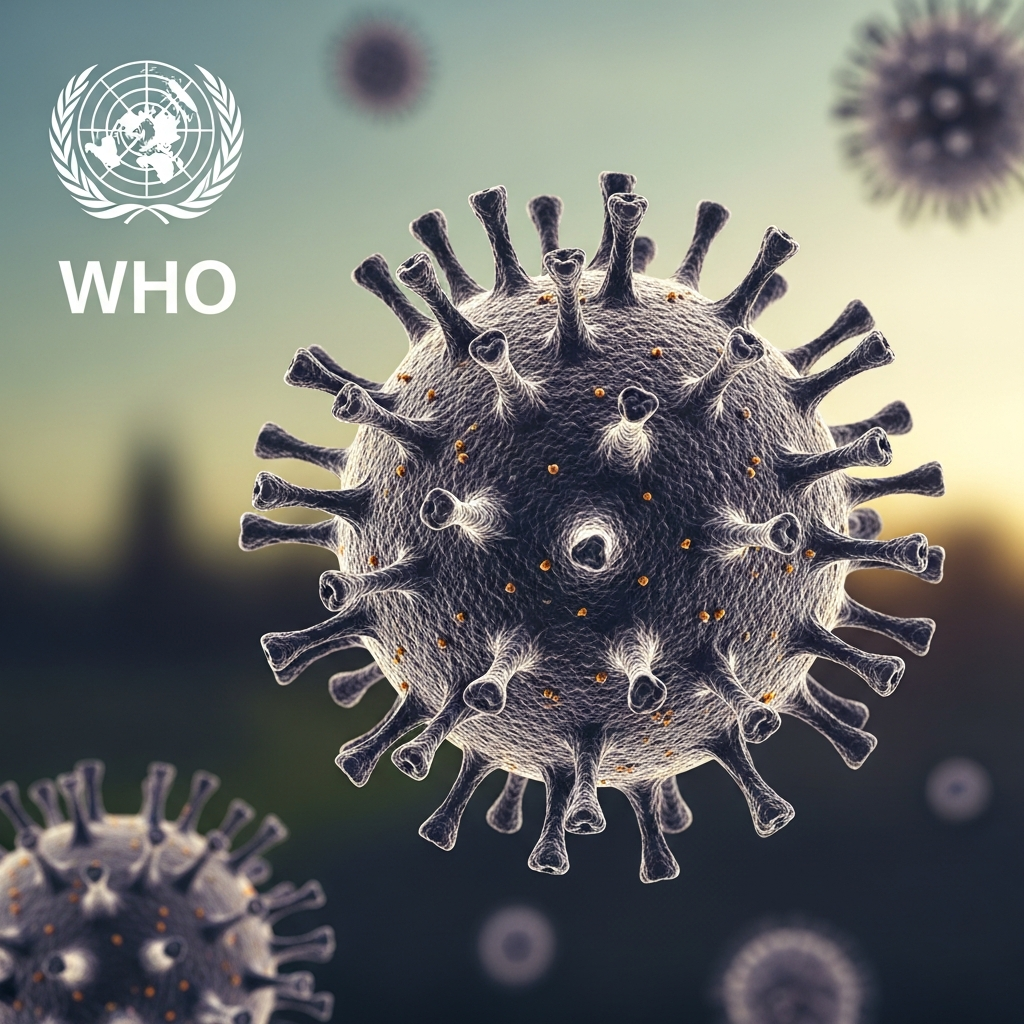
A new chapter in the ongoing COVID-19 pandemic is unfolding with the emergence of NB.1.8.1, a highly transmissible Omicron subvariant that has rapidly become a focal point for global health authorities. Initially detected in January 2025, this lineage, a “variant under monitoring” by the World Health Organization (WHO), is sparking significant concern about a potential summer surge in infections. Understanding this new variant, its potential impact, and the best ways to protect yourself and your community is now more crucial than ever. This guide cuts through the noise, providing expert insights and actionable advice to help you navigate the evolving landscape of COVID-19.
Understanding NB.1.8.1: The Latest Threat
NB.1.8.1 is an Omicron subvariant that has demonstrated rapid global spread. First identified in January 2025, it quickly gained traction, accounting for approximately 10.7% of global sequenced COVID-19 cases by late April 2025, a significant jump from just 2.5% the previous month. Its presence has been confirmed in over 20 countries, including the United States, through various surveillance methods like airport screenings and community monitoring.
This new COVID-19 variant is a recombinant of XDV.1.5.1 and shares genetic similarities with LP.8.1, another circulating strain. What sets NB.1.8.1 apart are its additional spike protein mutations. These genetic changes are particularly concerning because they may enhance the virus’s ability to evade existing immunity derived from previous infections or vaccinations. While initial reports do not suggest it causes more severe illness than other circulating variants, its heightened transmissibility poses a clear risk for increasing case numbers.
The Science Behind Viral Evolution: Why Variants Emerge
Viruses like SARS-CoV-2, which are RNA viruses, are constantly evolving. As they replicate, their genetic code can accumulate “misprints” or mutations. Most of these changes are inconsequential, but occasionally, a mutation can provide a survival advantage to the virus. These advantageous changes might improve its ability to spread from person to person, make it more adept at infecting human cells, or help it bypass the immune defenses we’ve built up.
The emergence of strains like NB.1.8.1 highlights the unpredictable nature of viral evolution. For instance, an older variant, BA.2.86 (Pirola), demonstrated a similarly extensive mutational profile in its spike protein, diverging significantly from its ancestral BA.2 lineage. This continuous evolution underscores the need for robust genomic surveillance — the process of tracking genetic changes in the virus — to swiftly identify and assess new threats. Unfortunately, a significant reduction in global genomic surveillance efforts can hamper our ability to understand variant origins and make timely public health decisions. Enhancing these monitoring systems is vital for future preparedness.
Symptoms, Severity, and Vulnerable Groups
For most vaccinated individuals, the symptoms associated with current Omicron variants, including NB.1.8.1, are typically milder. Common complaints include a cough, fatigue, sore throat, congestion, or a runny nose. The previously prevalent symptom of loss of taste and smell is now less common. Importantly, very few vaccinated individuals, especially those who have received an updated booster, require hospitalization or succumb to the infection. This underscores the continued effectiveness of vaccines in preventing severe outcomes.
However, certain populations remain at higher risk for severe illness:
Unvaccinated Adults and Children: These groups face a significantly higher risk of severe illness and constitute the overwhelming majority of COVID-19 hospitalizations.
Individuals Aged 65 and Older: This age group consistently experiences a higher risk of severe outcomes.
Young Infants: Infants do not develop a robust immune system until about six months of age, making them vulnerable to infection.
Immunocompromised Individuals: Those with weakened immune systems or chronic medical conditions (e.g., diabetes, heart disease) are at increased risk.
Pregnant individuals also face elevated risks. Even prior to the Omicron variants, mortality rates in pregnant people were three times higher than in non-pregnant individuals. This risk is compounded by often low vaccination rates within this group. While specific data for NB.1.8.1 in pregnancy is still emerging, its increased transmissibility means rising community infection rates pose a higher overall risk to this vulnerable population. Moreover, an infection increases the risk of Long COVID, a condition characterized by persistent symptoms long after the initial illness.
Navigating the Predicted Summer Surge
Experts are warning of a potential summer surge driven by the NB.1.8.1 COVID variant. Historically, the U.S. has experienced COVID-19 case spikes every summer between June and August since 2020, with 2025 expected to follow this trend. This pattern defies the typical seasonality of other respiratory viruses like influenza.
Several factors contribute to summer COVID spread:
Viral Adaptation: The SARS-CoV-2 virus appears to adapt well to hot, humid weather, unlike many other respiratory viruses.
Waning Immunity: Population immunity, whether from vaccination or previous infection, naturally declines over time. The further individuals are from their last surge or vaccination campaign, the more susceptible they become.
Low Vaccine Uptake: Uptake of the 2024-2025 COVID vaccine, released last fall, was notably low, leaving a significant portion of the population vulnerable.
Increased Socializing: Summer often brings increased travel and social gatherings, frequently in air-conditioned indoor spaces where the virus can spread more easily.
With the CDC no longer tracking total new cases as it once did, wastewater data has emerged as an increasingly valuable tool for monitoring COVID summer surge trends. While national wastewater levels were “low” as of early June, experts anticipate changes as NB.1.8.1 gains ground. By June 7, NB.1.8.1 was estimated to account for 37% of cases in the U.S., becoming the second-most prevalent variant.
Your Best Defense: Vaccination and Protection
Staying up-to-date with your vaccinations remains the cornerstone of protection against the NB.1.8.1 COVID variant and other circulating strains. The updated 2024-2025 COVID vaccines are specifically designed to protect against severe illness, hospitalization, and death caused by the currently circulating Omicron subvariants.
Updated Vaccines: What You Need to Know
The Centers for Disease Control and Prevention (CDC) strongly recommends that everyone aged 6 months and older receive one of these updated vaccines. These new shots are termed “updated” vaccines, rather than “boosters,” to reflect their annual adaptation to new circulating strains of SARS-CoV-2. The 2023 vaccine, for example, targeted the XBB.1.5 subvariant, while the current Pfizer and Moderna mRNA vaccines target the KP.2 strain, and the Novavax vaccine targets JN.1. Even as newer strains like KP.3.1.1 emerge, experts expect these vaccines to provide robust protection against severe illness.
The primary goal of these vaccines is not to prevent every infection but to significantly reduce the risk of severe outcomes and restore waning protection. CDC data from 2023 highlighted over 916,300 COVID-19 hospitalizations and more than 75,500 deaths in the U.S., with the majority of hospitalized individuals not having received the previous year’s updated shot. For those aged 65 and older, or those who are moderately or severely immunocompromised, the CDC recommended a second updated dose six months after their initial shot.
Vaccine Safety and New Guidelines
COVID-19 vaccines have undergone the most intense safety monitoring in U.S. history, with hundreds of millions of doses administered globally. While rare cases of myocarditis (heart muscle inflammation) and pericarditis (inflammation of the heart lining) have been observed, primarily in adolescent and young adult males, research consistently shows that these cardiac complications are significantly more likely after a COVID-19 infection than after vaccination. The benefits of vaccine protection against COVID-19 far outweigh the risks of potential side effects.
It’s important to note recent shifts in public health guidance. On May 27, the CDC announced new guidelines that no longer recommend routine COVID vaccines for healthy children and pregnant women. This change, announced by HHS Secretary Robert F. Kennedy Jr., has met with disagreement from many medical professionals and could impact insurance coverage. For high-risk individuals, however, some experts advise considering a pre-summer vaccine in addition to a fall shot, especially as updated 2025-2026 vaccines are expected to target the LP.8.1 variant.
Beyond Vaccination: Comprehensive Protection
Vaccination is a critical layer of defense, but it’s not the only one. To mitigate the spread of NB.1.8.1 and other variants, consider these established protective strategies:
Stay Up-to-Date on Vaccinations: Ensure you and your family are current with recommended doses.
Practice Good Hand Hygiene: Frequent hand washing is a simple yet effective barrier against many pathogens.
Stay Home When Sick: If you feel unwell, testing and isolating can prevent further transmission.
Avoid Contact with Sick Individuals: Maintain physical distance from those showing symptoms.
Mask Up in Crowded Spaces: Wearing a high-quality N95 mask in crowded indoor environments can add significant protection.
Test When Symptomatic or Exposed: Rapid testing helps in early detection and isolation.
Public Health Shifts and Personal Responsibility
The landscape of public health response has changed significantly since the early days of the pandemic. Recent major structural changes in the U.S. public health infrastructure, combined with a shift in government response (e.g., no longer mailing free at-home testing kits), mean that guidance and coordinated responses may be less predictable. With public attitudes towards COVID-19 increasingly “blasé,” the emphasis naturally shifts toward individual preventive measures.
Experts stress that while completely preventing new variants is impossible, their emergence can be slowed by reducing the virus’s ability to spread. This strategy involves increasing vaccination rates, improving access to testing and treatment, swiftly identifying outbreaks, and maintaining fundamental public health measures. Fewer opportunities for the virus to spread directly translate to fewer chances for it to mutate into new, potentially more concerning forms. International collaboration in SARS-CoV-2 genomic surveillance and public health efforts remains crucial to combat these continuously evolving threats.
Frequently Asked Questions
What is the NB.1.8.1 COVID variant, and why is it concerning?
NB.1.8.1 is a rapidly spreading Omicron subvariant of SARS-CoV-2, first identified in January 2025. It’s concerning due to its high transmissibility and additional spike protein mutations, which may enhance its ability to evade existing immunity from vaccines or prior infections. While current data suggests it doesn’t cause more severe illness, its potential to drive a significant summer surge makes it a “variant under monitoring” by the WHO.
What are the latest recommendations for COVID-19 vaccination, especially with the NB.1.8.1 variant?
The CDC strongly recommends that everyone aged 6 months and older receive the updated 2024-2025 COVID vaccines. These vaccines, targeting strains like KP.2 and JN.1, are expected to provide protection against severe illness from NB.1.8.1. High-risk individuals, such as those over 65 or immunocompromised, may also be advised to receive a second updated dose. However, recent CDC guidelines no longer recommend routine COVID vaccines for healthy children and pregnant women, a change that has sparked debate among medical professionals.
How can I best protect myself and my family from the new COVID variants and potential summer surges?
Beyond staying current on vaccinations, comprehensive protection involves several key strategies. Practice frequent hand washing, avoid contact with sick individuals, and stay home if you feel unwell. Consider wearing an N95 mask in crowded indoor spaces, and utilize testing if you develop symptoms or have been exposed. These measures collectively reduce opportunities for the virus to spread and mutate, contributing to personal and community health.
Staying Vigilant in an Evolving Pandemic
The emergence of the NB.1.8.1 COVID variant serves as a powerful reminder that SARS-CoV-2 continues to evolve, presenting new challenges to global public health. While the severity of this specific variant appears manageable for most vaccinated individuals, its heightened transmissibility underscores the importance of ongoing vigilance and proactive measures. By staying informed, embracing updated vaccination recommendations, and consistently practicing established protective behaviors, we can collectively minimize the impact of future surges and continue to navigate this dynamic pandemic effectively.