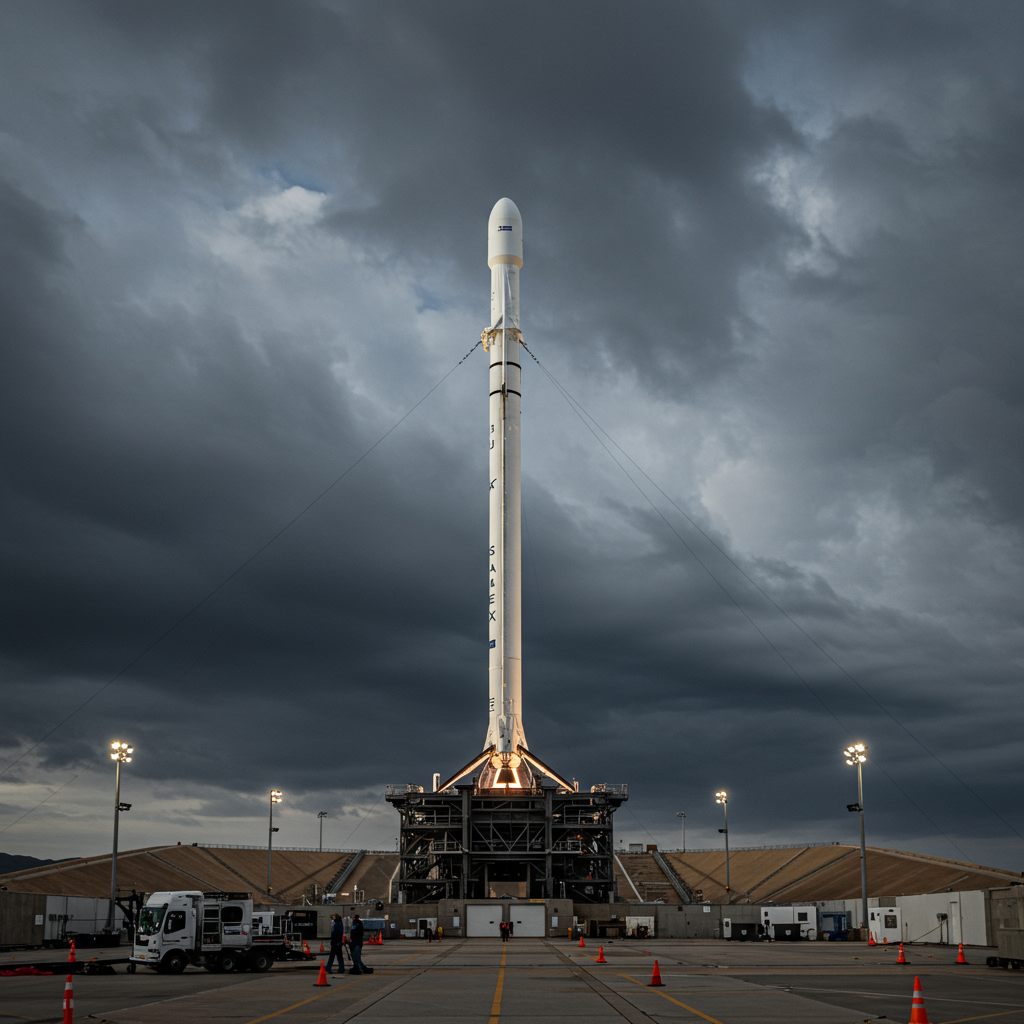
A monumental moment in human space exploration unfolded as NASA’s colossal Artemis II Space Launch System (SLS) rocket and Orion spacecraft made their deliberate journey to Launch Pad 39B at Kennedy Space Center in Florida. This critical rollout signals the final preparations for a historic crewed mission that will loop around the Moon, marking humanity’s return to lunar vicinity for the first time in over five decades. With a targeted launch date of April 1, 2026, this endeavor is a pivotal step toward establishing a sustainable human presence on the Moon and beyond.
The Colossal Crawl to Launch Pad 39B
In the early hours of March 20, 2026, the towering 322-foot (98-meter) SLS rocket, topped with the Orion crew capsule and mounted on its Mobile Launcher 1 platform, began its approximately four-mile (6.4 km) trek. Emerging from the immense Vehicle Assembly Building (VAB), the entire 11-million-pound (5,000-tonne) stack moved with astounding precision aboard NASA’s Crawler-Transporter 2. This engineering marvel, originally built in 1965 for the Apollo-era Saturn V rockets, transported its precious cargo at a maximum speed of a mere 1 mph (1.6 km/h).
The entire journey to Pad 39B took roughly 12 hours. This seemingly snail-like pace is intentional and crucial for the integrity of the multi-billion-dollar rocket. It meticulously reduces stresses on the immense structure and allows ground teams to meticulously monitor for any unwelcome movement. Following its arrival, the rocket and its launch platform were carefully “hard down” onto the pad pedestals, signifying its readiness for the intensive final checks.
Behind the Scenes: Intensive Pre-Launch Preparations
With the Artemis II rocket now securely on the pad, engineers are immersed in a rigorous schedule of final tests and validations. These crucial days involve:
Repair Verification: Confirming the successful resolution of the helium system issue addressed in the VAB.
Structural Integrity Checks: Ensuring no components shifted or were compromised during the slow, deliberate transport.
System Reconnection: Reestablishing all vital connections with the launch tower’s complex array of umbilicals and ground support equipment.
Pressure Tests: Conducting comprehensive pressure tests on the repaired helium system to guarantee its flawless operation.
Countdown Rehearsals: Practicing portions of the launch countdown using the precise computers and networks that will be active on launch day, though without actual propellant loading.
This meticulous approach underscores NASA’s unwavering commitment to safety and thoroughness, prioritizing mission success over strict adherence to arbitrary deadlines.
The Artemis II Mission: A Journey Around the Moon
The Artemis II mission is far more than just a test flight; it’s a profound step in humanity’s deep-space journey. The mission will see four brave astronauts embark on a challenging 10-day journey, piloting the Orion spacecraft on a loop around the far side of the Moon before returning safely to Earth. This will take them approximately 4,700 miles beyond the lunar far side, marking the farthest humans have ever traveled into space.
The pioneering crew comprises:
Reid Wiseman (NASA): Mission Commander
Victor Glover (NASA): Pilot
Christina Koch (NASA): Mission Specialist
Jeremy Hansen (Canadian Space Agency): Mission Specialist
Their primary objective is to thoroughly test Orion’s critical life support systems, navigation, and other hardware with human occupants, building upon the invaluable data gathered during the uncrewed Artemis I mission in 2022. While this mission will not involve a lunar landing, it is an indispensable precursor to future endeavors that will place astronauts back on the lunar surface.
Safeguarding the Crew: Pre-Launch Quarantine
In a standard yet critical procedure, the four Artemis II astronauts entered a pre-flight quarantine period on March 18, 2026, at the Johnson Space Center in Houston. This isolation, typically lasting at least 14 days, is designed to protect the crew from any illnesses that could jeopardize the mission. During this time, they continue intensive training, conduct simulations, review flight procedures, and undergo final medical checkups. Approximately five days before liftoff, the crew will travel to Kennedy Space Center to complete their quarantine and final preparations for their historic journey.
A Path Paved by Persistence: Overcoming Technical Challenges
The path to this momentous rollout was not without its hurdles. The SLS rocket had initially been rolled out to Pad 39B in January 2026 for an earlier “wet dress rehearsal” (a fueling test). However, during a second such rehearsal on February 19, a critical helium flow issue was detected in the rocket’s upper stage. Helium is vital for pressurizing propellant tanks, and a fault could compromise engine performance or the safe draining of fuel.
Rather than attempt a complex investigation at the pad, NASA managers opted for a prudent “rollback” to the VAB on February 25, 2026. Inside the VAB, ground teams utilized specialized work platforms to access the rocket’s Interim Cryogenic Propulsion Stage (ICPS), where they successfully diagnosed and addressed the helium issue by replacing suspect components and swapping out critical batteries. Subsequent rigorous testing confirmed the fault had been cleared, clearing the way for this second, successful rollout to the launch pad. This decision, though delaying the mission, underscored NASA’s commitment to prioritizing safety and thoroughness over schedule, a mantra echoed by Artemis II Launch Director Charlie Blackwell-Thompson.
The Broader Vision: Artemis Program Evolution
Artemis II is not just a standalone mission; it’s a vital link in NASA’s ambitious Artemis program, designed to return humans to the Moon and establish a sustainable lunar presence. It follows the highly successful uncrewed Artemis I mission in 2022, which validated the SLS rocket and Orion spacecraft in deep space.
Recent adjustments to the broader Artemis program, as announced by NASA Administrator Jared Isaacman, outline an evolving strategy:
Artemis III (2027): This mission is now planned as a crewed demonstration in Earth orbit. Its primary objective will be to test the Orion spacecraft’s ability to rendezvous and dock with commercial lunar landers, such as those under development by SpaceX (Starship) and Blue Origin (Blue Moon Mk.2).
- Artemis IV (2028): This mission is now targeted as the first human lunar landing of the Artemis program, following the successful docking tests from Artemis III.
- www.bbc.com
- www.usatoday.com
- www.accuweather.com
- www.space.com
- spaceflightnow.com
These strategic modifications, set to be discussed with international and industry partners, highlight NASA’s adaptive approach to complex space exploration. International collaboration remains a cornerstone, with partners like the European Space Agency (ESA) expressing strong support and eagerness to integrate into the evolving Artemis architecture, including plans for the Gateway lunar outpost.
Looking Ahead: A New Era of Lunar Exploration
The successful rollout of the Artemis II Moon rocket marks an exhilarating milestone, not just for NASA, but for all of humanity. It represents the culmination of years of dedicated work, cutting-edge engineering, and an unyielding spirit of exploration. As the world watches, the Artemis II mission stands ready to push the boundaries of human spaceflight, paving the way for future lunar landings, the establishment of lunar bases, and ultimately, missions to Mars. This next generation of lunar explorers is poised to write the next chapter in humanity’s greatest adventure. Keep an eye on NASA’s official channels for real-time updates as the launch window for April 1, 2026, approaches.
Frequently Asked Questions
What is the primary goal of NASA’s Artemis II mission?
The primary goal of the Artemis II mission is to conduct a critical flight test of the Orion spacecraft and the Space Launch System (SLS) rocket with a human crew aboard. This 10-day mission will send four astronauts—Reid Wiseman, Victor Glover, Christina Koch, and Jeremy Hansen—on a journey around the far side of the Moon and back to Earth. While there will be no lunar landing, the crew will rigorously test Orion’s life support systems, navigation, and other hardware in the deep space environment. This mission is essential for validating the spacecraft’s performance and safety before future human lunar landing attempts.
Where did the Artemis II rocket undergo repairs before its final rollout to the launch pad?
The Artemis II Space Launch System (SLS) rocket underwent crucial repairs inside NASA’s massive Vehicle Assembly Building (VAB) at Kennedy Space Center. After an initial rollout and fueling test in February 2026, engineers discovered a helium flow issue in the rocket’s upper stage. To address this complex technical problem effectively, NASA made the strategic decision to “roll back” the rocket from Launch Pad 39B to the VAB on February 25, 2026. Inside the VAB, ground teams replaced suspect components and critical batteries, ensuring the issue was resolved before the rocket’s final rollout on March 20, 2026.
How does Artemis II fit into NASA’s broader plans for returning humans to the Moon?
Artemis II is a pivotal step in NASA’s multi-stage Artemis program, which aims to establish a sustainable human presence on the Moon. It builds upon the success of Artemis I, the uncrewed test flight in 2022, by validating the SLS rocket and Orion spacecraft with a human crew. Following Artemis II, the program has been adjusted: Artemis III (targeted for 2027) will now focus on a crewed demonstration in Earth orbit, testing Orion’s ability to dock with commercial lunar landers like SpaceX’s Starship. The first human lunar landing is now projected for Artemis IV (targeted for 2028). This sequence gradually builds capabilities, leading to future lunar bases and eventual human missions to Mars.