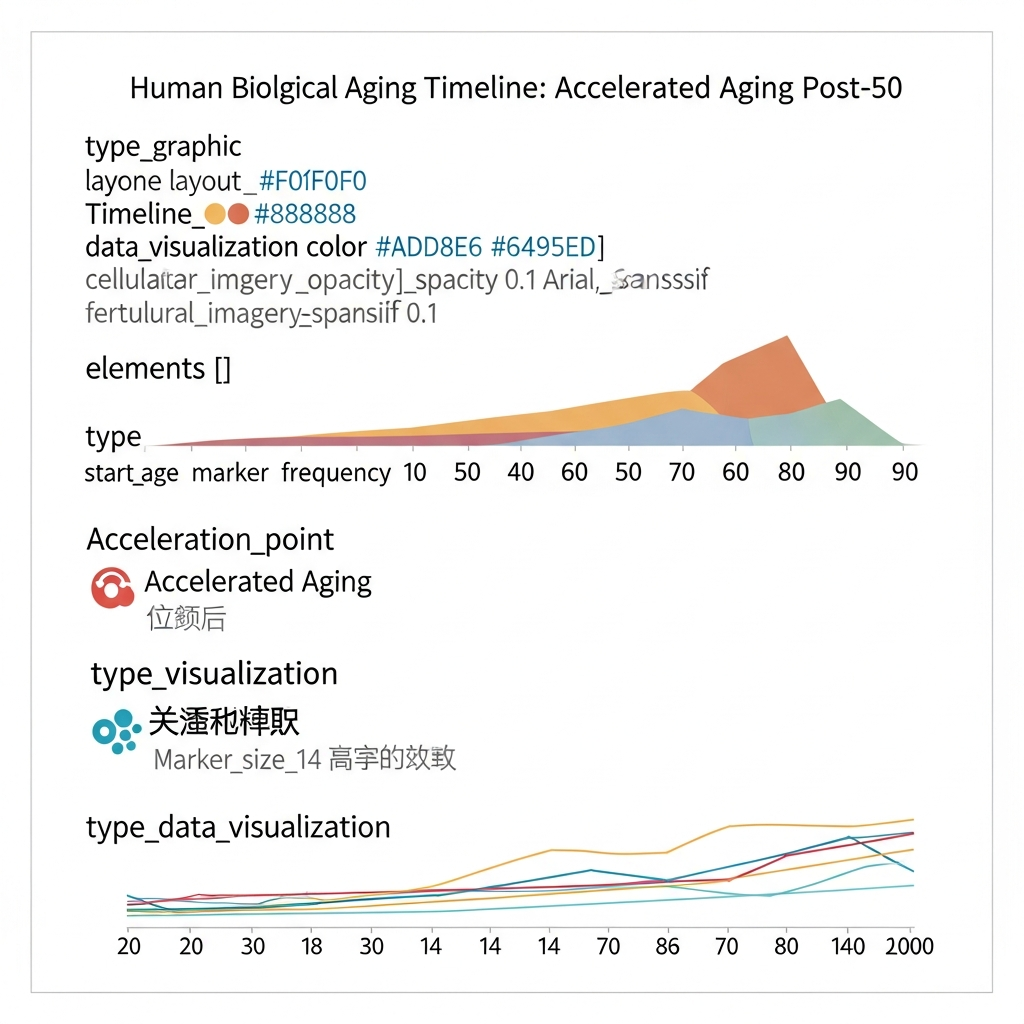
Have you ever wondered if aging is a slow, steady decline or if there are specific moments when your body truly shifts gears? Groundbreaking research suggests human aging isn’t a linear progression. Instead, a pivotal “turning point” around age 50 marks a significant acceleration in how our tissues and organs age, opening new avenues for understanding and potentially intervening in the aging process.
The Age 50 Turning Point: A New Perspective on Aging
For decades, we’ve largely viewed aging as a gradual, continuous process. However, recent scientific findings are challenging this long-held belief. A landmark study, published in the journal Cell in 2025 by a team of scientists from the Chinese Academy of Sciences, provides compelling evidence that human aging accelerates dramatically around the fifth decade of life. This isn’t just about wrinkles appearing; it’s a profound, molecular-level shift affecting the entire body.
The study reveals that rather than a smooth transition, our biological clock effectively speeds up, particularly after age 50. This period, often described as a “landmark inflection point,” sees a “molecular cascade storm” as organ proteomes undergo substantial remodeling. This means the proteins – the building blocks and functional machinery of our cells – change rapidly, signaling a steeper trajectory of aging.
Why Age 50? Unpacking the Proteomic Shift
The core of this revelation lies in proteomic aging. Researchers meticulously analyzed thousands of proteins across various human tissues to create a detailed “proteomic aging atlas.” This atlas allowed them to observe how protein levels and compositions dynamically change over an individual’s lifespan. They discovered that between the ages of 45 and 55, many tissues experience their most dramatic proteomic shifts.
This extensive molecular reorganization directly correlates with an increased expression of 48 disease-related proteins. These proteins are linked to a host of serious conditions, including cardiovascular issues, tissue fibrosis, fatty liver disease, and liver-related tumors. This connection underscores a critical insight: organ aging isn’t just a natural process; it’s the underlying essence of many chronic diseases commonly associated with getting older.
Organs on the Fast Track: Which Tissues Age First?
Not all organs and tissues age at the same pace or hit the acceleration point simultaneously. The Chinese Academy of Sciences study identified specific vulnerabilities:
Blood Vessels (Aorta): The cardiovascular system, particularly the aorta (the body’s main artery), emerged as one of the earliest and most susceptible tissues to accelerated aging. Changes in the aortic proteome are among the most dramatic. Vascular aging, therefore, may act as a “master switch,” broadcasting aging signals throughout the entire body.
Spleen and Pancreas: These vital organs also showed sustained and significant age-related changes around the age 50 mark. The pancreas, crucial for digestion and hormone production, and the spleen, key to immune function, exhibit considerable proteomic remodeling.
Adrenal Glands: Interestingly, other research suggests that adrenal glands, which produce stress and sex hormones, can show early signs of aging even in the early 30s. This highlights the non-uniform nature of biological decline across different systems.
Muscles and Skin: While the cardiovascular and digestive systems show earlier acceleration, muscles and skin typically begin their more noticeable decline after the mid-50s. This aligns with common midlife experiences like reduced energy, slower metabolism, and decreased resilience.
This intricate, tissue-specific aging pattern means that interventions designed to combat age-related decline might need to be highly targeted to specific organs and life stages.
The Scientific Method: How the Discoveries Were Made
To achieve these insights, the research team collected an extensive array of samples. They obtained 516 tissue and blood samples from 76 organ donors, aged between 14 and 68, who had died from accidental traumatic brain injuries. These samples represented 13 different tissues across seven major bodily systems: cardiovascular, digestive, immune, endocrine, respiratory, integumentary (skin), and musculoskeletal.
By meticulously cataloging the proteins in each sample and observing how their levels changed with the donor’s age, the scientists constructed their “proteomic aging atlas.” This allowed for a dynamic, panoramic view of how aging manifests at a molecular level across different parts of the body.
To further validate their findings, the researchers conducted an experiment with mice. They isolated an aging-associated protein from the aortas of older mice and injected it into younger mice. The results were striking: the treated young mice exhibited reduced physical performance, including decreased grip strength, lower endurance, and impaired balance and coordination. They also showed prominent biological markers of vascular aging, functionally confirming the impact of these protein changes on overall health and vitality.
Beyond Age 50: The Complexities of Biological Clocks
While the age 50 inflection point for proteomic aging is a significant finding, it’s important to understand that human aging is a multi-layered, step-wise process involving various systems, each with its own timeline. For example, separate research focusing on the structural topological development of the human brain has identified distinct “turning points” at approximately ages 9, 32, 66, and 83. These brain-specific shifts relate to changes in network density, integration, and segregation, impacting cognitive trajectories.
This broader view emphasizes that different biological systems may have their own unique “aging clocks” or pivotal moments of change. The Cell study highlights a critical multi-tissue proteomic acceleration around age 50, while brain development shows other significant re-organizations at different life stages. Understanding these diverse turning points across the body offers a more complete picture of our complex biological journey through life.
Empowering Health: Actionable Steps for Midlife and Beyond
The understanding that body aging accelerates at specific turning points, especially around age 50, is not a cause for alarm but an opportunity for proactive health management. Experts suggest that midlife is a crucial window for interventions that can potentially slow down this acceleration and “compress morbidity” – meaning we can live healthier, more vibrant lives for longer.
Here are actionable strategies to consider:
Prioritize Vascular Health: Since blood vessels, particularly the aorta, are highly susceptible to early and accelerated aging, focusing on cardiovascular health is paramount.
Diet: Adopt a heart-healthy eating plan rich in whole foods, fiber, and omega-3 fatty acids. Limit processed foods, unhealthy fats, and excessive sugar.
Exercise: Engage in regular aerobic exercise to maintain blood vessel elasticity and strength.
Monitoring: Regularly monitor blood pressure and cholesterol levels, and work with your doctor to manage them effectively.
Embrace Antioxidant and Anti-inflammatory Foods: Combat cellular stress and inflammation, which contribute to proteomic changes. Incorporate foods like berries, leafy greens, green tea, and turmeric into your diet.
Manage Stress Effectively: Chronic stress can impact hormonal balance, particularly affecting adrenal gland function. Practices like mindfulness, meditation, yoga, and spending time in nature can help.
Ensure Quality Sleep: Adequate, restorative sleep is crucial for cellular repair and maintaining overall physiological balance.
Avoid Environmental Toxins: Limit exposure to pollutants, smoking, and excessive alcohol consumption, all of which accelerate cellular damage.
Consider Emerging Tools: While proteomic age clocks are primarily research tools, a greater understanding of your personal biological age through emerging testing kits might offer opportunities for targeted interventions in the future.
By adopting proactive lifestyle habits, we can potentially influence the trajectory of our biological aging, fostering a healthier and more resilient midlife and beyond. This research lays the groundwork for developing more precise and effective strategies to improve the health and well-being of older adults globally.
Frequently Asked Questions
What is the “age 50 inflection point” in human aging?
The “age 50 inflection point” refers to a significant acceleration in the aging process of human tissues and organs, primarily identified around the age of 50. A 2025 study in Cell* revealed that the body’s proteome (the collection of all proteins) undergoes substantial remodeling between ages 45 and 55, leading to a steeper decline in organ function. This isn’t just physical appearance; it’s a molecular cascade storm that increases the expression of disease-related proteins, fundamentally shifting the body’s aging trajectory.
Which specific organs are most affected by accelerated aging at midlife?
The study identified several key organs and systems particularly susceptible to accelerated aging around age 50. The cardiovascular system, especially the aorta (the body’s main artery), shows the most dramatic proteomic reshaping, making it among the fastest tissues to decline. The spleen and pancreas also demonstrate sustained, accelerated changes. While these are prominent, earlier signs of aging can appear in adrenal glands (early 30s), and muscles and skin typically show noticeable decline after the mid-50s, highlighting the varied timelines of organ aging.
What lifestyle changes can help mitigate accelerated aging around age 50?
Based on the research, proactive lifestyle choices are crucial to potentially slow down the acceleration of body aging accelerates at midlife. Prioritizing vascular health through a heart-healthy diet (rich in whole foods, fiber, and omega-3s), regular aerobic exercise, and managing blood pressure and cholesterol is key. Incorporating antioxidant and anti-inflammatory foods, practicing effective stress management, ensuring quality sleep, and avoiding smoking, excessive alcohol, and environmental toxins can all help combat cellular stress and support overall health.
Conclusion
The revelation that body aging accelerates significantly around age 50 marks a pivotal moment in our understanding of human longevity. The groundbreaking research from the Chinese Academy of Sciences highlights that aging is not a uniform, linear process, but rather a complex, multi-stage phenomenon with distinct turning points driven by intricate proteomic changes. This age-50 inflection point, with its profound impact on organs like the aorta, spleen, and pancreas, underscores the importance of midlife as a critical window for health interventions. By shifting from a reactive to a proactive health mindset, focusing on vascular health, nutrition, stress management, and sleep, we can empower ourselves to navigate these biological shifts more effectively. This knowledge paves the way for future targeted strategies, promising healthier, more resilient lives as we age.