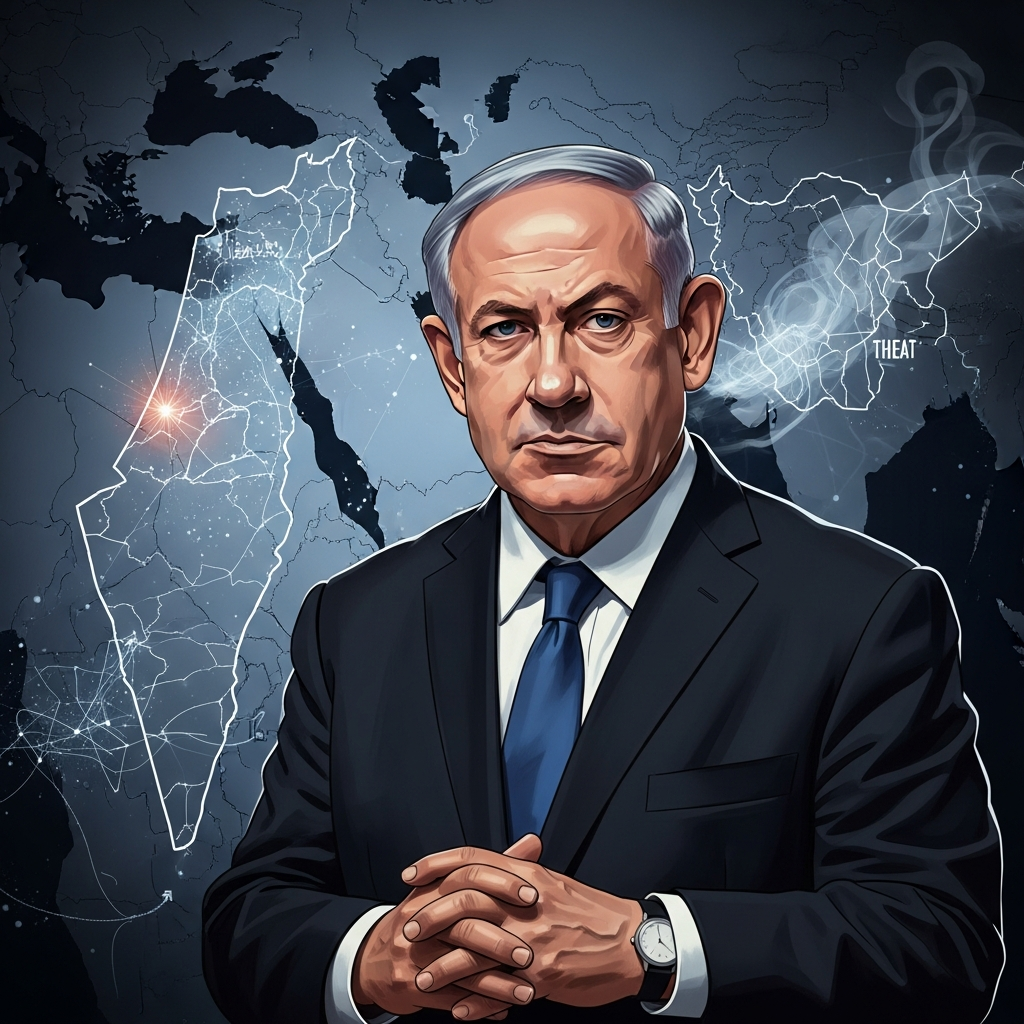
The volatile relationship between Israel and Iran has reached new heights, with Israeli Prime Minister Benjamin Netanyahu at the epicenter of a complex geopolitical standoff. From explicit death threats issued by Iran’s Revolutionary Guard to allegations of sophisticated financial networks supporting militant groups, the regional tensions are more strained than ever. This article delves into Netanyahu’s multifaceted approach to Iran, exploring the direct confrontations, strategic maneuvering, and the underlying intelligence operations that define this critical rivalry.
Escalating Tensions: A Vow of Retaliation and Counter-Threats
The Islamic Revolutionary Guard Corps (IRGC) recently escalated the war of words with an unambiguous threat, vowing to “pursue and kill” Prime Minister Benjamin Netanyahu. This chilling declaration, made public via the IRGC’s official website, Sepah News, labeled Netanyahu a “child-killing criminal” and affirmed a commitment to eliminate him “as long as he remains alive.” Such a grave pronouncement signals a dangerous intensification of direct animosity.
This explicit threat from the IRGC was a direct response to a “veiled warning” previously issued by Netanyahu. The Israeli leader had hinted at the potential for Israel to target high-ranking Iranian figures, including the new Supreme Leader, Mojtaba Khamenei. When pressed on the possibility of striking individuals like Mojtaba Khamenei, Netanyahu reportedly stated he “would not take out a life-insurance policy on any leaders of what he described as terror organisations.” This statement powerfully implied that Iranian leaders are legitimate targets, removing any perceived immunity and further fueling the cycle of threats between the two nations. The rhetoric underscores a dangerously heightened state of animosity and the potential for direct conflict.
Netanyahu’s Public Image Amidst Iranian Rumors
Amidst these high-stakes diplomatic and military tensions, Prime Minister Netanyahu himself became the subject of Iranian state media rumors claiming his death or injury. To counter these widespread allegations, Netanyahu swiftly released a video on a Sunday, showcasing himself at a cafe on the outskirts of Jerusalem. The video depicted him casually conversing with an aide while enjoying a cup of coffee.
In a clever play on words, Netanyahu responded to his aide’s direct question about the rumors. He used a Hebrew slang term for “dead,” which also translates to “being crazy about” something. As he reached for his coffee, he declared, “I’m crazy about coffee. You know what? I’m crazy about my people.” This public appearance effectively debunked the false reports and projected an image of resilience and connection with the Israeli populace. The authenticity and location of the video were independently verified by sources like Reuters, confirming its legitimacy and the date of his visit.
This incident offers a glimpse into Netanyahu’s communication strategy during conflict. Since US and Israeli attacks on Iran commenced on February 28, Netanyahu has made several public visits to affected towns, hospitals, and military bases. However, media access to these events has been notably restricted, with information primarily disseminated through his own office. This controlled messaging aligns with his general reluctance to grant interviews to Israeli press or hold traditional news conferences, opting for video-link press conferences, a format seen during Israel’s 12-day conflict with Iran in June. The context of emergency safety restrictions across Israel further highlights the sensitive environment in which these messages are conveyed.
The “Venezuela Model”: A US-Backed Decapitation Strategy?
One concerning aspect of the Netanyahu Iran dynamic is the rising speculation around a potential US “decapitation strategy” against Iran. This model draws parallels to the controversial US operation targeting Venezuelan President Nicolas Maduro. While the abduction of Maduro faced international condemnation, Israel quickly leveraged the event. Senior politician Yair Lapid explicitly warned Tehran to closely observe the developments in Venezuela.
Analysts express deep concern that such an episode could accelerate a renewed conflict with Iran, potentially under former President Donald Trump’s administration, or provide a US “imprimatur” for unilateral Israeli actions. The removal of Maduro occurred shortly after a meeting between Trump and Netanyahu, where threats against Iran were reiterated. Foreign policy observers, as reported by Al Jazeera, contend that the Venezuela operation significantly intensified fears of escalation in the Middle East. Jamal Abdi, president of the National Iranian American Council, highlighted this move as a severe breakdown of international norms, fostering instability and empowering proponents of military confrontation over diplomatic solutions.
This perceived risk is prompting Iran to re-evaluate its security posture. It could lead to enhanced deterrence capabilities or even pre-emptive measures against perceived US or Israeli threats. Negar Mortazavi, a senior fellow at the Centre for International Policy, emphasized that the US action underscores the Trump administration’s “maximalist approach.” This strategy, she believes, further diminishes prospects for negotiations, as Iranian officials interpret US demands as calls for unconditional surrender.
The article also recalled Trump’s consistent public threats against Iran, including warnings of strikes if Tehran attempted to rebuild its missile or nuclear programs. A June conflict saw Israel reportedly kill senior Iranian military commanders and nuclear scientists, followed by US bombing of key nuclear sites. Despite Trump’s claims of having destroyed Iran’s nuclear capabilities, Tehran survived and retaliated with large-scale missile attacks on Israel before a ceasefire. Experts caution that Iran’s leadership possesses comprehensive contingency plans. Any attempt to abduct or assassinate senior figures, such as President Masoud Pezeshkian or Supreme Leader Khamenei, would likely provoke severe retaliation, making such an operation far more complex and destabilizing than the action taken in Caracas.
Shifting Focus: From Nuclear Threat to Missile Prowess
Even as former President Trump touted success in dismantling Iran’s nuclear program following Washington-led strikes, Prime Minister Netanyahu appears poised to advocate for renewed military action against Iran. During an anticipated visit to Mar-a-Lago, Netanyahu reportedly planned to press U.S. President Donald Trump on this issue. This push signals a significant strategic shift by Israeli officials.
To avoid directly contradicting Trump’s claims regarding Iran’s nuclear program – historically Israel’s primary security concern for over three decades – Netanyahu’s government has recalibrated its messaging. The new focus highlights Iran’s missile capabilities as an urgent and growing danger. Pro-Israel lobbying groups and senior U.S. lawmakers are echoing these concerns, warning that Iran maintains substantial missile stockpiles and production capacity despite earlier Israeli military operations. This reorientation in the Netanyahu Iran narrative aims to maintain pressure on Tehran while navigating complex US political dynamics.
However, analysts contend that another confrontation with Iran would run counter to Trump’s stated foreign policy objectives. His administration aims to reduce America’s military footprint in the Middle East, fostering economic cooperation and diplomatic normalization between Israel and Arab states. Trump’s National Security Strategy frames the region as moving towards partnership and investment, not conflict.
Critics argue that Israel’s shifted narrative reflects a broader strategy. It aims not just at immediate threats but at maintaining military dominance in the region. They suggest periodic strikes are designed to keep Iran strategically weakened and politically constrained. Furthermore, these critics point out that Iran consistently maintains its nuclear program is peaceful. It also asserts that it has not launched missiles at Israel without provocation, recalling that during the June conflict, it was Israel that initiated hostilities. Despite the Trump administration’s stated pivot away from Middle East military interventions, a potential scenario exists where Israel might seek to draw Washington into renewed conflict. This could involve Israel acting unilaterally against Iran, confident in its reliance on U.S. military assets in the region for defensive support, thereby incrementally escalating tensions.
Exposing Financial Lifelines: Iran’s Alleged Support for Hamas
Beyond direct military threats, the Netanyahu Iran dynamic also encompasses a crucial intelligence battle over proxy forces. Israel has publicly accused Iran of orchestrating a significant financial network for Hamas, operating out of Turkey. This network is alleged to channel hundreds of millions of dollars to the militant group, underscoring Iran’s persistent regional influence.
According to statements from the Israel Defense Forces (IDF) and Shin Bet, Israel’s security agency, this intricate network is run by Gazans based in Turkey. These individuals reportedly receive funds from Iran, store them, and then transfer them directly to Hamas operatives. IDF Arabic spokesperson Col. Avichay Adraee revealed that Israeli agencies have uncovered documents substantiating the existence of an Iranian-controlled money exchange system within Turkey. This system purportedly leverages Turkey’s financial infrastructure to transfer substantial sums of money to Hamas leaders and operatives.
Israeli authorities assert that the discovered documents confirm the operation is managed by Gazans in Turkey who collaborate closely with Iran. They specify that this money transfer system ensures funds reach Hamas operatives directly. Officials also indicated that these documents represent only a fraction of the total transfers, with individual amounts reaching hundreds of thousands of dollars, suggesting a much larger overall financial flow.
The IDF and Shin Bet issued a stern warning: Hamas continues to plan attacks against Israel with ongoing Iranian support. They emphasized that the group is actively working to rebuild its capabilities outside the Gaza Strip and remains a potent threat despite damage sustained within Gaza. Israeli officials identified three key individuals allegedly involved in this financial network: Tamer Hassan, described as a senior Hamas finance official operating from Turkey and reporting to Khalil al Hayya; and Khalil Fraoneh and Farid Abu Dayer, both identified as money changers within the network. Yechiel Leiter, Israel’s ambassador to the United States, strongly condemned Iran, stating that the Iranian regime is deeply implicated in terrorism and corruption. Leiter also raised pointed questions about Turkey’s role in the scheme, suggesting that Hamas agents operating within Turkey are instrumental in facilitating these financial transfers for terrorist activities.
The Broader Geopolitical Chessboard
The ongoing saga between Benjamin Netanyahu and Iran represents a microcosm of wider Middle East instability. Each pronouncement, each strategic shift, and each intelligence operation contributes to a complex and volatile geopolitical chessboard. From the IRGC’s direct threats against Netanyahu to Israel’s allegations of Iranian-backed financial networks, the core issues remain constant: regional dominance, national security, and the future of critical energy and trade routes. Understanding the specific actions and rhetoric from Netanyahu’s government regarding Iran is crucial for comprehending the broader forces shaping the region.
Frequently Asked Questions
What are the main points of contention between Benjamin Netanyahu and Iran?
The core points of contention between Netanyahu’s Israel and Iran are multifaceted. They include Iran’s nuclear program (though Israel has recently shifted focus to Iran’s missile capabilities), its support for proxy militant groups like Hamas, and its regional influence. Recent escalations involve direct threats from the IRGC to assassinate Netanyahu, and Israel’s warnings about targeting Iranian leaders. Strategic concerns also revolve around the potential for US “decapitation strategies” against Iran, mirroring actions taken in Venezuela.
How has Benjamin Netanyahu addressed rumors of his death or injury spread by Iranian media?
Prime Minister Netanyahu directly countered Iranian state media rumors of his death or injury by posting a video on a Sunday. In the video, he was seen at a Jerusalem cafe, casually conversing and drinking coffee. He responded to a direct question about the rumors by stating, “I’m crazy about coffee. You know what? I’m crazy about my people,” using a Hebrew slang term that carries a double meaning. This video was independently verified and aimed to project an image of resilience and refute the false claims.
What is Israel’s current strategy regarding Iran’s military capabilities, and how does it relate to US policy?
Israel’s current strategy, led by Prime Minister Netanyahu, has strategically shifted focus from Iran’s nuclear program to its missile capabilities, which it now frames as an urgent danger. This shift allows Israel to maintain a hawkish stance against Iran without directly contradicting former President Trump’s past claims of dismantling Iran’s nuclear infrastructure. However, analysts suggest this approach risks drawing the US into renewed conflict, potentially through unilateral Israeli action relying on US military assets. This contrasts with Trump’s stated foreign policy goals of reducing America’s military footprint in the Middle East and fostering economic cooperation.