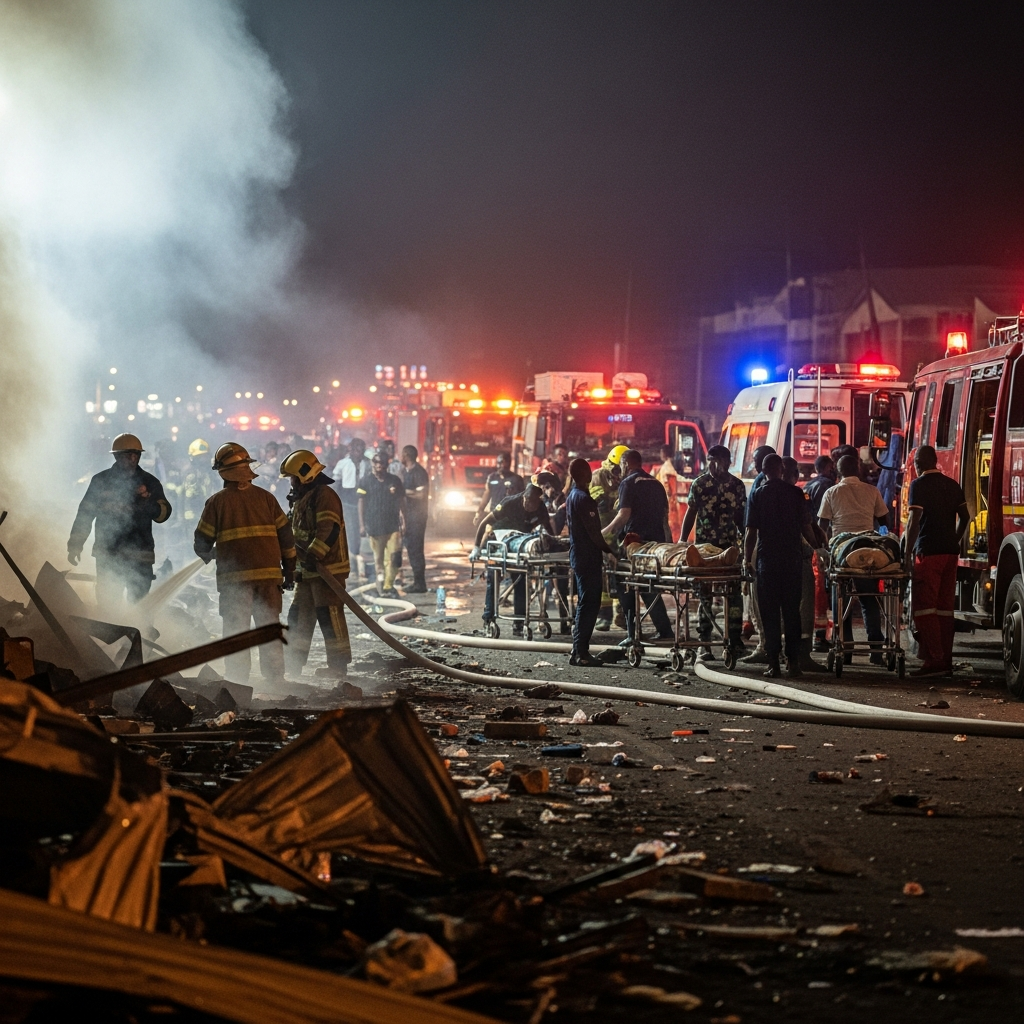
A series of devastating bomb explosions rocked Maiduguri, the capital of Borno state in northeastern Nigeria, on Monday night, March 16, 2026. These tragic incidents have resulted in scores of deaths and injuries, plunging the region further into a complex humanitarian crisis. Emergency services swiftly responded, indicating that the blasts were likely coordinated suicide bombings. The attacks underscore the enduring security challenges facing Nigeria, particularly in its northern territories, despite years of counter-insurgency efforts against jihadi extremist groups.
The Devastating Attacks Unfold Across Maiduguri
The synchronized blasts targeted critical civilian hubs within Maiduguri. Explosions were reported at the entrance of the University of Maiduguri Teaching Hospital, a vital medical facility, and two bustling local markets: the Post Office Market and the Monday Market. These locations are central to daily life, maximizing the potential for mass casualties and instilling widespread fear. Sirajo Abdullahi, head of operations for Nigeria’s National Emergency Management Agency (NEMA) in Maiduguri, confirmed the presence of numerous casualties. He noted that victims were receiving urgent care at the hospital, though an official count of the dead and injured remained pending amidst the chaos.
The timing of these attacks is particularly alarming. Earlier on the same Monday, the Nigerian military had reportedly repelled assaults by suspected Islamic militants on Maiduguri’s outskirts. This suggests a determined effort by extremist groups to destabilize the region, challenging military operations and inflicting terror on civilian populations.
Eyewitness Accounts Detail the Horrific Aftermath
The human toll of the Maiduguri bombings is heartbreaking, as evidenced by vivid eyewitness testimonies. Bagoni Alkali, who rushed wounded individuals to the University of Maiduguri Teaching Hospital, painted a grim picture of the emergency. He reported that “over 200 people have been injured and are receiving care” in the accident and emergency department. Alkali tragically recounted how “many lost their lives at the scene immediately after the bomb exploded,” highlighting the immediate and brutal impact of the blasts.
Adding to the stark reality, Mohammed Hassan, a dedicated member of a volunteer group assisting security forces, confirmed evacuating ten bodies directly from the Post Office and Monday Markets. He emphasized the critical situation at the hospitals, stating, “many victims were rushed to the emergency ward, but some died at the hospital. We’re in dire need of blood.” Hassan described the incident as “one of the deadliest in Maiduguri in years,” a chilling testament to the severity and scale of the attack. These firsthand accounts provide a crucial, albeit harrowing, insight into the immediate aftermath and the desperate need for medical aid.
Nigeria’s Enduring Struggle Against Extremism
Maiduguri stands as the epicenter of Nigeria’s protracted 17-year battle against extremist armed groups. For over a decade, the homegrown jihadi Boko Haram extremists have waged a brutal insurgency from this region. While no group immediately claimed responsibility for the recent Maiduguri blasts, the style and location of the attacks bear the hallmarks of such groups. Boko Haram and its splinter factions, including the Islamic State West Africa Province (ISWAP), have been blamed for an escalation of attacks on military bases in Nigeria’s northeast throughout the current month.
The Borno state capital has, in recent years, experienced a relative calm following intensified military operations. This makes the recent series of Maiduguri blasts a significant and alarming development. It suggests a potential shift in tactics or a renewed capability of these groups to strike at the heart of civilian life, challenging the gains made by security forces. The ongoing conflict has created a complex security crisis across northern Nigeria, marked by violence, displacement, and profound humanitarian suffering. Understanding this historical context is vital for grasping the full implications of this latest tragedy.
Governor Condemns “Barbaric” Act Amidst Calls for Calm
Borno State Governor Babagana Umara Zulum swiftly and unequivocally condemned the explosions. In a statement released shortly after the attacks, Governor Zulum described the act as “utterly condemnable, barbaric, and inhumane.” He extended his heartfelt thoughts and prayers to the families of the victims and those who sustained injuries. The governor’s strong condemnation reflects the deep shock and outrage felt across the state and the nation.
In the wake of such a traumatic event, Governor Zulum also appealed to residents to maintain calm and continue their daily routines as much as possible. He urged citizens to remain vigilant and report any suspicious movements or activities to security agencies promptly. Such calls are crucial for maintaining public order and assisting security forces in preventing further incidents, fostering a collective effort against the persistent extremist threat.
The Urgent Need for Support and Stability
The Maiduguri blasts highlight the persistent and multifaceted challenges facing Nigeria. Beyond the immediate casualties, such attacks inflict deep psychological trauma on communities already grappling with years of conflict. The strain on healthcare infrastructure, already fragile, is immense, further exacerbated by the critical demand for blood and medical supplies. Addressing this humanitarian fallout requires not only immediate emergency aid but also sustained long-term support for affected communities.
Internally, Nigeria continues to bolster its counter-terrorism efforts. This includes enhancing intelligence gathering, improving military capabilities, and fostering community resilience. However, the scale of the crisis demands regional and international cooperation. Collaboration on border security, intelligence sharing, and humanitarian assistance is essential to contain the spread of extremism and provide much-needed relief. The path to lasting stability in Borno State and the wider northeast requires a comprehensive approach, combining security measures with initiatives aimed at economic development, education, and social cohesion to address the root causes of radicalization. This tragedy serves as a stark reminder of the ongoing struggle and the urgent need for global attention and support.
Frequently Asked Questions
What details have emerged about the recent deadly explosions in Maiduguri, Nigeria?
On Monday night, March 16, 2026, multiple bomb explosions occurred in Maiduguri, the capital of Borno state. These blasts targeted the entrance of the University of Maiduguri Teaching Hospital, the Post Office Market, and the Monday Market. Emergency services indicated possible suicide bombings, resulting in scores of people killed and injured. Eyewitnesses reported over 200 injured and many fatalities at the scenes, with hospitals facing a dire need for blood. No group immediately claimed responsibility, but the attacks fit the pattern of jihadi extremist groups active in the region.
Which specific locations in Maiduguri were targeted by the bombings?
The recent devastating bombings in Maiduguri struck three key locations. The first blast occurred at the entrance of the University of Maiduguri Teaching Hospital, a major healthcare facility. The other two targets were local markets known as the Post Office Market and the Monday Market. These areas are typically densely populated, leading to the high number of casualties reported by emergency services and eyewitnesses.
Why are these recent Maiduguri bombings particularly concerning given Nigeria’s ongoing security crisis?
These Maiduguri bombings are particularly alarming because attacks within the Borno state capital had become relatively rare in recent years following sustained military operations against extremist groups like Boko Haram and its factions. Maiduguri is the epicenter of Nigeria’s 17-year struggle against these groups. The ability of militants to strike at such critical civilian locations suggests a potential resurgence or adaptation of their tactics, challenging perceived security gains and indicating the persistent threat despite long-term counter-insurgency efforts across northeastern Nigeria.
In conclusion, the Maiduguri blasts of March 16, 2026, represent a tragic escalation in Nigeria’s ongoing battle against extremism. The immediate aftermath has revealed a horrific human toll, with scores killed and hundreds injured, placing immense strain on local emergency services. While no group has claimed responsibility, the attacks occur within a complex security landscape dominated by Boko Haram and its affiliates. This incident serves as a stark reminder of the persistent vulnerability of civilian populations and the urgent need for continued national and international efforts to achieve lasting peace and stability in northeastern Nigeria.