Astronomers have made a stunning discovery, identifying a brand-new class of planet unlike anything seen before. At the forefront of this groundbreaking revelation is exoplanet L 98-59 d, a world of extreme conditions featuring a permanent, global magma ocean and an atmosphere laden with sulfurous gases. This “molten sulfurous planet,” located just 35 light-years away, is challenging long-held assumptions about how planets form and evolve, forcing scientists to rethink the very categories used to classify worlds beyond our solar system.
This isn’t just another exoplanet finding; it represents a significant leap in our understanding of cosmic diversity. Researchers, leveraging the immense power of the James Webb Space Telescope (JWST) and sophisticated computer simulations, have pieced together the nearly 5-billion-year history of L 98-59 d, revealing an “oddball planet” that defies conventional descriptions like “super-Earth” or “sub-Neptune.” Its unique characteristics promise to reshape planetary science for years to come.
Unveiling L 98-59 d: A Stinky New World
Discovered initially in 2019, L 98-59 d, which orbits a small, cool M-dwarf star, has now come into sharper focus thanks to a recent wave of observations and research. Roughly 1.6 times the size of Earth and weighing in at about 1.64 times our planet’s mass, its most striking feature is its atmosphere. JWST data from 2024 revealed an abundance of sulfur dioxide and other sulfur-bearing gases, giving the planet a distinct “rotten egg” smell—a truly pungent atmosphere. This unique atmospheric fingerprint, combined with its extremely low density for its size, immediately signals a world unlike any previously cataloged.
The “Rotten Egg” Signature: What Makes It Unique
The overwhelming presence of sulfur in L 98-59 d’s atmosphere is a key characteristic. While other exoplanets might have rocky cores or vast oceans of water, L 98-59 d stands out with its volatile-rich, hydrogen-heavy atmosphere permeated by sulfur compounds. The planet receives about four times the radiant energy Earth does, contributing to its extreme conditions. Scientists are particularly fascinated by how such a thick, hydrogen-rich atmosphere could persist despite intense X-ray bombardment from its host star, a phenomenon that would typically strip away an entire atmosphere over billions of years. This retention mechanism points to a complex interplay between the planet’s interior and its gaseous envelope.
A Global Magma Ocean: The Heart of L 98-59 d
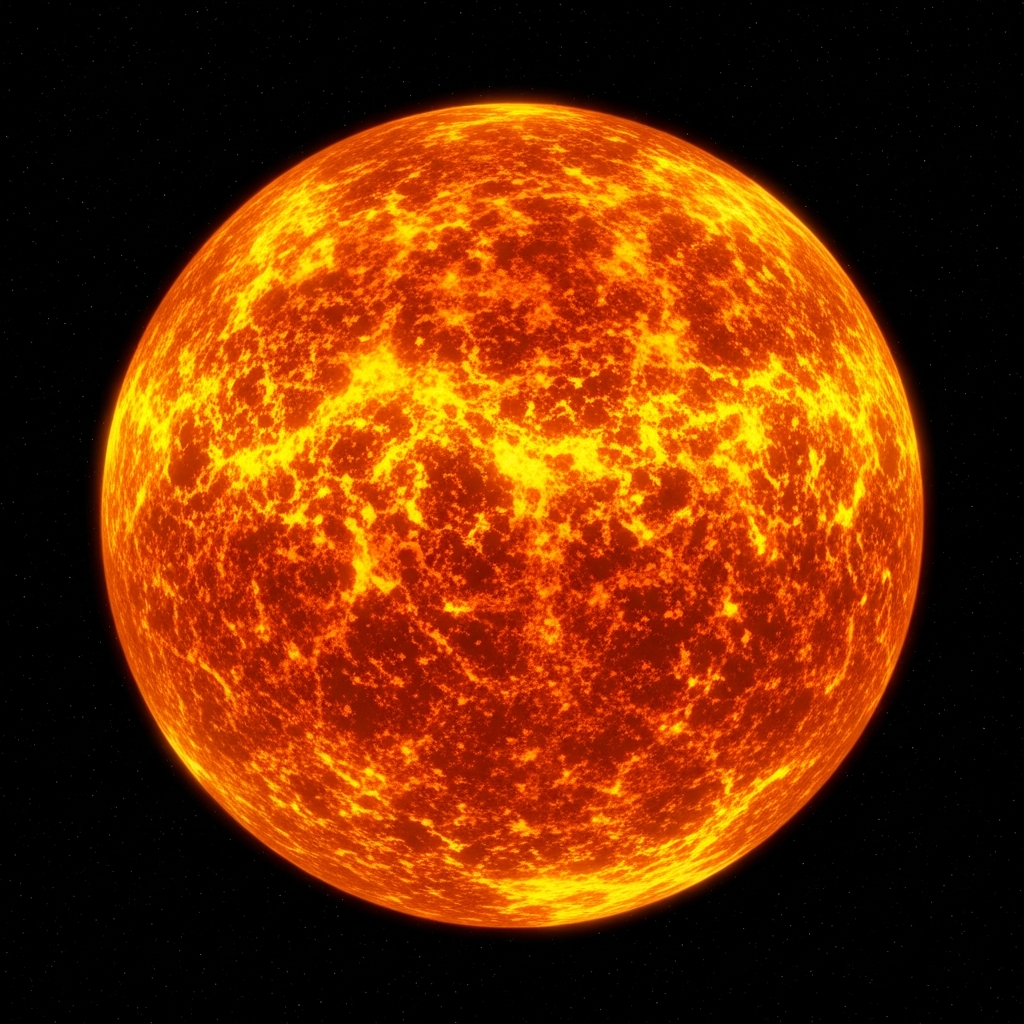
At the core of L 98-59 d’s identity is its permanent, global magma ocean. Computer simulations, led by Harrison Nicholls from the University of Oxford, reconstruct the planet’s internal structure, suggesting its mantle is composed of molten silicate rock, much like Earth’s lava. This vast ocean of magma extends for thousands of kilometers beneath the surface, acting as a massive reservoir for sulfur. Over billions of years, sulfur readily dissolved into this molten silicate, becoming trapped within the planet’s interior. This continuous exchange between the interior and the atmosphere means that sulfur-rich gases are slowly but constantly released into the upper atmosphere, creating the “stinky” signature detected by the JWST.
Billions of Years in the Making: An Evolutionary Tale
The sophisticated computer models have not only revealed the planet’s current state but also its evolutionary pathway. Researchers believe L 98-59 d likely started as a larger, sub-Neptune-like planet, rich in volatile materials. Over billions of years, it gradually shrunk and cooled, shedding some of its initial atmosphere. However, crucially, its deep magma ocean played a pivotal role in preserving a substantial portion of its hydrogen and sulfur-rich atmosphere. Ultraviolet light from the host star further triggers chemical exchange reactions, further sculpting the planet’s unique atmospheric composition. This long-term interplay led to the formation of this extraordinary molten sulfurous planet, a testament to the diverse paths planetary evolution can take.
Challenging Planetary Classification: Beyond Super-Earths
The discovery of L 98-59 d fundamentally challenges the existing, potentially oversimplified, categories astronomers use for small planets. Traditional classifications often place planets of this size into “gas-dwarf” scenarios (rocky cores with thin hydrogen-helium envelopes) or “water-world” scenarios (dominated by liquid or frozen water). L 98-59 d, with its magma oceans and sulfur-dominated atmosphere, fits neither. It compels the scientific community to develop new frameworks and classifications to encompass the immense diversity of worlds now being uncovered.
The Radius Valley Anomaly and What It Means
L 98-59 d sits within the “radius valley,” a curious gap in the distribution of exoplanet sizes that separates smaller rocky planets from larger ones with thick atmospheres. Its particular combination of size, low density, and atmospheric composition makes it a significant anomaly in this region. This discovery highlights that the formation conditions for such a planet might not be as exotic as once thought, implying that “pungent planets” could be surprisingly common across the cosmos. Understanding such planets is crucial for accurately interpreting the increasingly detailed atmospheric data from advanced observatories like the JWST, avoiding misleading models about planetary composition, habitability, or origins.
Unlocking Cosmic Secrets: Webb Telescope’s Role
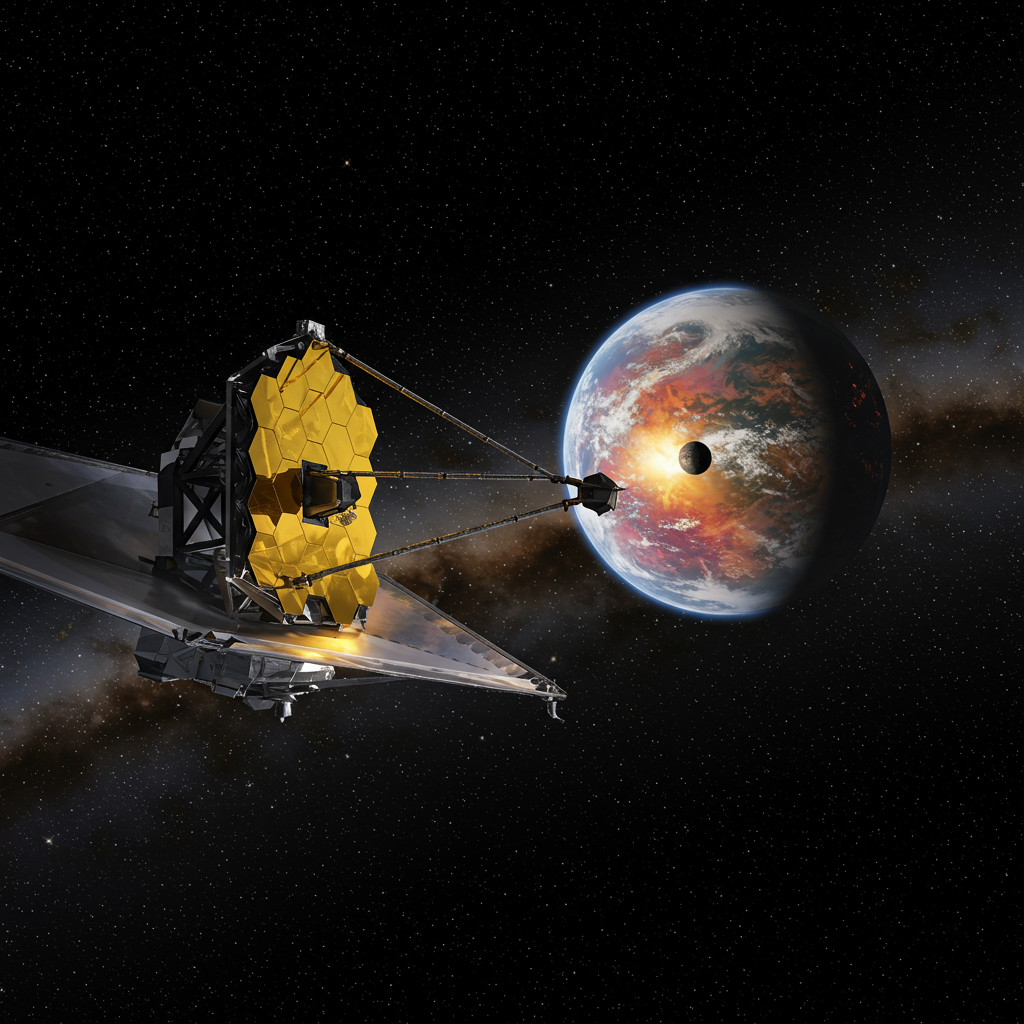
The James Webb Space Telescope has been instrumental in characterizing this new type of planet. Its advanced observational capabilities allowed scientists to detect the subtle spectral signatures of sulfur-bearing gases in L 98-59 d’s distant atmosphere, a feat that would have been impossible with previous technology. The JWST’s ability to peer into the atmospheres of exoplanets provides the critical data points necessary for researchers to run their complex computer simulations. This synergy between cutting-edge space telescopes and sophisticated computational models is unlocking previously hidden interiors and deep evolutionary pasts of exoplanets, allowing us to reconstruct the history of alien worlds we can never visit.
The lead author, Harrison Nicholls, stated that this discovery reinforces the profound diversity of worlds beyond our solar system. Co-author Raymond Pierrehumbert emphasized the power of computer models in uncovering these secrets. While L 98-59 d is considered highly unlikely to support life due to its extreme conditions, its existence significantly broadens our understanding of planetary formation and the vast, varied tapestry of the universe.
Frequently Asked Questions
What makes L 98-59 d a “new class” of planet?
L 98-59 d is considered a new class of planet due to its unique combination of characteristics: a persistent, global magma ocean thousands of kilometers deep, and a thick, hydrogen-rich atmosphere laden with sulfur-bearing gases like sulfur dioxide and hydrogen sulfide. Unlike previously categorized “super-Earths” or “sub-Neptunes,” it doesn’t fit the typical gas-dwarf or water-world scenarios, challenging existing planetary formation models and requiring new classifications for “gas-rich sulfurous planets that sustain long-lived magma oceans.”
How did the James Webb Space Telescope help characterize this molten sulfurous planet?
The James Webb Space Telescope (JWST) was crucial in characterizing L 98-59 d. Its advanced instruments detected the distinct spectral signatures of sulfur dioxide and other sulfur gases in the planet’s atmosphere in 2024. These observations, combined with data from Earth-based observatories and sophisticated computer simulations, allowed researchers to understand the planet’s atmospheric composition, internal structure (like the global magma ocean), and its 5-billion-year evolutionary history, revealing its unique nature as a molten sulfurous planet.
What implications does L 98-59 d have for our understanding of planetary evolution and habitability?
The discovery of L 98-59 d profoundly impacts our understanding of planetary evolution by demonstrating a new, unexpected pathway for planetary development. It shows that categories for small planets may be “too simple,” revealing an immense diversity of worlds. While L 98-59 d is highly unlikely to be habitable due to its molten surface and noxious atmosphere, its study offers insights into early planetary evolution, including processes similar to Earth’s own molten stages. It expands the search for exoplanets by highlighting that many other unique, non-habitable planetary types likely exist, urging astronomers to broaden their search parameters.
The Future of Exoplanet Discovery
The identification of this molten sulfurous planet, L 98-59 d, marks a pivotal moment in astronomy. It underscores that our solar system is merely one example of planetary architecture, and the cosmos is teeming with a bewildering array of worlds. As new observatories like the upcoming Ariel and PLATO missions come online, and as machine learning techniques are applied to existing datasets, scientists anticipate uncovering even more “oddball planets.” Each new discovery pushes the boundaries of our knowledge, forcing us to re-evaluate fundamental questions about planetary formation, evolution, and the potential for life beyond Earth. The universe, it seems, has many more surprises in store.