The Middle East is gripped by an intensifying crisis as the U.S.-Israeli war with Iran enters its second week, showing no signs of de-escalation. Amidst widespread destruction and economic turmoil, a pivotal shift in leadership has occurred in Tehran: Mojtaba Khamenei, son of the late Ayatollah Ali Khamenei, has been named Iran’s new Supreme Leader. This unprecedented transfer of power within the same family since the 1979 revolution adds another layer of complexity to an already volatile geopolitical landscape, prompting strong reactions globally and raising urgent questions about the region’s future.
Escalation of Conflict: A Region Ablaze
The U.S.-Israeli military campaign against Iran has reached an alarming intensity. What began as targeted strikes has quickly morphed into a sprawling conflict with severe consequences. Israeli airstrikes have repeatedly hit critical Iranian infrastructure, including crucial oil depots in northern Tehran. These attacks ignited massive fires, their flames visible for miles and sending thick, toxic smoke plumes across the capital. Further strikes over the weekend reportedly caused burning oil to spill into residential areas, setting homes ablaze and killing at least four tanker drivers, according to Iranian state media.
Retaliation from Tehran has been swift and varied. Iran launched a new wave of military operations, showcasing missile launches. An Iranian strike in Central Israel tragically killed one civilian and injured two others. The conflict has also extended to maritime targets, with U.S. and Israeli forces striking three Iranian ships in the Persian Gulf, leaving one vessel in flames off the port of Bandar Abbas. In a significant move, Iran’s Revolutionary Guards (IRGC) asserted control over the strategic Strait of Hormuz, disrupting global energy flows, and even claimed to have struck a U.S. tanker in the northern Gulf. Adding to the regional spread, Iranian drones allegedly crossed into Azerbaijan, causing injuries and damage, though Iran denied targeting its neighbor. NATO defenses even intercepted an Iranian ballistic missile heading toward Turkey, highlighting the conflict’s widening footprint.
Mounting Humanitarian and Economic Toll
The human cost of this escalating war is devastating. The Iranian Red Crescent Society reported over 1,230 fatalities in Iran, including 175 schoolgirls and staff killed in a primary school. Lebanon’s Health Ministry documented 77 deaths, prompting thousands to flee southern Beirut following Israeli warnings. The U.S. Central Command confirmed the death of Army Sergeant Benjamin Pennington from Kentucky, marking the seventh American service member killed in an Iranian attack on a Saudi Arabian base. Kuwait also reported an 11-year-old girl killed by shrapnel, and six U.S. troops died in a separate drone attack.
Economically, the war is creating major global blowback. Attacks on oil infrastructure have driven global oil prices significantly higher, briefly reaching nearly $120 per barrel. Lieutenant Colonel Ebrahim Zolfaghari, an Iranian Military Spokesperson, issued a stark warning, challenging adversaries to “keep playing this game” if they could tolerate oil prices exceeding $200 per barrel. The conflict has cut off a fifth of global oil and liquefied natural gas (LNG) supplies, leading to chaos in air transport and severe disruptions to global logistics. German Capital Markets Expert Tim Oechsner highlighted growing concerns about inflation and economic growth, particularly as oil prices remain elevated. Despite these concerns, President Donald Trump dismissed “short-term oil prices” as a “very small price to pay for USA and world safety and peace,” posting his views on TRUTH Social.
Mojtaba Khamenei: A Controversial Ascension
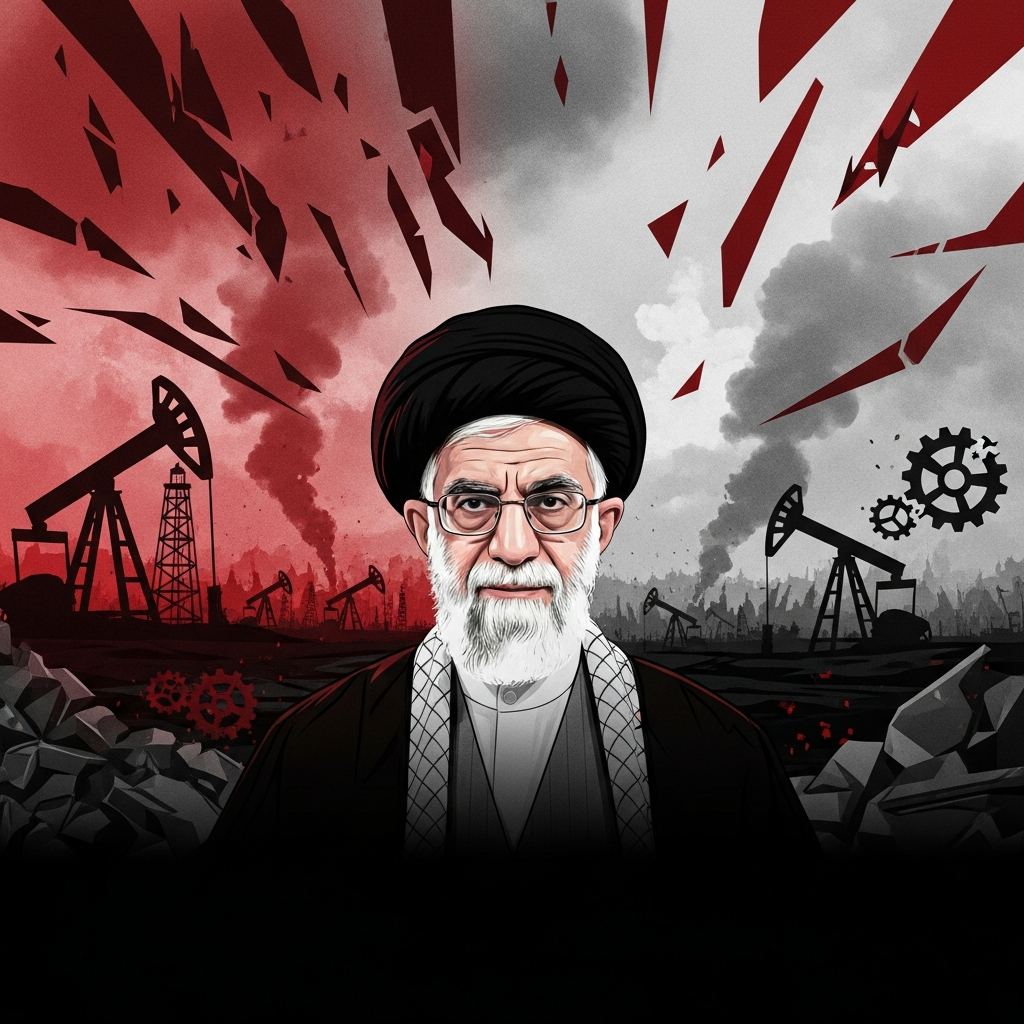
The gravest political development within Iran unfolded amidst this chaos: the appointment of Mojtaba Khamenei as the new Supreme Leader. This occurred ten days after the killing of his father, Ayatollah Ali Khamenei, reportedly the first assassination of a country’s top ruler by an airstrike in modern history. At 56, Mojtaba’s selection marks a deeply symbolic, and for many, controversial, echo of hereditary rule, a system the Islamic Republic was founded to replace. His path to power was considered “deeply unlikely” just a year ago. However, the tragic killing of his parents, wife, and son in recent U.S.-Israeli strikes transformed him into a potent symbolic figure for pro-regime supporters.
This appointment is also widely interpreted as a direct message to President Donald Trump, who had openly expressed a desire to influence Iran’s leadership succession. Trump reacted critically to the news, calling the choice “unacceptable” and stating, “I think they made a big mistake.” Analysts suggest that the power vacuum created by his father’s death has further consolidated influence within Iran’s powerful military establishment, implying that Mojtaba’s close ties to the IRGC likely played a crucial role in his appointment. He is widely expected to continue his father’s hard-line approach.
Internal Strife and Shifting Power Dynamics
The succession drama has exposed profound internal divisions within Iran. The planned three-day state funeral for Ayatollah Ali Khamenei and his wife was abruptly postponed due to severe security concerns amidst the ongoing war. This delay also stemmed from deep uncertainty surrounding the succession, with the Assembly of Experts—constitutionally responsible for selecting the Supreme Leader—reportedly declining nominations. This led the Expediency Discernment Council to suspend the Assembly and establish a provisional leadership structure, effectively granting President Massoud Pezeshkian significant powers.
However, Pezeshkian faces criticism for not leveraging this moment to de-escalate conflicts or mend ties with citizens. Critics argue his focus on secondary issues, like local elections, is indecisive during wartime. The IRGC remains central to this power struggle, reportedly backing Mojtaba despite constitutional concerns. This sidelining of the Assembly of Experts highlights deep institutional rifts, with some clerics warning against a wartime succession while others push for a swift decision.
Public sentiment further complicates the internal landscape. Many Iranians openly celebrated Khamenei’s death, recalling the thousands killed by his security forces during recent anti-government protests. Iranian state television was even hacked, broadcasting a video message from Reza Pahlavi, the exiled son of Iran’s last shah, calling for “final victory.” Social media platforms, particularly X, have been flooded with sarcastic, angry, and openly celebratory posts, mocking the delays in the funeral arrangements and using dark humor to criticize the regime. For many Iranians, any weakening of the Islamic Republic is seen as an opportunity for political change and democracy, with some expressing gratitude to figures like Donald Trump and Benjamin Netanyahu for actions perceived to challenge the current regime.
International Fallout and the Road Ahead
The regional scope of the conflict is rapidly expanding. The U.S. State Department has urged Americans in Saudi Arabia to “strongly consider departing” and avoid U.S. diplomatic facilities. This warning came after an Iranian drone strike on Riyadh’s U.S. Embassy compound. The U.S. has also ordered non-emergency government employees and their families to leave Qatar and urged Americans to leave Iraq. European nations have pledged naval deployments to the eastern Mediterranean, indicating a broader international involvement.
From a diplomatic standpoint, positions are hardening. Israeli Prime Minister Benjamin Netanyahu acknowledged “great” achievements but warned “much work still lies ahead,” indicating plans for a second phase of operations targeting Iran’s underground missile bunkers. Israel’s stated objective is the overthrow of Iran’s clerical rulers, while Washington aims to prevent Tehran from projecting force beyond its borders, simultaneously encouraging Iranians to “rise up and seize power.” Iran’s foreign minister condemned the U.S. sinking of a warship in international waters, stating Washington would “bitterly regret” it. U.S. Defense Secretary Pete Hegseth reaffirmed robust U.S. support for Israel, stating, “Keep going until the end – we’re with you.” He further added that the U.S. is “accelerating, not decelerating” its war on Iran and is “just getting started,” boldly declaring that “America is winning.”
The future remains highly uncertain. With Mojtaba Khamenei, a hardliner with strong IRGC ties, at the helm, and the U.S.-Israeli campaign “accelerating,” the potential for further escalation is significant. The profound institutional disarray within Iran, coupled with widespread public dissent, creates an unpredictable internal environment. The immediate consequences include sustained high oil prices, disrupted global supply chains, and an escalating humanitarian crisis. The long-term implications involve a potential reshaping of power dynamics across the entire Middle East, with global repercussions that could reverberate for years to come.
Frequently Asked Questions
What key events led to Mojtaba Khamenei becoming Iran’s Supreme Leader?
Mojtaba Khamenei’s ascension followed the death of his father, Ayatollah Ali Khamenei, who was reportedly killed in a U.S.-Israeli airstrike. This event, unprecedented for a top Iranian ruler, created a power vacuum. Mojtaba, previously an “unlikely” successor, gained prominence as a symbolic figure amid the war, particularly after his family members were also reportedly killed in strikes. His strong ties to the powerful Islamic Revolutionary Guard Corps (IRGC) and the sidelining of the Assembly of Experts, the traditional body for selecting the Supreme Leader, likely cemented his controversial appointment, marking a significant family transfer of power.
How has the recent conflict impacted global oil supplies and the world economy?
The U.S.-Israeli war with Iran has severely disrupted global oil supplies. Attacks on key oil infrastructure, including depots in Tehran, and Iranian assertions of control over the Strait of Hormuz—a vital global shipping lane—have cut off a fifth of global oil and liquefied natural gas (LNG) supplies. This disruption has caused oil prices to spike dramatically, briefly reaching nearly $120 per barrel. Experts warn of “major blowback” to the global economy, with growing concerns about inflation, economic growth, and chaos in air transport and logistics, as long as oil prices remain elevated.
What are the potential consequences of Mojtaba Khamenei’s appointment for US-Iran relations?
Mojtaba Khamenei is widely expected to continue his father’s hard-line approach, signaling a likely continuation, if not an intensification, of confrontation with the U.S. and Israel. President Donald Trump has already called his appointment “unacceptable” and expressed a desire to influence Iran’s leadership, indicating a strong rejection of the new leader. Given the escalating U.S.-Israeli military campaign with objectives to prevent Iran from projecting force and even to overthrow its clerical rulers, Mojtaba’s hardline stance and close ties to the IRGC suggest a period of heightened tensions, potential for further military clashes, and little prospect for diplomatic de-escalation between the U.S. and Iran.
The twin crises of a deepening regional war and a contentious leadership transition have plunged Iran and the broader Middle East into an era of extreme uncertainty. With Mojtaba Khamenei’s hardline leadership now established, and international powers reaffirming their commitments, the path forward is fraught with challenges. The world watches anxiously as the consequences of these pivotal events continue to unfold, with profound implications for global stability, economic markets, and human lives.