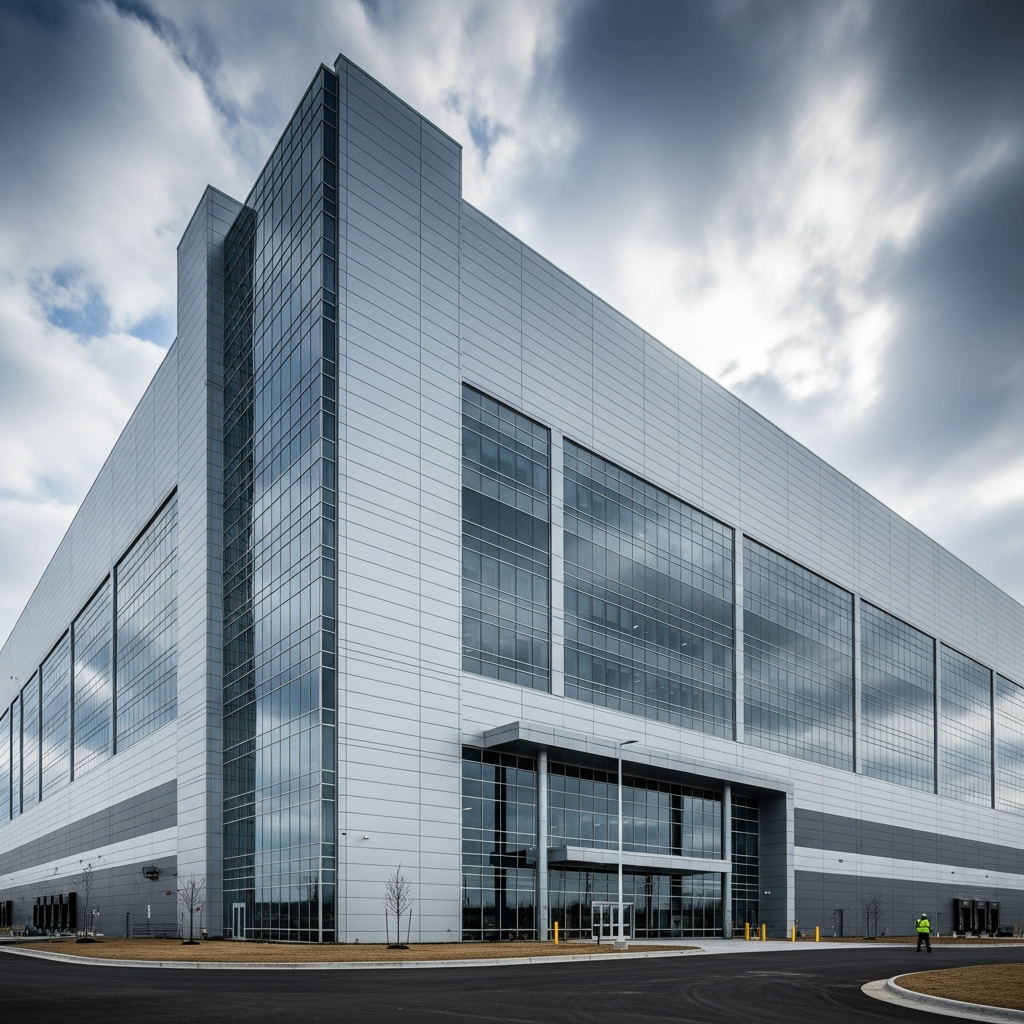
The promise of substantial investment often brings expectations of robust job growth. Yet, in Northeastern Ohio, a stark reality is unfolding. A new $136 million data center expansion, an investment exceeding many traditional industrial projects, is set to deliver a surprisingly meager ten full-time positions. This striking disparity raises critical questions about the true economic value of large-scale tech infrastructure and the effectiveness of state tax incentives.
The Alarming Disparity in Job Creation
When states invest in economic development, the goal is often to stimulate local economies and provide employment opportunities. Consider these recent industrial projects:
Fit Precast, a concrete manufacturer, is investing $102 million in Gastonia, North Carolina. This project will generate 125 new jobs.
Becton Dickinson, a pharmaceutical giant, is expanding in Columbus, Ohio, with a $110 million investment. This expansion will add 120 jobs.
- An automotive venture in Orangeburg, South Carolina, is pouring $120 million into a new plant, projecting nearly 400 jobs.
- futurism.com
- www.vanityfair.com
- www.themeateater.com
- <a href="https://www.ign.com/wikis/metal-gear-solid-delta-snake-eater/ThingsMetalGearSolidDeltaSnakeEaterDoesn'tTell_You”>www.ign.com
- futurism.com
Contrast these figures with Ark Data Centers, an Iowa firm embarking on a $136 million campus expansion in Northeastern Ohio. Despite a larger capital outlay than any of the above, this significant project will create precisely ten permanent jobs. This immense investment-to-job ratio is a focal point of growing public scrutiny, prompting a re-evaluation of how public funds are utilized for economic growth.
Unpacking Ohio’s Generous Tax Breaks for Data Centers
The Ark Data Centers project did not secure its incentives by chance. It was one of eight developments that received multimillion-dollar tax breaks from the Ohio Tax Credit Authority. This decision came on the recommendation of JobsOhio, a prominent economic development nonprofit within the state.
Remarkably, Ark Data Centers received the largest tax break among these projects. This package includes a ten-year sales exemption covering 50 percent of newly purchased equipment, totaling an estimated $4.5 million in state tax exemptions. This substantial public incentive aims to attract businesses, yet it raises eyebrows when considering the mere ten jobs it purports to create. Workers in these new roles will, presumably, still contribute to state income taxes, highlighting a concerning imbalance in who truly benefits.
The Broader Strain of Data Centers on Ohio’s Infrastructure
Ohio is already a hub for digital infrastructure, with approximately 200 data facilities operating across the state. This makes it a significant player in the burgeoning field of AI infrastructure projects. However, this concentration comes with growing pains. Municipal governments are increasingly burdened by the demands of these facilities, stretching local resources and services.
Furthermore, the proliferation of these energy-intensive operations is threatening to create a statewide energy crisis. Data centers consume vast amounts of electricity, requiring substantial power infrastructure that can strain grids and impact energy costs for residential and other commercial users. This environmental and infrastructural toll often goes overlooked in the excitement of new tech investments.
The Precarious Nature of Data Center Employment
Unlike the durable manufacturing jobs offered by companies like Fit Precast, which tend to provide stable, long-term employment, data center jobs are often characterized as “notoriously precarious.” These facilities typically operate with a lean “skeleton crew” consisting primarily of low-wage security guards and a limited number of IT workers.
This operational model means that the direct employment benefits to local communities are minimal. Labor researcher Greg LeRoy highlighted this issue, noting that data center tycoons have historically “pocketed over $1 million in state subsidies for every permanent job they created.” An analysis by the nonprofit Food & Water Watch in Virginia further underscored this inefficiency, finding that the capital investment required to create one full-time data center job was nearly 100 times more than for similar jobs in other industries. This suggests an enormous indirect cost to taxpayers for what amounts to very few local employment opportunities.
Questioning the Rationale: Are Data Centers a Good Investment?
Given the low job creation, the significant public subsidies, and the strain on local resources, the question remains: why do states like Ohio continue to “bend over backward” for data center projects? The perception of being a “tech-forward” state, the lure of future economic ecosystems, or strong lobbying efforts might play a role. However, the immediate, tangible benefits to taxpayers and local economies appear slim.
Data centers are increasingly viewed by the public as unpopular and a questionable investment overall, particularly when compared to industries that provide broader employment and community stability. This growing public sentiment suggests that states may eventually face demands for a more equitable approach to economic development incentives. The long-term sustainability of such high-cost, low-yield projects must be rigorously re-evaluated in the context of genuine community welfare.
The Road Ahead: Demanding Change from Taxpayers
The current model of incentivizing data center construction appears economically unbalanced, funneling public funds into projects that offer minimal direct job creation. As taxpayers become more aware of these disparities, pressure on state and local governments to reform their economic development strategies is likely to grow. The focus may shift towards investments that demonstrate a clear, measurable return in terms of stable, well-paying jobs and sustainable community growth, rather than merely attracting large capital investments with disproportionately low employment outcomes.
Frequently Asked Questions
Why do data centers create so few jobs despite massive investments?
Data centers are highly automated facilities designed for efficiency, often requiring a minimal human workforce for operation, monitoring, and security. Unlike manufacturing plants that need large assembly lines or specialized labor, data centers run on sophisticated technology that needs periodic maintenance rather than constant human interaction. This automation means that even multi-million-dollar investments primarily go towards specialized equipment, power infrastructure, and advanced cooling systems, not a large payroll, leading to a low job-to-investment ratio.
Which other industries offer better job creation for similar investments?
As highlighted in the article, traditional manufacturing and industrial sectors often yield significantly more jobs for comparable or even lesser investments. For instance, a $102 million industrial concrete facility created 125 jobs, a $110 million pharmaceutical expansion created 120 jobs, and a $120 million automotive plant projected nearly 400 jobs. These durable manufacturing and industrial ventures typically involve more complex supply chains and production processes that demand a larger, more diverse workforce than automated data centers.
Should states reconsider tax breaks for data center projects?
Based on the evidence presented, many argue that states should indeed reconsider the scale and nature of tax incentives offered to data center projects. When a $4.5 million tax exemption from Ohio results in only ten full-time jobs, the economic return on public investment becomes highly questionable. Re-evaluating these policies could ensure that state funds are directed towards industries that provide more substantial, stable employment opportunities and broader economic benefits for the community, rather than disproportionately subsidizing projects with minimal job creation.
The case of Ohio’s $136 million data center yielding only ten jobs serves as a potent illustration of a growing challenge in economic development. While technological infrastructure is undoubtedly vital, the imbalance between massive capital investment, substantial tax breaks, and meager job creation demands scrutiny. States must critically assess whether current incentive structures genuinely serve the public good, fostering sustainable employment and robust local economies, or if they are inadvertently subsidizing projects with minimal tangible returns for taxpayers. This ongoing dialogue will shape future policy and the true cost of our digital future.