As the Russia-Ukraine war enters March 2026, significant shifts in geopolitical strategy and military operations are unfolding. Today’s crucial Ukraine War update reveals Ukraine’s active role in Middle Eastern air defense, escalating Kremlin rhetoric against the United States, and ongoing battlefield dynamics. This report synthesizes key assessments, offering a deep dive into the conflict’s evolving landscape.
Ukraine Steps Up: Aiding US Air Defense in the Middle East
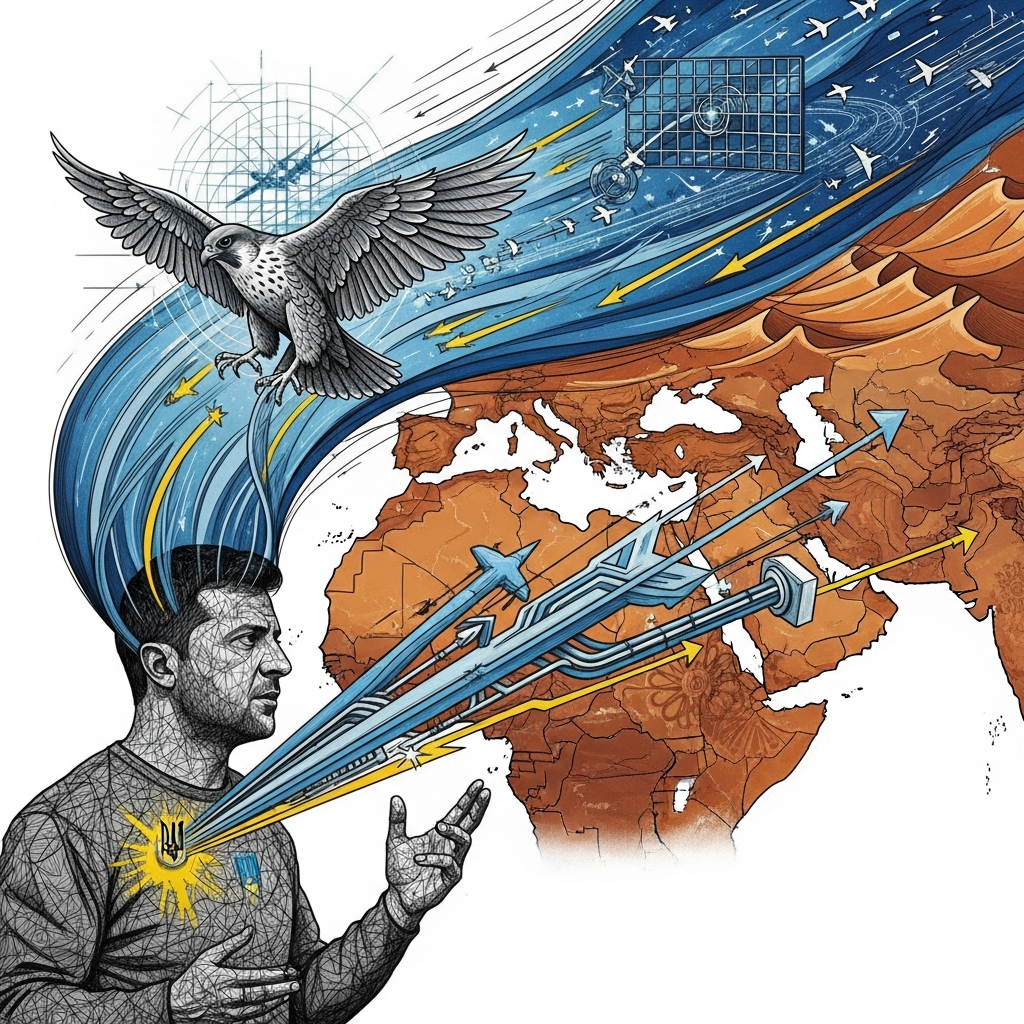
Ukrainian President Volodymyr Zelensky confirmed that Ukraine will provide critical support to US air defense efforts in the Middle East. This strategic move aims to counter Iranian Shahed drone attacks. On March 5, Zelensky stated Ukraine received an urgent request from the United States for “specific support.” He immediately instructed his teams to deploy equipment and Ukrainian specialists to the region.
This initiative is not without precedent. Zelensky previously engaged with leaders from the UAE, Qatar, Jordan, Bahrain, and Kuwait on March 4, discussing potential Ukrainian air defense assistance. The Financial Times reported ongoing discussions between the US Department of Defense, a Gulf state, and Ukrainian industry figures to acquire Ukrainian-made interceptor drones. These cost only a few thousand dollars each, a stark contrast to the multi-million dollar PAC-3 interceptors used in Patriot systems.
Ukraine’s extensive experience against Iranian-origin drones is invaluable. For years, Ukraine has faced near-nightly, large-scale Russian drone and missile barrages, achieving a remarkable 90 percent interception rate against such threats. This expertise offers a critical playbook for Middle Eastern states confronting similar challenges. Strategic analysts note that US allies and partners in the Middle East can significantly leverage Ukraine’s battle-hardened drone defense tactics.
Kremlin’s Strategic Maneuvers: Blaming the US Amidst Regional Tensions
The Kremlin is leveraging escalating Middle East tensions to criticize the United States and shape a narrative that could absolve Russia of future peace negotiation failures in Ukraine. Russian Foreign Minister Sergei Lavrov, on March 5, slammed US rhetoric surrounding US-Israeli operations against Iran. He accused US President Donald Trump and Defense Secretary Pete Hegseth of making contradictory statements. Lavrov claimed the US aims to sow discord and destabilize the broader Middle East, particularly by driving a wedge between Iran and Gulf States.
Lavrov explicitly linked these Middle East military operations to the Russia-Ukraine War. He alleged that the US and Israel intend to draw Gulf States into conflict, mirroring how the West supposedly drew Ukraine into conflict with Russia. Citing concerns among Russian politicians and analysts, Lavrov pointed to the timing of US operations against countries it negotiates with. He referenced the June 2025 Israel-Iran war, the January 3 US operation against Venezuela, and current US-Israeli operations against Iran.
The Foreign Minister expressed concern that the “spirit” of the August 2025 US-Russian summit in Alaska is fading. However, Lavrov slightly hedged, emphasizing that the summit’s vague “understandings” were more important. He also maintained that the Kremlin itself has not observed US bad faith in negotiations. This measured tone likely aims to convey a specific message to the Russian populace and allies without overtly criticizing the Trump administration.
Other Russian Officials Amplify Anti-US Rhetoric
Other prominent Russian officials are also utilizing US military actions against Iran to harshly condemn the United States. They aim to rhetorically position Russia and the United States as adversaries. Russian Security Council Deputy Chairperson Dmitry Medvedev directly criticized President Trump for pursuing peace efforts while simultaneously conducting military operations against Iran. Russian State Duma International Affairs Committee First Deputy Chairperson Alexei Chepa warned that these operations might undermine Russia’s trust in the US as an “impartial and honest” mediator. Duma Defense Committee Member Andrei Kolesnik went further, advocating for increased Russian military support for Iran, stating Russia “cannot allow Iran to be destroyed.”
Medvedev often expresses more extreme Kremlin views, while Duma deputies frequently act as rhetorical bullhorns, especially for domestic audiences. The Kremlin’s long-standing strategy has been to delay or stall Ukraine peace negotiations, as it shows no interest in talks falling short of its original war demands. This objective is balanced against avoiding severe US sanctions. The escalation in Kremlin rhetoric post-February 28, following US-Israeli operations against Iran, suggests growing difficulty in balancing relations with the US and key partners like Iran. This sharp criticism may also serve to preemptively blame the US for any future failures in Ukraine peace negotiations. Notably, Russian President Vladimir Putin has also attempted to position himself as a potential peacemaker between Iran and Gulf States. This diplomatic overture occurs amid the ongoing US-Israeli operation, highlighting Russia’s bid to leverage regional tensions for its own influence.
Furthermore, Iranian threats against vessels in the Strait of Hormuz are causing significant spikes in global oil prices. If sustained, these elevated prices could reverse a year-long trend of declining Russian oil revenues, providing a substantial financial boost to Moscow.
Russian Military Adjustments and Internal Purges
In a routine move, Russian President Vladimir Putin signed a decree on March 4, marginally increasing the authorized end strength of the Russian military. This is part of ongoing Russian military reforms. The decree raises the authorized personnel to 2,391,770 total, including 1,502,640 military personnel. This March 4 expansion adds only 2,640 personnel compared to 2024.
Since the full-scale invasion of Ukraine in 2022, Russia has expanded its authorized military strength almost annually. However, the 2026 expansion is the smallest to date, contrasting sharply with increases of 137,000 in 2022, 170,000 in 2023, and 180,000 in 2024. This latest increase likely supports the expansion of the Russian force structure announced in January 2023 under then-Defense Minister Sergei Shoigu. Forming new military districts and units requires more personnel. Therefore, this decree is unlikely to have immediate battlefield impact in Ukraine but rather supports Russia’s long-term efforts to bolster its force for future conflicts, including against NATO.
The Ongoing Purge of Shoigu’s Loyalists
Russian authorities continue a long-standing Kremlin campaign to remove personnel loyal to former Russian Defense Minister Sergei Shoigu. This aims to neutralize his influence within the Russian Ministry of Defense (MoD). On March 5, former Deputy Defense Minister Ruslan Tsalikov was arrested. Charges include founding a criminal organization, embezzling Russian budget funds between 2017 and 2024, money laundering, and bribery.
Tsalikov resigned in May 2023, shortly after Putin removed Shoigu as defense minister. He reportedly had close ties to Shoigu and left his post after questioning over possible corruption. Tsalikov is the fourth Shoigu deputy to face charges, following the 2024 arrests of former deputy defense ministers Timur Ivanov, Pavel Popov, and Dmitry Bulgakov on various corruption, fraud, and treason charges. This pattern underscores the Kremlin’s determined effort to consolidate power and control within its defense establishment.
Battlefield Developments: Advances and Counter-Strikes
The Russia-Ukraine War update also includes critical battlefield information. Ukrainian forces recently made localized advances in the Kostyantynivka-Druzhkivka tactical area, as evidenced by geolocated footage from March 3 and 4 showing progress southeast and south of Kostyantynivka. Russian forces have also made marginal gains in this region. Additionally, Ukrainian naval strikes between March 1 and 2 critically damaged the Russian Black Sea Fleet’s Project 11356R Admiral Grigorovich-class frigate Admiral Essen in Novorossiysk, rendering it unable to launch Kalibr cruise missiles. Ukrainian Security Service (SBU) sources confirmed grenade launchers on the frigate detonated, causing an 18-hour fire.
Ukrainian forces may have targeted oil infrastructure in Saratov Oblast overnight on March 4-5. Footage showed explosions and fires near the Saratov Oil Refinery. Simultaneously, the Kremlin accused Ukraine of striking a Russian tanker in the Mediterranean Sea, using this alleged incident to frame Ukraine as “escalating” the conflict.
Furthermore, Ukrainian Special Operations Forces (SSO) reported destroying a Russian S-400 air defense system in occupied Orlivka, Crimea, roughly 190 kilometers from the frontline. Ukrainian Naval Forces also destroyed a Russian Ka-27 naval helicopter over the Black Sea. These mid- and long-range strikes demonstrate Ukraine’s persistent efforts to degrade Russian military and logistics capabilities deep within occupied territories.
Intensified Russian Drone Activity and Frontline Engagements
Russian forces continue intensifying their use of drones, including Shahed-type UAVs, at both tactical and operational levels as part of their battlefield air interdiction campaign. Overnight on March 4-5, Russia conducted extensive long-range drone strikes against Ukraine, launching 155 drones of various types, including about 100 Shaheds, from multiple directions. Ukrainian forces reportedly downed 136 of these drones. However, 18 strike drones hit eight locations, impacting residential, civilian, commercial, and rail infrastructure in Dnipropetrovsk, Kharkiv, and Kherson Oblasts. These strikes caused power outages. A Panamanian-flagged cargo ship, the BULL, carrying Ukrainian corn, was also struck after leaving Chornomorsk port.
On the ground, Russian forces continued offensive operations across several key axes but without significant confirmed advances:
Northern Axis (Sumy Oblast): Attacks continued near Yunakivka and Marine.
Kharkiv Oblast: Offensive actions northeast of Kharkiv City and toward Verkhnya Pysarivka.
Kupyansk Direction: Attacks east, southeast, and south of Kupyansk, as well as north and southeast of Borova.
Slovyansk Direction: Russian forces attacked near Lyman, Yarova, Svyatohirsk, and southeast of Slovyansk. The Russian Ministry of Defense claimed to seize Yarova. Russian forces have also made advances in the Slovyansk and Pokrovsk directions in recent days.
Kostyantynivka-Druzhkivka Tactical Area: Russian forces attacked around Kostyantynivka, Mykolaivka, Pleshchiivka, and Druzhkivka. A Ukrainian commander noted Russian forces restored communication capabilities to 50-60% of pre-Starlink shutdown levels.
Dobropillya Direction: Continued offensive operations near Zapovidne.
Pokrovsk Direction: Attacks northwest, north, northeast, and southwest of Pokrovsk. Russian infiltration intensity reportedly decreased due to UGV shortages.
Novopavlivka Direction: Attacks near Novopavlivka and northeast of Muravka.
Oleksandrivka Direction: Attacks northeast and southeast of Oleksandrivka, including a bomber strike on a dam on the Vovcha River.
Hulyaipole Direction: Offensive operations near Hulyaipole, Varvarivka, and Zaliznychne. Ukrainian forces recently made advances in the Hulyaipole direction.
Western Zaporizhia Oblast: Attacks east and northwest of Orikhiv.
Kherson Direction: Limited ground attacks northeast and southwest of Kherson City.
Ukrainian forces also sustained their frontline strike campaign against Russian military assets in the Russian near rear, hitting manpower concentrations near Pokrovsk and Berezove. The Ukrainian General Staff reported strikes on a Russian ammunition depot and a logistics depot in occupied Donetsk Oblast, alongside a drone repair facility.
Other Developments: Belarus and Future Outlook
Belarusian and Vietnamese military delegations continued bilateral cooperation talks on March 5, building on discussions that began on March 4. Meanwhile, President Zelensky has issued a warning about an anticipated shift in Russian targeting. As Spring 2026 approaches, Russia is expected to redirect its long-range missile and drone strikes to focus on Ukrainian logistics and vital water infrastructure. This suggests a strategic change aimed at disrupting supply lines and essential services across Ukraine.
This comprehensive Russia-Ukraine War update highlights a complex and interconnected conflict. Ukraine’s proactive stance in global security, alongside Russia’s intricate geopolitical maneuvering, underscores a dynamic period. As internal Russian power struggles continue and both sides adapt their military strategies, the international community remains attentive to the unfolding events.
Frequently Asked Questions
What is Ukraine’s specific role in supporting US air defense in the Middle East?
Ukraine is providing “specific support” to US efforts against Iranian Shahed drone strikes in the Middle East. President Zelensky has authorized the deployment of Ukrainian equipment and specialists. Ukraine’s extensive, proven experience in intercepting Iranian-origin drones, with a reported 90% success rate against Russian drone attacks, makes its expertise invaluable for countering similar threats in the Middle East. This collaboration leverages Ukraine’s battlefield lessons learned.
Where are Russian forces primarily focusing their current offensive efforts in Ukraine?
As of March 5, 2026, Russian forces are conducting offensive operations across multiple fronts in eastern and southern Ukraine. Key areas of focus include the Northern Axis (Sumy Oblast), Kharkiv Oblast, Kupyansk direction, Slovyansk direction, Kostyantynivka-Druzhkivka tactical area, Dobropillya, Pokrovsk direction, Novopavlivka direction, Oleksandrivka direction, Hulyaipole direction, western Zaporizhia Oblast, and Kherson direction. While operations are widespread, confirmed significant advances were limited on this specific date.
Why is the Kremlin criticizing US military operations against Iran?
The Kremlin is criticizing US operations against Iran to serve several strategic objectives. Russian officials, including Foreign Minister Lavrov and Deputy Chairperson Medvedev, are using the escalation in the Middle East to accuse the US of destabilizing the region and making contradictory statements. This criticism aims to discredit the US as an impartial mediator in Ukraine peace talks and to preemptively blame the US for any future failures in negotiations, allowing Russia to avoid accountability. It also aligns with Russia’s efforts to balance relations with its allies like Iran against its dealings with the United States.