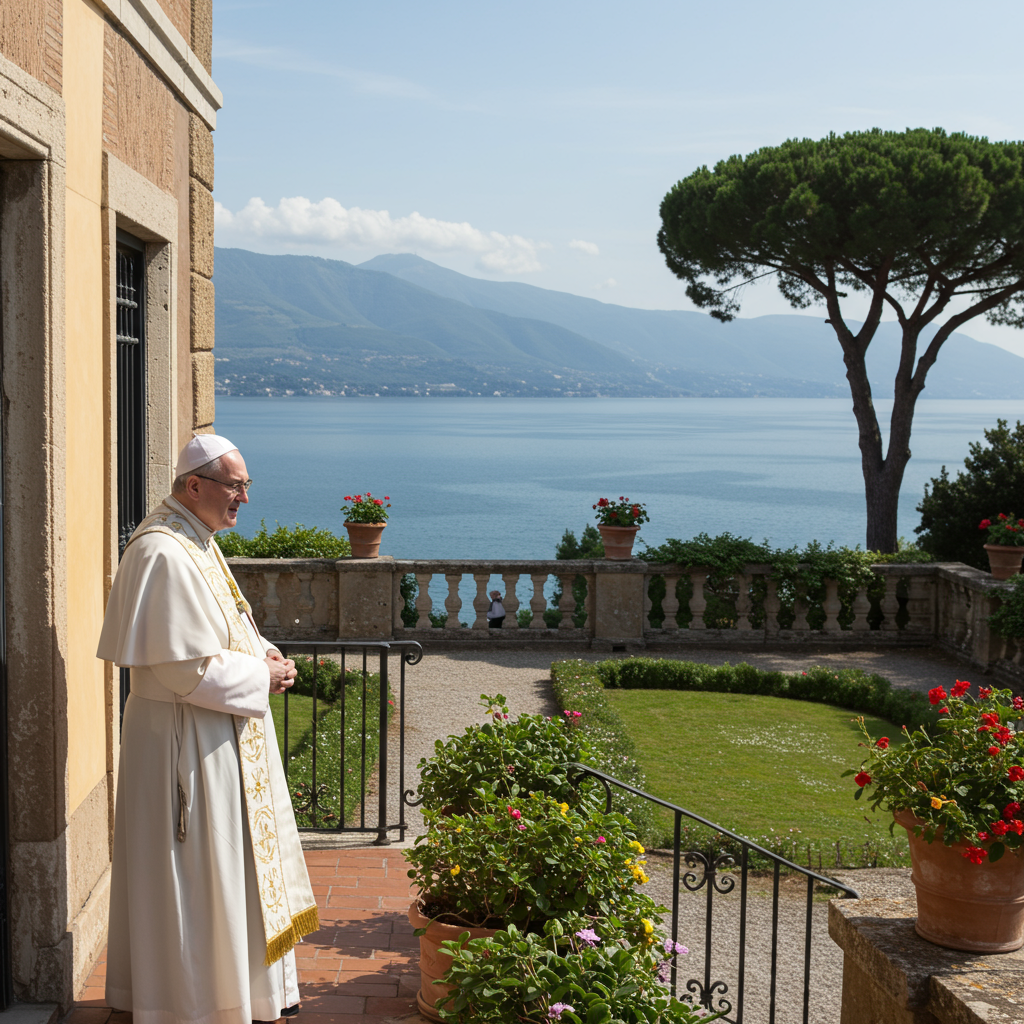
In a move signaling a return to long-held <a href="https://news.quantosei.com/2025/07/07/welcome-pope-leo-arrives-in-castel-gandolfo/” title=”Pope Leo XIV's Joyful Return to Castel Gandolfo”>papal tradition, Pope Leo XIV has arrived at the historic summer residence of Castel Gandolfo. Located just outside Rome overlooking the serene Lake Alban, this visit marks a significant departure from the practice of his predecessor, Pope Francis, who opted not to use the lakeside retreat during his 12-year pontificate. Pope Leo XIV, the first American pope, commenced his six-week vacation period on Sunday, July 6, 2025, seeking essential time for rest, reflection, and preparation for his burgeoning mission.
His arrival in the picturesque hilltop town was met with enthusiastic welcomes. Well-wishers lined the main road leading into Castel Gandolfo, eager to greet the pontiff. Pope Leo XIV acknowledged the crowd, waving from the balcony of the villa where he will reside. Earlier that day at the Vatican, during his noontime prayer, the 69-year-old pontiff shared his personal reason for the trip, stating he hoped to “restore the body and spirit.” He extended this sentiment universally, expressing a wish that everyone could find time for similar restorative breaks.
A Prized Papal Escape Resumed
For centuries, Castel Gandolfo served as a cherished summer sanctuary for Roman pontiffs. Providing a respite from the intense heat of the city, its cooler climate and tranquil surroundings made it an ideal retreat. The tradition of popes spending the hot summer months here dates back generations, becoming an ingrained part of the rhythm of the papal year and, indeed, the life of the town itself. This long-standing practice saw pontiffs regularly relocate their temporary residence and administrative functions, if only partially, to the lakeside palace.
Pope Francis, however, broke from this custom throughout his entire pontificate. Known for his preference to remain at the Vatican, even during the height of summer, he never utilized Castel Gandolfo for traditional papal vacations. This decision marked an unprecedented shift after nearly 400 years of consistent papal presence, leaving the historic summer palace vacant during the months it was most typically occupied. Pope Leo XIV’s decision to resume this tradition is therefore seen as a notable moment, bridging a recent gap and reconnecting with a deeper historical lineage of papal retreats.
Rest, Reflection, and Reigniting Energy
Pope Leo XIV’s six-week stay is not merely a casual holiday; it is framed as a necessary period of recuperation and strategic thinking. His election on May 8 initiated a whirlwind of activity, including numerous inaugural audiences, public appearances, and early celebrations tied to the upcoming Holy Year. Officials close to the pontiff emphasize that this initial period has been incredibly demanding.
According to Vatican observers and those welcoming the Pope, this time is crucial for him to consolidate energy and focus. Sister Mary Livia, a nun from Uganda present for his arrival, highlighted the intense workload Pope Leo has undertaken since his election, noting he has been “working, working, working.” She stressed the importance of this break, stating he needs it to “get more energy and get strength for his mission.” While the Pope will conduct some public duties from Castel Gandolfo, such as delivering his Sunday noon prayers, and may even return to the Vatican for specific events, the primary focus of these weeks is expected to be on personal rest, quiet contemplation, extensive reading on key issues facing the global Church, and charting the course for his new pontificate.
The Historic Estate of Castel Gandolfo
The papal complex at Castel Gandolfo boasts a rich history extending far beyond its use by popes. The area has served as a favored retreat for Roman rulers since the era of Emperor Domitian in the first century. The papal palace itself was commissioned in 1624 by Pope Urban VIII, specifically intended as a summer escape from the Roman heat.
Over subsequent centuries, the estate was significantly expanded, eventually reaching its current impressive size of 55 hectares (136 acres). This vast area is notably larger than Vatican City itself. The grounds are multifaceted, featuring a working farm, meticulously manicured gardens, and a world-renowned observatory run by Jesuit astronomers. In more recent times, an environmental educational center was established on the estate, reflecting themes championed in Pope Francis’s influential 2015 encyclical, Laudato Si’ (Praised Be). The tranquil setting overlooking Lake Alban provides a starkly different environment from the bustling Vatican, historically offering popes a unique space for both physical and spiritual refreshment.
Impact and Adaptation in the Lakeside Town
The town of Castel Gandolfo developed an intrinsic connection to the papal summer presence over centuries. Its local economy and social rhythms became deeply intertwined with the annual arrival and departure of the pontiff and the influx of pilgrims and visitors that accompanied him. The absence of Pope Francis during his 12-year pontificate therefore had a significant initial impact.
Local businesses that had relied heavily on the summer crowds drawn by the papal presence experienced economic challenges. However, Pope Francis later initiated a transformative change: he opened the main papal palace and gardens to the public as a year-round museum. While this move initially caused emotional disappointment among residents who missed the symbolic and personal presence of the pope, it ultimately fostered a new form of stability. Shopkeepers and restaurateurs found that the consistent, year-round flow of tourists visiting the museum provided a more reliable economic benefit than the previous summer-only Sunday crowds. Simone Mariani, who runs a local restaurant, highlighted this, noting that Francis made these historical structures accessible for the first time in 400 years, bringing tourism that was “good for the whole town.” Despite this positive economic adaptation, the emotional connection remains, with residents like Patrizia Gasperini, a souvenir shop owner, describing missing the “color, the movement” and the sense of the town coming alive with the pope’s presence.
A New Residence Within the Estate
With the main papal palace now permanently repurposed as a museum open to the public, Pope Leo XIV will not be residing in the historical building where most previous popes vacationed. Instead, he will be staying in the smaller Villa Barberini.
This elegant villa is also located within the extensive grounds of the Castel Gandolfo estate. Historically, the Villa Barberini served as the temporary residence for the Vatican’s Secretary of State whenever the reigning pope was in residence at the main palace. This arrangement ensures the Pope can still utilize the peaceful and private environment of the Castel Gandolfo property while allowing the museum in the main palace to remain accessible to visitors year-round.
Hopes for Continued Connection
The return of Pope Leo XIV has ignited hope among the residents and local leadership of Castel Gandolfo for a renewed and perhaps expanded relationship with the papacy. Mayor Alberto De Angelis has voiced aspirations that this visit is not a one-off return to tradition solely for summer.
De Angelis expressed hope that Pope Leo XIV might consider using Castel Gandolfo for periodic vacations throughout the year, following the example set by St. John Paul II, who often sought retreat there at various times. Beyond providing a personal break, there is also a strong desire that the peaceful, inspiring environment of Castel Gandolfo will serve as a backdrop for significant work. Mayoral hopes include the possibility that Pope Leo XIV will continue the tradition of past popes who used their time at the retreat to draft important church documents and encyclicals. De Angelis articulated this hope, wishing that Pope Leo “produces some text, some encyclical here that has a global reach” and can proudly declare that it “came from Castel Gandolfo,” inspired by the location for the benefit of the entire world.
Frequently Asked Questions
Why is Pope Leo XIV’s visit to Castel Gandolfo significant?
Pope Leo XIV’s arrival at Castel Gandolfo is significant because it resumes a long-standing papal tradition that was paused for 12 years by his predecessor, Pope Francis. For centuries, popes regularly used this estate as a summer retreat from Rome. By returning, Pope Leo connects his pontificate with this deep historical practice, bringing a renewed papal presence to the town after a considerable absence.
What is the Papal Summer Residence at Castel Gandolfo like?
The Papal Summer Residence is a large estate covering 55 hectares (136 acres) overlooking Lake Alban, about 30 kilometers southeast of Rome. It includes a historic papal palace built in 1624, extensive gardens, a working farm, a Jesuit observatory, and an environmental center. While the main palace is now a museum, Pope Leo XIV will be staying in the smaller Villa Barberini on the grounds, offering him a tranquil and private environment.
What is the Pope expected to do during his vacation period?
Pope Leo XIV is taking a six-week vacation primarily for rest, reflection, and to “restore the body and spirit” after a very busy start to his pontificate. While he may hold some public events, such as Sunday noon prayers or occasional returns to the Vatican, the main purpose is to recuperate, think deeply about key issues facing the Church, and read in preparation for future decisions and actions in his mission.