Actor Shia LaBeouf is once again at the center of legal scrutiny, facing additional simple battery charges following his second Shia LaBeouf arrest in New Orleans. The incident, which unfolded during the city’s lively Mardi Gras celebrations, has led to court mandates including substance abuse treatment. This ongoing legal saga reignites discussions around the actor’s public behavior, his past troubles, and the complex interplay of celebrity status with the judicial system. The recent developments shine a spotlight on LaBeouf’s personal struggles and his controversial public responses to the allegations.
Unpacking the Mardi Gras Incident
The catalyst for LaBeouf’s renewed legal troubles was a chaotic altercation on February 17, occurring on the eve of Fat Tuesday. Near the vibrant French Quarter in the Marigny neighborhood, outside the Royal Street Inn & R Bar, an incident erupted involving the actor. Police reports detail a disturbance where LaBeouf allegedly became increasingly aggressive.
The Initial Altercation Details
According to a New Orleans police report, video footage captured a shirtless LaBeouf engaging in violent behavior. He was seen shoving one individual to the ground and striking another in the face, causing what police described as a “possibly dislocated nose.” Further allegations, later leading to a third charge, suggest LaBeouf also head-butted another person during the same chaotic event. Witnesses recounted him shouting homophobic slurs and making threats, attempting to instigate fights with those around him.
Identifying the Victims
Among the individuals reportedly targeted was Jeffrey Damnit, also identified in police reports as Jeffrey Klein, a well-known local entertainer. Damnit confirmed being one of LaBeouf’s victims, describing the actor as having “just got nuts” and repeatedly threatening to “beat them up.” Damnit also stated that LaBeouf had previously pushed him from behind at the bar earlier that night, using homophobic slurs and explicitly threatening his life. Despite efforts by Damnit and others to de-escalate the situation and encourage LaBeouf to leave, he reportedly escalated his aggression. Police arrived on the scene around 12:45 a.m. to make the initial arrest.
Legal Ramifications and Second Arrest
Following the initial Shia LaBeouf arrest on February 17, a new warrant was issued. LaBeouf voluntarily surrendered to the Orleans Parish jail on a Saturday after his attorney learned of the new warrant on Friday. This led to his second booking, signifying the gravity of the developing situation.
Court Orders and Bail Conditions
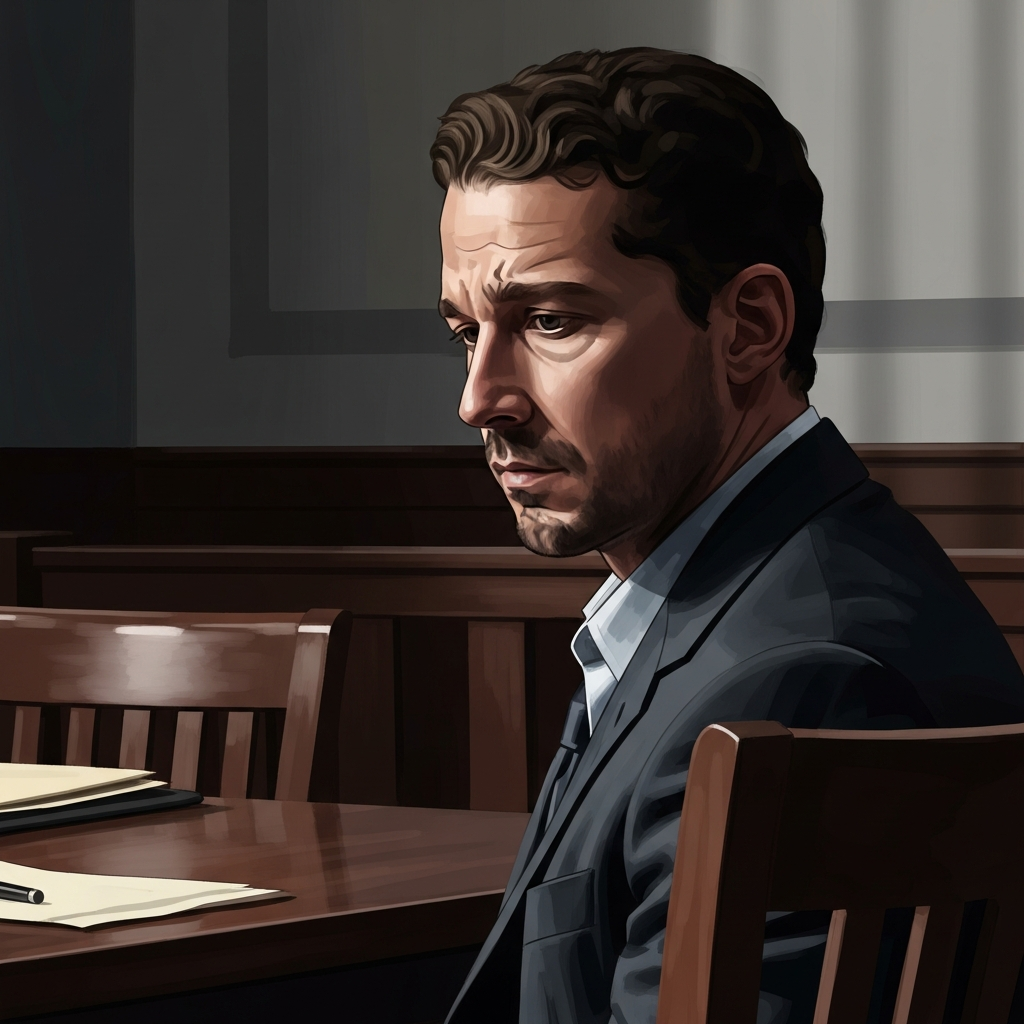
During a subsequent hearing, Judge Simone Levine presided over LaBeouf’s case. She set a substantial bond of $100,000 for the actor, an amount his attorney vehemently criticized for a misdemeanor. Critically, Judge Levine also mandated that LaBeouf undergo drug testing and enroll in substance abuse treatment, a test he reportedly took at the courthouse. Although specific findings were not publicly discussed, the judge expressed concern that LaBeouf “does not take his alcohol addiction seriously” based on the test results. After posting the $100,000 bond, LaBeouf quickly departed the courthouse, avoiding reporters. A later $5,000 bond was posted for the newest charge.
Attorney’s Defense and Public Figure Status
LaBeouf’s private defense attorney, Sarah Chervinsky, has been vocal about the handling of the case. She argued in court that “being drunk on Mardi Gras is not a crime,” seemingly attempting to contextualize the alleged actions within the celebratory atmosphere. Chervinsky also highlighted what she perceives as unfair treatment due to LaBeouf’s celebrity status. She asserted that “no regular person would be required to post over $100,000 in bonds and be jailed two separate times for one misdemeanor incident.” Her argument emphasizes that while LaBeouf does not seek preferential treatment, he should equally not be subjected to harsher penalties solely because of his public recognition.
LaBeouf’s Controversial Interview & Self-Reflection
In a widely discussed interview with YouTuber Andrew Callaghan, released on the same day as his second Shia LaBeouf arrest, the actor offered his perspective on the Mardi Gras incident. LaBeouf took significant responsibility for his actions, admitting, “I fucked up, it’s on me. It was no good, bro. My behavior’s dirty, ugly, disgusting, so I gotta eat it.”
Addressing the “Small Man Complex”
Despite acknowledging his culpability, LaBeouf denied having a “drinking problem” or needing to return to rehab for alcohol. Instead, he attributed his issues to a “different problem,” describing it as a “small man complex” or “Napoleonic” tendencies, intrinsically linked to “anger and ego.” He noted that throughout his life, he has often been “forced to get sober by the court system” or to appease partners. This framing attempts to shift the narrative from addiction to a deeper-seated personality issue.
Homophobic Remarks and Responsibility
During the interview, LaBeouf made highly controversial statements regarding his bigotry, stating, “I’ll be honest with you, big gay people are scary to me.” He elaborated that he gets triggered when his “masculinity is challenged” and when “three gay men are touching my leg.” He added, “If that’s homophobic, then I’m that…I’m good with gay, be gay over there though, don’t be gay in my lap.” However, he later softened his stance, acknowledging, “I am wrong for touching anyone, ever, and that’s the end of my statement on this whole shit.” He also confirmed that after his initial release, he returned to party in the French Quarter during Mardi Gras, seemingly undeterred by the arrest.
A Pattern of Past Legal Troubles
The recent Shia LaBeouf New Orleans battery charges are not an isolated incident but rather fit into a pattern of public disturbances and legal challenges throughout his career. This history often draws public scrutiny and shapes the narrative around his current behavior.
In 2017, LaBeouf was arrested in Georgia, facing charges of public drunkenness, disorderly conduct, and obstruction. A video surfaced from that arrest showing him making racist remarks, for which he later issued an apology. This incident, combined with others, painted a picture of an actor struggling with anger management and substance use.
More significantly, LaBeouf was also sued by his ex-girlfriend, FKA Twigs, for sexual battery, assault, and infliction of emotional distress. While that case was later settled, it highlighted serious allegations of abuse. In the Andrew Callaghan interview, when asked about Twigs’ claims, LaBeouf cryptically stated, “Whatever she said, run with most of it,” a comment that offered little clarity but acknowledged the weight of the allegations. These past events provide crucial context for understanding the public reaction to his current legal predicaments and the court’s stringent mandates.
Frequently Asked Questions
What specific charges does Shia LaBeouf face in New Orleans?
Shia LaBeouf is currently facing three counts of simple battery in New Orleans. These charges stem from an altercation that occurred on February 17 during Mardi Gras celebrations at the Royal Street Inn & R Bar. The allegations include pushing one person to the ground, hitting another in the face, and head-butting a third individual. His voluntary surrender for the additional charges indicates the severity with which the authorities are pursuing the case.
What mandates did the court issue regarding Shia LaBeouf’s recent arrest?
Following his arrest and a court hearing, Judge Simone Levine imposed several significant mandates on Shia LaBeouf. These include setting a substantial $100,000 bond, ordering him to undergo drug testing, and requiring his enrollment in a substance abuse treatment program. The judge expressed concerns about his approach to alcohol addiction, indicating that these measures are intended to address underlying behavioral issues.
How has Shia LaBeouf responded to the allegations and his past behavior?
In an interview with Andrew Callaghan, Shia LaBeouf took responsibility for his actions during the Mardi Gras incident, stating he “fucked up.” He attributed his behavior to a “small man complex” tied to “anger and ego,” rather than an alcohol problem, despite the court’s mandate for substance abuse treatment. Controversially, he also admitted to being scared of “big, gay people,” initially framing his actions as a reaction to perceived challenges to his masculinity, though he later acknowledged being “wrong for touching anyone, ever.”
Conclusion
The latest Shia LaBeouf arrest in New Orleans, complete with multiple battery charges and court-ordered substance abuse treatment, underscores a continuing pattern of challenges for the acclaimed actor. His controversial statements regarding the incident and his personal struggles have further fueled public debate, intersecting discussions about celebrity accountability, mental health, and the complexities of addiction. As the legal proceedings move forward, the case will continue to draw significant attention, reflecting not only on LaBeouf’s individual journey but also on broader societal perceptions of public figures grappling with personal demons. The outcome will undoubtedly be watched closely by fans and critics alike, offering further insights into the long-term implications of his behavior.