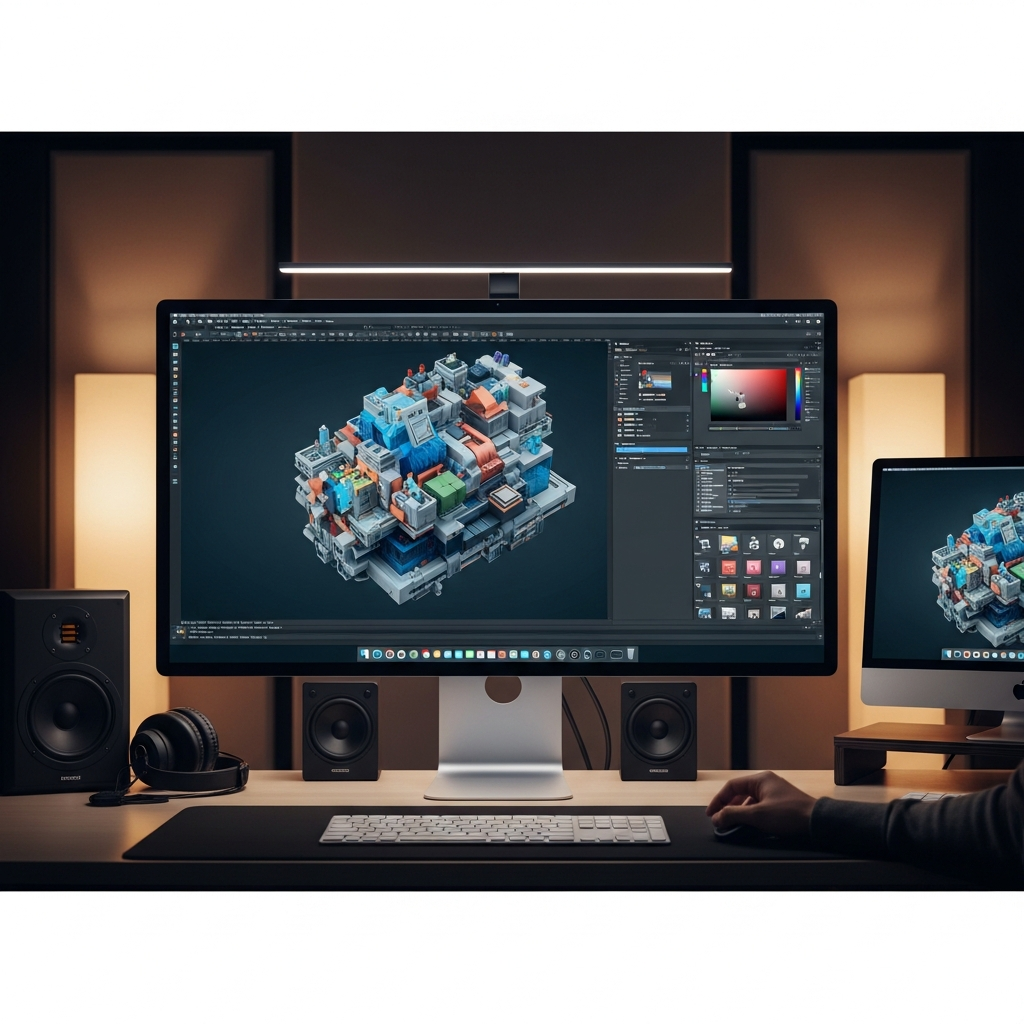
The rumor mill is buzzing with exciting news for Mac users and creative professionals alike. Apple appears to be gearing up for a significant overhaul of its external display lineup, with strong evidence pointing to not one, but two next-generation Apple Studio Display 2 models in development. These upcoming monitors, internally codenamed J427 and J527, promise to bring a wealth of advanced features, including the highly anticipated ProMotion technology, HDR support, and a potential mini-LED backlight, elevating the display experience to new heights.
This strategic split into standard and premium configurations suggests Apple is aiming to cater to a broader spectrum of users, from discerning professionals needing top-tier performance to everyday Mac users seeking substantial upgrades. Early discoveries in internal Apple files and pre-release software builds of iOS 26 and macOS 26.3 have provided concrete clues about these ambitious plans, hinting at a future where your Mac is paired with an even more capable and immersive external display.
Apple’s Dual-Tier Display Strategy: J427 and J527 Unpacked
Apple’s internal code consistently provides a peek into its future product pipeline, and the Studio Display 2 is no exception. Recent deep dives into system files have confirmed the existence of two distinct models: J427 and J527. This dual-pronged approach signals a departure from the current single-configuration Studio Display, allowing Apple to offer differentiated features and price points. Both models are expected to share core advancements like 120Hz ProMotion for buttery-smooth scrolling and high refresh rates, along with HDR (High Dynamic Range) support for vibrant, true-to-life colors and exceptional contrast. However, the premium J527 variant is poised to stand out with several key enhancements.
The J527: A Glimpse at the Ultimate Professional Display
The higher-end J527 model is shaping up to be a true powerhouse, designed to meet the demands of professionals and enthusiasts. Code references indicate a focus on superior audio drivers, advanced connectivity, and a larger screen format, making it a compelling successor to the original Studio Display.
Revolutionary Display Technology: ProMotion, HDR, and Mini-LED
For the J527, the inclusion of 120Hz ProMotion and HDR is a foundational upgrade. ProMotion, already a staple in Apple’s Pro devices like the iPhone Pro and MacBook Pro, dynamically adjusts the refresh rate, providing incredible fluidity for video, gaming, and even basic UI interactions. Paired with HDR, this ensures content looks stunningly vibrant with deep blacks and bright highlights.
Crucially, external research from Fortune suggests the J527 could incorporate a mini-LED backlight. This technology, already seen in the Pro Display XDR and high-end iPad Pro/MacBook Pro models, dramatically enhances peak brightness, delivers superior local dimming zones for incredible contrast, and significantly boosts overall HDR performance. For creative work like photo and video editing, this translates to unparalleled visual accuracy and a more immersive viewing experience, especially when handling color-critical tasks.
HomePod-Quality Audio and Spatial Sound
The current Studio Display boasts a respectable six-speaker system with spatial audio support, similar to that found in the MacBook Pro. However, the J527 is rumored to take audio to the next level. Internal files indicate different audio drivers for the premium model, implying speakers capable of delivering sound quality comparable to a HomePod. This would mean richer bass, clearer mids, and more expansive soundstaging, transforming the monitor into a truly integrated multimedia hub. For users who value immersive audio without external speakers, this could be a game-changer.
Advanced I/O: Beyond Current Standards
Connectivity is another area where the J527 is expected to shine. The original Studio Display features a Thunderbolt 3 port and three USB-C 3.1 Gen 2 ports. Leaked code suggests the J527 will support “more I/O controllers,” hinting at a greater number of ports or more advanced options. This could translate to the inclusion of Thunderbolt 4 or even Thunderbolt 5 ports, offering higher bandwidth for external GPUs, multiple high-resolution displays, and faster data transfer speeds. Additional USB-C ports with higher power delivery, or even the reintroduction of USB-A ports via an integrated hub, would greatly enhance the display’s utility as a central docking station for Mac Mini or MacBook Pro users, reducing desktop clutter and expanding peripheral connectivity.
The Lure of a Larger 32-Inch Screen
While not explicitly stated for the J427, the premium J527 is highly anticipated to feature a larger 32-inch screen. Offering two 27-inch displays with only marginal differences in speakers and ports would be a curious strategy for Apple. A 32-inch model, however, makes perfect sense as a flagship offering. This increased screen real estate, combined with 5K or even 6K resolution and the aforementioned premium features, would solidify its position as a top-tier professional display, rivaling offerings like the Pro Display XDR while potentially being more accessible.
The Standard J427 and Release Timelines
The J427 model, while still featuring ProMotion and HDR, is likely to be positioned as a more standard offering. It would presumably retain similar I/O and audio capabilities to the current Studio Display, providing a solid upgrade path without the premium price tag of the J527.
Internal labeling within Apple’s files suggests a staggered release schedule. The J427 is internally designated as a “2025” product, while the higher-end J527 is marked for “2026.” This could reflect Apple’s original phased introduction plan or indicate that the more advanced features of the J527 require additional development time. These new displays are also expected to pair seamlessly with Apple’s upcoming M5-powered Macs, as referenced in MacRumors reports, ensuring optimal performance and synergy within the Apple ecosystem.
Why These Upgrades Matter for Mac Users
These anticipated Apple Studio Display 2 upgrades are more than just incremental improvements; they represent a significant leap forward in professional and general-purpose external monitor technology. For content creators, photographers, and video editors, the benefits are profound. The combination of mini-LED, ProMotion, and HDR offers unparalleled color accuracy, brightness, and smooth motion, which are critical for precision work.
As highlighted by Wired and Digital Camera World, essential monitor features for Mac users include high resolution (4K-6K), excellent color accuracy (Adobe RGB, DCI-P3 coverage), smooth refresh rates (120Hz), and robust connectivity. The current Studio Display is praised for its 5K resolution and color accuracy, but its 60Hz refresh rate and fixed-height stand (unless a costly upgrade is purchased) are common points of critique. The new models, especially the J527, directly address these limitations, offering a more complete and ergonomic solution for a wider range of professional workflows. The enhanced connectivity, especially if it includes Thunderbolt 4/5, positions the display as a powerful hub, reducing cable clutter and expanding the capabilities of your Mac.
Anticipation and What’s Next
While Apple has teased various product announcements, including new MacBooks and iPads, the persistent evidence of new desktop Macs and displays suggests that an official unveiling for one or both of these Studio Display models could happen sooner than their internal “2025” and “2026” product labels might strictly imply for market availability. Given Apple’s tradition of showcasing new hardware alongside compatible software, keeping an eye on upcoming keynote events will be key for those eagerly awaiting these cutting-edge displays.
For anyone considering a new external monitor for their Mac, the prospect of an Apple Studio Display 2 featuring ProMotion, HDR, mini-LED, HomePod-quality audio, and advanced I/O ports makes a strong case for patience. These enhancements promise a truly premium visual and auditory experience, solidifying Apple’s position at the forefront of professional display technology.
Frequently Asked Questions
What key technical advancements are expected in the next-generation Apple Studio Displays?
The upcoming Apple Studio Display 2 models are anticipated to bring several significant technical upgrades. Both models, codenamed J427 and J527, are expected to feature 120Hz ProMotion technology for incredibly fluid visuals and HDR (High Dynamic Range) support for superior contrast and vibrant colors. The premium J527 variant is also rumored to include a mini-LED backlight, which would dramatically improve peak brightness and local dimming. Additionally, the J527 is projected to boast HomePod-quality audio drivers and more advanced I/O (input/output) ports, possibly including Thunderbolt 4 or 5.
When are the new Apple Studio Display models, J427 and J527, anticipated to be released?
Based on internal Apple files, the standard J427 model is internally labeled as a “2025” product, suggesting a release sometime next year. The higher-end J527 model, with its more advanced features, is designated as a “2026” product. This indicates a staggered release strategy or a longer development cycle for the premium variant. While these dates represent internal product timelines, official announcements could potentially occur earlier, aligning with Apple’s broader hardware roadmap for upcoming M5-powered Macs.
How will the premium Apple Studio Display (J527) differ from the current model and the standard J427 version?
The premium Apple Studio Display 2 (J527) is expected to offer substantial upgrades over the current model and the standard J427. While both new displays will feature ProMotion and HDR, the J527 differentiates itself with a likely 32-inch screen size, a potential mini-LED backlight for superior image quality, HomePod-quality audio through advanced speaker drivers, and more sophisticated I/O ports compared to the current Studio Display. The J427 will offer core ProMotion and HDR but likely maintain a 27-inch screen and similar audio/I/O to the existing model, positioning it as a more accessible upgrade option.