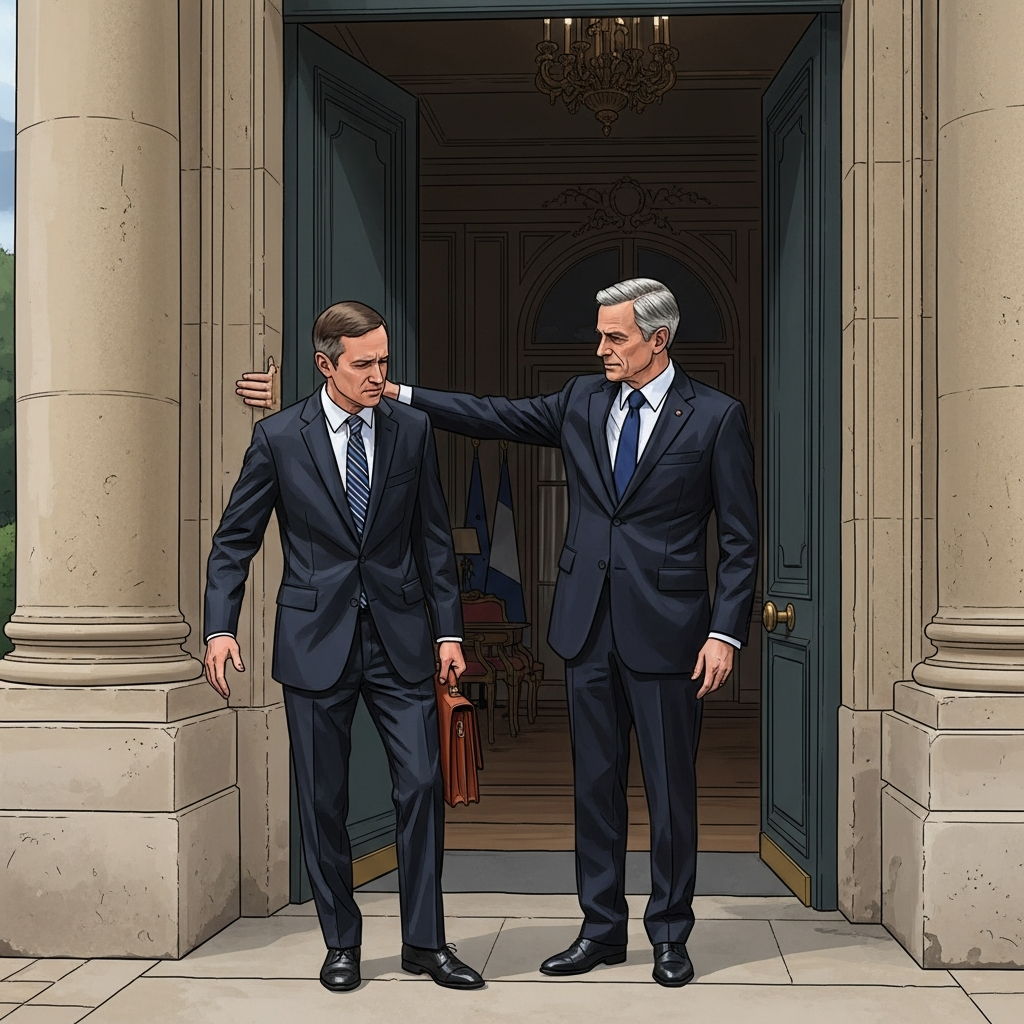
A significant diplomatic rift has emerged between France and the United States, as French officials move to restrict US Ambassador to France Charles Kushner’s direct access to government members. This unprecedented step follows Ambassador Kushner’s repeated failure to attend crucial diplomatic summons, most recently regarding controversial comments from the Trump administration about a far-right activist’s death in Lyon. The incident casts a shadow over the enduring Franco-American relations, signaling a profound breakdown in ambassadorial protocol.
Ambassador Kushner’s Absence Triggers Diplomatic Retaliation
On Monday, February 23, 2026, France’s top diplomat, Foreign Minister Jean-Noël Barrot, announced the severe measure. This action came after Ambassador Charles Kushner, father of President Donald Trump’s son-in-law Jared Kushner, did not appear for a summons at the Quai d’Orsay, the seat of the French Foreign Affairs Ministry. The meeting was intended to address the Trump administration’s remarks concerning the recent beating death of Quentin Deranque, a far-right activist in France.
Minister Barrot minced no words, stating the restriction was “in light of this apparent misunderstanding of the basic expectations of the mission of an ambassador, who has the honor of representing his country.” Diplomatic sources confirmed Kushner’s non-attendance, noting he had reportedly sent a senior embassy official in his place, citing “personal commitments.” This perceived slight at the heart of French diplomacy was a direct challenge to established international norms.
The Provocation: US Commentary on French Internal Affairs
The immediate catalyst for this diplomatic escalation was a statement posted on X (formerly Twitter) by the U.S. State Department’s Counterterrorism Bureau. This statement, later reposted by the U.S. Embassy in France, asserted that “reports, corroborated by the French Minister of the Interior, that Quentin Deranque was killed by left-wing militants, should concern us all.” It further claimed that “violent radical leftism is on the rise and its role in Quentin Deranque’s death demonstrates the threat it poses to public safety.” The post concluded with an expectation for the perpetrators of violence to be brought to justice.
Quentin Deranque, a 23-year-old far-right activist, died of brain injuries earlier this month after a beating in Lyon. The fatal attack occurred during a fight on the margins of a student meeting. A far-left lawmaker was the keynote speaker at the event. His death has dramatically heightened political tensions across France, particularly ahead of the upcoming presidential election. This fragile political climate made the U.S. commentary particularly inflammatory.
France’s Stern Rejection of “Instrumentalization”
French Foreign Minister Barrot vehemently rejected the U.S. statements. Over the weekend, he declared, “We reject any instrumentalization of this tragedy, which has plunged a French family into mourning, for political ends.” His words underscored France’s perception of the U.S. remarks as politically motivated interference in its internal affairs. Barrot delivered a pointed rebuke, adding, “We have no lessons to learn, particularly on the issue of violence, from the international reactionary movement.”
This firm stance highlights France’s commitment to defending its national sovereignty and internal political discourse. The French authorities have already charged six individuals in connection with Deranque’s death, including a parliamentary assistant to a left-wing France Unbowed (LFI) lawmaker. The incident also sparked a large rally in Lyon in support of Deranque, which itself is under investigation for alleged Nazi salutes. President Emmanuel Macron is slated to address growing concerns about “violent action groups” amid the escalating political tensions.
A Pattern of Missed Engagements
This is not the first instance where Ambassador Charles Kushner has bypassed a formal summons from French authorities. In August 2025, Kushner was called to the Quai d’Orsay to discuss a letter he had sent to French President Emmanuel Macron. In that letter, Kushner alleged that France was not doing enough to combat antisemitism. Similar to the current situation, Kushner did not attend that meeting either, sending a representative from the U.S. embassy in his stead.
This pattern of non-attendance raises serious questions about Kushner’s understanding and respect for diplomatic protocols. An ambassador’s direct engagement with the host nation’s government is fundamental to their mission. Repeatedly missing such crucial meetings is widely viewed as a significant breach of diplomatic access and an affront to the host country.
Implications for Franco-American Relations
The decision to restrict an ambassador’s diplomatic access is a grave measure in international relations. It signals a deep level of displeasure and a lack of confidence in the ambassador’s ability or willingness to perform their duties effectively. While the French Foreign Ministry has stated that the “door remains open” for reconciliation, emphasizing the 250-year friendship between the nations, the path forward appears fraught.
The ministry’s statement noted, “It remains, of course, possible for Ambassador Charles Kushner to carry out his duties and present himself at the Quai d’Orsay, so that we may hold the diplomatic discussions needed to smooth over the irritants that can inevitably arise.” This suggests that France expects direct engagement and adherence to protocol to mend the strained Franco-American relations. The ongoing friction, particularly concerning sensitive internal matters and the conduct of the US Ambassador to France, highlights the delicate balance required in bilateral ties.
The Ambassador’s Role in a Crisis
An ambassador serves as the primary bridge between two nations. Their direct diplomatic access facilitates crucial communication, negotiation, and conflict resolution. When this access is curtailed, it effectively hinders the ambassador’s ability to represent their country’s interests at the highest level. Such restrictions can escalate minor disagreements into full-blown diplomatic crises, impacting cooperation on various fronts, from trade to security. The current situation demands careful handling from both sides to prevent further damage to this historically vital alliance.
Frequently Asked Questions
Why did France restrict Ambassador Charles Kushner’s access to its government?
France restricted US Ambassador Charles Kushner’s access due to his repeated failure to attend official summons at the Quai d’Orsay, the French Foreign Affairs Ministry. Most recently, Kushner skipped a meeting called to address controversial comments from the Trump administration. These comments concerned the death of a far-right activist in Lyon and were perceived by France as politically motivated interference in its internal affairs. French Foreign Minister Jean-Noël Barrot cited Kushner’s “apparent misunderstanding of the basic expectations of the mission of an ambassador.”
What were the specific US comments that angered French officials?
The U.S. State Department’s Counterterrorism Bureau, reposted by the U.S. Embassy, issued statements linking the death of Quentin Deranque, a far-right activist, to “violent radical leftism.” They claimed Deranque was “killed by left-wing militants” and that this “should concern us all,” warning that “violent radical leftism is on the rise.” French Foreign Minister Jean-Noël Barrot strongly rejected these assertions. He considered them an “instrumentalization of this tragedy for political ends” and stated France had “no lessons to learn” on violence from “the international reactionary movement.”
What does this diplomatic restriction mean for future US-France relations?
This restriction signifies a serious strain in Franco-American relations, indicating a profound level of displeasure from France. While the French Foreign Ministry has left the door open for reconciliation, expecting Ambassador Kushner to engage directly, the incident highlights significant friction over diplomatic protocol and external commentary on internal affairs. It could hinder high-level cooperation and communication, potentially impacting bilateral efforts in areas like trade, security, and cultural exchange until the underlying issues, particularly regarding respect for sovereignty and diplomatic conduct, are resolved.
Conclusion
The decision by France to restrict US Ambassador Charles Kushner’s direct diplomatic access marks a critical moment in Franco-American relations. It underscores the importance of diplomatic protocol and mutual respect between allied nations. As France navigates heightened internal political tensions ahead of its presidential election, any perceived foreign interference or disrespect for its sovereignty is met with a firm response. The path to reconciliation will require careful diplomacy and a clear demonstration of adherence to established norms from both sides to restore confidence in this long-standing and vital friendship. The world watches to see how this diplomatic friction evolves.