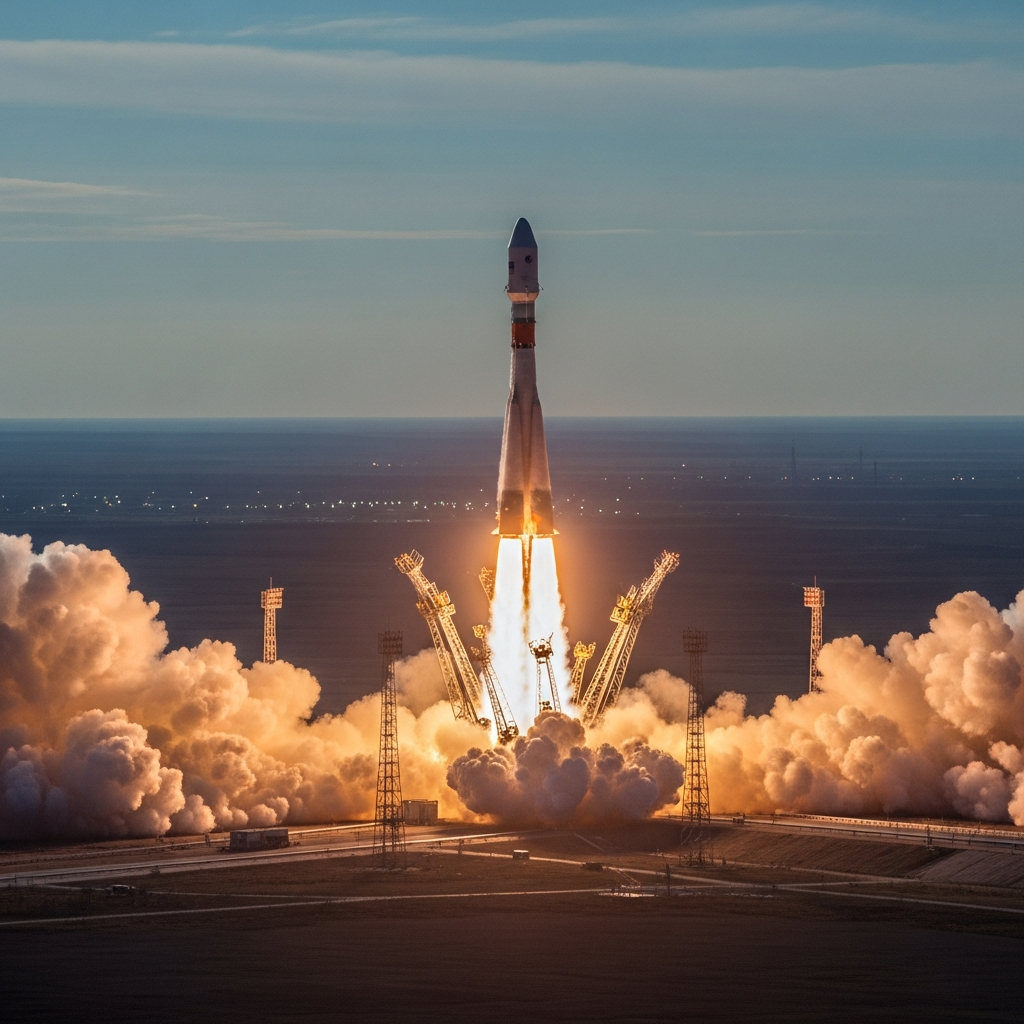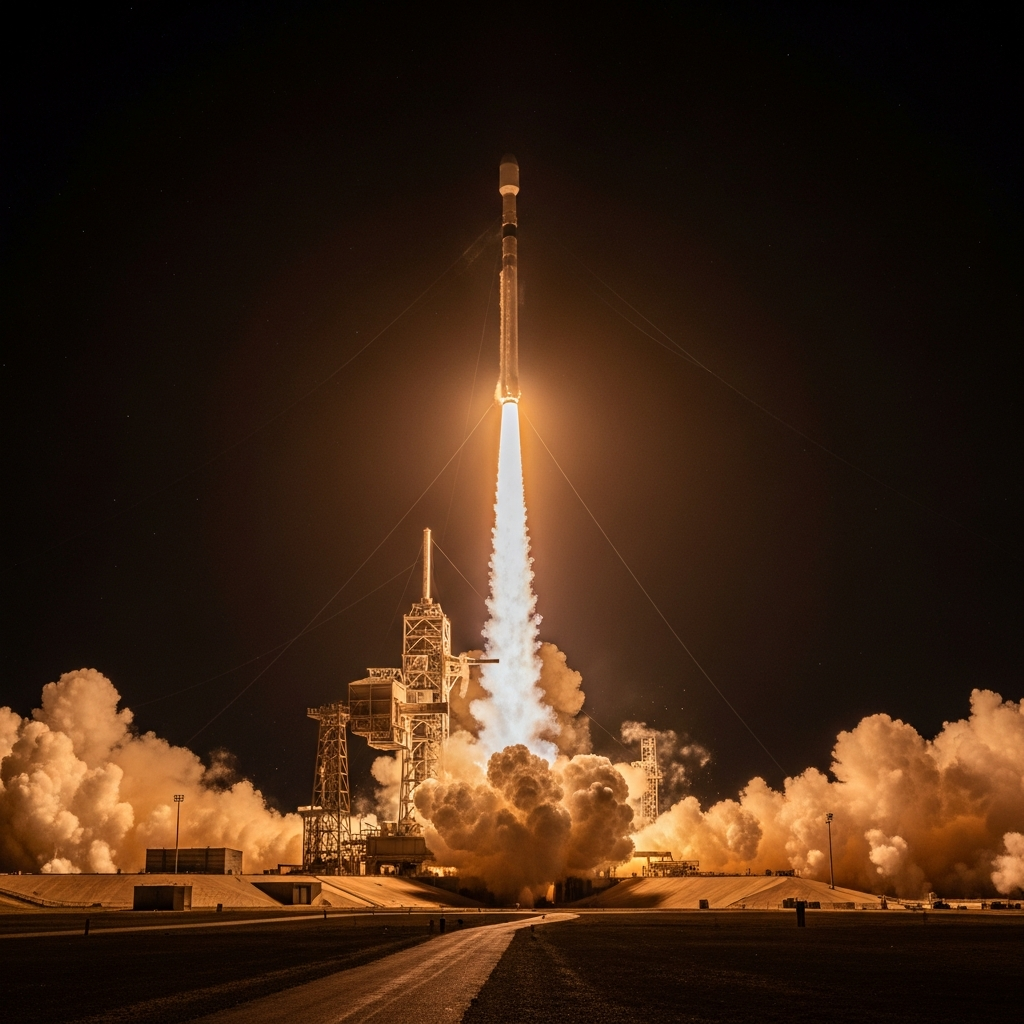
SpaceX is gearing up for a crucial Falcon 9 Starlink launch, deploying 25 internet-beaming satellites from California. After several weather-induced delays, this mission, dubbed Starlink 17-25, is a testament to SpaceX’s relentless operational pace and commitment to expanding global broadband access. This upcoming Starlink mission from Vandenberg Space Force Base promises another significant step forward in connecting the world.
Scheduled for liftoff at 1:04:19 a.m. PST (4:04:19 a.m. EST / 0904:19 UTC), the Falcon 9 rocket will ascend from Space Launch Complex 4 East (SLC-4E) at Vandenberg Space Force Base. Originally set for February 18, the launch faced three postponements due to severe weather across central California, highlighting the challenges of intricate spaceflight operations. The rocket will embark on a southerly trajectory, a common path for polar and sun-synchronous orbit deployments from this West Coast launch site.
Central to this SpaceX Starlink mission is the Falcon 9 first stage booster B1063. This remarkable booster is slated for its 31st flight, making it the third most flown booster in SpaceX’s impressive fleet. Its unparalleled endurance showcases the maturity and success of SpaceX’s reusability program, a cornerstone of its strategy to drastically reduce launch costs and increase flight frequency.
Reusability Redefined: The Legacy of Falcon 9 Booster B1063
Booster B1063 is not just a workhorse; it’s a veteran of diverse space endeavors. Its extensive flight log includes twenty previous batches of Starlink satellites, significantly contributing to the expansion of the vital Starlink internet constellation. Beyond internet connectivity, B1063 has also played a critical role in national security, launching three batches of Starshield satellites for the U.S. military. This versatility underscores its reliability across various mission profiles.
The impressive résumé of B1063 also features a series of high-profile scientific and observational missions. These include the Sentinel-6 Michael Freilich satellite, dedicated to ocean monitoring, and NASA’s Double Asteroid Redirection Test (DART), a pioneering planetary defense mission. Additionally, it facilitated the Transporter-7 rideshare mission, Iridium OneWeb satellites, and the SDA-0B and NAOS missions, demonstrating its crucial support for global communications and scientific research efforts.
Following its primary duty of propelling the Starlink satellites skyward, the first stage of the Falcon 9 rocket will perform a precise landing maneuver. Its target is the autonomous drone ship ‘Of Course I Still Love You’ (OCISLY), strategically positioned downrange in the Pacific Ocean. This planned recovery is a standard yet spectacular part of SpaceX operations, enabling rapid refurbishment and subsequent reuse of these valuable boosters. A successful recovery of B1063 would further solidify SpaceX’s operational efficiency.
The Broader Impact: Falcon 9’s Unprecedented Era of Spaceflight
The Starlink 17-25 launch, while significant on its own, is part of a much larger narrative of innovation and achievement within SpaceX’s reusability program. The Falcon 9 rocket has truly revolutionized access to space, making missions more frequent and affordable than ever before. This continuous deployment of Starlink satellites is a prime example of this new era, pushing the boundaries of what’s possible in orbital mechanics and global connectivity.
Just recently, SpaceX celebrated a monumental milestone with the successful launch of its 600th Falcon 9 rocket. This historic event, part of the Starlink 17-13 mission on February 14, 2026, from Vandenberg’s SLC-4E, also saw booster B1081 complete its 22nd flight. On the very same day, SpaceX’s Crew Dragon spacecraft “Freedom” successfully docked with the International Space Station, marking the company’s 20th human spaceflight mission. These concurrent successes powerfully underscore SpaceX’s robust operational capacity in both cargo and crew transport.
Expanding the Starlink Constellation: A Relentless Pace
SpaceX’s commitment to growing the Starlink constellation is evident in its relentless launch schedule. The Starlink 17-34 mission, for instance, launched 24 satellites from Vandenberg on a Wednesday morning, marking the 12th Starlink mission of the year. This particular mission utilized booster B1100, completing its third flight and successfully landing on OCISLY. Another recent deployment, Starlink 17-20, also saw 25 V2 Mini Optimized satellites launched into polar low Earth orbit by booster B1097, which completed its sixth flight, further expanding the network’s global reach.
Navigating Challenges: SpaceX’s Commitment to Reliability
While SpaceX demonstrates unparalleled success, it also openly addresses operational challenges. A recent instance involved an “off-nominal condition” in the Falcon 9 upper stage following the Starlink 17-32 mission on February 2, 2026. Despite this, the primary mission objective was achieved, with all 25 Starlink V2 Mini Optimized satellites successfully deployed to their intended orbit. Booster B1071, which flew its 31st mission, landed successfully on OCISLY, emphasizing the robustness of the first stage’s reusability.
SpaceX promptly announced the upper stage anomaly, confirming that the vehicle “performed as designed to successfully passivate the stage” after the condition arose. This transparency is crucial for maintaining trust and ensuring continuous improvement. The incident initiated a thorough review of data to determine the root cause, leading to temporary holds or rescheduling for subsequent missions like Starlink 6-103. NASA is also closely monitoring the investigation, particularly concerning its implications for upcoming crewed missions, such as Crew-12, highlighting the stringent safety standards required for human spaceflight.
The Future of Global Connectivity and Space Access
The ongoing Falcon 9 Starlink launch efforts are rapidly reshaping global connectivity. Starlink provides high-speed, low-latency internet services to underserved and remote areas worldwide, offering a vital alternative to traditional terrestrial infrastructure. For users, this means reliable internet access, supporting everything from education and healthcare to emergency services and critical economic development in previously disconnected regions.
Beyond the immediate benefit of internet access, these frequent Starlink deployments by SpaceX underscore a significant shift in the broader space industry. The ability to launch payloads consistently, coupled with pioneering reusability, is driving down costs and accelerating the development of essential space-based infrastructure. This relentless pace is not just about satellites; it’s about unlocking new frontiers in scientific research, national security, and ultimately, humanity’s multi-planetary future.
Frequently Asked Questions
What is the significance of Falcon 9 booster B1063’s 31st flight?
Falcon 9 booster B1063 achieving its 31st flight is a monumental testament to SpaceX’s rocket reusability program. It demonstrates an unprecedented level of engineering durability and operational efficiency, making B1063 the third most flown booster in the fleet. This extensive flight history, including twenty Starlink missions and several critical scientific and military satellite deployments, significantly reduces launch costs and increases launch cadence. It proves that complex orbital-class rockets can be reliably reused dozens of times, a feat once considered impossible in spaceflight.
Where are SpaceX Falcon 9 rockets typically launched from for Starlink missions?
SpaceX Falcon 9 rockets for Starlink missions are primarily launched from two key locations in the United States. For missions requiring a southerly trajectory, such as those deploying satellites into polar or sun-synchronous orbits, launches occur from Space Launch Complex 4 East (SLC-4E) at Vandenberg Space Force Base in California. For missions targeting easterly trajectories, often for higher inclination orbits, launches take place from Cape Canaveral Space Force Station, typically from Launch Complex 40 (SLC-40) or Launch Complex 39A (LC-39A) at Kennedy Space Center in Florida.
How does the recent Falcon 9 upper stage anomaly affect future SpaceX missions?
The recent “off-nominal condition” experienced in a Falcon 9 upper stage during the Starlink 17-32 mission prompted a thorough review by SpaceX. While the primary mission of deploying 25 Starlink satellites was successful, the anomaly led to temporary holds or rescheduling of subsequent Starlink missions, such as Starlink 6-103, to ensure the root cause is identified and addressed before returning to flight. NASA is also closely monitoring the investigation for its implications on future crewed missions, highlighting SpaceX’s commitment to safety and continuous improvement.
Conclusion
The Falcon 9 Starlink launch of 25 satellites, specifically the Starlink 17-25 mission, represents more than just another orbital deployment. It symbolizes SpaceX’s unwavering dedication to innovation, highlighted by booster B1063’s incredible 31st flight and the broader success of their reusability program. Despite facing practical challenges like weather delays and operating within a context of continuous improvement and anomaly investigation, SpaceX consistently pushes the boundaries of space access. These missions rapidly expand the Starlink constellation, delivering essential internet connectivity and propelling humanity further into a future shaped by advanced space technology. As SpaceX continues its ambitious journey, each launch reinforces its position at the forefront of the commercial space industry.