Astronomers have made a groundbreaking discovery, unveiling CDG-2, an exceptionally dim and “ghostly” galaxy composed of an astonishing 99% dark matter. This cosmic enigma challenges our understanding of galaxy formation, offering a rare glimpse into the universe’s unseen architecture. Located some 300 million light-years away in the Perseus galaxy cluster, CDG-2 is one of the most dark matter-dominated galaxies ever identified, detected not by its faint starlight, but by the subtle gravitational tug of its hidden mass. Its unearthing marks a significant step forward in our quest to comprehend the mysterious invisible matter that holds the cosmos together.
Unveiling the “Ghost Galaxy”: What is CDG-2?
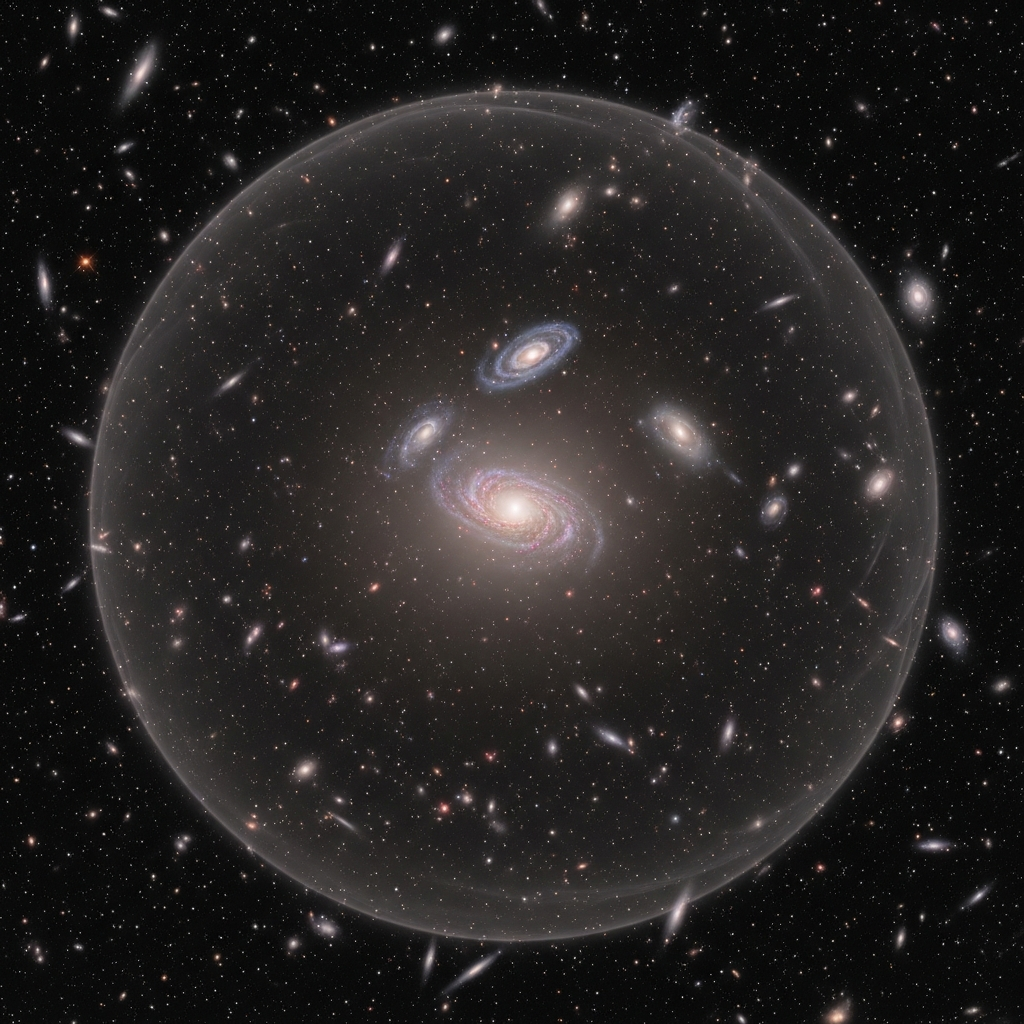
Imagine a galaxy so faint it’s almost invisible, harboring only a sparse scattering of stars. That’s CDG-2, a celestial body officially designated Candidate Dark Galaxy-2. This ultra-dim system is categorized as a “dark galaxy,” a rare class of galactic structures characterized by an overwhelming abundance of dark matter and very little visible material. Unlike the grand, spiral arms of the Milky Way, CDG-2 emits light equivalent to a mere six million Sun-like stars, a minuscule fraction compared to typical galaxies containing billions.
The most profound aspect of CDG-2 is its composition: a staggering 99% of its total mass is attributed to dark matter. This dramatically amplifies the usual cosmic ratio, where dark matter typically outweighs ordinary matter by about five to one. Situated within the dense Perseus galaxy cluster, CDG-2’s extreme dark matter dominance presents a unique laboratory for studying the properties of this elusive substance and its pivotal role in shaping the universe.
The Ingenious Hunt: How Astronomers Found the Unseen
Detecting a galaxy like CDG-2 poses an immense challenge. Its low surface brightness makes direct observation nearly impossible with conventional methods. To overcome this hurdle, a team led by David Li of the University of Toronto employed an innovative statistical technique. Instead of searching for faint starlight, they looked for tightly packed globular clusters. These dense, spherical collections of ancient stars typically orbit galaxies, acting as “cosmic breadcrumbs” that betray the presence of a hidden, faint galactic core.
This ingenious approach allowed the team to pinpoint potential dark galaxy candidates. They initially identified ten previously confirmed low-surface-brightness galaxies and two entirely new dark galaxy possibilities. It was among these elusive candidates that CDG-2 stood out, presenting an anomaly that warranted further, more detailed investigation. The method proved remarkably effective, showcasing a new frontier in astronomical detection.
A Cosmic Collaboration: Tools of Discovery
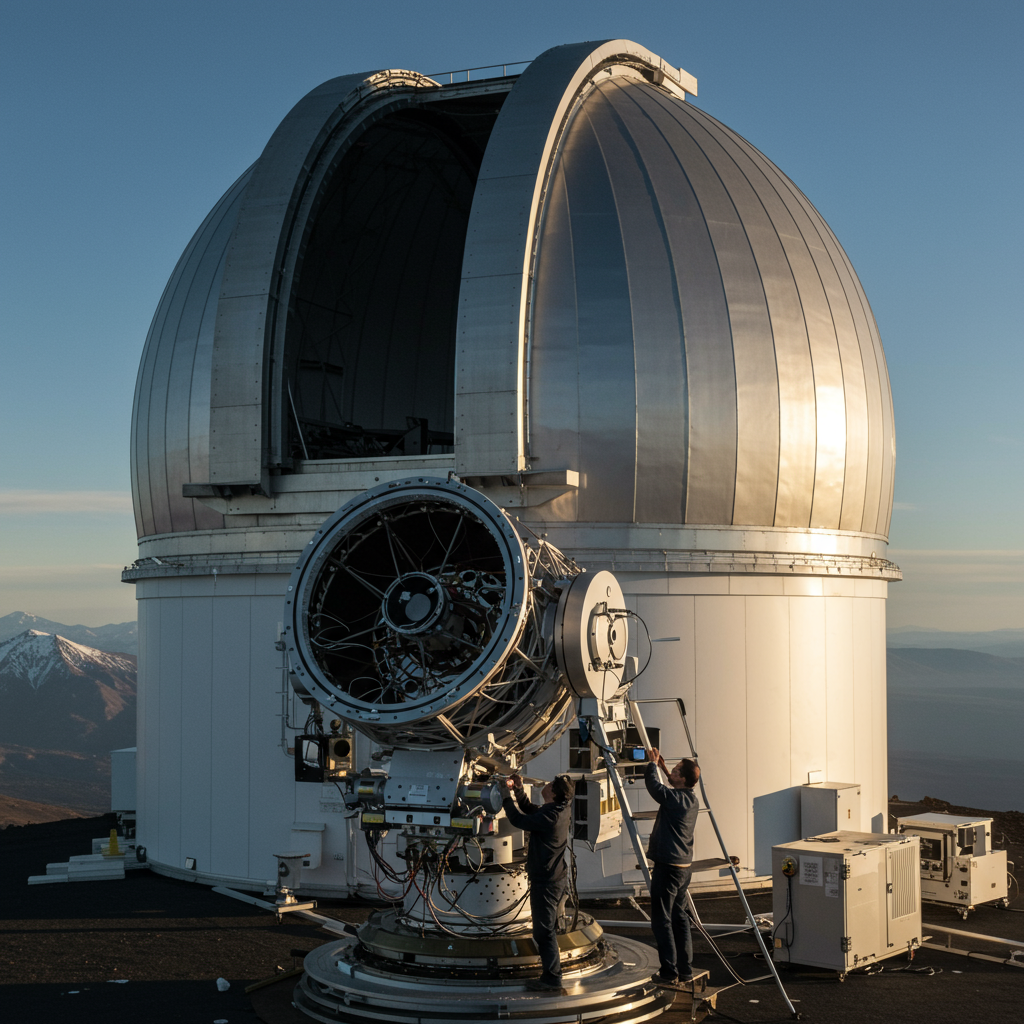
To confirm the existence of CDG-2, astronomers leveraged the combined power of three world-class observatories. The NASA Hubble Space Telescope provided high-resolution images, crucial for resolving the fine details of the distant Perseus galaxy cluster. It revealed a close collection of four globular clusters – unusually tight grouping that hinted at a powerful, unseen gravitational force holding them together.
The European Space Agency’s Euclid space observatory and the ground-based Subaru Telescope in Hawaii contributed additional critical data. By integrating observations from all three instruments, scientists uncovered a faint, diffuse glow surrounding these star clusters. This subtle halo of light provided irrefutable evidence of an underlying galaxy. David Li emphasized the groundbreaking nature of this confirmation, stating that CDG-2 is “the first galaxy detected solely through its globular cluster population,” with these four clusters conservatively representing its entire globular cluster system.
CDG-2’s Extreme Makeup: A Dark Matter Dominance
The analysis of CDG-2 paints a picture of extreme cosmic imbalance. While the galaxy shines with the luminosity of about six million Sun-like stars, a significant 16% of this meager light originates from its four detected globular clusters. This means the vast, diffuse components of the galaxy contribute very little visible material. The most striking finding, however, remains the estimation that an astounding 99% of CDG-2’s total mass is composed of dark matter.
This unparalleled ratio challenges many existing models of galaxy formation and evolution. In typical galaxies, while dark matter is abundant, visible matter (stars, gas, dust) still plays a prominent role. CDG-2 pushes the boundaries of this balance, presenting a unique case study where the invisible dominates almost entirely. Understanding how such an extreme system forms and survives offers crucial insights into the pervasive influence of dark matter across the cosmos.
Why So Dark? The Tale of Tidal Stripping
Scientists hypothesize that CDG-2 likely once contained more stars and gas, similar to other galaxies. However, its location within the dense Perseus galaxy cluster may hold the key to its current, nearly invisible state. Powerful gravitational interactions with other massive galaxies in this crowded environment are thought to have stripped away much of CDG-2’s visible matter, including the hydrogen gas necessary for star formation.
This phenomenon, known as tidal stripping, left behind a galaxy severely depleted in normal matter. Crucially, the tightly bound nature of globular clusters allowed them to withstand this gravitational disruption. Being extremely dense and gravitationally robust, they are more resilient than the diffuse components of a galaxy. This characteristic makes them dependable tracers for locating faint, ghost-like galaxies that would otherwise remain undetectable, proving their vital role in CDG-2’s discovery.
Peering into the Future: Implications for Astronomy
The discovery of CDG-2 has profound implications for astronomy. It highlights that our current census of galaxies might be significantly underestimated, as many more low-surface-brightness, dark matter-dominated systems could be lurking undetected in the universe. The new detection technique, focusing on the gravitational signatures of globular clusters, offers a promising pathway to uncovering these hidden cosmic entities.
Looking ahead, this breakthrough underscores the evolving landscape of astronomical research. As large sky surveys expand with missions like ESA’s Euclid, NASA’s upcoming Nancy Grace Roman Space Telescope, and the Vera C. Rubin Observatory, researchers will be grappling with enormous volumes of data. The increasing reliance on sophisticated statistical tools and machine learning will be essential in sifting through this information, promising a wealth of future discoveries of such elusive dark matter-dominated galaxies. The continued contributions of the Hubble Space Telescope, operational for over three decades, remain pivotal in shaping our fundamental understanding of the universe.
Frequently Asked Questions
What makes CDG-2 a “dark galaxy” and why is it significant?
CDG-2 is classified as a “dark galaxy” because an astonishing 99% of its total mass is composed of dark matter, with only a tiny fraction of visible stars and gas. This extreme imbalance, far exceeding the typical dark matter-to-normal matter ratio in most galaxies, makes it one of the most dark matter-dominated systems ever found. Its significance lies in providing astronomers with a unique natural laboratory to study dark matter’s properties and its gravitational influence on galaxy evolution, challenging existing models of how galaxies form and develop.
How did scientists manage to detect CDG-2 despite its near invisibility?
Detecting CDG-2 was extremely challenging due to its very low luminosity, making it nearly invisible to traditional methods. Scientists, led by David Li, used an innovative approach: they searched for tightly packed globular clusters. These dense star groups, often found orbiting galaxies, act as gravitational markers. By combining data from the NASA Hubble Space Telescope, ESA’s Euclid space observatory, and the Subaru Telescope, they first identified four closely grouped clusters. Subsequent analysis revealed a faint, diffuse glow surrounding these clusters, confirming the presence of the hidden galaxy.
What does the discovery of CDG-2 teach us about dark matter and galaxy evolution?
The discovery of CDG-2 provides crucial evidence for the pervasive influence of dark matter and offers new insights into galaxy evolution. Its extreme dark matter content suggests that some galaxies can lose nearly all their visible material, likely through powerful gravitational interactions (tidal stripping) with neighboring galaxies in dense environments like the Perseus cluster. The resilience of its globular clusters, which survived these stripping events, also highlights their importance as tracers for such elusive systems. This finding implies that many more dark, undetected galaxies might exist, potentially altering our estimates of the total number of galaxies in the universe and deepening our understanding of dark matter’s role.
Conclusion: A Glimpse into the Universe’s Hidden Depths
The discovery of CDG-2 represents a monumental achievement in astronomy, pulling back the veil on one of the universe’s most profound mysteries. This ghostly galaxy, almost entirely comprised of invisible dark matter, provides an unprecedented opportunity to study the elusive substance that fundamentally shapes cosmic structures. It underscores the power of innovative detection techniques and international scientific collaboration, pushing the boundaries of what we thought possible to observe. As future observatories continue to scan the skies, discoveries like CDG-2 will undoubtedly lead us closer to a complete understanding of our dark and wondrous universe.