Our digital world is drowning in data. Each year, global data volumes explode, creating an urgent need for storage solutions that can keep information safe for centuries, not just decades. Enter Microsoft’s Project Silica, a groundbreaking initiative using everyday glass to store digital data for an astounding 10,000 years. This revolutionary technology promises to redefine how humanity preserves its most valuable knowledge, offering a sustainable, ultra-long-term archive solution far beyond the lifespan of current magnetic tapes and hard drives.
The Looming Data Crisis: Why Ultra-Long-Term Storage Matters
The sheer volume of data generated worldwide is staggering, projected to nearly triple by 2028. This digital deluge presents a monumental challenge for preservation. Traditional archival methods, like magnetic tape, typically degrade within 30 years. Hard drives and solid-state drives offer even shorter lifespans for cold storage. This constant need for data migration is costly, energy-intensive, and carries the risk of “bit rot”—the silent decay of digital information. We are rapidly accumulating petabytes upon zettabytes of critical data with no truly permanent home. Cultural records, scientific discoveries, and historical archives all demand a solution that transcends generations and technological shifts. Project Silica directly confronts this challenge, proposing a passive, durable, and energy-efficient medium for millennia-long preservation.
Microsoft Project Silica: A Glimpse into the Future of Archival
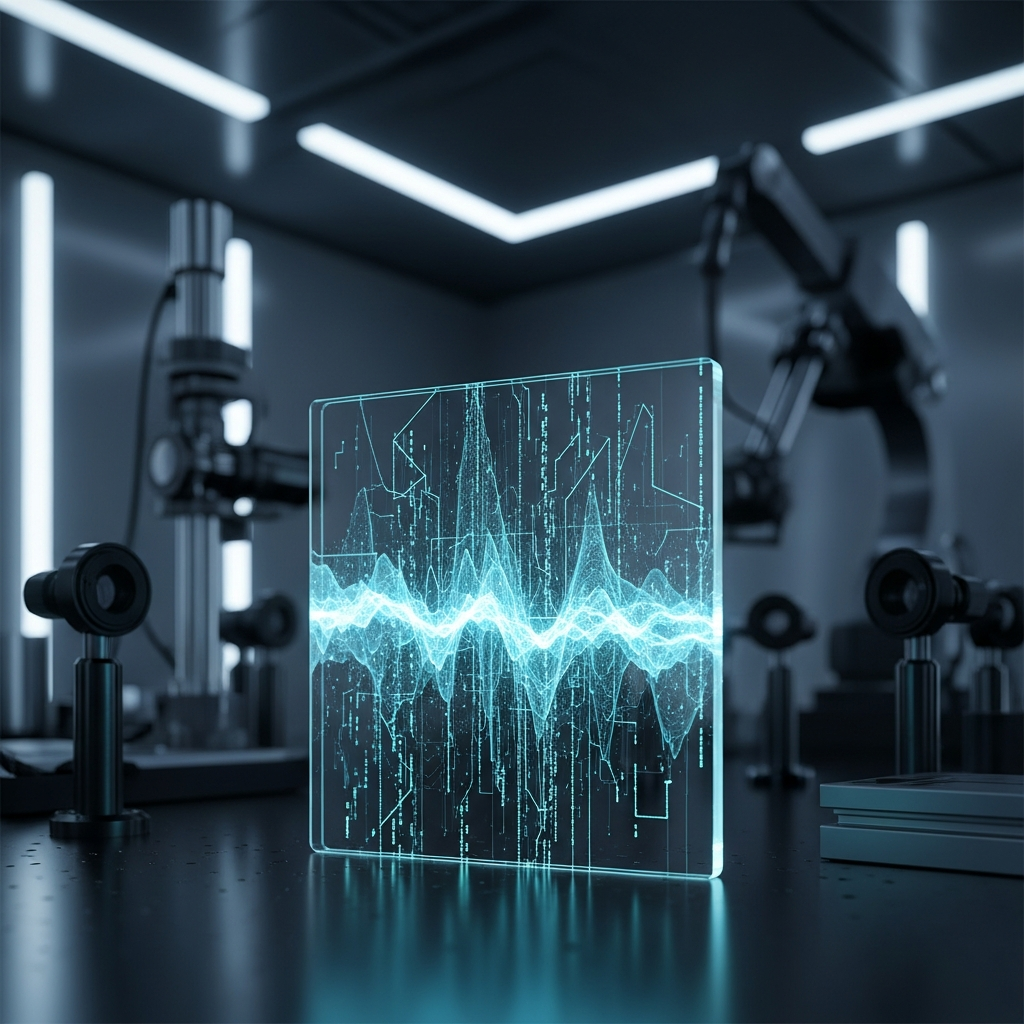
At its core, Project Silica leverages the inherent stability of glass, a material known for its resistance to extreme temperatures, water, and electromagnetic interference. Microsoft Research scientists employ ultrafast femtosecond lasers to write data directly into the glass. These lasers create tiny, permanent physical modifications within the material, forming three-dimensional data units called “voxels.” Unlike surface-based storage, this deep encoding protects data from superficial damage, ensuring integrity even if the glass surface is scratched.
How Glass Becomes a Digital Archive: The Science Behind Silica
The advancement in Project Silica is rooted in sophisticated scientific breakthroughs. Initially, the technology relied on expensive, high-purity fused silica. A major leap involves the successful transition to borosilicate glass. This common, lower-cost material, often found in kitchen cookware, makes the technology significantly more viable for commercialization.
Researchers have developed two primary voxel types:
Birefringent Voxels: These create optically anisotropic nanovoids. They were refined to require only two laser pulses (a “seed” and “data” pulse) per voxel, enabling faster writing.
Phase Voxels: A newer, novel method, phase voxels induce isotropic refractive index changes. Crucially, they require only a single laser pulse per voxel, further boosting efficiency and reducing power consumption. Phase voxels are also compatible with the more affordable borosilicate glass.
Both methods allow for incredible data density. Hundreds of data layers can be stacked within a 2-millimeter-thick glass pane. Data retrieval is equally innovative, using an automated optical microscope combined with machine learning algorithms. These algorithms interpret subtle changes in the glass’s optical properties to reconstruct the original digital information. This reading process is contact-free, preventing wear and tear.
Unprecedented Longevity and Durability
The standout feature of Microsoft’s Project Silica is its remarkable 10,000-year projected data lifespan. This isn’t just an optimistic guess; it’s backed by rigorous scientific testing.
The 10,000-Year Promise: Beyond Bit Rot
Microsoft scientists conducted accelerated aging tests, repeatedly heating inscribed glass plates to 500 °C. By simulating centuries of environmental wear under extreme conditions, they validated the data’s readability. These tests, combined with the Arrhenius law, provide robust evidence that data stored on these glass plates could remain readable for over 10,000 years at room temperature.
The inherent properties of glass contribute greatly to this longevity. It resists:
Heat: Stable across wide temperature ranges.
Water and Chemicals: Impervious to moisture and many corrosive substances.
Dust and Electromagnetic Interference (EMI): A passive medium unaffected by common environmental hazards.
Unlike traditional media that rely on delicate magnetic patterns or electrical charges, Project Silica creates permanent physical changes. This deep encoding means that even significant surface damage or electromagnetic interference will not compromise the deeply embedded data.
Boosting Performance: Density, Speed, and Efficiency
Project Silica is not just about longevity; it’s also about impressive performance metrics for archival needs. The system aims to be practical and efficient for large-scale deployments.
Packing Terabytes into a Small Pane
The storage density is remarkable, reaching up to 1.59 gigabits per cubic millimeter in fused silica. This translates to an incredible 4.84 terabytes (TB) of data on a single 12-square-centimeter, 2-millimeter-thick glass chip. To put this in perspective, one such plate could hold the equivalent of approximately 2 million printed books or 5,000 ultra-high-definition 4K films. For borosilicate glass, it achieves 2.02 TB per platter.
Efficiency extends to the writing process. The development of single-pulse writing for phase voxels drastically reduces power consumption. Furthermore, a multi-beam delivery system allows for parallel writing, meaning numerous data voxels can be created simultaneously. This innovation significantly boosts writing speeds, reaching up to 25.6 megabits per second (Mbit/s) per beam, with multibeam configurations pushing throughput much higher. Simplified reading hardware, requiring just a single camera, also contributes to cost reduction and practicality.
Sustainable Storage for a Digital Age
In an era acutely aware of environmental impact, Project Silica offers a compelling vision for sustainable data archiving.
Green Archiving: Reducing the Environmental Footprint
Traditional data centers are energy hogs, consuming vast amounts of power for operations, cooling, and the constant migration of data from aging media. Project Silica’s glass is a passive storage medium. Once data is written, the glass plates can be stored offline in air-gapped libraries, drawing absolutely no power until retrieved for reading. This eliminates frequent media refresh cycles, significantly reducing the energy, manufacturing, shipping, and disposal environmental footprints over the long term. This reduced operational expenditure over multi-century horizons could lead to a lower total cost of ownership compared to repeated media refreshing.
Real-World Applications and Security
Project Silica is not designed to replace your everyday SSD or hard drive. Instead, it’s an “ultra-cold storage tier,” optimized for “write once, preserve for a very long time” archival scenarios where data access is infrequent but permanence is paramount.
Who Benefits from 10,000-Year Storage?
The applications for such robust, long-term storage are vast:
Cloud Archives: Hyperscale cloud providers can offer a truly permanent archival tier for historical logs, compliance data, and rarely accessed backups.
National Libraries and Cultural Institutions: Preserving humanity’s cultural heritage, literature, and art for future generations.
Scientific Research Data: Ensuring the integrity of crucial scientific datasets for centuries.
Government and Legal Records: Maintaining permanent records securely and reliably.
Microsoft has already demonstrated the technology’s capability by storing Warner Bros.’ “Superman” movie on quartz glass and collaborating with initiatives like the Global Music Vault.
Security is another significant advantage. Since glass plates typically reside in air-gapped libraries, they are physically isolated from networks. This provides robust protection against malware, remote attacks, and ransomware, as the inert data cannot be modified or encrypted once offline. Data can also be encrypted before writing for an additional layer of security.
Challenges and the Path Forward
While Project Silica presents an incredibly promising future, challenges remain. The specialized femtosecond lasers, optics, and robotics required for the system are currently expensive and not yet mass-produced. This high upfront cost poses a barrier to widespread scalability, at least in the short term.
However, Microsoft Research has concluded its research phase and is actively sharing its findings. This open approach encourages the broader scientific and engineering community to build upon these foundational advancements, fostering innovation that could drive down costs and accelerate development. Future advancements are expected in areas like:
Higher numerical aperture (NA) optics, potentially quadrupling data density.
More advanced machine learning models for even better reading and decoding.
Further improvements in femtosecond laser technology (e.g., higher repetition rates).
- The development of automated robotic glass libraries for seamless integration into data center ecosystems.
- www.microsoft.com
- spectrum.ieee.org
- www.nature.com
- www.techtimes.com
- www.techzine.eu
Project Silica represents a monumental step towards solving the critical problem of digital longevity, paving the way for a future where humanity’s digital legacy is truly indelible.
Frequently Asked Questions
How does Microsoft’s Project Silica store data in glass for so long?
Project Silica uses ultrafast femtosecond lasers to create permanent, physical structural changes, called voxels, within sheets of borosilicate glass. These voxels are tiny, three-dimensional modifications that encode digital information across hundreds of layers. Unlike magnetic or electronic storage, the data is embedded deep within the glass, which is inherently resistant to heat, water, dust, and electromagnetic interference. Accelerated aging tests on these inscribed glass plates confirm that data can remain readable for over 10,000 years by simulating centuries of environmental wear.
Where will Project Silica primarily be used?
Project Silica is designed for “write-once, read-rarely” archival storage scenarios, not for everyday active data. Its primary applications will be in large-scale cloud environments, national libraries, scientific research data archives, and cultural preservation initiatives. It will serve as an “ultra-cold storage tier” for critical data that needs to be preserved for centuries, such as historical records, compliance archives, and vast scientific datasets, effectively creating a long-term memory for civilization.
Is Project Silica a replacement for everyday hard drives or SSDs?
No, Project Silica is not intended to replace everyday storage solutions like hard drives (HDDs) or solid-state drives (SSDs). HDDs and SSDs are optimized for active, low-latency, and frequently accessed data workloads. Project Silica, conversely, is an archival technology built for extreme longevity (10,000 years) with a “write-once, preserve for a very long time” model, where data access is infrequent but permanence is paramount. It represents a distinct, ultra-cold storage tier for different data preservation needs.
Conclusion:
Microsoft’s Project Silica is more than just a technological marvel; it’s a vital answer to one of the most pressing challenges of our digital age: preserving information for future generations. By harnessing the enduring power of everyday glass, this initiative offers an unprecedented 10,000-year data lifespan, coupled with high density, energy efficiency, and robust security. As data volumes continue their exponential growth, innovations like glass data storage will be crucial in building a sustainable, long-term memory for humanity. The journey from research breakthrough to widespread implementation is ongoing, but the promise of an indelible digital archive is now within our grasp.