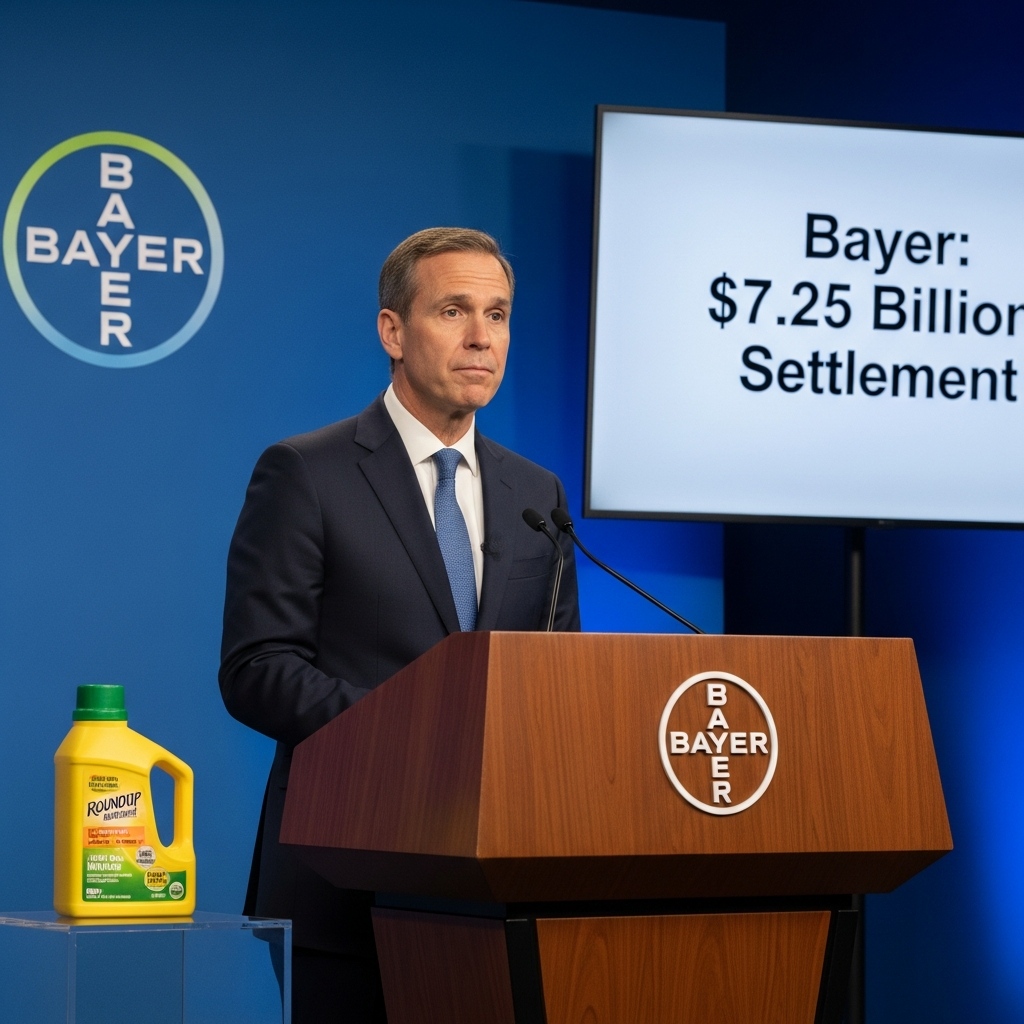
Bayer has announced a significant proposed $7.25 billion nationwide settlement, aiming to resolve thousands of U.S. lawsuits alleging its popular weedkiller Roundup causes cancer. This landmark Bayer Roundup settlement, filed in St. Louis, Missouri, offers a potential path to closure for individuals diagnosed with non-Hodgkin lymphoma after Roundup exposure, while the company maintains its long-held stance on the product’s safety. The agreement seeks to address most remaining claims and even future cases, marking a pivotal moment in the ongoing Roundup cancer lawsuits saga.
This proposed deal arrives as Bayer faces immense pressure, including a crucial U.S. Supreme Court review slated for April regarding its argument that federal law should shield it from state-level “failure-to-warn” claims. Despite the company’s dispute over the link between glyphosate, Roundup’s active ingredient, and cancer, mounting legal costs have threatened its agricultural market position. This settlement, if approved, represents a strategic move to mitigate risk for both parties, guaranteeing compensation for plaintiffs while protecting Bayer from potentially larger financial penalties.
The Historic Bayer Roundup Settlement Unpacked
The proposed Bayer Roundup settlement is designed to bring an end to years of litigation uncertainty that has plagued the agrochemical giant since its 2018 acquisition of Monsanto, the original maker of Roundup. This new agreement comes after approximately 77,000 claims were resolved through earlier, separate settlements. Bayer CEO Bill Anderson articulated that the settlement offers “a road to closure,” allowing the company to refocus on its core mission and innovation.
The agreement, filed in the St. Louis Circuit Court, targets about 200,000 Roundup-related claims, including over 125,000 plaintiffs who have initiated lawsuits since 2015. It encompasses individuals exposed to Roundup before the settlement announcement, as well as those who might file future claims. Critically, the settlement is conditional; Bayer reserves the right to cancel if too many plaintiffs opt out, although the specific threshold remains undisclosed.
Key Terms of the Agreement
Under the proposed settlement, Bayer will contribute annual payments into a special fund for up to 21 years, potentially reaching the full $7.25 billion. Individual payouts will vary substantially, depending on several crucial factors:
Exposure Level: How extensively the individual used Roundup.
Age at Diagnosis: Their age when diagnosed with non-Hodgkin lymphoma.
- Severity of Illness: The aggressiveness and impact of their cancer.
- apnews.com
- finance.yahoo.com
- www.dw.com
- www.upi.com
- www.firstalert4.com
For example, an agricultural worker with extensive, prolonged exposure, diagnosed with an aggressive form of non-Hodgkin lymphoma before age 60, could receive an average of $165,000. In contrast, a residential user diagnosed with a less aggressive form between ages 60-77 might receive around $20,000, while those diagnosed at age 78 or older could average $10,000. These variations highlight an attempt to tailor compensation to the unique circumstances of each claimant.
Navigating the Contested Science and Legal Terrain
Bayer staunchly maintains that glyphosate does not cause non-Hodgkin lymphoma, citing decades of studies and regulatory approvals. The U.S. Environmental Protection Agency (EPA) has also stated that glyphosate is “not likely to be carcinogenic to humans when used as directed,” and the federally approved Roundup label includes no cancer warning. This scientific contention is central to Bayer’s legal defense and its broader corporate strategy.
However, many plaintiffs and some independent studies have drawn a link between glyphosate exposure and non-Hodgkin lymphoma. This scientific debate has fueled the protracted legal battles, with mixed results in court. While Bayer has secured 13 verdicts in its favor, plaintiffs have won 11, including a significant $2.1 billion award from a Georgia jury last year. These varied outcomes underscore the legal uncertainties both sides have faced.
The Looming Supreme Court Case
A pivotal factor influencing the timing and structure of this Bayer Roundup settlement is the upcoming U.S. Supreme Court hearing. Bayer is appealing a Missouri case that awarded $1.25 million to a man with non-Hodgkin lymphoma, arguing that federal pesticide laws should preempt states from adopting additional labeling requirements. This “preemption argument” suggests that if the EPA approves a label without a cancer warning, states cannot allow “failure-to-warn” lawsuits.
The Supreme Court’s decision could significantly impact Bayer’s future liability. If the court rules in Bayer’s favor, it could invalidate many existing state-level claims and prevent future lawsuits based on similar “failure-to-warn” arguments. Conversely, a ruling against Bayer could open the floodgates to even more expensive litigation. While the proposed settlement does not directly affect the Supreme Court case, it strategically insulates Bayer from potentially catastrophic losses and provides plaintiffs with guaranteed compensation, regardless of the high court’s ultimate ruling.
Mixed Reactions and Broader Implications
Reactions to the proposed Bayer Roundup settlement are varied. Christopher Seeger, an attorney who would represent current claimants under the agreement, hailed it as a “historic step” offering a “clear, streamlined path to compensation” for both current and future sufferers. He emphasized the agreement’s speed, transparency, and security, especially amidst ongoing Supreme Court review.
However, not all plaintiffs’ attorneys are enthusiastic. Matt Clement, representing approximately 280 Roundup plaintiffs, expressed surprise and predicted many of his clients would opt out. He found the proposed payouts “exceedingly too small,” reflecting the challenge of reaching a settlement that satisfies all parties impacted by serious health issues. The right of plaintiffs to opt out is a critical feature, allowing individuals to pursue their own claims if they believe the class-action settlement does not adequately address their specific situation.
Changing Market Dynamics and Lobbying Efforts
Due to the intense litigation surrounding Roundup cancer lawsuits, Bayer has already ceased using glyphosate in Roundup products sold in the U.S. residential lawn and garden market. However, glyphosate remains a key component in agricultural Roundup products, vital for use with genetically modified seeds that resist the herbicide. This bifurcation of the market underscores the differing regulatory and public perception challenges for residential versus commercial use.
Beyond the courtroom, Bayer has actively lobbied state legislatures to enact laws shielding pesticide manufacturers from “failure-to-warn” lawsuits when their products comply with federal labeling requirements. North Dakota enacted such a law in April, followed by Georgia in May. These legislative efforts illustrate Bayer’s multi-pronged approach to manage its legal exposure and solidify its position in the agricultural sector. The Trump administration’s reversal of the Biden administration’s stance, weighing in on Bayer’s behalf in the Supreme Court case, further highlights the political dimensions of this complex issue.
Frequently Asked Questions
What is the Bayer Roundup settlement about?
The Bayer Roundup settlement is a proposed $7.25 billion nationwide agreement aimed at resolving thousands of U.S. lawsuits alleging that Bayer’s weedkiller, Roundup, causes non-Hodgkin lymphoma. Filed in St. Louis, Missouri, this settlement offers compensation to individuals diagnosed with this cancer after exposure to Roundup, providing a resolution path for current and some future claims. Bayer, while agreeing to the payout, continues to dispute any link between glyphosate (Roundup’s active ingredient) and cancer.
Who is eligible for compensation from the Roundup settlement?
Eligibility for compensation from the proposed Bayer Roundup settlement generally includes individuals who were exposed to Roundup prior to the settlement announcement date and subsequently received a medical diagnosis of non-Hodgkin lymphoma. The settlement also aims to cover individuals diagnosed with non-Hodgkin lymphoma within 16 years of the proposed settlement gaining final approval. Specific payout amounts vary widely based on factors such as the extent of Roundup usage, the individual’s age at diagnosis, and the severity of their illness.
What are the implications of the settlement for future Roundup lawsuits?
This proposed Roundup cancer lawsuits settlement is designed to address the bulk of remaining lawsuits and future claims from individuals exposed before the announcement. It offers a “road to closure” from years of litigation uncertainty for Bayer. Crucially, it provides guaranteed compensation for eligible plaintiffs, irrespective of the outcome of Bayer’s upcoming Supreme Court appeal regarding federal preemption. However, plaintiffs retain the right to opt out, and if too many do, Bayer reserves the right to cancel the settlement, potentially leading to continued individual litigation.
Conclusion
The proposed $7.25 billion Bayer Roundup settlement represents a monumental development in the protracted legal battle surrounding the popular weedkiller. While it signifies a strategic move by Bayer to mitigate financial risks and achieve a “road to closure,” it also offers substantial compensation to thousands of individuals affected by non-Hodgkin lymphoma. The agreement’s success hinges on court approval and the willingness of plaintiffs to opt in, with mixed reactions already surfacing regarding the adequacy of the proposed payouts.
This settlement’s interplay with the impending U.S. Supreme Court decision on federal preemption adds another layer of complexity, highlighting the intricate legal and scientific challenges inherent in product liability cases involving agrochemicals. As the legal landscape continues to evolve, this Bayer Roundup settlement underscores the enduring tension between corporate interests, public health concerns, and the pursuit of justice in a complex regulatory environment. This historic agreement aims to reshape the future for Bayer and thousands of claimants alike, though the ultimate resolution remains to be seen.