North Korea has unveiled a significant new housing district in Pyongyang, named Saeppyol Street, dedicated to the families of soldiers killed fighting alongside Russian forces in Ukraine. This strategic move, personally championed by leader Kim Jong Un, aims to honor the “young martyrs” and bolster national unity amidst Pyongyang’s deepening military alliance with Moscow. Analysts view the initiative as a crucial component of an intensified state propaganda campaign, meticulously timed to precede a major Workers’ Party congress and further solidify Kim’s domestic control while justifying costly foreign military engagements.
North Korea Honors Its Fallen: Saeppyol Street Unveiled
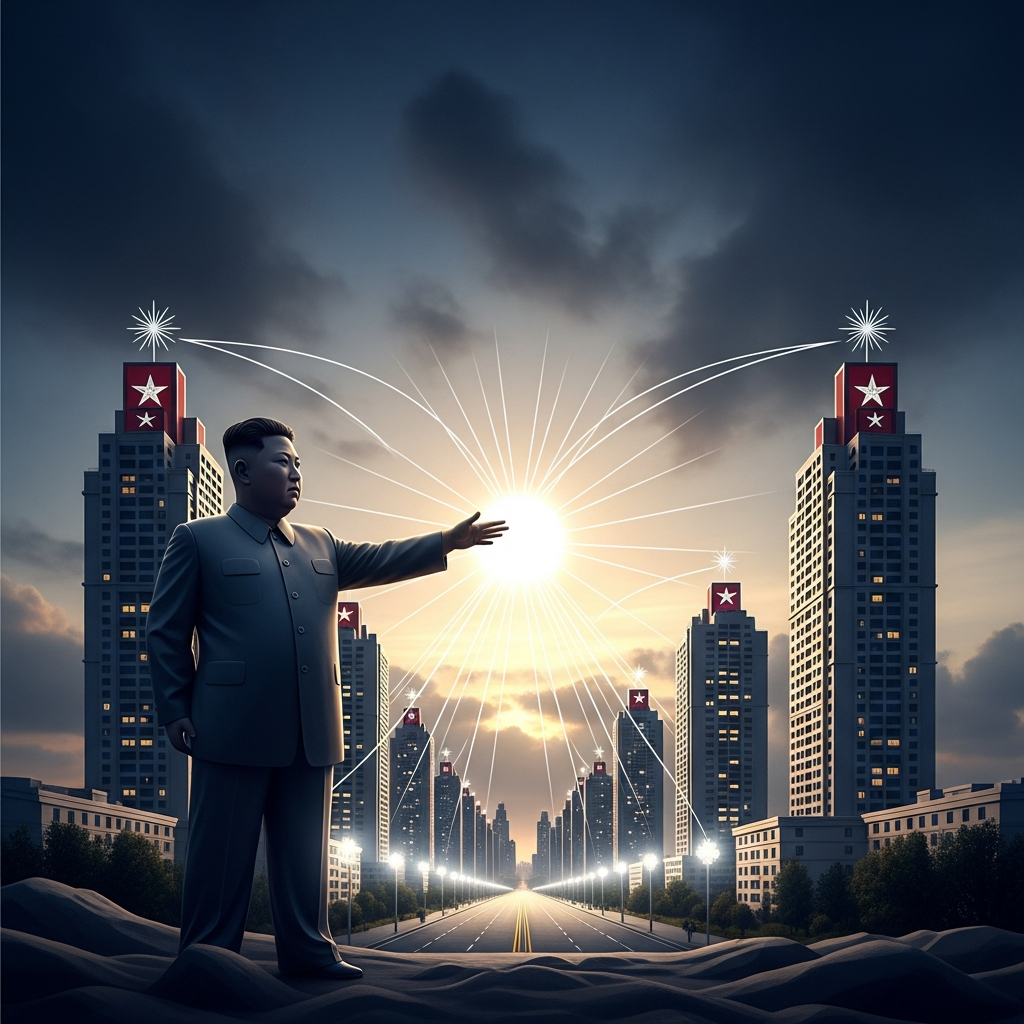
In a widely publicized ceremony on Sunday, February 15, 2026, North Korean leader Kim Jong Un officially opened Saeppyol Street, a new housing complex in Pyongyang. This purpose-built district is exclusively designated for the bereaved families of North Korean soldiers who perished while fighting in Ukraine. State media reports highlighted Kim Jong Un’s presence at the event, where he was seen touring the new street and visiting the homes of several families. He was accompanied by his increasingly prominent daughter, believed to be Kim Ju Ae.
A Symbol of Sacrifice and State Support
During the ceremony, Kim Jong Un delivered a poignant speech, pledging to repay the “young martyrs” who “sacrificed all to their motherland.” He emphasized his personal commitment to completing the project swiftly, hoping to provide “some small comfort” and allow the bereaved families to “take pride in their sons and husbands.” This initiative, located in the capital’s Hawasong area, is presented as a tangible demonstration of the state’s care and gratitude for military sacrifice. The lavish housing serves as a powerful symbol, designed to cultivate loyalty and mitigate any potential public discontent stemming from the human cost of North Korea’s military involvement overseas.
Pyongyang’s Deepening Alliance with Moscow
The construction and unveiling of Saeppyol Street underscore North Korea’s intensified support for Russia in its ongoing conflict with Ukraine. In recent months, Kim Jong Un has authorized the transfer of substantial military equipment, including artillery shells and missiles, to aid the Russian war effort. This military assistance forms a critical part of a strategic alignment between Kim and Russian President Vladimir Putin, as both leaders confront separate challenges from Washington and its allies. Kim has publicly affirmed “unconditional support” for all of Putin’s policies, signaling a robust and enduring partnership.
North Korea’s Military Contribution to the Ukraine War
Beyond material aid, North Korea has also deployed thousands of its troops to fight alongside Russian forces. According to South Korean, Ukrainian, and Western intelligence sources, North Korea sent approximately 14,000 soldiers to Ukraine in 2024 under a mutual defense pact with Russia. This deployment represents a significant commitment of military personnel, indicative of the close strategic ties between Pyongyang and Moscow. The direct involvement of North Korean troops on the battlefield is a critical, though less frequently discussed, aspect of this alliance.
The Human Cost: Casualty Estimates
The deployment of North Korean troops to a foreign conflict has come at a considerable price. South Korea’s National Intelligence Service (NIS) estimated that roughly 6,000 North Korean troops have been either killed or wounded during their deployment in the Ukraine war. This figure represents a sharp increase from an earlier NIS estimate of around 600 fatalities. Other sources, including South Korean, Ukrainian, and Western agencies, similarly report over 6,000 casualties among the 14,000 deployed soldiers. These heavy losses highlight the dangerous realities faced by North Korean personnel in the conflict zone.
Strategic Gains: Combat Experience and Technical Support
Despite the significant casualties, analysts suggest North Korea views its military involvement in Ukraine as strategically beneficial. The NIS believes that North Korean forces are gaining invaluable modern combat experience, which could significantly enhance their capabilities. Furthermore, the agency speculates that Russian technical support provided in exchange for military aid could lead to substantial improvements in the performance and capabilities of North Korea’s indigenous weapons systems. This exchange of experience and technology is a key, often overlooked, benefit for Pyongyang.
Kim Jong Un’s Political Maneuver
The unveiling of Saeppyol Street is not merely an act of compassion; it is a highly calculated political move by Kim Jong Un. The housing project is part of a broader, intensified propaganda campaign aimed at glorifying troops deployed to the Ukraine conflict. This campaign also includes the establishment of memorial walls and the construction of military museums. These efforts serve a dual purpose: to recognize and valorize military sacrifice publicly, and to manage potential internal dissent over the human and economic costs of the foreign military engagement.
Bolstering Internal Unity and Curbing Dissent
By visibly honoring the “war dead” and providing for their families, the North Korean regime seeks to foster a sense of national unity and purpose. Analysts like Hong Min of the Korea Institute for National Unification note that the project “visualizes the state providing concrete compensation to the families of fallen soldiers… as a symbolic showcase” to justify the soldier deployment. This reinforces the idea that soldiers are sacrificing for a noble cause, thereby bolstering public morale and deterring criticism of Kim’s policies. The regime effectively frames these soldiers as heroes, transforming their deaths into propaganda tools.
Kim Ju Ae’s Growing Public Role
Kim Ju Ae’s consistent presence at high-profile events, including the Saeppyol Street ceremony, is attracting significant international attention. Her appearance alongside her father, consoling bereaved families and visiting their new homes, further solidifies her image as a potential successor. Over the past three years, she has increasingly been featured in state media during missile tests, military anniversaries, and national celebrations. This deliberate elevation of her public visibility suggests a concerted effort by the state propaganda apparatus to groom her for future leadership, making this housing district opening another stage for her political debut.
Timing: A Pre-Congress Showcase
The timing of the Saeppyol Street inauguration is particularly significant. It precedes a major ruling party congress scheduled to open later in the month. During this congress, Kim Jong Un is expected to announce his key domestic and foreign policy objectives for the next five years and is anticipated to take further measures to consolidate his control. The completion of the housing district serves as a powerful testament to Kim’s leadership and his concern for the military, presenting it as a major achievement ahead of this crucial political gathering.
Frequently Asked Questions
What is Saeppyol Street, and what is its purpose?
Saeppyol Street is a newly completed housing district in Pyongyang, North Korea, specifically built for the families of North Korean soldiers killed while fighting alongside Russian forces in Ukraine. Its primary purpose, as articulated by leader Kim Jong Un, is to honor these “young martyrs” and provide “some small comfort” to their bereaved families. The initiative also serves as a key component of North Korea’s intensified state propaganda, aiming to bolster national unity and justify the country’s costly foreign military engagements.
How many North Korean soldiers are estimated to have been involved in the Ukraine war?
According to intelligence reports from South Korea’s National Intelligence Service (NIS), as well as other South Korean, Ukrainian, and Western sources, North Korea deployed approximately 14,000 soldiers to Ukraine in 2024. These troops fought alongside Russian forces under a mutual defense pact. Initial estimates from the NIS suggested around 600 fatalities, which later increased significantly, with current estimates indicating approximately 6,000 North Korean troops have been killed or wounded during their deployment.
What are the political motivations behind Kim Jong Un’s new housing initiative?
Kim Jong Un’s decision to open Saeppyol Street is a highly calculated political maneuver. It serves multiple strategic objectives: to publicly recognize and valorize the sacrifices of soldiers, thereby fostering internal unity and loyalty among the populace; to mitigate potential public discontent over the heavy casualties and economic costs of the war; and to showcase his leadership and concern for the military ahead of a crucial ruling Workers’ Party congress. The initiative also provides a platform to further elevate the public profile of his daughter, Kim Ju Ae.
Kim Jong Un’s unveiling of Saeppyol Street is a multi-layered event, deeply embedded in North Korea’s domestic politics and international strategy. While presented as a compassionate gesture, it simultaneously functions as a powerful propaganda tool, reinforcing national unity, solidifying Kim’s control, and strategically positioning the regime ahead of critical internal and external challenges. The ongoing military alliance with Russia, with its human and strategic costs, continues to shape Pyongyang’s policy and messaging.