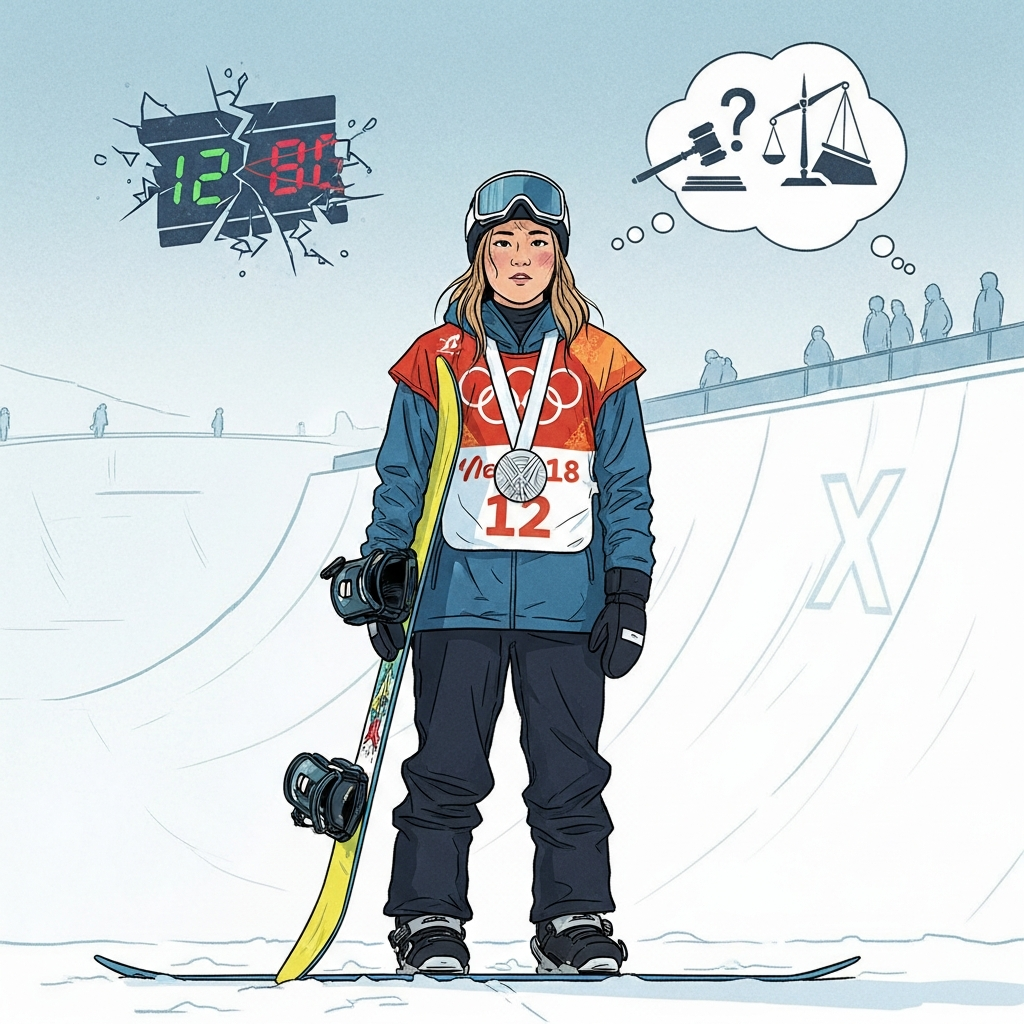
The Milano Cortina 2026 Winter Olympics delivered a dramatic showdown in the women’s snowboard halfpipe. American superstar Chloe Kim, aiming for a historic third consecutive gold medal, ultimately secured a silver. However, her powerful performance sparked intense discussion around judging decisions, casting a spotlight on the fine margins that define Olympic glory. This captivating event blended extraordinary athleticism with compelling human stories, including a triumphant performance from Kim’s young mentee, Gaon Choi of South Korea.
The Quest for an Unprecedented Three-Peat
Chloe Kim, a prominent figure with a global fan base, arrived at the 2026 Games under unique pressure. Just over a month prior, she had dislocated her shoulder during training, raising serious doubts about her participation. Despite a limited two-week return to snowboarding before the Olympics, Kim showcased incredible resilience. She candidly expressed her anxiety, noting the qualifiers marked her first competition of the season. Yet, she dominated the qualifying rounds, securing first place with an impressive 90.25 on her initial run. This strong start hinted at her fierce determination and talent, even when not at 100%. Kim was poised to become the first halfpipe snowboarder, male or female, to clinch three consecutive Olympic gold medals.
Halfpipe Drama: A Mentor-Mentee Showdown
The final competition unfolded under a light snowfall, adding to the challenging conditions. Kim established an early lead with a powerful first run, scoring 88.00 points. For a significant portion of the event, this score held strong as many other contenders struggled, some even falling hard. The narrative took a dramatic turn with 17-year-old South Korean phenom Gaon Choi, a rider Kim herself had mentored since childhood. Choi, who idolizes Kim, suffered a heavy fall on her opening run, requiring a concussion check, and fell again on her second attempt.
Despite two crashes, Choi remarkably returned for her final run. In a breathtaking display of resilience and skill, she delivered a clean and powerful routine, earning an astounding 90.25 points. This put immense pressure on Kim, the last rider to go. To reclaim gold, Kim needed to surpass Choi’s score. She attempted an ambitious double cork 1080 but fell on her final landing. Kim’s 88.00 point first run ultimately secured her the silver medal, while Japan’s Mitsuki Ono claimed the bronze with 85.00 points.
At the Heart of the Debate: Judging the Tricks
The narrow two-point margin separating gold and silver immediately ignited a nuanced debate about judging fairness. While not as publicly contentious as other Olympic events like ice dance, the discussion centered on the perceived difficulty of the athletes’ tricks.
Arguments favoring Kim highlighted her execution of the “hardest trick in the sport”—a double-cork 1080. NBC commentator Todd Richards emphasized the higher risk and consequence involved in such a maneuver compared to a switch-backside 900. He specifically noted the complexity of flipping twice upside down while spinning.
However, Gaon Choi’s winning run was also lauded for its exceptional quality. Her performance was described as “a beauty filled with difficult spins approached from tough angles that were different at every turn.” Crucially, Choi included a “switch-backside 9″—riding backward and initiating a spin facing up the halfpipe—a move widely considered the toughest direction in the sport. While Kim performed an upside-down maneuver on her last hit, making her the only rider to do so twice, Choi’s specific switch-backside 9 added unique difficulty.
Another factor in the controversy revolved around timing. Some speculated that judges might have “gone just a little light” on Kim’s initial 88.00 score, anticipating she would perform more complex maneuvers later. Had her 88.00 come on a second or third run, it might have been scored higher, potentially securing the lead. Despite the debate, Kim displayed immense sportsmanship, immediately embracing and congratulating Choi at the finish line.
Beyond the Halfpipe: Broader Olympic Narratives
The 2026 Winter Olympics offered many other compelling stories alongside the halfpipe drama. Controversies, triumphs, and heartwarming moments shaped the global narrative:
Political Statement Leads to Disqualification: Ukrainian skeleton pilot Vladyslav Heraskevych was disqualified after refusing to remove a helmet adorned with images of Ukrainian athletes killed in the ongoing war. Despite wearing it in training, the IOC banned its use, citing policy against political statements. Heraskevych prioritized honoring fallen athletes over medals.
Ice Dance Controversy: The ice dancing competition also generated significant debate, with Team USA’s Madison Chock and Evan Bates finishing second, reportedly due to a lower score from a French judge. This contrasted with the generally lower level of judging disputes often seen in “extreme” sports like snowboarding, which some attribute to a different ethos among athletes.
Joy at the Finish Line: American skier Breezy Johnson got engaged to Connor Watkins in a touching proposal at the finish line of the women’s super-G race. The moment, almost disrupted by Italian President Sergio Mattarella’s arrival, even received congratulations from Taylor Swift.
Team USA Successes: The U.S. men’s hockey team began its Olympic journey with a decisive 5-1 victory over Latvia. Jessie Diggins also secured a bronze medal in cross-country skiing, despite riding with bruised ribs.
A Changing Landscape: Cultural Impact and Mentorship
The women’s halfpipe final was more than just a medal event; it was a powerful “full-circle moment” for Chloe Kim. Having known Gaon Choi since she was a young child, Kim expressed profound pride in her mentee’s success on such a grand stage. Their bond spans nearly a decade, rooted in a friendship between their fathers and Kim’s family helping Choi train in the U.S. Kim shared that seeing Choi succeed was “a mirror reflection of myself and my family,” highlighting her role in inspiring the next generation.
Kim also emphasized a significant cultural shift in winter sports. “We’re seeing a big shift to Asians being dominant in snow sports,” she noted, contrasting it with earlier societal pressures she faced to pursue a “real career” instead of snowboarding. Choi’s victory holds immense historical weight for South Korea, making her the first female Korean athlete to win a medal in snow sports and securing the country’s first-ever snowboard gold. Choi herself hoped her performance would introduce the sport more widely in her home country.
Chloe Kim’s Enduring Legacy
Despite not achieving the historic three-peat, Chloe Kim’s silver medal at the 2026 Olympics further cemented her legacy. Overcoming a severe shoulder injury just weeks before the games, her ability to perform at such a high level underscores her exceptional talent and mental fortitude. Kim remains one of the most recognizable U.S. athletes, celebrated not only for her three Olympic medals but also for her influence as an international celebrity and fashion icon. Her journey, marked by both triumph and the gracious acceptance of defeat, continues to inspire millions globally.
Frequently Asked Questions
What was the core of the judging controversy surrounding Chloe Kim’s silver medal?
The judging controversy primarily revolved around the difficulty comparison between Chloe Kim’s first-run score of 88.00 and Gaon Choi’s winning 90.25 score. Advocates for Kim highlighted her landing of a double-cork 1080, considered the sport’s hardest trick. Conversely, Choi’s run was praised for its “difficult spins approached from tough angles” and the inclusion of a “switch-backside 9,” recognized as the toughest direction. Some commentators also suggested Kim’s initial score might have been “light,” potentially influencing the final outcome in a very close competition.
How did Gaon Choi’s journey to Olympic gold compare to Chloe Kim’s performance?
Gaon Choi, Chloe Kim’s 17-year-old mentee, secured gold with a dramatic comeback. After falling on her first two runs, Choi delivered a clean 90.25 on her final attempt. Kim, despite a recent shoulder injury, led early with an 88.00 but fell on her final, more ambitious run. While Kim showcased consistent high-level performance and resilience, Choi’s path was marked by a thrilling rebound from adversity, clinching gold in a powerful display of determination against her idol and mentor.
What broader cultural significance did the 2026 Olympic women’s halfpipe event hold for snow sports?
The 2026 Olympic women’s halfpipe final highlighted a significant cultural shift, with Chloe Kim noting “a big shift to Asians being dominant in snow sports.” The event symbolized mentorship and inspiration, as Kim witnessed her young Korean protégé, Gaon Choi, win gold. Choi’s victory was also historic for South Korea, marking the country’s first-ever snowboard gold and the first female Korean medal in snow sports, aiming to popularize the sport further in her home country.