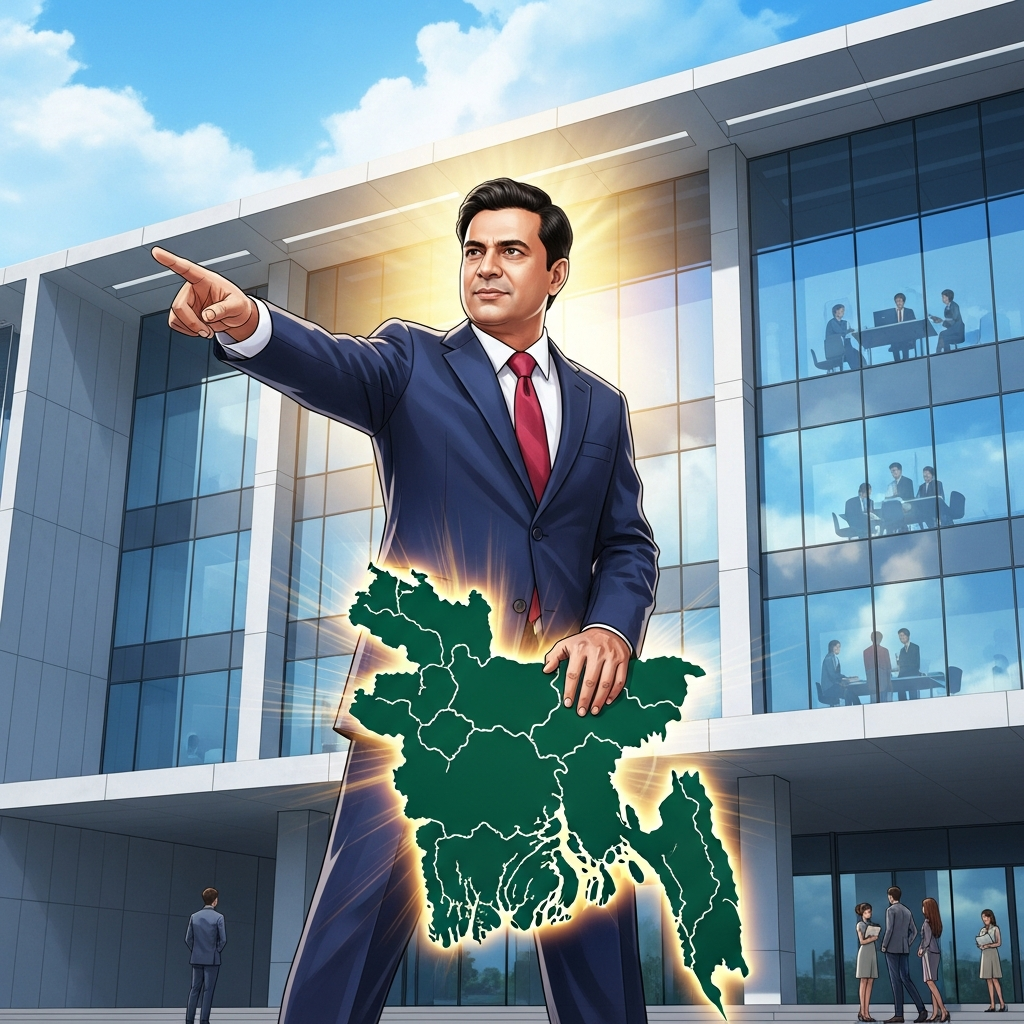
Bangladesh stands at a pivotal juncture after a landmark election saw the Bangladesh Nationalist Party (BNP) sweep to power. This decisive victory heralds a new political chapter, with Tarique Rahman poised to lead the nation. His ascension ends Sheikh Hasina’s 15-year tenure, raising hopes for democratic renewal and economic stability. Yet, Rahman, largely an untested leader, faces immense pressure to deliver on promises amid deep-seated challenges and high public expectations. This shift marks another “flip-flop” in the country’s turbulent political history, but a new dynamic driven by a youth uprising suggests a demand for more than just a change of guard.
Bangladesh’s Political Earthquake: A New Era Begins
Bangladesh has witnessed a dramatic political transformation. The recent general election delivered a resounding victory to the Bangladesh Nationalist Party (BNP), securing over two-thirds of parliamentary seats. This landslide result ended the long-standing rule of Sheikh Hasina’s Awami League, which was barred from participating. For decades, power has oscillated between these two political dynasties. The BNP’s triumph, fueled by public discontent and a powerful “Gen Z uprising” in July 2024, signals a strong desire for systemic change. This historic vote, the first in four decades without the direct presence of either Sheikh Hasina or Khaleda Zia, places Tarique Rahman, 60, at the forefront of a nation craving reform.
Who is Tarique Rahman? From Exile to Prime Minister
Tarique Rahman’s journey to the premiership is marked by a complex legacy. He is the son of two political giants: Khaleda Zia, the BNP’s head for four decades, and Ziaur Rahman, the party’s founder and a key leader of Bangladesh’s independence war. Rahman returned to Bangladesh in December 2025, ending a 17-year self-imposed exile in London. While he has previously acted as a de-facto chair during his mother’s imprisonment and illness, this election is his first time formally leading the BNP and contesting a parliamentary seat.
Rahman’s past includes allegations of nepotism and corruption during his mother’s time in power. Although he was later cleared of charges during Hasina’s administration, these accusations still fuel skepticism among some voters. Despite this background, political scientist Navine Murshid suggests his lack of prior experience might be an asset. People are “willing to give change a chance,” she notes, fostering hope for “new, good things” to become possible. This sentiment reflects a yearning for a fresh start, distinct from the old political cycles.
Promises of Renewal: Restoring Democracy and Institutions
The BNP’s primary platform revolves around a pledge to restore democracy in Bangladesh. Senior BNP leader Amir Khasru Mahmud Chowdhury stated shortly after the election that the party’s first priority is to rebuild the “democratic institutions [and] financial institutions, which have been destroyed over the last decade.” This promise, however, resonates against a historical backdrop of Bangladeshi parties often becoming authoritarian once in power, frequently breaking similar vows.
Yet, this time, a powerful new voice demands accountability: the nation’s youth. The “July uprising” of 2024, which saw young people actively participate in ousting Hasina, instilled a fierce intolerance for political stagnation. Tazin Ahmed, a 19-year-old participant, emphasizes that the real victory isn’t just Hasina’s departure. She seeks a country that “runs smoothly without any corruption, and the economy becomes good.” Her cousin, Tahmina Tasnim, 21, adds, “We have been part of an uprising and we know how to fight back. So if the same things start again, we will have the right to do it again.” These sentiments highlight the immense pressure on Tarique Rahman’s government to deliver tangible change.
Navigating Immediate Hurdles and Economic Realities
The incoming government faces a formidable array of challenges. The interim period under Mohammad Yunus was marred by violence, making the restoration of law and order a critical first step. Economically, Bangladesh grapples with vulnerabilities to global fluctuations, persistent inflation, and external debt. Reviving the economy, specifically reducing soaring food prices and creating jobs for the country’s vast young population, are massive, urgent tasks. Sociologist Samina Luthfa points out a universal challenge: a general lack of government experience across all political parties, including some of the new entrants in parliament.
The economy, while showing growth in recent decades due to garment exports and remittances, needs diversification. The new administration is expected to focus on stabilizing prices, encouraging investment, and strengthening fiscal management. Supporting small and medium enterprises (SMEs) will be crucial for employment, alongside expanding exports beyond ready-made garments into sectors like technology and pharmaceuticals.
New Faces, Old Dynamics: The Parliament’s Evolving Landscape
The election brought new and established players into parliament, reshaping Bangladesh’s political mosaic. The Islamist Jamaat-e-Islami party, previously banned twice, secured a significant number of seats for the first time. Its manifesto presented a secular, development-focused agenda, consciously omitting references to Islamic law. However, its website’s assertion that “Islamic law can’t be implemented without political force” raises persistent questions about its long-term objectives. Navine Murshid acknowledges Jamaat’s relentless grassroots work but also characterizes the party as “inherently anti-democratic, misogynistic and patriarchal.”
Alongside Jamaat, the National Citizens Party (NCP), formed by some student leaders of the uprising, made a notable debut, securing six seats. These young parliamentarians have much to learn. Luthfa observes, “We are going to see leaders in the parliament who have never been to the parliament before.” This blend of seasoned politicians and fresh, inexperienced faces will make the task of governance an “uphill task.” A critical concern, raised by Luthfa, is the severe underrepresentation of women. Just over 4% of candidates were female, despite women’s prominent role in the July uprising. This highlights a pervasive patriarchal structure that all parties, including the new government, must address.
The Shadow of Legitimacy and Internal Party Challenges
Despite its landslide victory, the election’s credibility remains a contentious issue. The decision to bar Sheikh Hasina’s Awami League from participating has cast a significant shadow. Hasina, from exile in India, denounced the poll as a “deception and farce,” demanding a fresh election that includes her party. BNP senior leader Chowdhury indicated that the Awami League’s return rests with the people, citing accusations of “killing their own people, of atrocities, persecution.”
Internally, Tarique Rahman faces significant challenges to party discipline. Analyst Al Masud Hasanuzzaman highlighted that 92 candidates contested against official BNP nominees in 79 constituencies, indicating a lack of control “higher than at any previous time.” A Transparency International Bangladesh study also found 91 percent of political violence since August 2024 involved BNP activists. Rahman’s anti-corruption rhetoric is also questioned, as he has nominated 23 loan defaulters for the election despite pledging a firm stance against corruption. These issues raise doubts about the BNP’s ability to truly break from past patterns of governance.
Youth Disillusionment and the “Politics of Aspiration”
The euphoria of the July uprising has, for many student leaders, given way to deep disillusionment. Nazifa Jannat, a prominent student voice, expressed dismay at the looting and vandalism following Hasina’s ousting, seeing it as a desecration. Law and order worsened in the post-Hasina period, with attacks on symbols associated with Sheikh Mujibur Rahman and mob violence based on unverified claims. Mahfuz Alam, a “brain of the revolution,” concedes these actions damaged the students’ reputation. Umama Fatema alleged corruption, claiming “old political groups” are manipulating and even bribing students.
A significant source of anger for students is the alliance between the student-led NCP and Jamaat-e-Islami. Many argue this alliance lends undeserved legitimacy to Jamaat, eroding the revolution’s credibility. Anik Roy, a founding member who left the NCP, notes that Jamaat’s patriarchal views on women’s leadership led many female student leaders to depart. Despite the gloom, some, like Mahfuz Alam, believe the uprising politicized young Bangladeshis, injecting a “politics of aspiration” back into the nation. They hope this engagement will compel older parties to genuinely reform.
Managing High Expectations and Forging a New Path
Tarique Rahman’s administration inherits a country teeming with high expectations and complex problems. His leadership style, perceived by some as opting for “loyalty over meritocracy” and leading to isolation from grassroots feedback, will be closely scrutinized. While his dynastic legacy mobilizes supporters, many younger voters desire a move beyond such politics. Rahman has acknowledged “unintentional mistakes” during past BNP rule, offering an apology and pledging to restore the rule of law. However, the gap between his personal appeal and the BNP’s lingering perceptions of corruption remains a hurdle, particularly among young voters unfamiliar with the party’s past rule.
Beyond immediate economic and governance issues, the new government must address infrastructure development and urban planning, crucial given rapid urbanization. Bangladesh’s high vulnerability to climate change also makes adaptation a national priority. In foreign policy, the new leadership will likely maintain balanced relations, strengthening regional and global trade ties. The coming years will demonstrate whether this electoral support translates into meaningful and lasting transformation for Bangladesh’s citizens. Sustained reform will demand consistent policy direction, robust institutional strength, and transparent communication to build long-term credibility.
Frequently Asked Questions
What are the key challenges facing Tarique Rahman’s new government in Bangladesh?
Tarique Rahman’s government faces immediate and long-term challenges. Top priorities include restoring law and order, reviving the economy, curbing high inflation, and creating jobs for Bangladesh’s large youth population. Additionally, the administration must address calls for greater transparency, accountability, and judicial independence. Historically, Bangladeshi parties have struggled to maintain democratic principles once in power, and Rahman’s government will be under pressure to break this cycle. The general lack of governmental experience among many new parliamentarians, including some from the student-led NCP, further complicates the task.
How does the “July uprising” influence the current political landscape in Bangladesh?
The “July uprising” of 2024, spearheaded by young people, was instrumental in ousting Sheikh Hasina and catalyzed the demand for fundamental change. It has instilled a fierce intolerance for corruption and political stagnation among the youth. While the initial euphoria has been tinged with disillusionment over post-uprising violence and political alliances (like the NCP with Jamaat-e-Islami), the uprising has significantly politicized young Bangladeshis. This creates a “politics of aspiration” that demands accountability and genuine reform from the new government, warning of further action if past patterns of authoritarianism or corruption re-emerge.
What concerns surround Tarique Rahman’s leadership despite his party’s landslide victory?
Despite the BNP’s landslide win, concerns about Tarique Rahman’s leadership persist. Historically, he has faced allegations of nepotism and corruption, which, though cleared, continue to shadow his image. More recently, critics point to issues within the BNP, such as a perceived lack of internal party discipline, evidenced by numerous rebel candidates in the election, and accusations of political violence involving party activists. His anti-corruption rhetoric also faces scrutiny due to the nomination of loan defaulters. Some analysts also highlight his leadership style, suggesting a preference for “loyalty over meritocracy” and a potential isolation from grassroots feedback, raising questions about his ability to unite and effectively govern.
Conclusion
Bangladesh stands on the precipice of a new, uncertain era. Tarique Rahman’s ascent to power, driven by a landslide victory and a potent youth uprising, offers a blend of hope and skepticism. The nation yearns for genuine change: a return to democratic norms, a stable economy, and a government free from corruption. However, the historical patterns of Bangladeshi politics, coupled with the profound challenges facing Rahman and his party, underscore the monumental “uphill task” ahead. The success of this new administration will hinge on its ability to transcend past cycles, unify a diverse political landscape, and deliver tangible improvements in the lives of ordinary citizens, particularly the demanding and politicized younger generation. The world will be watching closely as Bangladesh navigates this critical juncture.