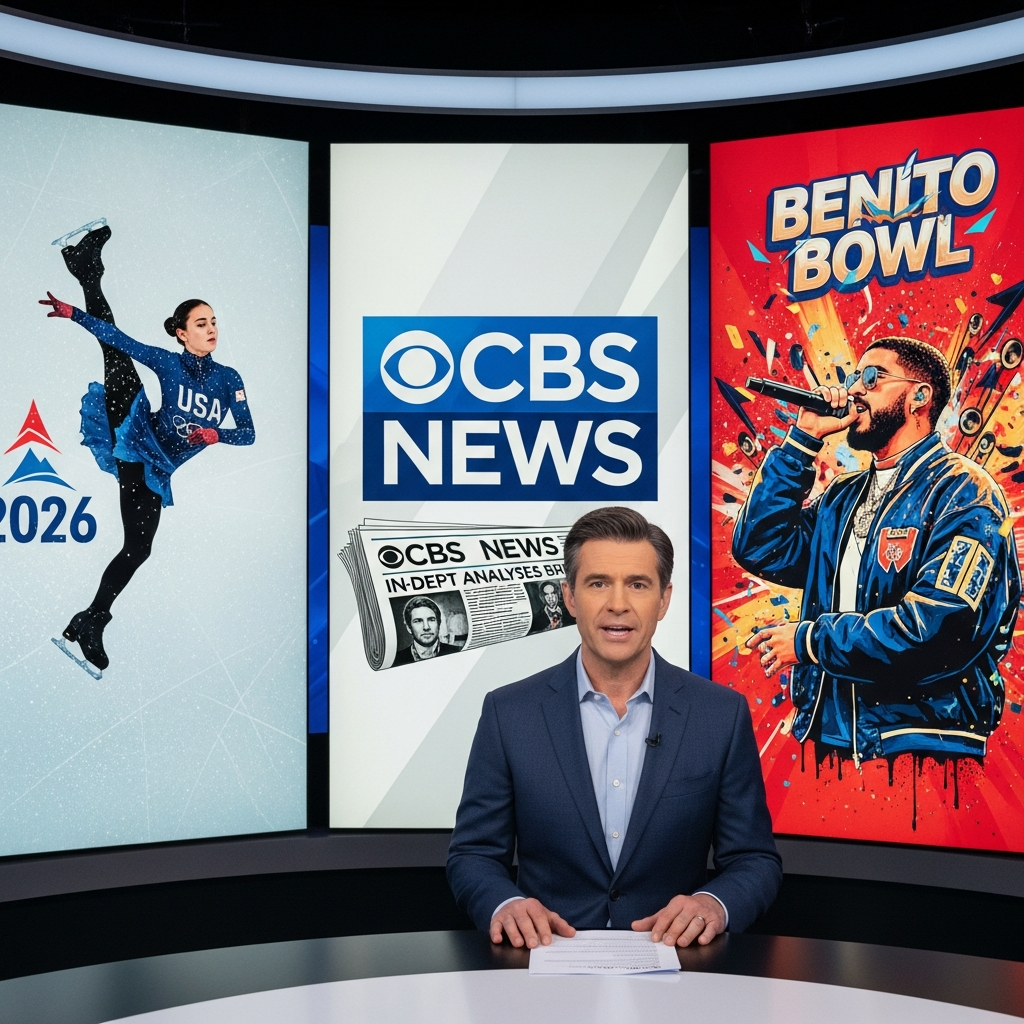
Dive into today’s top headlines shaping our world. From the thrilling action of the 2026 Winter Olympics, highlighting Team USA’s remarkable performance, to the seismic shifts rocking major media outlets like CBS News, we cover it all. Discover how cultural phenomena, such as Bad Bunny’s “Benito Bowl,” influence local economies and explore the bold stances of Olympic athletes like Amber Glenn. Get diverse perspectives on the biggest stories unfolding right now.
2026 Winter Olympics: Team USA’s Early Triumphs & Historic Medal Race
The 2026 Winter Games are underway in Milan and Cortina d’Ampezzo, northern Italy, bringing intense competition and compelling stories. Team USA has fielded its largest-ever Winter Olympics team, with 232 athletes ready to compete. Early reports indicate a strong showing, sparking national pride and excitement.
Milan-Cortina Games Kick Off with Strong American Start
America’s presence at the Games began with a bang. Breezy Johnson secured the nation’s first gold medal in the women’s downhill event. U.S. figure skaters also claimed gold in the team competition. Ilia Malinin, nicknamed the “Quad God” for his difficult jumps, delivered a dominant performance in figure skating.
Team USA continued to rack up medals in the initial days. On Tuesday, Ben Ogden won a silver medal in cross-country skiing sprint. This marked the first time an American man had medaled in that sport since 1976. Alex Hall grabbed silver in freestyle ski. Jackie Wiles and Paula Moltzan took bronze in the team downhill. The mixed doubles curling team earned a silver medal, despite a loss to Sweden.
Wednesday brought more success. Skier Elizabeth Lemley claimed gold in moguls. Speedskating star Jordan Stolz set a new Olympic record, winning gold in the 1,000 meters. Ice dancing duo Madison Chock and Evan Bates also secured a silver medal. Thursday saw snowboarder Chloe Kim achieve a silver medal in the halfpipe, with cross-country skier Jessie Diggins earning a bronze.
Olympic History & the All-Time Medal Standings
While Team USA consistently shines, a look at recent and historical records offers context. At the 2024 Summer Olympics, the U.S. brought home the most medals overall. However, Norway emerged victorious in the medal count at the most recent Winter Games in 2022.
The 2022 Winter Olympics saw Norway top the charts with an impressive 37 medals, including 16 gold. The ROC (Russian Olympic Committee) followed with 32 medals, and Germany secured 27. Canada claimed 26, while Team USA ranked fifth with 25 medals (9 gold, 9 silver, 7 bronze).
Historically, the United States leads the all-time Olympic medal count from all Summer and Winter Games combined. The U.S. boasts a total of 3,103 medals, including 1,220 gold. The former Soviet Union is second with 1,204 medals, and Germany is third with 1,091. When focusing solely on Winter Olympics history, Norway, a perennial winter sports powerhouse, takes the lead with 404 medals. The U.S. stands second with 330 Winter Olympic medals, and Germany is third with 286.
CBS Evening News Undergoes Major Editorial Shift Amidst Staff Departures
A significant overhaul is underway at CBS Evening News, leading to notable staff departures. Eleven staffers from the approximate 40-person team have accepted buyout offers. This shake-up coincides with Tony Dokoupil assuming the anchor position last month. Bari Weiss, CBS News editor-in-chief, is driving this new strategic vision for the news division.
“Heterodox Journalism” Sparks Internal Debate
Weiss articulated her vision during an all-staff meeting, suggesting that those not aligning with the new strategy might consider other career paths. She reportedly stated there are “so many exciting things to spend your career doing.” This sentiment underscores a philosophical shift in journalistic approach.
Producer Alicia Hastey, a notable departure, circulated a letter criticizing the new direction. She described it as a “sweeping new vision prioritizing a break from traditional broadcast norms.” Hastey specifically referenced what has been called “‘heterodox’ journalism.” She voiced concern that stories might now be “evaluated not just on their journalistic merit but on whether they conform to a shifting set of ideological expectations.” This dynamic, Hastey argued, pressures reporters and producers to “self-censor or avoid challenging narratives.” She added that a commitment to “underrepresented perspectives” and “interviews that challenged conventional wisdom” is becoming “increasingly impossible.”
Dokoupil’s Tenure and Ratings Challenges
Dokoupil’s month-long tenure as anchor has drawn scrutiny from both CBS News staffers and media critics. Criticism has focused on his perceived “congenial coverage” of the Trump administration. Examples cited include an interview with the former president and friendly packages on administration figures. The coverage of the fifth anniversary of the Jan. 6 Capitol riot also garnered attention.
These internal challenges follow broader restructuring. Dokoupil’s first week as anchor saw the removal of the show’s No. 2 producer, Javier Guzman. This departure was reportedly due to disagreements with executive producer Kim Harvey. Furthermore, ratings for “CBS Evening News” under Dokoupil have largely remained behind those of its ABC and NBC competitors. This latest round of buyouts follows previous layoffs in October, which saw nearly 100 staffers across the CBS news division let go. These job reductions are part of broader cost-cutting measures by parent company Paramount, which anticipates additional job cuts across the company. The shifts at CBS News reflect wider media industry trends of evolving journalistic standards and financial pressures.
The “Benito Bowl”: Bad Bunny’s Super Bowl Impact Boosts Puerto Rican Culture & Economy
Even thousands of miles away, the cultural phenomenon surrounding Bad Bunny’s Super Bowl halftime show generated a significant economic and cultural boost. Puerto Rican restaurants in South Florida experienced an unprecedented surge, a phenomenon dubbed the “Benito Bowl.” This term recognizes the multi-Grammy-winning megastar’s real name, Benito Ocasio. His global presence created a tangible local impact.
Local Businesses Thrive on Global Star Power
The excitement surrounding Bad Bunny translated into direct business benefits. Employees at establishments like El Rinconocito in Hialeah expressed immense pride. They noted it was a “proud moment right now” to be Puerto Rican and work in a Puerto Rican restaurant. This pride was evident in restaurant decor, clothing, and the authentic food served.
Restaurants reported a substantial increase in calls and orders as families prepared for Super Bowl watch parties. Popular dishes like trays featuring alcapurria, pasteles, and carne frita were ordered in large quantities. This surge wasn’t limited to existing patrons. Owners saw business pick up not only with longtime fans but also with new customers discovering Puerto Rican food for the first time. There was a stated interest from people “in knowing that new culture.” Even Cuban employees joined in the celebration, highlighting a broader sense of community. Some restaurants also created and sold shirts with “proud Ricans” messaging, underscoring a strong sense of identity.
A Celebration of Heritage Beyond the Field
The “Benito Bowl” phenomenon demonstrates how a celebrity’s mainstream success can have a profound, localized impact. Bad Bunny’s performance was not merely a musical act. It transformed a major sporting event into a vibrant celebration of cultural identity and heritage. This fostered community, introduced cuisine to new audiences, and allowed Puerto Ricans to celebrate their roots collectively. It created a powerful wave of cultural pride that directly translated into economic benefit for local businesses, a testament to the influence of cultural events on local economies.
Olympic Gold Medalist Amber Glenn Fires Back at “Woke” Critics
American figure skater Amber Glenn drew both praise and criticism following her gold medal victory in the team event at the 2026 Winter Olympics. Her win, however, reignited a broader conversation about athlete advocacy and social commentary. Glenn used her platform to directly address online detractors, sparking further debate around Olympic athlete activism.
Athlete Advocacy and Political Stance
Prior to the Olympics, Glenn openly shared her political views. She stated in a press conference that the administration of former President Donald Trump had been a “hard time” for her and the LGBT community. Glenn emphasized that the queer community has frequently had to fight for human rights. She also noted that these issues were affecting “many other communities” as well. This shared struggle, she argued, fostered greater mutual support, making these communities stronger. Glenn affirmed her commitment to speaking out, stating she wouldn’t be quiet about such important matters.
These political comments led to significant online backlash. Glenn faced “hate” comments and threats, prompting her to take a temporary break from social media. She expressed disappointment, noting she had anticipated such a response for simply exercising her freedom of speech as an athlete representing Team USA. She highlighted the “troubling time for many Americans,” justifying her stance.
Defiance in the Face of Backlash
Following her Olympic gold medal win in Milan, Italy, Glenn returned to TikTok with a defiant message. Sharing photos of herself and fellow skater Alysa Liu, she directly addressed her critics. Her caption read: “They hate to see two woke bes winning.” Glenn then offered her own definition of “woke” within the context of her actions. “If ‘Woke’ means people who use their platforms to advocate for marginalized communities in the country that they are actively representing …… Then yeah sure?” she posted. She underscored her resolve, concluding that despite the negativity, she would “never stop using my voice for what I believe in.” This powerful message highlights the evolving role of athletes in public discourse. It underscores their willingness to challenge critics and advocate for social change, even on the global stage of the Olympics.
Frequently Asked Questions
What were the key controversies surrounding the CBS Evening News overhaul?
The CBS Evening News overhaul saw approximately eleven staffers accept buyouts amidst a new editorial vision. Editor-in-chief Bari Weiss introduced a strategy some departing staff, like producer Alicia Hastey, termed “‘heterodox’ journalism.” Critics voiced concerns that this approach might prioritize ideological alignment over journalistic merit, potentially leading to self-censorship and a deemphasis on “underrepresented perspectives.” Additionally, new anchor Tony Dokoupil faced scrutiny over his perceived “congenial coverage” of the Trump administration and the program’s lagging ratings compared to competitors.
Where are the 2026 Winter Olympics being held, and which nations traditionally dominate?
The 2026 Winter Olympics are taking place in Milan and Cortina d’Ampezzo, northern Italy. Historically, Norway is considered a perennial winter sports powerhouse, leading the all-time Winter Olympic medal count with 404 medals. The United States ranks second with 330. In the most recent 2022 Winter Games, Norway also topped the medal count. However, the U.S. maintains the lead in the overall all-time Olympic medal count across both Summer and Winter Games combined.
How can cultural events, like the Super Bowl halftime show, create significant local economic boosts?
Major cultural events, even when geographically distant, can generate substantial local economic boosts through heightened cultural pride and community engagement. As seen with Bad Bunny’s “Benito Bowl” phenomenon during the Super Bowl, his performance in California directly led to increased business for Puerto Rican restaurants in South Florida. This surge came from existing fans celebrating their heritage and new customers discovering the cuisine. This demonstrates how a global celebrity’s platform can foster a collective sense of identity, translating into tangible support for local businesses and promoting cultural exchange.