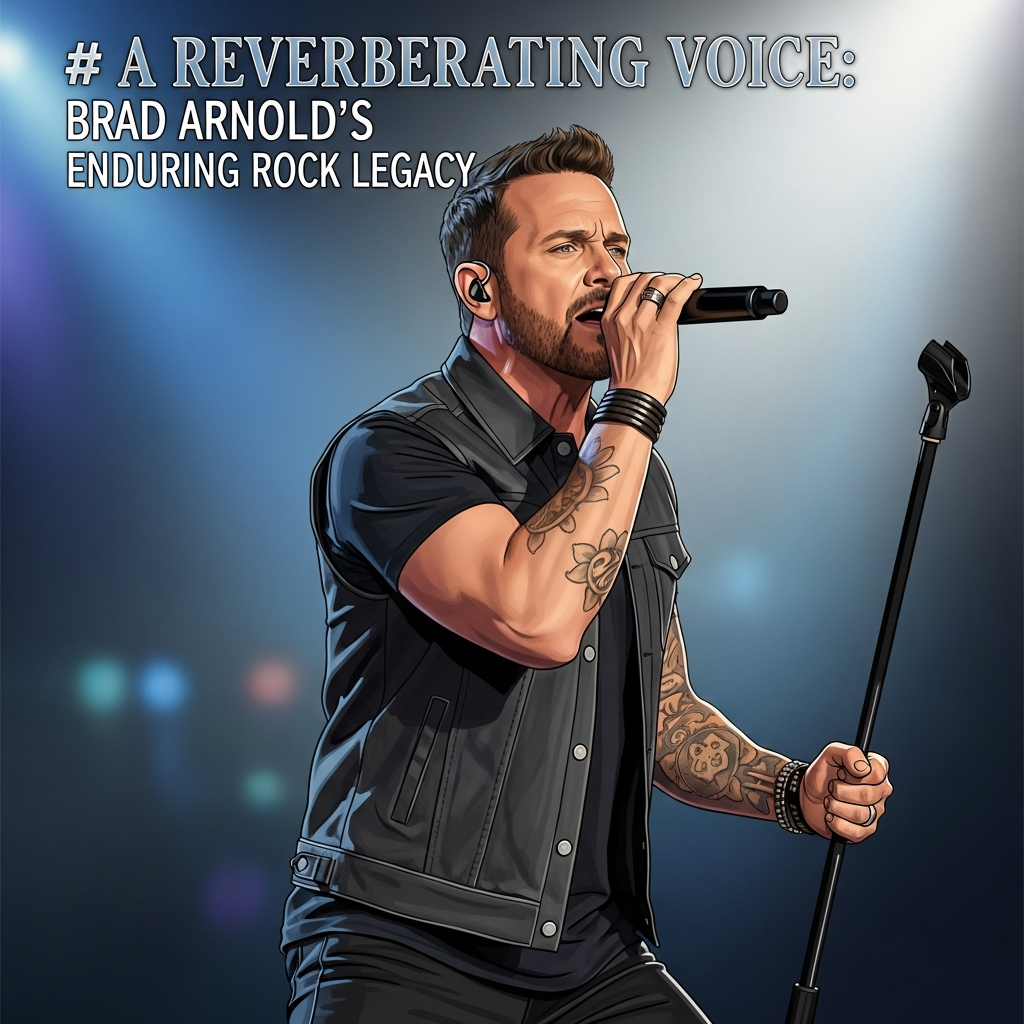
The music world is mourning the loss of a distinctive voice. Brad Arnold, the revered lead singer and a founding member of the iconic rock band 3 Doors Down, passed away peacefully on Saturday, February 7, 2026. He was 47 years old. Arnold’s death followed a courageous and public battle with Stage 4 kidney cancer, a journey he faced with unwavering faith and inspiring resilience. His wife, Jennifer, and other loved ones were by his side as he died in his sleep.
Arnold’s passing marks the end of an era for many rock fans. He helped define the sound of mainstream rock in the early 2000s. Blending accessible post-grunge melodies with deeply personal and emotionally resonant lyrics, his music connected profoundly with listeners everywhere. The Mississippi-based band’s official Instagram page shared a heartfelt tribute, acknowledging Arnold’s immense contributions. They remembered not just his talent, but also his remarkable warmth, humility, and generosity.
A Valiant Battle: Brad Arnold’s Fight Against Cancer
Brad Arnold’s health struggles became publicly known in May 2025. It was then that the 3 Doors Down lead singer bravely revealed his cancer diagnosis. The news sent shockwaves through the music community and among devoted fans.
A Public Revelation
In a poignant video shared across social media, Arnold himself disclosed the severity of his condition. He explained that he had been diagnosed with clear cell renal cell carcinoma, a type of kidney cancer. Tragically, the disease had advanced to Stage 4, having metastasized to his lungs. This grim prognosis necessitated the immediate cancellation of 3 Doors Down’s summer tour, prioritizing Arnold’s health and treatment. Despite the gravity of the situation, Arnold’s message remained one of hope and strength.
Faith in the Face of Adversity
Throughout his cancer battle, Brad Arnold displayed profound faith. He famously declared, “I have no fear. I really, sincerely am not scared of it at all.” He often spoke of leaning on his spiritual beliefs, stating, “We serve a mighty God, and He can overcome anything.” This conviction became a powerful testament to his character. He also humbly requested prayers from his global fanbase, a plea met with an outpouring of support. In a characteristic display of his humor, he even suggested it was time for him to listen to the band’s own track, “It’s Not My Time,” finding solace and a touch of irony in his own lyrics. Arnold’s openness about his struggle resonated deeply, offering comfort and inspiration to many.
From Escatawpa to Stardom: The Genesis of 3 Doors Down
Brad Arnold’s musical journey began far from the bright lights of stadium tours. It started in the unassuming town of Escatawpa, Mississippi. It was here, in 1996, that a musical collaboration would spark a global phenomenon.
The Birth of a Band
Arnold formed 3 Doors Down with his high school friends, guitarist Matt Roberts and bassist Todd Harrell. In these formative years, Arnold took on a dual role, serving as both the band’s lead vocalist and its original drummer. This early setup laid the groundwork for their distinctive sound. The trio poured their raw talent and passion into their music, fueled by a desire to create something authentic. Their humble beginnings contrasted sharply with the massive success they would soon achieve.
“Kryptonite”: An Accidental Anthem
One of the band’s most enduring hits, “Kryptonite,” has a legendary origin story. Brad Arnold penned the lyrics to this iconic track when he was just 15 years old. The inspiration struck him during an algebra class, where he reportedly drummed out the beat on his desk. This raw, powerful song was featured on the band’s demo tape the following year. It quickly gained traction on local radio stations, becoming an unexpected regional sensation. This local popularity ultimately caught the attention of major record labels, propelling 3 Doors Down onto the national stage. “Kryptonite” became a cultural touchstone for a generation, solidifying Arnold’s place as a gifted songwriter.
Charting Success: 3 Doors Down’s Impact on Rock Music
The early 2000s belonged, in part, to 3 Doors Down. Their sound struck a chord with millions. They quickly ascended the ranks of mainstream rock.
Dominating the Airwaves
During their commercial peak, 3 Doors Down achieved remarkable chart success. The band scored an impressive ten Billboard Hot 100 chart hits. Three of these tracks soared into the top 10: “Kryptonite” reached No. 3 in 2000, followed by “When I’m Gone” at No. 4 in 2003, and “Here Without You” at No. 5 in the same year. Their album success was equally significant, with two No. 1 albums on the all-genre Billboard 200 chart: “Seventeen Days” in 2005 and their self-titled “3 Doors Down” in 2008. These achievements cemented their status as a dominant force in rock music. Brad Arnold’s distinctive “heartland drawl” and casual stage presence were often highlighted by critics.
A Unique Sound and Lyrical Depth
Brad Arnold’s songwriting prowess earned him three Grammy nominations. These included nods for Best Rock Song for both “Kryptonite” and “When I’m Gone,” as well as a nomination for Best Rock Performance by a Duo or Group with Vocal for “When I’m Gone.” His lyrical themes consistently resonated with everyday listeners. He captured universal feelings of longing, struggle, and hope. The band’s ability to blend post-grunge accessibility with emotionally direct storytelling created a unique and memorable sound. This distinct musical identity carved out a lasting niche in the rock landscape.
Beyond the Stage: Personal Life and Challenges
Brad Arnold’s life, like his music, was not without its complexities. He openly shared his personal struggles. He navigated both individual battles and significant changes within his band’s lineup.
A Decade of Sobriety
Beyond his recent cancer fight, Arnold had also spoken candidly about a long-standing battle with alcoholism. He admitted that his addiction began in his teenage years. The pressures of touring at a young age, starting around 20, intensified his struggle. However, Arnold found strength in his faith, ultimately achieving a decade of sobriety. He often credited his religious beliefs for this transformative period. He openly proclaimed his faith during many performances. These years, he stated in January 2025, were “the best years” of his life. His journey to sobriety offered an inspiring example of overcoming personal demons.
Evolution of 3 Doors Down’s Lineup
The band’s lineup saw significant changes over the years. The 2011 album “Time of My Life” marked the last recording featuring Arnold alongside original members Matt Roberts and Todd Harrell. Guitarist Roberts departed in 2012 due to health issues, and tragically passed away in 2016 from a drug overdose. Bassist Harrell was dismissed from the band following a 2013 vehicular manslaughter charge. Despite these challenges, 3 Doors Down continued to tour regularly. Their final studio album, “Us and the Night,” was released in 2016. The band even performed at the inauguration of President Trump in 2017, showcasing their continued presence in the music scene.
Tributes Pour In: Remembering a Beloved Musician
News of Brad Arnold’s passing prompted a wave of heartfelt condolences. Tributes poured in from fellow musicians, industry figures, and countless fans. This outpouring of grief reflected his profound impact.
A Community Mourns
The rock community was quick to share its sorrow and respect. Bands like Alter Bridge, Sevendust, and Creed posted messages of remembrance. Chris Daughtry expressed his love to the Arnold family, wishing Brad to “Rest easy brother.” Black Stone Cherry praised Arnold as a “top notch, class act,” acknowledging his support for their band even before their own rise to prominence. They called his passing “a huge loss.” These tributes underscored Arnold’s standing as a respected and beloved figure among his peers.
A Lasting Impact on Republic Records
Monte and Avery Lipman, co-founders of Republic Records, shared a poignant statement. They had signed 3 Doors Down to a partnership in 1999. The Lipmans emphasized the immeasurable impact Arnold and the band had on them. They were grateful for the trust and loyalty shown by choosing a then-small company. They described Arnold’s connection to people and his rare ability to uplift spirits through music as legendary. “Our hearts are broken and we’ll miss him dearly,” they stated, “but Brad Arnold will forever be with us in spirit.” These words highlight the deep personal and professional connections Arnold fostered throughout his career.
Frequently Asked Questions
What was Brad Arnold’s cause of death and how long did he battle his illness?
Brad Arnold, the lead singer of 3 Doors Down, passed away on February 7, 2026, at the age of 47. His death was a result of Stage 4 kidney cancer, specifically clear cell renal cell carcinoma, which had metastasized to his lungs. He publicly disclosed his diagnosis in May 2025, meaning he battled the advanced-stage illness for approximately nine months before his peaceful passing.
Which iconic songs did Brad Arnold write or co-write for 3 Doors Down, and what was their impact?
Brad Arnold was famously the lyricist behind many of 3 Doors Down’s biggest hits. Most notably, he wrote the band’s breakout single, “Kryptonite,” at the astonishing age of 15. He also contributed significantly to other chart-toppers like “When I’m Gone” and “Here Without You.” These songs not only achieved massive commercial success, including multiple Billboard Hot 100 top 10 hits and Grammy nominations, but also resonated deeply with listeners due to their emotionally direct and relatable lyrical themes.
What is the lasting legacy of Brad Arnold’s music and his role in 3 Doors Down?
Brad Arnold’s legacy is multifaceted. Musically, he’s remembered for helping redefine mainstream rock with 3 Doors Down’s blend of post-grunge accessibility and heartfelt lyrics, making their songs cultural touchstones of the 2000s. Personally, he leaves behind a legacy of faith, resilience in the face of cancer, and candidness about his past struggles with alcoholism and subsequent sobriety. His kindness, humility, and generosity, coupled with his deep love for family and friends, touched many lives both on and off the stage, ensuring he will be deeply missed and forever remembered.
Conclusion
Brad Arnold’s passing leaves a significant void in the rock music landscape. His powerful vocals and deeply personal songwriting shaped the sound of a generation. From the humble beginnings in Escatawpa, Mississippi, to global stardom, he remained true to his authentic self. His unwavering faith, even in the face of terminal illness, inspired countless fans. He leaves behind a legacy of iconic music that continues to resonate. The heartfelt tributes from peers and industry leaders attest to the profound impact he had on their lives and the broader music community. Brad Arnold’s voice may be silent, but his enduring spirit and unforgettable contributions to rock music will echo on for years to come.