NASA has announced a critical delay for its highly anticipated Artemis II moon mission. This historic lunar journey aims to send four astronauts farther into deep space than any human in over 50 years. It is now targeting March 2026 for its earliest launch opportunity. The decision follows technical challenges during a crucial wet dress rehearsal at Florida’s Kennedy Space Center. This postponement underscores NASA’s unwavering commitment to safety and meticulous preparation for human spaceflight.
The mission was originally slated for liftoff as early as February 8. However, the complexities of space exploration demand absolute precision. The agency’s thorough testing process successfully identified several issues. These require careful analysis and mitigation before the crew can embark on their groundbreaking voyage around the Moon.
Why the Delay? Insights from the Wet Dress Rehearsal
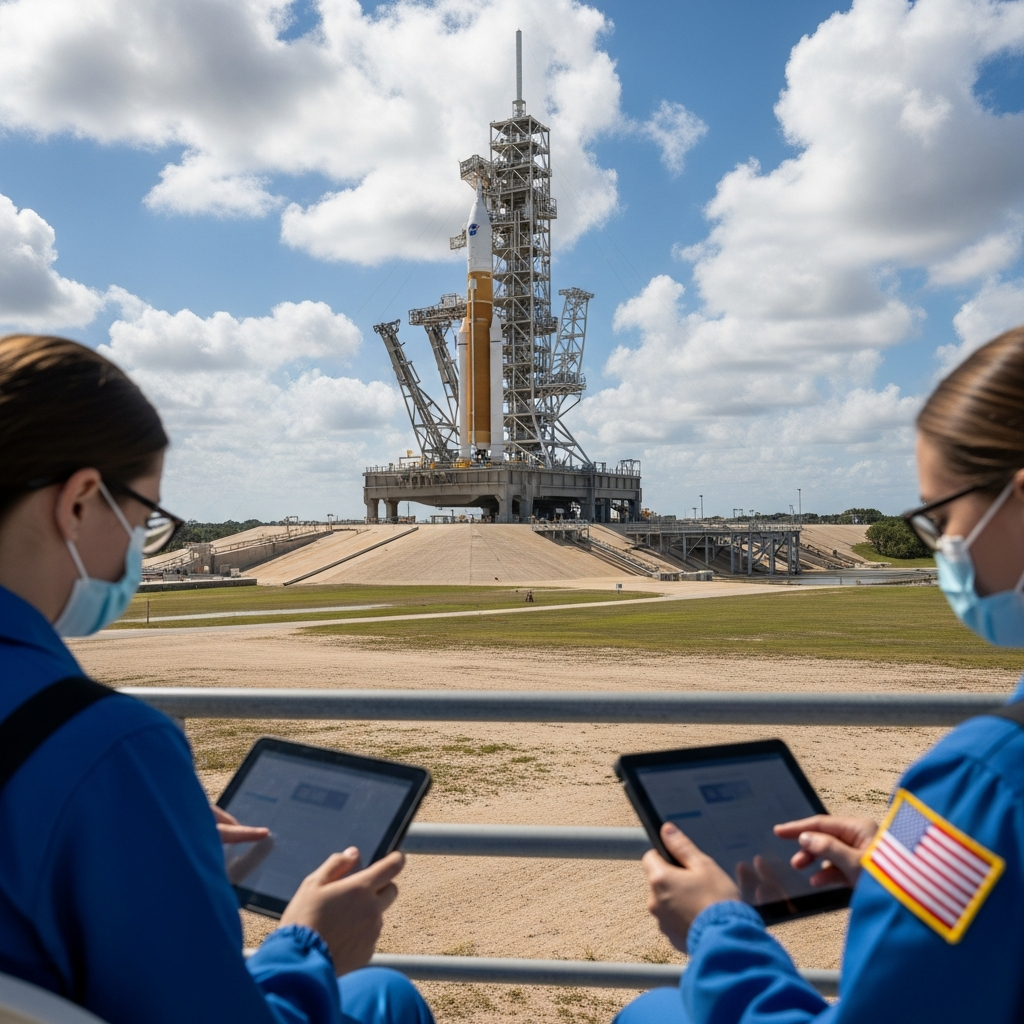
The core reason for the postponement stems from a comprehensive “wet dress rehearsal.” This intricate practice run is a critical test. It simulates nearly every step of an actual launch countdown. Mission teams at the Kennedy Space Center meticulously filled the powerful Space Launch System (SLS) rocket. They used over 700,000 gallons of super-chilled cryogenic propellants during this intense, two-day process.
Technical Hurdles Identified
During the rehearsal, engineers encountered several issues. The most significant was a persistent hydrogen leak from the SLS rocket. This leak recurred, causing the countdown to halt prematurely at the five-minute mark. Problems also arose with a valve associated with the Orion capsule, the module designed to house the astronauts. Additionally, ground teams experienced several audio communication difficulties. These challenges highlighted areas needing further attention and refinement.
NASA officials emphasized the value of such rehearsals. They are designed to push the rocket and ground teams to their limits. This happens before a crew is onboard. John Honeycutt, chair of the Artemis II Mission Management Team, noted the rocket “talked to us.” This means the rehearsal successfully identified potential problems, ensuring no risks are taken with human lives.
NASA’s Unwavering Commitment: Safety First
NASA leadership swiftly addressed the delay. They emphasized that encountering challenges is an anticipated part of rigorous testing phases. “With more than three years between SLS launches, we fully anticipated encountering challenges,” stated NASA Administrator Jared Isaacman on social media. He added, “These tests are designed to surface issues before flight and set up launch day with the highest probability of success.”
Lori Glaze, acting associate administrator for NASA’s Exploration Systems Development Mission Directorate, indicated the full rehearsal results require thorough analysis. This diligent review process ensures every issue is understood and mitigated. The agency’s meticulous approach prioritizes astronaut safety above all else. This proactive strategy is fundamental to successful human space exploration.
The Fickle Nature of Hydrogen Fuel
The persistent hydrogen leak proved particularly problematic. Hydrogen, a super-chilled liquid propellant, powers the SLS rocket. It is notoriously difficult to contain. Its tiny molecular structure makes the substance prone to leaks. This issue isn’t entirely new for the Space Launch System (SLS) rocket. The uncrewed Artemis I test flight in 2022 also experienced hydrogen leaks during its initial wet dress rehearsals.
NASA had taken an aggressive approach to troubleshoot these issues after Artemis I. However, the unique interface for Artemis II presented new complexities. “This one caught us off guard,” commented John Honeycutt regarding the leak. Despite the challenges, teams managed to achieve a ‘replenish mode’ during the rehearsal. This meant the rocket was topped off with fuel. Yet, a final surge in the leak rate ultimately halted the countdown.
The Historic Artemis II Mission: A Return to Deep Space
When Artemis II ultimately launches, it will mark a monumental leap for human space exploration. Four intrepid astronauts will embark on a 10-day journey. Their destination: a path around the far side of the Moon. This lunar journey will be the first time humans have ventured beyond low Earth orbit since the Apollo program concluded over five decades ago.
The diverse and highly experienced crew includes:
Reid Wiseman (Commander): A seasoned NASA astronaut with prior ISS experience.
Victor Glover: A NASA astronaut, set to be the first person of color to travel beyond low Earth orbit.
Christina Koch: A NASA astronaut, who will become the first woman to journey beyond low Earth orbit.
Jeremy Hansen: A Canadian Space Agency astronaut, making history as the first non-American astronaut to reach deep space.
Their journey could set a new record for the farthest distance humans have ever traveled from Earth. The mission’s success is a vital precursor to future lunar landings.
Astronauts’ Status and Next Steps
The four Artemis II astronauts had entered a pre-mission quarantine. They began this isolation in Houston on January 21. Following the delay announcement, they were released. They will now remain in Houston, resuming their training regimens. The crew is expected to re-enter quarantine approximately two weeks before the newly targeted launch opportunity.
The agency plans to conduct a second wet dress rehearsal to address the remaining objectives. These include those occurring after the five-minute countdown mark that were not achieved in the initial test. If extensive repairs are required, rolling the SLS rocket and Orion spacecraft back to the Vehicle Assembly Building (VAB) could lead to further delays. This meticulous process ensures all systems are absolutely flight-ready before the crew boards.
The Road Ahead for NASA’s Artemis Program
NASA is currently targeting March 2026 as the earliest possible launch window for Artemis II. Specific potential dates identified include March 6-9 and March 11. Additional launch opportunities are also available in April if necessary. The agency will fully review data from the test, mitigate each issue, and return to testing before setting an official target launch date.
This comprehensive testing is vital. Artemis II serves as a crucial precursor to Artemis III. The ultimate goal of Artemis III is to land astronauts near the lunar south pole. The entire Artemis program, named after the Greek goddess of the Moon, seeks to establish a sustainable human presence on the lunar surface. It represents humanity’s ambitious return to deep space exploration.
Frequently Asked Questions
What key issues led to the postponement of NASA’s Artemis II moon mission?
The primary reasons for the delay stemmed from a comprehensive wet dress rehearsal. During this critical test, engineers detected a persistent hydrogen fuel leak from the Space Launch System (SLS) rocket. Additionally, a problem was identified with a valve on the Orion capsule, and ground teams experienced audio communication issues. These technical hurdles required the simulated countdown to be halted prematurely, necessitating further review and resolution before the mission can proceed.
How will NASA address the technical issues before the next Artemis II launch attempt?
NASA plans to meticulously review all data collected during the recent wet dress rehearsal. This analysis will help pinpoint the exact causes and solutions for the hydrogen leaks, valve issues, and communication problems. The agency will then conduct a second wet dress rehearsal to test these solutions and ensure all systems perform flawlessly, particularly focusing on the final stages of the countdown. If more extensive repairs are needed, the SLS rocket and Orion spacecraft might be rolled back to the Vehicle Assembly Building for servicing, though this could lead to further delays.
What makes the Artemis II mission a significant milestone for human space exploration?
Artemis II is historically significant as it will be the first time humans travel beyond low Earth orbit since the Apollo program concluded over five decades ago. The mission will send four astronauts—including the first woman and first person of color to venture beyond low Earth orbit, and the first non-American astronaut to reach deep space—on a journey around the Moon. This mission is also a crucial precursor to Artemis III, which aims to land astronauts on the lunar surface, marking a pivotal step toward establishing a long-term human presence on the Moon.
Conclusion
While the delay for the Artemis II moon mission is disappointing, it underscores NASA’s paramount commitment to astronaut safety. The rigorous testing process, designed to uncover and resolve complex technical issues, is fundamental to the success of human spaceflight. As teams meticulously review data and prepare for further rehearsals, the world eagerly awaits the next chapter in humanity’s return to the Moon and beyond. This mission truly represents a giant leap for future generations of explorers and sets a new standard for meticulous preparation.