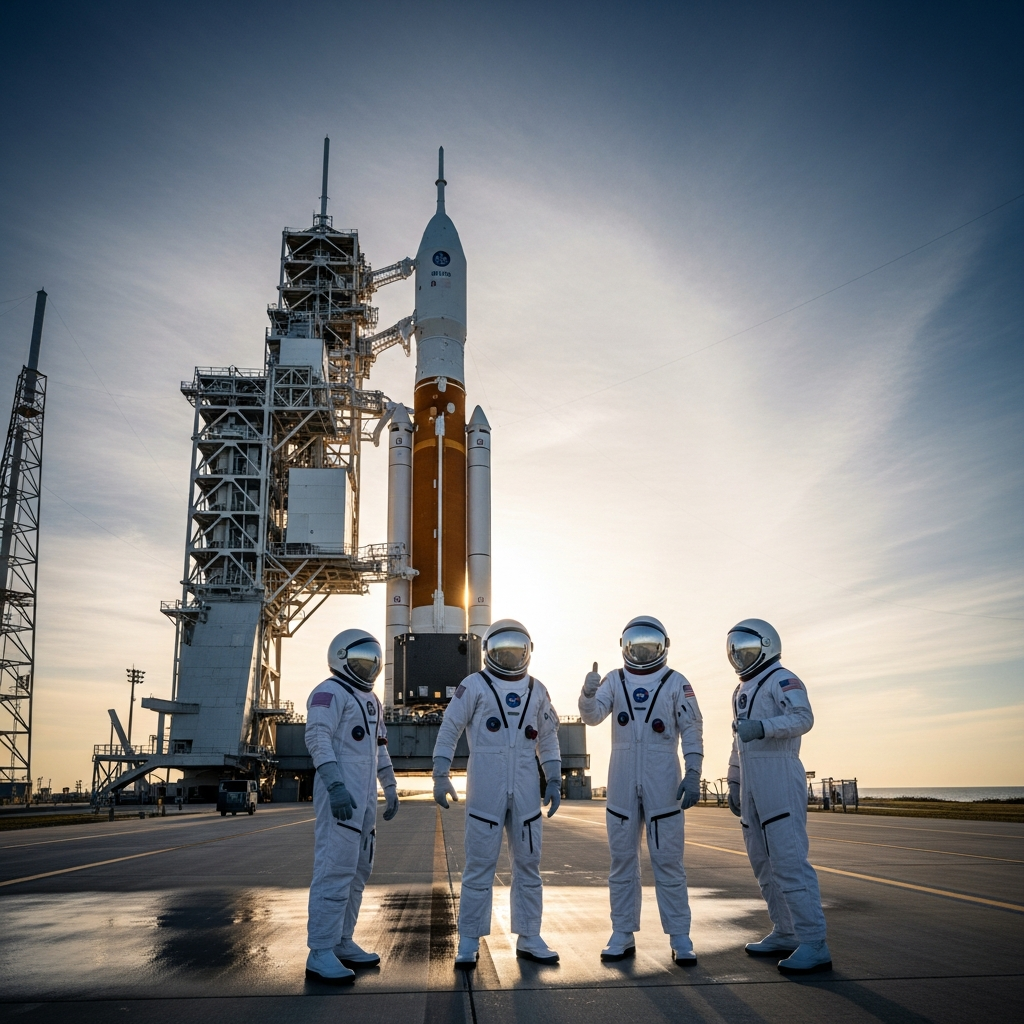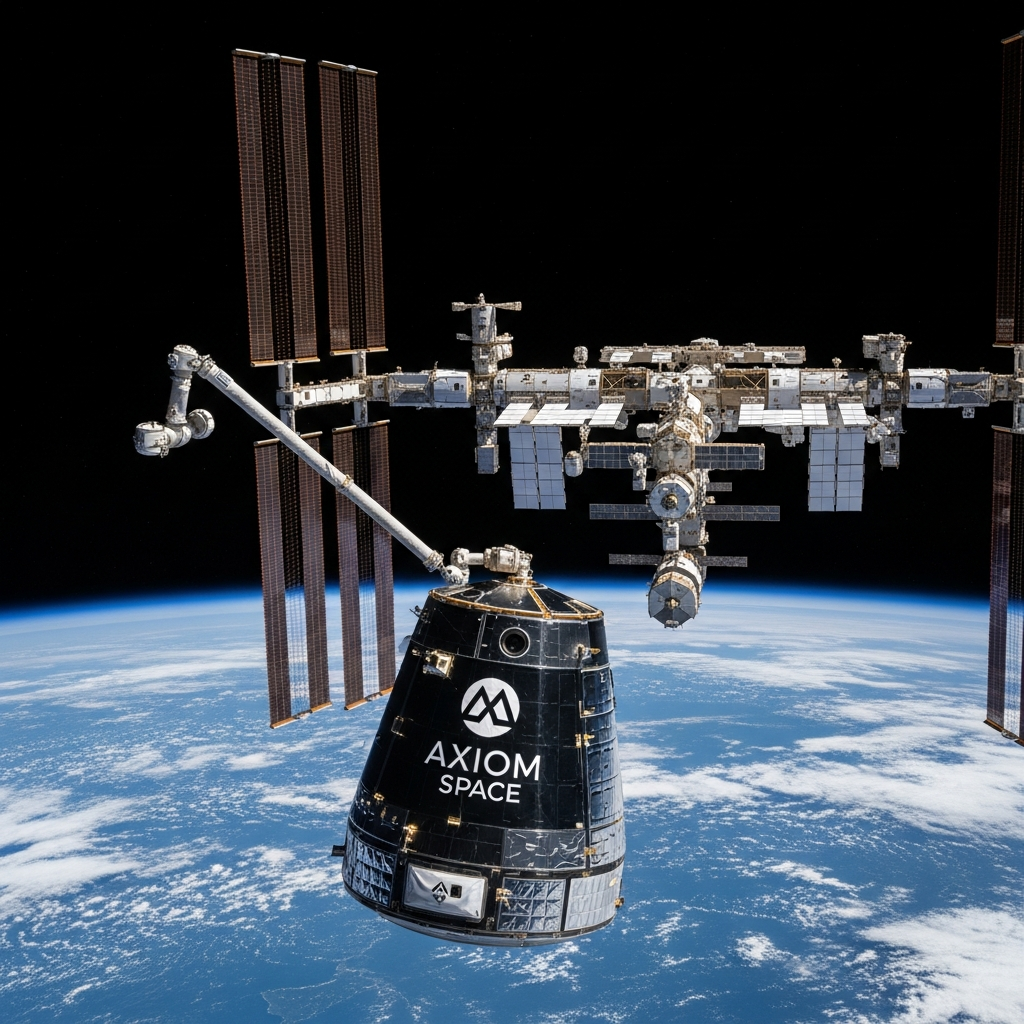
The frontier of commercial spaceflight is rapidly expanding, and Axiom Space stands at its forefront. NASA recently awarded Axiom Space its fifth private astronaut mission to the International Space Station (ISS), designated Ax-5. This pivotal two-week mission, set for launch no earlier than January 2027 from Florida’s Kennedy Space Center, solidifies Axiom’s near-monopoly on private human spaceflight to the orbiting laboratory. It marks a significant step toward a future where commercial entities play a central role in orbital operations and beyond.
This latest agreement, formalized on January 30, underscores NASA’s strategic shift. The agency aims to transform Low Earth Orbit (LEO) into a thriving commercial domain. Ax-5 is not just another flight; it’s a testament to the growing maturity of private space operations, building crucial experience for what comes next in human exploration.
Axiom’s Undisputed Leadership in Private ISS Missions
Since NASA first announced plans for private astronaut missions to the ISS in 2019, Axiom Space has remarkably secured all five opportunities. This track record demonstrates the company’s established capability and trusted relationship with the space agency. The most recent mission, Ax-4, successfully launched to the station last summer, further cementing Axiom’s operational prowess.
Jonathan Cirtain, CEO of Axiom Space, highlighted the profound impact of these missions. He noted how the previous four flights — Ax-1 through Ax-4 — have broadened the global community of space explorers. These ventures also diversified scientific investigations conducted in microgravity. Critically, the insights gained are directly benefiting the development of Axiom Station, the company’s ambitious next-generation commercial space platform. This continuous flow of experience is invaluable.
For the Ax-5 mission, Axiom Space will propose a four-member crew. As with previous missions, the proposed crew will undergo rigorous review and approval by both NASA and its international partners. A key NASA requirement for these missions stipulates that the commander must be a former astronaut with prior ISS flight experience, ensuring seasoned leadership for complex orbital operations.
Evolving Partnerships and the Commercial Space Landscape
A new dimension for Ax-5 involves a significant collaboration with Voyager Technologies. Voyager will play a crucial role in payload integration for the flight. This partnership signifies a growing interconnectedness within the commercial space ecosystem. Dylan Taylor, CEO of Voyager, emphasized that as commercial LEO destinations mature, missions like Ax-5 will showcase comprehensive execution across human spaceflight, research payloads, and the burgeoning commercial infrastructure shaping the future space economy.
While Axiom has faced minimal competition for its initial missions, the landscape is poised for change. Another commercial entity, Vast, has publicly declared its intention to compete for future private astronaut mission opportunities. NASA issued a Request for Proposals (RFP) in early 2025 for two additional private astronaut missions. While Ax-5 is one of these selections, NASA is actively finalizing the order for the sixth mission, signaling an anticipated increase in competition and options for commercial access to LEO. This burgeoning competition is a healthy sign for the industry.
The Strategic Importance for NASA’s Future Goals
NASA views these private astronaut missions as indispensable. They are not merely commercial endeavors but foundational components of a broader strategy. NASA Administrator Jared Isaacman powerfully articulated this vision, stating that the award of the fifth private astronaut mission proves “commercial space is not a distant promise, but a present reality.” He emphasized that expanding access and fostering competition in LEO builds the essential capabilities NASA will leverage for its ambitious goals, including human exploration “outward to the moon, Mars and beyond” through programs like Artemis.
Dana Weigel, Manager of the International Space Station Program, further reinforced this perspective. She described the ISS as a “critical platform for enabling commercial industry in Low Earth Orbit.” Weigel explained that private astronaut missions transform the station into a vital proving ground. They support emerging markets and technologies, while simultaneously promoting science, research, and outreach. This approach strengthens the commercial space economy without compromising the station’s primary scientific objectives.
Building the Next Generation of Space Stations
For companies like Axiom, Vast, and Voyager, private astronaut missions are more than just short trips to orbit. They represent crucial opportunities to gain invaluable hands-on experience in human spaceflight and space station operations. This experience is deemed essential preparation for the eventual deployment of their own commercial space stations.
Axiom Space, for instance, is actively developing Axiom Station, envisioned as a direct successor to the International Space Station. Axiom Station aims to provide a sustainable platform for research, innovation, and long-term commercial activities in LEO. Similarly, Vast is developing its own distinct commercial station concept. Voyager Technologies is a lead partner in the Starlab Space joint venture, also pursuing the development of a commercial station. These missions are, in essence, test runs for the future of orbital habitation and commerce.
Navigating Challenges: Lessons from Prior Missions
The path to routine commercial spaceflight is not without its hurdles. The Axiom Mission 4 (Ax-4), for example, faced significant delays before its eventual launch. These postponements were attributed to a range of factors, including unfavorable weather conditions and technical issues such with a SpaceX Falcon 9 launch vehicle. Furthermore, a Crew Dragon capsule originally designated for Ax-4 had qualification issues, necessitating a swap that impacted other scheduled missions.
Perhaps most critically, concerns regarding the integrity of the aging International Space Station itself caused further shifts. NASA opted to delay launches to evaluate repair attempts. Air leaks and cracks were discovered in the Russian segment of the Zvezda module. NASA emphasized the need to ensure the “interconnected and interdependent systems” of the station were fully ready for additional crew members. Such challenges highlight the complex, interconnected nature of space operations and the realities of maintaining an aging orbital laboratory. These experiences provide invaluable operational insights for future commercial stations.
The Commercial Exchange: A New Model for Space
The agreement between NASA and Axiom Space for Ax-5 embodies a reciprocal service exchange, a hallmark of the evolving commercial space model. Axiom Space will compensate NASA for essential services, including crew consumables, cargo delivery, storage capabilities, and other in-orbit resources necessary for daily operations. In a strategic return, NASA will acquire critical services from Axiom Space. Specifically, NASA will utilize Axiom’s capability to safely return sensitive scientific samples, particularly those requiring cold storage, back to Earth. This symbiotic relationship reduces NASA’s direct expenditure while fostering a self-sustaining commercial ecosystem.
NASA’s backing of these private missions is a cornerstone of its strategy to commercialize spaceflight. It reduces reliance on exclusively government-funded programs. The agency believes that fostering commercial missions in LEO is instrumental in accumulating valuable experience and developing new technologies. These advancements will be critical for future, more ambitious endeavors, such as missions to the Moon and Mars under the Artemis campaign. The ISS serves as a crucial testing ground, allowing private astronauts to conduct experiments, validate new technologies, and support ongoing research, all while generating new business opportunities within the burgeoning space sector.
Frequently Asked Questions
What is the significance of Axiom Space’s dominance in private ISS missions?
Axiom Space’s consistent success in securing all five private astronaut mission opportunities to the ISS highlights its established expertise and trusted partnership with NASA. This dominance reflects its operational capability in managing complex human spaceflight missions and its leading role in commercializing Low Earth Orbit. While it currently faces limited competition, this track record allows Axiom to gain unparalleled experience crucial for developing its own commercial Axiom Station, directly benefiting the future of orbital infrastructure.
How do private astronaut missions like Ax-5 contribute to the development of future commercial space stations?
Private astronaut missions are vital testbeds for future commercial space stations. They provide invaluable hands-on experience in human spaceflight operations, mission planning, crew training, and payload integration in a real-world orbital environment. Companies like Axiom Space, Vast, and Voyager (Starlab) use these missions to refine technologies, test operational procedures, and build the necessary infrastructure and expertise. This direct experience is fundamental to designing, building, and operating the next generation of privately-owned orbital platforms, ensuring they are robust and sustainable.
What challenges have previous private astronaut missions faced, and how might they impact future flights?
Previous private astronaut missions, particularly Ax-4, have encountered significant challenges including weather delays, technical issues with launch vehicles, and capsule reallocations. Critically, concerns over the aging International Space Station’s integrity, such as air leaks and cracks in modules like Zvezda, have also led to mission postponements. These challenges underscore the inherent complexities and risks of spaceflight. They emphasize the need for robust contingency planning, adaptable schedules, and continuous monitoring of orbital infrastructure. Lessons learned from these delays will likely lead to even more stringent operational protocols and contingency measures for future commercial flights, as well as accelerate the timeline for commercial station development to replace the aging ISS.
The Dawn of a New Space Era
The Axiom Space Mission 5 is more than just another trip to the International Space Station. It represents a tangible step into an era where commercial ingenuity and private enterprise drive the future of human spaceflight. With each mission, Axiom Space and its partners are not only expanding access to orbit but also laying the groundwork for sustainable commercial operations that will extend humanity’s reach further into the cosmos. The vision of a vibrant, commercial Low Earth Orbit is rapidly becoming reality, paving the way for the next great leaps to the Moon, Mars, and beyond.
References
- spacenews.com
- timesofindia.indiatimes.com
- www.miragenews.com
- spacenews.com
- <a href="https://www.theregister.com/2025/06/24/axiommission4finallyset/”>www.theregister.com