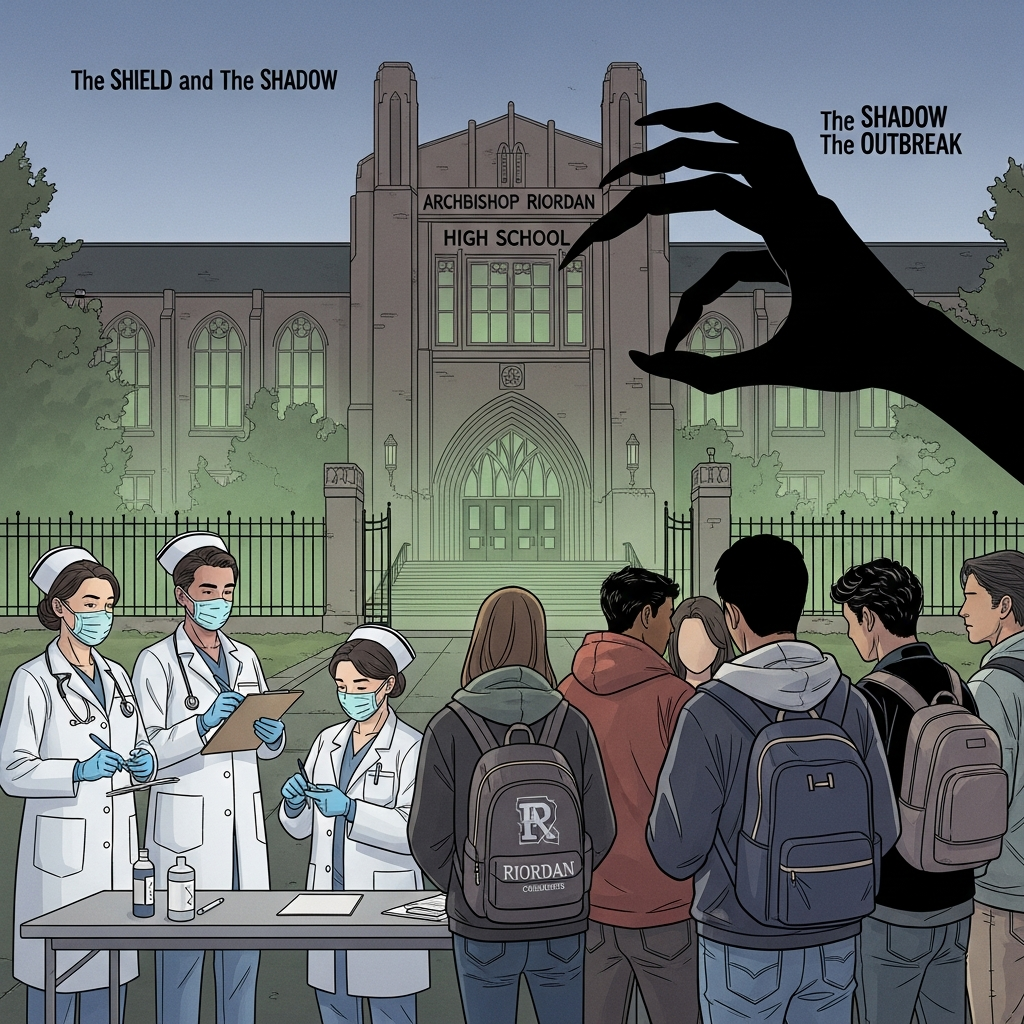
The San Francisco community is on high alert as Archbishop Riordan High School confronts a confirmed tuberculosis (TB) outbreak, prompting immediate and extensive public health measures. With at least three active cases identified, the private Catholic institution has transitioned to remote learning and mandated comprehensive testing for its entire student and staff population. This critical response aims to contain the airborne bacterial infection and safeguard the well-being of the school’s approximately 1,150 students and 100 faculty members.
The San Francisco Department of Public Health (SFDPH) is working closely with Riordan High to manage this evolving situation. Experts emphasize the importance of swift action, as TB, though treatable, poses a significant risk in close-contact environments like schools. This article delves into the specifics of the outbreak, the school’s robust response, and what it means for the Archbishop Riordan High School community.
Archbishop Riordan High School: An Outbreak Confirmed
An active tuberculosis outbreak, defined by health officials as three or more confirmed active cases, has been officially declared at Archbishop Riordan High School. The first case was identified in November, initiating initial testing efforts. However, the subsequent confirmation of two additional active cases after the holiday break triggered a more urgent and comprehensive response. This development underscores the silent and slow-growing nature of TB, a disease that can take weeks to manifest.
The school’s extensive population means the outbreak has significant implications. All members of the Riordan community are now part of a critical health screening process. Health officials have also identified an additional 50 cases of latent TB infection among the school population. While latent infection means individuals carry the bacteria without symptoms and are not contagious, it highlights the potential for broader exposure within the school environment.
Understanding the Outbreak Timeline and Escalation
The initial case detected in November prompted a period of mandatory testing. However, the lengthy incubation period of TB, which can range from two to ten weeks, means early tests can sometimes yield false negatives. This characteristic of the disease likely contributed to the emergence of additional active cases after the initial screening, particularly following the holiday period when potential exposures might have gone unnoticed.
Dr. Peter Chin-Hong, an infectious disease specialist at UCSF, noted that TB is “slow growing and so quiet,” making its detection and management particularly challenging. The subsequent discovery of new active cases necessitated a “reset” of the investigation, leading to the current comprehensive re-screening mandate for everyone on campus.
Swift Action: Remote Learning & Mandatory Testing
In response to the escalating situation, Archbishop Riordan High School has implemented a series of stringent measures in consultation with the SFDPH. These actions prioritize the health and safety of the school community while striving to maintain educational continuity.
Immediate Class Cancellation: All in-person classes were canceled on Friday, January 30, 2026.
Transition to Remote Learning: In-person instruction was halted for the following week, starting Monday, February 3, 2026. Students were required to complete assignments online.
Mandatory Testing for All: Every student and staff member is now required to undergo TB testing.
Hybrid Learning Model: From February 9 to February 20, the school plans to implement a hybrid model. Only students who submit negative TB test results will be permitted to return to campus for in-person classes. Students who have not yet been tested or prefer to remain home can continue with online instruction via Zoom.
Strict Compliance: After February 20, individuals who have not completed their mandatory TB testing will be barred from campus and will lose their online learning option, requiring parent-excused absences until their testing is complete.
Beyond academic adjustments, the school has also taken steps to mitigate transmission risks. Indoor mask-wearing has been recommended, and various school-wide events, including rallies and basketball games, have been canceled or restricted for those not yet tested. The goal is to minimize close-contact activities during this critical screening phase.
Why Such Comprehensive Measures Are Necessary
Medical experts underscore the rationale behind these decisive actions. Dr. Monica Gandhi, also an infectious disease expert at UC San Francisco, described a three-case cluster in a single high school as “really bad,” highlighting that TB is “quite easily transmitted in closed settings.” School environments, with daily close contact during activities like studying, talking, and playing sports, present ideal conditions for airborne transmission.
The SFDPH confirmed its comprehensive public health response includes not only mandatory testing but also coordinated screening and contact tracing efforts. This multi-pronged approach is essential to identify infected individuals, prevent further spread, and ultimately declare the outbreak over.
Understanding Tuberculosis: Key Facts for the Community
Tuberculosis, often referred to as TB, is a serious bacterial infectious disease primarily affecting the lungs. It spreads through the air when an infected person coughs, sneezes, or speaks, releasing airborne particles containing the bacteria. While a significant portion of the global population carries the TB bacteria, only a small fraction develops active, contagious disease.
There are two main forms of TB infection:
Latent TB Infection: In 90-95% of exposed cases, the immune system contains the bacteria, preventing it from becoming active. Individuals with latent TB are infected but do not exhibit symptoms and are not contagious. However, they carry the risk of developing active TB later.
Active TB Disease: This occurs when the bacteria multiply and cause symptoms, making the person contagious. Active TB can present with symptoms similar to a common cold or flu, such as a persistent cough, fever, night sweats, and weight loss, making early detection challenging. Active TB is more likely to develop in infants and immunocompromised individuals.
The good news is that active TB is curable with a months-long course of antibiotics. However, if left untreated, it can be fatal. Dr. Chin-Hong reiterated that while finding multiple cases in an isolated setting like a school is somewhat rare, “the risk is still relatively low to the population” given proper management and treatment.
TB in San Francisco: A Broader Context
The Archbishop Riordan TB outbreak occurs amidst a rising trend of tuberculosis cases in San Francisco. Recent data indicates that the city recorded 91 TB cases in 2024. This represents a 31 percent increase from 2023 and a 58 percent increase from 2022, signaling a need for continued vigilance across the city. Typically, San Francisco sees around 100 cases annually. Dr. Chin-Hong also clarified that the incidence of TB in the U.S. is not high enough to warrant widespread vaccinations, emphasizing targeted screening and treatment instead.
Community Response and Outlook
Archbishop Riordan High School President Tim Reardon has issued statements affirming the institution’s commitment to the safety and well-being of its community, promising frequent and consistent updates. He emphasized that the shift to online classes provides “additional flexibility during this phase of testing” and ensures the “greatest possible combination of safety, stability, and continuity of learning.”
Parents, while understandably concerned, have largely expressed confidence in the school’s communication and management of the situation. Student feedback suggests a mix of apprehension and reassurance, with some noting the situation reminds them “a bit of COVID” but appreciating the school’s proactive decisions. The emotional impact on students, many of whom experienced significant disruptions during the pandemic, is also a consideration for families.
The SFDPH continues to provide ongoing medical and public health guidance, having also issued an advisory to healthcare providers regarding the outbreak. Officials intend to reassess test results every eight weeks until the Archbishop Riordan TB outbreak is officially declared over, indicating a sustained monitoring effort. This collaborative approach between school leadership, public health officials, and the community is crucial for effective containment and recovery.
Frequently Asked Questions
What is latent TB, and how is it different from active TB?
Latent tuberculosis (TB) infection means you have the TB bacteria in your body, but your immune system has contained it, so you don’t have symptoms and are not contagious. About 90-95% of people exposed develop latent TB. Active TB disease, on the other hand, means the bacteria are actively multiplying, causing symptoms like a cough, fever, and night sweats, and you are* contagious. At Archbishop Riordan High School, both active (three confirmed cases) and latent (50 cases) infections have been identified.
What are the mandatory testing requirements for Riordan High School students and staff?
All students and staff at Archbishop Riordan High School are required to undergo TB testing. Testing began between January 20 and February 13, with a re-screening deadline of February 20. Failure to comply with this mandatory testing will result in individuals being barred from campus. After February 20, students who have not completed testing will lose the online learning option and will need to use parent-excused absences until their results are submitted.
Should students or parents be concerned about attending Riordan High School given the TB outbreak?
While a TB outbreak is serious, health experts and school officials are taking comprehensive measures. Archbishop Riordan High School has moved to remote learning, mandated testing for all, and implemented a hybrid return plan for those with negative results. Dr. Peter Chin-Hong of UCSF notes that TB is treatable with antibiotics and, with proper management, “the risk is still relatively low to the population.” The school and SFDPH are committed to ensuring safety and providing continuous updates.
Conclusion: Prioritizing Health and Learning
The Archbishop Riordan TB outbreak represents a significant health challenge, but the swift and comprehensive response from school administration and the San Francisco Department of Public Health is designed to ensure the safety of the community. Through mandatory testing, a transition to remote and hybrid learning, and ongoing vigilance, the goal is to contain the infection and support affected individuals. The situation highlights the importance of understanding TB, its transmission, and the critical role of public health protocols in managing outbreaks within close-knit environments like schools. The commitment to frequent updates and transparent communication remains paramount as the Archbishop Riordan High School community navigates this period, ultimately prioritizing both health and educational continuity.