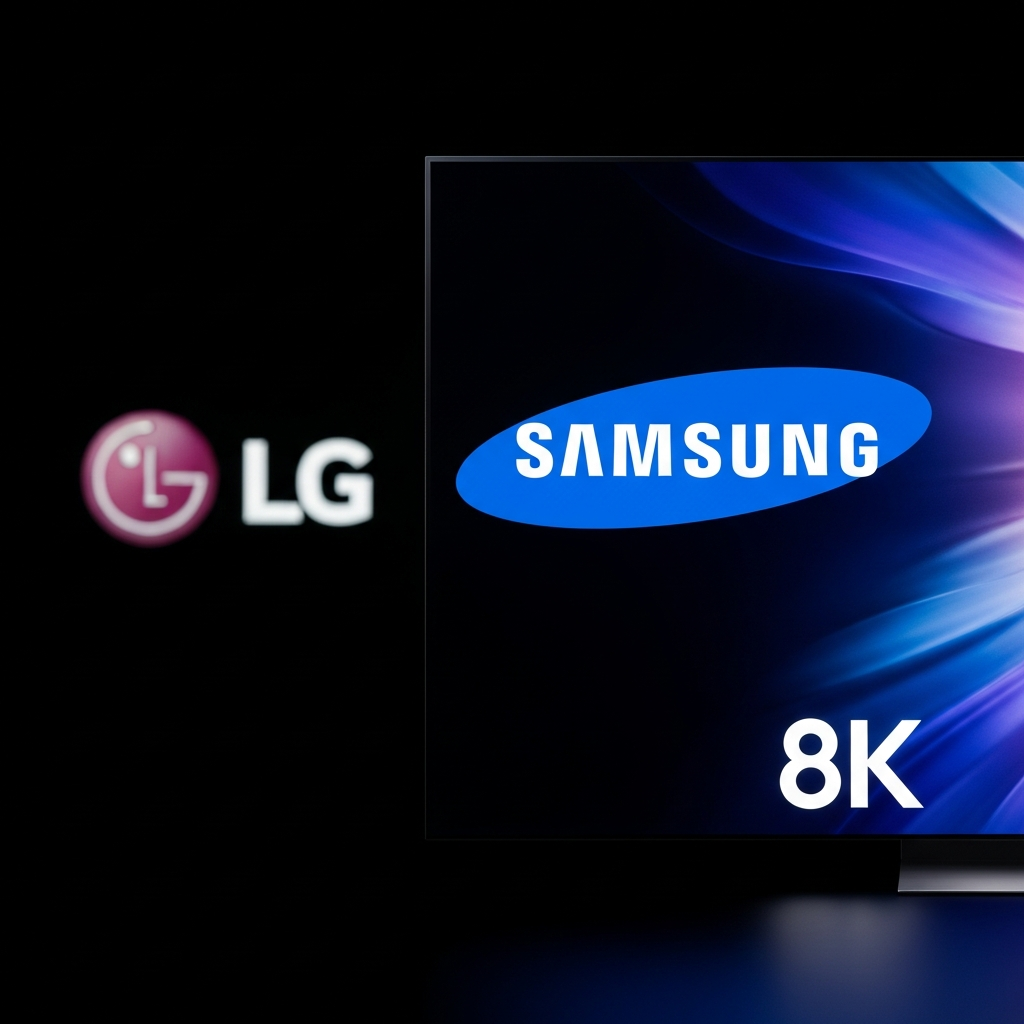
The landscape of high-definition television just experienced a significant shift. LG, a major player in premium display technology, is reportedly stepping back from the 8K TV market. This strategic withdrawal leaves rival Samsung as the only prominent manufacturer actively championing the ultra-high-resolution format. For consumers and industry watchers alike, this development sparks crucial questions about the future of 8K televisions and the broader direction of home cinema technology.
LG’s Strategic Pivot Away From 8K
South Korean tech giant LG has confirmed it is halting the development of 8K OLED panels. This decision signals a clear pause in the company’s commitment to new 8K OLED models, including acclaimed units like the LG Z3, which previously earned high marks in expert reviews. While an existing 8K LCD model, the LG QNED99, might still be found at some retailers, the absence of new 8K LCD announcements for 2026 suggests its eventual discontinuation. This move is a strong indicator that LG sees its future investments in other display technologies.
Companies often make such strategic decisions when market conditions don’t align with long-term profitability or growth. Much like Micron Technology recently exited the consumer memory market, discontinuing its Crucial brand to focus entirely on the booming AI data center and enterprise segments, LG appears to be reallocating its considerable resources. Micron’s pivot was driven by higher margins and predictable demand in specialized sectors, a rationale that could easily apply to LG’s focus on more established or emerging display technologies where it sees greater return.
Why 8K Television Has Struggled to Gain Traction
The journey of 8K technology has been fraught with challenges since its inception. A primary hurdle has been the significant lack of native 8K content. Without movies, TV shows, or even major streaming services offering widespread 8K programming, consumers have had little reason to upgrade. Standard 4K content, while impressive, doesn’t fully utilize the enhanced resolution of an 8K panel, relying heavily on upscaling technology to fill the pixels.
Another major deterrent is the prohibitive cost. 8K TVs typically command astronomical price tags that put them well out of reach for the average consumer. For instance, the 77-inch LG Z3 was priced at approximately £14,999 / AU$15,999 (around $20,660 USD). Even Samsung’s top-tier 8K offerings remain a significant financial commitment. The economic barrier, coupled with the content deficit, has made the value proposition of 8K difficult for many to justify. Furthermore, the strong performance and increasing affordability of high-quality 4K TVs have presented formidable competition, often delivering an excellent viewing experience at a fraction of the cost. This trend is not unique to the tech sector; companies across various industries, from health insurance providers exiting specific markets due to unviable conditions to pharmaceutical firms streamlining portfolios for specialized investments, routinely pull back from segments that fail to meet strategic or financial targets.
Sony’s Precedent: An Early Exit
LG is not the first major manufacturer to signal a withdrawal from the 8K TV market. Sony, another leading innovator in television technology, ceased its 8K TV production in April of last year, notably with the discontinuation of models like the Z9K. These consecutive exits from two industry titans underscore the fundamental difficulties faced by 8K in establishing a mass-market foothold. It suggests a broader industry consensus that the ecosystem required to support widespread 8K adoption – from content creation and distribution to more accessible pricing – is simply not mature enough.
Samsung: The Last Major Player Standing
With LG’s announced withdrawal, Samsung now finds itself as the sole major manufacturer actively developing and promoting 8K televisions. The company continues to invest in the technology, launching new models and showcasing advanced upscaling capabilities. Their five-star Samsung QN900D, a 2024 What Hi-Fi? Award winner, exemplifies their commitment. Even newer models like the Samsung QN990F and QN900F, though yet to be fully tested by critics, have impressed with their rich colors and sophisticated processing during hands-on sessions.
Samsung’s continued presence offers a glimmer of hope for 8K enthusiasts. However, even their premium 8K offerings, such as the QN900D, still carry a substantial price tag, launching at around £6650 / $6299 / AU$8999. This pricing remains a significant hurdle for mainstream adoption. Samsung’s solo venture into 8K will likely test the limits of what a single manufacturer can achieve in driving a nascent, high-cost technology forward without broader industry support.
Implications for the Consumer Market
For consumers contemplating a new television purchase, LG’s 8K TV exit reinforces the dominance of 4K. While 8K might still represent the ultimate in resolution, the practical benefits remain marginal for most viewers, especially given the content situation. Investing in a top-tier 4K OLED or QLED TV often provides a more tangible upgrade in overall picture quality, contrast, and color accuracy, at a much more accessible price point. The market is currently rich with excellent 4K options, offering incredible value and performance.
This shift might also mean that innovations originally destined for 8K could be redirected. Manufacturers like LG may focus their advanced display research on enhancing 4K experiences, improving panel efficiency, or developing entirely new form factors and smart TV features. The consumer tech market constantly evolves, and companies must adapt their strategies, much like Lundbeck, a pharmaceutical company, offloaded assets and exited 27 markets to focus on higher-growth neuro-rare and neuro-specialty disease franchises. This strategic pruning allows for more targeted investment in areas with clearer potential.
The Future of Ultra-HD and Display Technology
While the current outlook for 8K TV adoption appears challenging, the technology itself is not necessarily “dead.” It may simply be entering a period of dormancy in the consumer market, awaiting significant breakthroughs in content availability or a drastic reduction in manufacturing costs. Future applications for 8K resolution might lie in specialized commercial displays, professional video production, or virtual/augmented reality, where the pixel density offers more immediate and practical advantages.
In the near term, expect continued innovation in 4K display technology, especially in areas like brightness, contrast, color gamut, and processing power. MicroLED and advanced Mini LED technologies are also emerging as key areas of development, promising unprecedented picture quality for those seeking a premium viewing experience without necessarily chasing the highest pixel count.
Frequently Asked Questions
Why did LG exit the 8K TV market?
LG’s decision to halt 8K OLED panel development stems from several factors, including the significant lack of native 8K content, the prohibitive cost of 8K TVs for average consumers, and intense competition from highly capable and more affordable 4K televisions. This strategic shift allows LG to reallocate resources to other display technologies and market segments where it perceives greater growth potential and profitability.
Should consumers still consider buying an 8K TV?
For most consumers, investing in an 8K TV is currently not recommended. The practical benefits are minimal due to the scarcity of native 8K content, meaning the TV’s full resolution capabilities are rarely utilized. Furthermore, 8K TVs remain extremely expensive. A high-end 4K TV, particularly an OLED or premium Mini LED model, offers a superior viewing experience for current content at a much more reasonable price.
What are the future prospects for 8K TV technology?
While 8K TV adoption faces significant challenges in the consumer market, the technology itself may not be entirely abandoned. Its future prospects might lie in specialized applications such as large commercial displays, professional video editing, or advanced virtual and augmented reality systems where extreme pixel density is crucial. For the home cinema market, a resurgence would likely require widespread 8K content availability and a substantial drop in manufacturing costs, which are not anticipated in the immediate future.
Conclusion
LG’s withdrawal from the 8K TV market is a defining moment, signaling a practical acknowledgment of the format’s current consumer viability. It highlights the challenges high-cost, content-starved technologies face in a rapidly evolving market. While Samsung stands alone as the primary proponent of 8K for now, the immediate future of home entertainment unequivocally belongs to sophisticated 4K displays. Consumers should focus on the exceptional value and performance available in the 4K segment, confident that the cutting edge of visual technology continues to advance, even if not always at the highest pixel count.