Despite a severe communications blackout, Iranian citizens are bravely sharing rare, harrowing accounts from the front lines of widespread anti-government demonstrations that swept the nation in early January 2026. These compelling narratives offer a critical glimpse into an unprecedented wave of dissent. They reveal both the brutal state crackdown and the unwavering determination of a populace demanding fundamental rights and dignity. From the bustling streets of Tehran to the hospitals of Mashhad, protesters are risking everything. Their voices, often amplified only through clandestine means like Starlink satellite dishes, paint a vivid picture of a nation at a pivotal crossroads.
Unprecedented Dissent: Iran’s January 2026 Uprising
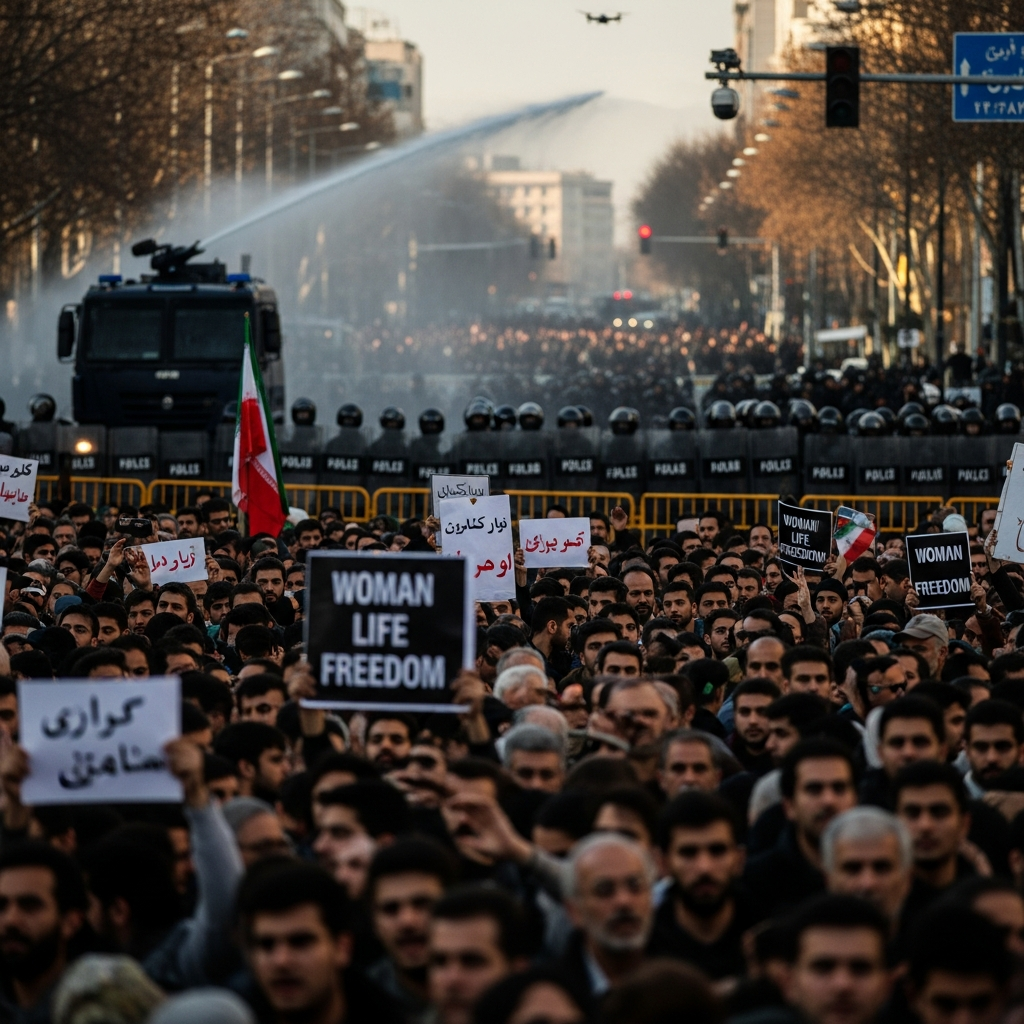
Early 2026 saw a surge of anti-government protests across Iran. Witnesses describe these demonstrations as unmatched in their scale and intensity. What began as an outcry against inflation and a plummeting currency quickly evolved. Chants soon targeted the country’s entrenched theocratic leaders. This momentum felt different. It was a broad movement, encompassing diverse age groups and social backgrounds. Older residents joined younger, defiant voices. Even some children participated. Many felt the current national situation was simply unsustainable. This broad consensus fueled a rare sense of hope, even amid profound fear.
The backdrop to these Iranian protests is grim. Iran has battled economic hardship. Western-led sanctions and a recent 12-day war involving Israeli and U.S. jets worsened conditions. Citizens express deep frustration. They accuse the government of mismanagement and pervasive interference in their daily lives. Their core demands are simple: rights and dignity.
The State’s Brutal Response and Communication Blackout
The government’s response to these Iran protests was swift and brutal. Activists estimate over 6,000 people, mostly protesters, were killed. This makes it the bloodiest crackdown on dissent since the Islamic Republic’s formation in 1979. Supreme Leader Ayatollah Ali Khamenei made a rare admission of “several thousand” deaths. This statement underscored the sheer scale of the movement and the state’s aggressive counter-response.
Iranian authorities swiftly implemented a severe internet blackout. This communications blockade aimed to stifle dissent and prevent information from reaching the outside world. This shutdown was described as far more extensive than previous incidents. It covered the entire nation for an extended duration, restricting international phone access. Cloudflare noted “internet traffic anomalies” that preceded Iran being “almost entirely cut off from the global internet.” The government labeled demonstrators as “terrorists” and “violent separatists.” State media showcased damaged property, attributing it to protesters. Meanwhile, Iran’s UN ambassador asserted security forces confronted protesters “firmly and responsibly.”
Eyewitness Accounts: Voices from the Front Lines
Despite severe restrictions, personal stories emerged, painting a harrowing picture. Six Iranians spoke anonymously through secure channels. Four managed to bypass the internet shutdown from within Iran. Two spoke from abroad. They described state violence against protesters. They witnessed the brutality firsthand.
A 25-year-old fashion designer from Tehran joined the Iran protests again in January. Four years prior, protests following Mahsa Amini’s death in custody (for improper hijab wearing) brought little change. She felt her previous efforts might have been in vain. Yet, this time, a new spark ignited. She described January 8 as a turning point. A call to protest from exiled Crown Prince Reza Pahlavi drew thousands into Tehran’s streets. The crowd was massive, more diverse than she’d ever seen. “Everyone was afraid,” she recounted, but “they kept saying, ‘No, don’t leave. This time, we can’t leave it.'”
She and two friends used a smuggled Starlink satellite dish to communicate. They marched on Shariati Street, a commercial artery in Tehran. Shops were closed. They spray-painted graffiti and yelled anti-government chants. Some shouts called for the death of Khamenei—a cry that carries the death penalty. Anti-riot police and Basij paramilitary forces arrived. They blocked roads, lobbed tear gas, and fired pellet guns. Protesters scattered, panic in the air. Many pushed forward, throwing rocks. Experienced younger protesters wore masks. Security forces retreated initially but soon charged again. The designer and her friends fled into alleys. Residents helped, throwing rags and antiseptics. Tear gas canisters followed. She kicked one back, a lesson from past protests. But security forces fired paintballs and pellets. She was hit in the hand and leg. Her mask softened a paintball blow to her face.
A Doctor’s Testimony from Mashhad
In Mashhad, Iran’s second-largest city, a doctor witnessed similar, unprecedented scale. She spoke to the Associated Press while visiting family abroad. Days before a hospital night shift, she joined protests. She heard distant gunfire and felt tear gas burn her eyes. Walls bore graffiti; buildings, even mosques, were ablaze.
At the hospital, the state’s response escalated dramatically. Security agents, uniformed and plainclothes, took over the emergency room. “I was not afraid for myself,” the doctor stated. “I was afraid for others.” Ambulances and protesters brought in bodies. Colleagues reported 150 bodies on one night alone. She glimpsed a boy and a young woman, both with gunshot wounds. Doctors protested the agents’ presence. But they were silenced, told to stop asking questions. An account from a colleague painted a chilling scene: agents stood “over their (ER workers) heads with a gun, telling them not to touch (the wounded).” It was “as if they wanted those injured people to die on their own.”
She described a horrific incident. A family arrived to retrieve a young woman’s body. Agents refused release unless the family identified her as a Basij volunteer, a government supporter. The family refused, saying, “Our daughter was killed by your forces.” They were arrested. The woman’s body was taken to a cemetery with others. “I can’t get the picture of that day out of mind,” the doctor lamented.
The Starlink Lifeline Amidst Digital Darkness
The widespread internet blackout Iran implemented was severe. It sought to isolate the population and suppress dissent. However, Starlink, Elon Musk’s satellite internet service, provided a crucial lifeline. Thousands of Starlink terminals have been smuggled into Iran since 2022. This influx followed US authorization for American tech companies to provide communication tools to Iranians during earlier protests. Both former President Biden and President Trump publicly supported Starlink’s efforts.
Starlink operates through a “constellation” of satellites in low Earth orbit. Users require a Wi-Fi-enabled satellite receiver, which hands off signals between satellites. This design allows for broader signal reception but also makes it susceptible to jamming. Mahmood Amiry-Moghaddam, director of Iran Human Rights, emphasized Starlink’s vital role. Without it, he stated, “no information” on the protests and death tolls would emerge globally.
Iran’s government has escalated its efforts to block communications. New tactics include attempts to jam Starlink signals and seize terminals. This marks a significant shift from previous blackouts. Iranian state media showcased confiscated terminals, branding them as “electronic espionage and sabotage items.” Despite these challenges, Starlink continues to be a primary conduit. Images and videos of the demonstrations and government crackdowns reach the global audience through this network. However, Starlink’s unauthorized operation in Iran also sparks debate. In 2023, Iran lodged a complaint with the UN’s telecoms arm, the ITU, which ruled Starlink’s deployment illegal.
Lingering Fear and a Plea for Global Attention
As January ended, street tensions in Tehran cooled slightly. Daily life tentatively resumed. Yet, a pervasive sense of fear and watchfulness remains. Iranians report large deployments of security forces—both uniformed and plainclothes agents—in public spaces. The doctor in Mashhad articulated a profound concern: “What I fear is that these events will be treated as something ordinary by the world.” She fears the “voices of so many of those who were killed never reaches anyone.” The enormity of the situation, she states, is truly difficult to convey. “No one would believe that a government of a country can so easily kill its own people.” This sentiment underscores a desperate plea for continued international attention and acknowledgment of the human rights crisis unfolding within Iran.
Frequently Asked Questions
What sparked the widespread Iranian protests in early 2026?
The protests initially ignited due to severe economic hardships, including high inflation and a rapidly plummeting value of the Iranian rial. However, the movement quickly escalated beyond economic grievances. Participants soon directed their chants towards the country’s theocratic leaders, reflecting deeper discontent with the government’s management and its interference in personal freedoms. This economic trigger, combined with a history of suppressed civil rights, fueled a broad, diverse uprising seeking fundamental change.
How is Starlink enabling communication during Iran’s internet blackouts?
Starlink provides satellite internet access to Iranians amidst the government’s severe communication blackouts. Thousands of Starlink terminals, often smuggled into the country, receive signals from a constellation of low Earth orbit satellites. This allows individuals to bypass state-controlled internet infrastructure. While the Iranian government actively attempts to jam Starlink signals and confiscate terminals, the service remains a crucial, albeit risky, lifeline for protesters and citizens to share information and connect with the outside world.
What are the reported human costs and government tactics during these protests?
Human rights activists estimate that over 6,000 people, primarily protesters, were killed during the crackdown, making it one of the bloodiest since 1979. The government’s tactics included deploying anti-riot police and paramilitary Basij forces who used tear gas, pellet guns, and live ammunition. Hospitals were reportedly taken over by security agents, preventing medical staff from treating injured protesters. The state also imposed a comprehensive internet blackout, labeled protesters as “terrorists,” and attempted to suppress information flow, even resorting to confiscating bodies or dictating causes of death.