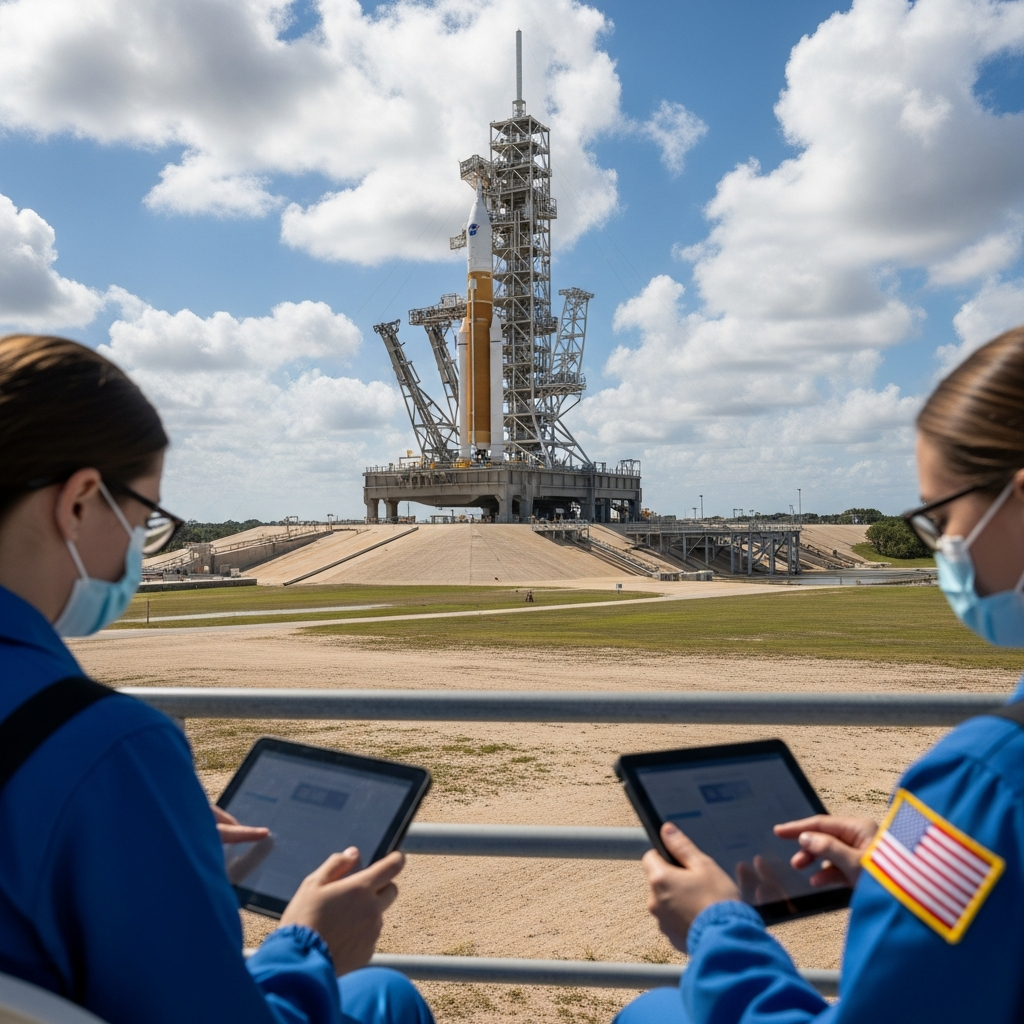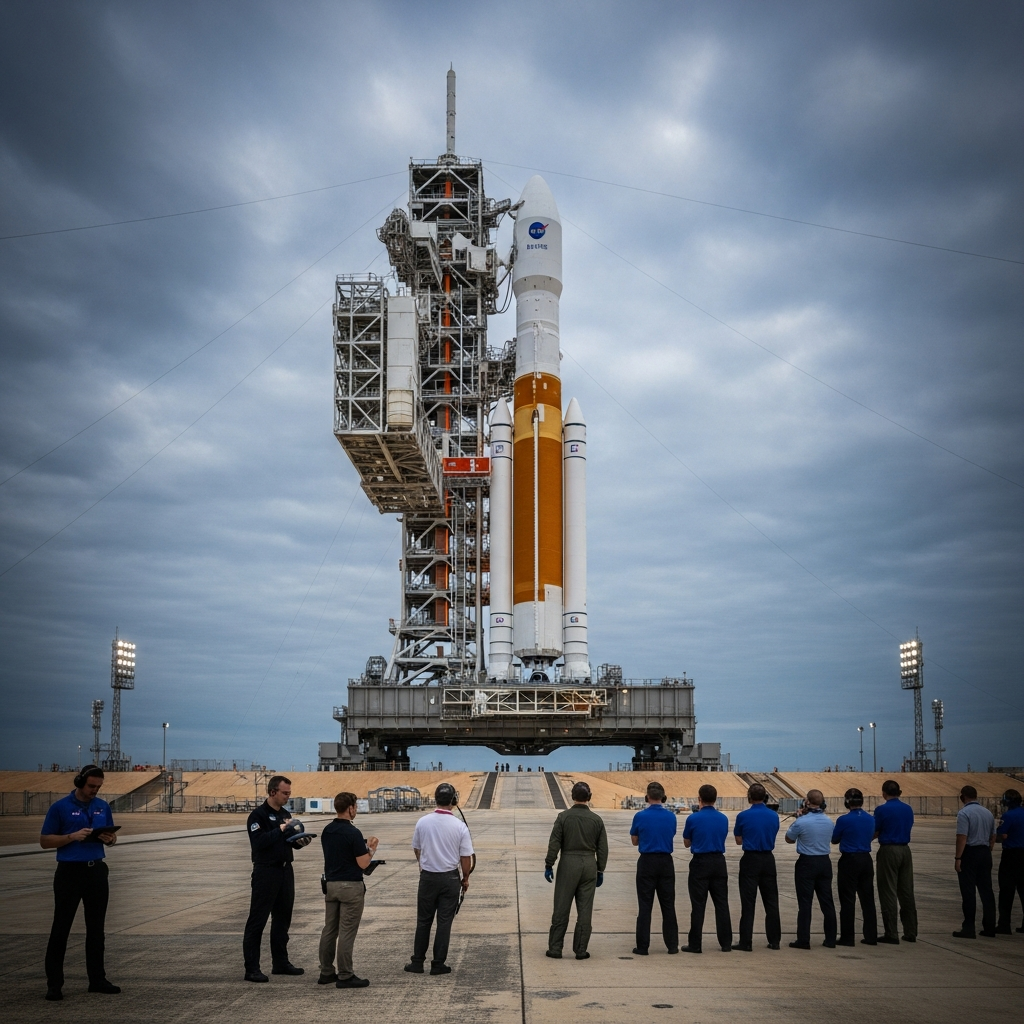
NASA is on the cusp of a monumental achievement: sending humans back to lunar orbit for the first time in over 50 years with the Artemis II mission. To ensure this historic journey’s success, a critical pre-launch event is underway. Known as the wet dress rehearsal, this comprehensive test simulates nearly every aspect of launch day. It’s a vital step for the Space Launch System (SLS) rocket and Orion spacecraft, guaranteeing readiness for the four brave astronauts set to make history.
What is a Wet Dress Rehearsal (WDR)?
Imagine a Broadway show’s final full run-through before opening night. That’s precisely what a wet dress rehearsal is for a rocket launch. It’s an exhaustive, uncrewed simulation designed to test all systems and procedures under conditions mirroring an actual launch. For the Artemis II mission, this means evaluating everything from fuel loading to the intricate countdown sequence. This meticulous practice helps launch teams perfect their timing and resolve any last-minute issues, ensuring maximum safety and efficiency.
The upcoming Artemis II wet dress rehearsal is a multi-day event, with core activities focusing on a critical cryogenic fuel loading. Engineers demonstrate their ability to handle vast quantities of propellants. They also practice the crucial process of safely removing these fuels if needed. NASA’s engineering teams at Kennedy Space Center, Florida, have worked tirelessly, even ahead of schedule, to prepare for this complex undertaking.
The Heart of the Test: Fueling the SLS Rocket
A central component of the Artemis II wet dress rehearsal is the massive fueling operation. Teams load more than 700,000 gallons (approximately 2.65 million liters) of super-cold liquid hydrogen and liquid oxygen into the SLS rocket’s massive tanks. This chilling process significantly increases the rocket’s weight to nearly 5.75 million pounds (around 2.6 million kilograms). Throughout this multi-hour task, engineers meticulously monitor every vehicle system. They validate ground procedures to ensure everything performs flawlessly under extreme cryogenic conditions.
Handling these “super-cold” fuels, known as cryogenic propellants, is a delicate art. Any leaks or malfunctions could jeopardize the mission. This is why the Artemis II wet dress rehearsal prioritizes demonstrating the seamless loading and, if necessary, the safe offloading of these propellants. This ensures the ground teams are fully proficient for the actual launch.
Simulating Launch Day: The Countdown Sequence
Beyond fueling, the rehearsal includes an extensive simulated countdown. This sequence runs to just moments before liftoff. The test features multiple “runs” to rigorously assess the launch team’s proficiency. They practice stopping, restarting, and recycling the countdown to different points within the crucial final 10 minutes, known as the terminal count. For Artemis II, the countdown will proceed to specific points like T-33 seconds or T-29 seconds. At these precise moments, the rocket’s onboard computers assume control for an actual launch.
The simulated launch is targeted for 9:00 p.m. EST. This rigorous simulation, which can extend operations until the early hours, allows controllers to rehearse every planned hold. It prepares them for any scenario that might arise on mission day. It’s a vital exercise in precision and quick decision-making, ensuring the seamless execution of the complex launch sequence.
Lessons Learned: Addressing Artemis I Challenges
NASA is committed to continuous improvement. A key objective of the Artemis II wet dress rehearsal is to verify that all issues encountered during similar tests in 2022, ahead of the uncrewed Artemis I mission, have been fully resolved. The Artemis I rehearsals faced several fueling leaks and required multiple rollbacks to the Vehicle Assembly Building (VAB) for repairs.
While NASA officials express confidence that these previous challenges have been addressed for Artemis II, this rehearsal serves as the ultimate validation. It demonstrates NASA’s meticulous approach to identifying and rectifying potential vulnerabilities. The insights gained from Artemis I’s experiences are directly integrated into the current preparations, aiming for a smoother and more reliable path to launch for this crewed mission.
The Astronauts’ Crucial Role (and Absence from Rehearsal)
While ground teams conduct the intricate wet dress rehearsal, the four history-making Artemis II astronauts will not participate directly. NASA’s Reid Wiseman (Commander), Victor Glover (Pilot), and Christina Koch (Mission Specialist), alongside Canadian Space Agency astronaut Jeremy Hansen (Mission Specialist), are currently undergoing a 14-day quarantine. This vital precaution ensures they do not contract any illness that could potentially delay the mission.
The crew entered quarantine in Houston on January 23rd, signifying another critical step towards launch. During this period, they reside in the Astronaut Crew Quarters at the Neil Armstrong Operations and Checkout Building at Kennedy Space Center. Described as “spartan but functional,” this facility, which dates back to the Apollo era, provides essential amenities. It includes a kitchen, lounge, bedrooms, medical exam rooms, and the dedicated suit room where the crew will don their pressure suits before heading to the launch pad on mission day. This stringent health protocol underscores the paramount focus on crew safety.
Beyond the Fueling: Comprehensive Preparations
The Artemis II wet dress rehearsal is part of a much broader preparation effort. Teams have been working tirelessly on numerous other fronts.
Booster Servicing: The SLS rocket boosters received servicing, including loading hydrazine into their aft skirts.
Orion Spacecraft Readiness: Technicians are stowing various items inside the Orion spacecraft and performing planned pyrotechnic work on its launch abort system.
Engine Checkouts: Comprehensive checkouts of the core stage’s four RS-25 engines have been completed.
Propulsion System: A tank within the spacecraft’s propulsion system, the composite overwrapped pressure vessel, has been pressurized.
Emergency Egress: An issue with the emergency egress system’s baskets, designed to transport personnel from the launch tower, was identified and rectified by adjusting brake settings. This ensures a full and safe descent for the crew.
Potable Water System: Engineers are taking additional samples of Orion’s potable water system after initial analyses showed higher-than-expected levels of total organic carbon. This ensures the water is completely drinkable for the astronauts.
- Weather Challenges: Given the potential for cold Florida weather, technicians are taking measures to safeguard rocket and spacecraft components. Historically, cold temperatures have posed risks, as seen with the 1986 Space Shuttle Challenger disaster. This vigilance ensures environmental control systems maintain optimal conditions.
- www.wral.com
- www.nasa.gov
- www.clickorlando.com
- thedebrief.org
- www.space.com
Setting the Stage for History: Artemis II Mission Overview
The Artemis II mission is envisioned as a roughly 10-day journey. After achieving Earth orbit to verify all spacecraft systems, Orion will embark on a “free-return” trajectory around the Moon. This unique figure-eight flight path guarantees the crew’s safe return to Earth, even in the unlikely event of a propulsion system failure. While Artemis II will not land on the Moon, it holds immense historical significance. It marks humanity’s first return to lunar space since the Apollo era.
This mission serves as a critical stepping stone, validating hardware and procedures for future lunar landings. Depending on specific launch parameters, Artemis II could potentially carry astronauts farther from Earth than any human has ever traveled. The mission is an “all-new chapter in American spaceflight,” setting the stage for deeper space exploration.
Looking Ahead: From Rehearsal to Launch and Beyond
A successful wet dress rehearsal is the green light for the final countdown to launch. Following its completion, NASA will meticulously review all collected data. This thorough analysis will inform the final preparations and confirm a specific launch date. An earliest potential launch date for Artemis II could be Friday, February 6 at 9:41 p.m. EST. However, even a flawless rehearsal does not guarantee this date, as further work or weather concerns could cause adjustments. NASA may also opt to roll back the SLS and Orion to the Vehicle Assembly Building (VAB) for additional work if deemed necessary.
Beyond Artemis II, the success of this mission paves the way for Artemis III, which aims to land astronauts on the lunar surface around 2028. The broader Artemis program infrastructure includes establishing initial elements of the Gateway space station in lunar orbit and developing Human Landing Systems (HLS) vehicles. This includes SpaceX’s Starship and potential involvement from other companies like Blue Origin. The Artemis II mission is thus not just a journey around the Moon, but a crucial link in humanity’s ambitious return to deep space.
Frequently Asked Questions
What exactly is NASA’s Artemis II wet dress rehearsal?
NASA’s Artemis II wet dress rehearsal is a comprehensive, uncrewed simulation of launch day procedures for the SLS rocket and Orion spacecraft. It involves fully loading over 700,000 gallons of super-cold cryogenic propellants into the rocket, followed by a simulated countdown sequence that proceeds to just seconds before liftoff. The primary goal is to test all systems, validate ground teams’ readiness, and resolve any issues under conditions identical to an actual launch, ensuring mission safety and success.
Why are the Artemis II astronauts in quarantine during this critical test?
The four Artemis II astronauts—Reid Wiseman, Victor Glover, Christina Koch, and Jeremy Hansen—are currently undergoing a 14-day quarantine during the wet dress rehearsal as a crucial health precaution. This measure helps prevent them from contracting any illness that could delay the mission’s launch. They are staying in the Astronaut Crew Quarters at Kennedy Space Center, ensuring their health and readiness are prioritized for their historic journey around the Moon.
What are the main challenges NASA is tackling for the Artemis II mission?
NASA is addressing several key challenges for the Artemis II mission. This includes resolving issues encountered during previous Artemis I wet dress rehearsals, such as fueling leaks, to ensure system reliability. They are also meticulously preparing for potential cold Florida weather, taking precautions to protect sensitive equipment. Furthermore, engineers recently rectified an issue with the crew emergency egress system and are taking extra steps to ensure the Orion spacecraft’s potable water system is optimal for the astronauts.
The Dawn of a New Lunar Era
The Artemis II wet dress rehearsal represents far more than just a test; it’s a testament to human ingenuity and our unyielding desire to explore. As NASA’s teams at Kennedy Space Center meticulously conduct this crucial simulation, they bring us closer to the moment four astronauts will embark on a historic journey around the Moon. This mission is a vital stepping stone, not just for returning humans to lunar orbit, but for paving the way for sustainable deep space exploration, including future landings on the lunar surface with Artemis III and beyond. The insights gained from this rehearsal will be instrumental in writing the next chapter of human spaceflight.