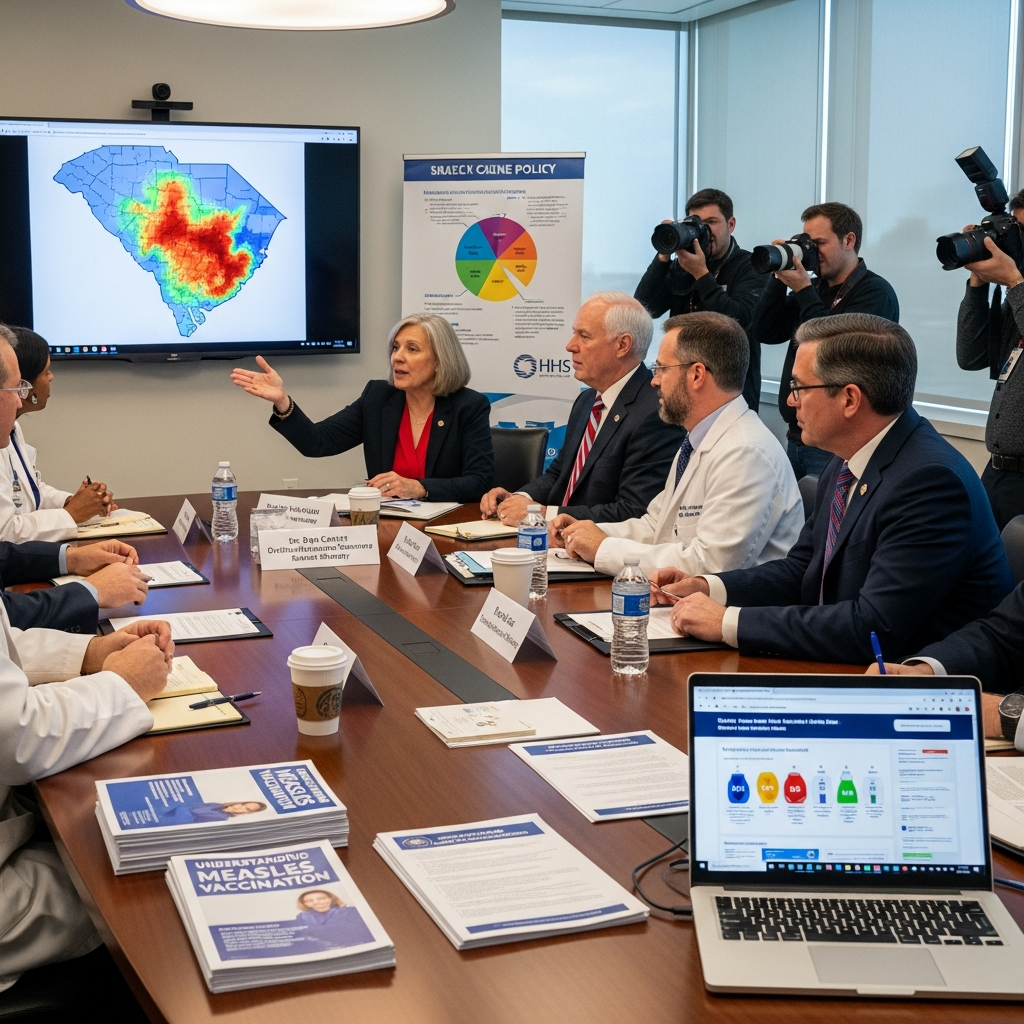
South Carolina is grappling with its most significant measles outbreak in decades, prompting critical questions about public health communication, vaccine policy, and federal oversight. With over 789 reported cases, this highly contagious virus is rapidly spreading, particularly within unvaccinated communities, surpassing the scale of any U.S. outbreak since measles was declared eliminated in 2000. This alarming surge unfolds amidst a perplexing narrative from the Department of Health and Human Services (HHS), which initially downplayed the threat, only to face a burgeoning crisis reminiscent of a severe outbreak in Texas just last year.
An Unprecedented Measles Resurgence in South Carolina
The current measles situation in South Carolina represents a stark challenge to national public health. State officials confirm that the virus is actively circulating, significantly elevating the risk of exposure and infection for individuals without immunity. A staggering 692 of the documented cases involve unvaccinated residents, underscoring the critical role of immunization in disease prevention. This pattern closely mirrors the devastating Texas outbreak from the previous year, which sickened 762 individuals, necessitated 99 hospitalizations, and tragically claimed the lives of two children. These figures highlight the severe health consequences of widespread vaccine hesitancy and the rapid spread of measles in susceptible populations.
The epicenter of South Carolina’s outbreak appears to be concentrated within an undervaccinated immigrant community in the Spartanburg area. This demographic detail not only points to localized vulnerability but also resonates with broader federal health policy discussions surrounding immigrant communities and access to care, a topic that has seen increased scrutiny from HHS.
HHS’s Shifting Stance and Leadership Scrutiny
Despite the lessons from Texas, the federal response to South Carolina’s escalating crisis has been marked by inconsistency. In a December email, when the state already reported over 100 cases, HHS Press Secretary Emily Hilliard asserted that the CDC was “not currently concerned that this will develop into a large, long-running outbreak.” However, as the situation intensified, HHS issued a more cautious statement, confirming close collaboration with South Carolina health officials and allocating $1.4 million in financial aid. While South Carolina State Epidemiologist Linda Bell welcomed the CDC’s expert assistance, the initial dismissal from HHS has drawn significant criticism.
This evolving narrative comes under the leadership of HHS Secretary Robert F. Kennedy Jr., whose past statements on vaccines have ignited controversy. While HHS spokespersons have consistently reiterated Kennedy Jr.’s official stance that “vaccination is the most effective way to prevent measles,” the Secretary’s previous public remarks tell a more complex story. During the height of the Texas outbreak, Kennedy Jr. reportedly speculated that measles vaccination had harmed children in the state and falsely claimed that vaccine risk profiles were unknown. Such statements fuel public skepticism and contradict established scientific consensus, posing a challenge to public health messaging. This pattern of questioning mainstream scientific consensus, particularly regarding children’s health issues, is not isolated, reflecting a broader trend of skepticism that some critics argue undermines crucial public health efforts.
The Broader Implications: Personal Freedom vs. Public Health
The South Carolina measles crisis also brings to light a contentious debate regarding individual liberty and collective health. CDC Principal Deputy Director Ralph Abraham articulated this tension during a recent press conference, stating, “We have these communities that choose to be unvaccinated… That’s their personal freedom.” He further suggested that if the United States were to lose its measles elimination status – a hard-won public health achievement – that would be the “cost of doing business.” This perspective, while acknowledging personal autonomy, has sparked debate among public health advocates who emphasize the societal responsibility inherent in preventing communicable diseases. The potential loss of measles elimination status carries significant implications, not only for the health of vulnerable populations but also for the global reputation of U.S. public health infrastructure.
Moreover, the mention of an “undervaccinated immigrant community” in Spartanburg adds another layer of complexity. Recent federal directives from HHS under the Trump administration have intensified scrutiny on Medicaid eligibility based on immigration status, demanding states conduct “unprecedented” investigations. While some states have disputed the administration’s claims of widespread fraud, these actions create an atmosphere of uncertainty and distrust within immigrant communities, potentially impacting their willingness to access essential health services, including vaccinations. Such policies risk exacerbating health disparities and creating barriers to care, making communities more vulnerable to outbreaks of preventable diseases like measles.
Addressing the Crisis: The Path Forward
Effectively combating the South Carolina measles outbreak, and preventing future recurrences, requires a multi-pronged approach rooted in clear, consistent public health messaging. Experts emphasize the vital role of widespread vaccination campaigns and robust surveillance systems. Public health authorities must work to rebuild trust, particularly in communities that may be hesitant due to misinformation or past federal policies. This involves tailored outreach, culturally sensitive health education, and ensuring equitable access to vaccination services for all residents, regardless of socioeconomic status or immigration background.
The financial assistance provided by the CDC is a crucial step, but long-term solutions require sustained investment in public health infrastructure and a unified front against vaccine misinformation. Transparent communication from federal agencies like HHS is paramount, ensuring that official statements align with scientific consensus and avoid creating confusion or doubt among the public. The ongoing challenge is not merely to contain the current outbreak but to strengthen the nation’s defenses against future preventable disease resurgence, safeguarding the health and well-being of all communities.
Frequently Asked Questions
How large and concerning is the South Carolina measles outbreak?
The South Carolina measles outbreak has grown to over 789 confirmed cases, making it the largest in the United States since measles was declared eliminated in 2000. It is highly concerning due to the virus’s rapid spread, particularly among unvaccinated individuals (692 cases), and its potential for severe health complications, including hospitalization and death, as seen in a recent Texas outbreak. The concentration of cases in specific undervaccinated communities further amplifies the public health challenge.
What conflicting messages have emerged from HHS regarding the South Carolina measles outbreak and vaccination?
HHS initially downplayed the South Carolina outbreak in December, stating the CDC was “not concerned” it would become a large, long-running event. However, as cases surged, HHS changed its tone, confirming active collaboration and providing $1.4 million in aid. Secretary Robert F. Kennedy Jr. officially advocates for vaccination as “the most effective way to prevent measles,” yet he has previously speculated about vaccine harm and falsely claimed unknown risk profiles during the Texas outbreak, creating mixed signals regarding the federal stance on vaccine safety and efficacy.
What are the broader implications of measles outbreaks and vaccine hesitancy for U.S. public health?
Measles outbreaks highlight a critical public health challenge posed by vaccine hesitancy, which threatens the U.S.’s measles elimination status achieved in 2000. Such outbreaks strain healthcare resources, endanger vulnerable populations, and raise questions about the balance between individual freedom and collective health responsibility. A CDC official noted that losing elimination status might be the “cost of doing business” for communities choosing not to vaccinate, underscoring the significant societal and health system consequences of declining vaccination rates.