A profound sense of fear and outrage has gripped Minneapolis following two fatal shootings of U.S. citizens by federal immigration agents within weeks. Residents are grappling with intensified federal enforcement and conflicting narratives surrounding the deaths. The escalating tensions have placed Minnesota at the heart of a national debate on immigration policy, federal overreach, and accountability for agents. This article delves into the tragic incidents, the community’s response, and the political fallout, offering clarity on a complex and emotionally charged situation.
Unpacking the Fatal Encounters in Minneapolis
The city’s distress centers on the deaths of Alex Pretti and Renée Good. Alex Pretti, a 37-year-old intensive care nurse, was fatally shot by federal agents on a Saturday morning near Nicollet Avenue. Just two weeks earlier, Renée Nicole Good also died after being shot by an Immigration and Customs Enforcement (ICE) agent. These Minneapolis federal agent shootings have ignited widespread protests and demands for accountability.
Federal authorities, including the Department of Homeland Security (DHS) and Border Patrol commander Greg Bovino, claim agents acted in self-defense during Pretti’s shooting. They alleged Pretti approached with a 9mm semi-automatic handgun, resisted disarmament, and intended to “massacre law enforcement.” Homeland Security Secretary Kristi Noem echoed this, stating individuals “assaulted our officers.” President Trump also supported this narrative, referencing Pretti “brandishing” a loaded gun.
However, this account faces vehement challenges. Eyewitnesses, local officials, and Pretti’s family dispute the federal claims. Multiple videos show Pretti filming agents with his phone, not a gun, and shielding a woman from pepper spray. His family insists he held only his phone and was shot after agents tackled him. They called the administration’s claims “sickening lies.” Minneapolis Police Chief Brian O’Hara confirmed Pretti was a lawful gun owner with a permit but emphasized that his family had never known him to carry it. The Minnesota Department of Corrections also debunked federal claims about a target of the operation having a severe criminal history, stating he had only minor traffic offenses.
The Life and Legacy of Alex Pretti
Alex Pretti’s family and colleagues remember him as a compassionate and dedicated individual. An ICU nurse at the Minneapolis Veterans Affairs hospital, Pretti cared deeply for veterans. Born in Illinois and raised in Green Bay, Wisconsin, he was an avid outdoorsman. His mother, Susan Pretti, noted his strong concern for environmental issues and his distress over Trump administration policies. Pretti was a Democratic voter and had participated in protests after George Floyd’s death.
His sister, Micayla Pretti, described him as “my hero,” highlighting his desire to help others and make a difference. Governor Tim Walz called Pretti a “First Amendment witness” to ICE’s actions. Friends and neighbors described him as warmhearted, not someone known to carry a gun. The contrasting portrayal of Pretti as a “domestic terrorist” by federal sources versus a “kindhearted soul” by his loved ones underscores the deep divide in the narrative surrounding his death.
Minneapolis on Edge: Community Outcry and Fear
The Minneapolis federal agent shootings have left the community in a state of shock and exhaustion. Residents express profound fear and a sense of being under siege. George Cordero of St. Paul noted many were too scared to leave their homes. The Calvary Baptist Church, near Pretti’s shooting site, became a sanctuary, offering comfort and support. Church administrator Dean Caldwell-Tautges distributed whistles to alert residents to ICE activity, equating the agents’ presence to “what America is now.”
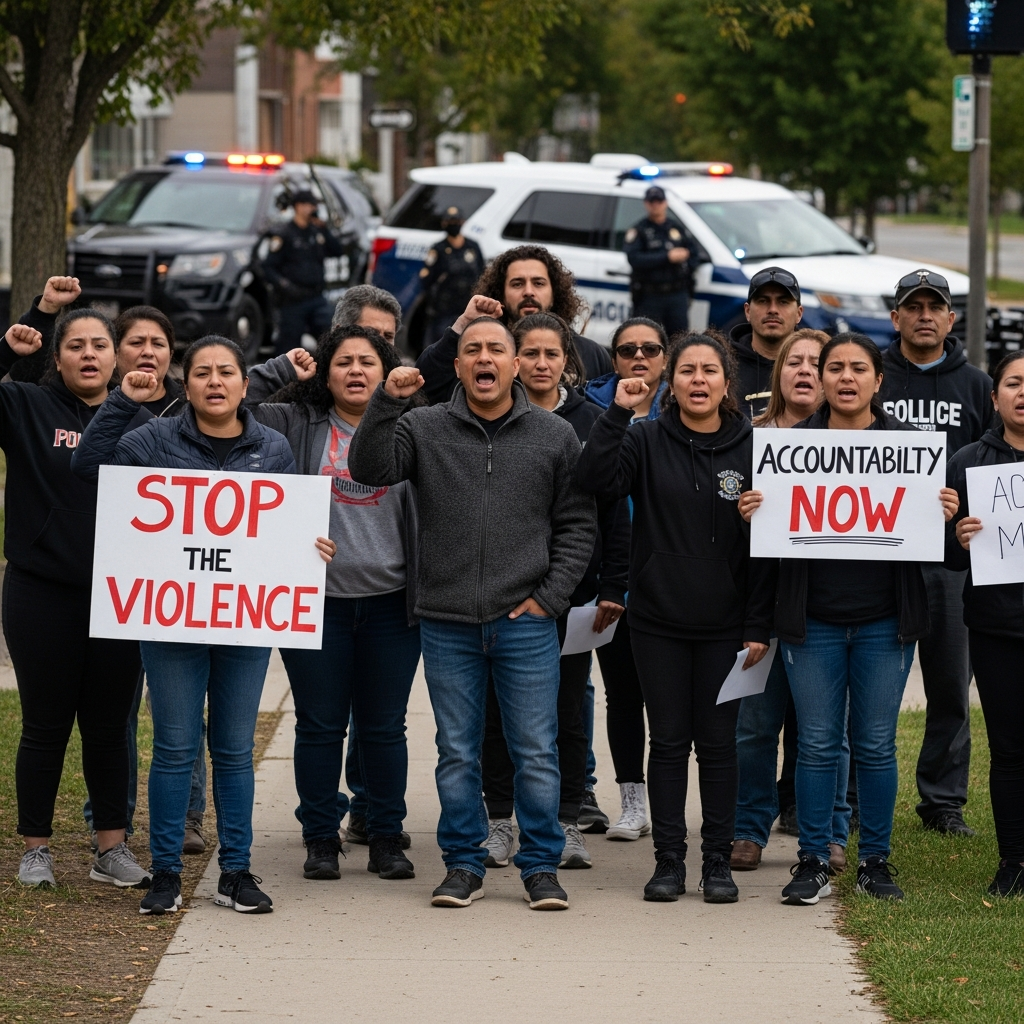
Vigils and memorials for Alex Pretti have sprung up across the city. Mourners gather to lay flowers, light candles, and display signs, including “stop killing us.” Lifelong resident Pege Miller, 69, voiced the widespread weariness: “I’m tired of protesting… We’re on tenterhooks. We don’t know what’s going to happen next.” Hundreds joined impromptu protests downtown, chanting “No more Minnesota nice, Minneapolis will strike.” Many expressed anger over the operations, criticizing the treatment of citizens “like they’re animals.”
Calls for De-escalation and Accountability
The intense federal presence, ordered by President Trump for a “massive deportation of undocumented migrants,” has drawn fierce criticism. Governor Tim Walz has urgently called for the immediate withdrawal of what he described as Trump’s “3,000 untrained agents” to prevent further American deaths. State and local officials largely echoed this sentiment, demanding an end to the confrontational approach.
The federal strategy included Border Patrol commander Greg Bovino, a prominent figure in the administration’s hardline immigration enforcement. He was actively involved in campaigns across several US cities, often filming raids for social media. Bovino was directly involved in the operation where Alex Pretti was shot. His impending departure from Minneapolis, with “border tsar” Tom Homan taking over, signals a potential de-escalation of the aggressive stance. This change followed “positive” talks between President Trump and local Democratic leaders.
Political Fallout and National Debate
The Minneapolis federal agent shootings have ignited a significant political firestorm. Governor Walz declared America was at an “inflection point,” strongly criticizing the “smearing of an American citizen.” He urged the public to trust what they saw in videos. Minneapolis Police Chief Brian O’Hara revealed federal agents blocked state officers from accessing the scene, hindering investigations. This action jeopardized long-standing inter-agency cooperation.
Criticism extends across the political spectrum. Several prominent Republicans, including Oklahoma Governor Kevin Stitt and Senator John Curtis, have joined Democrats in calling for a wide-ranging, independent investigation. Curtis emphasized that “Those responsible – no matter their title – must be held accountable.” Democrats in Congress are threatening to block a key government financing package if it includes DHS funds, raising the specter of a federal government shutdown. Even the National Rifle Association (NRA) pushed back, calling for a full investigation and cautioning against “generalizations and demonizing law-abiding citizens.”
President Trump, despite praising agents for their “phenomenal job,” engaged in discussions with Governor Walz and Mayor Jacob Frey. He indicated a willingness to “look into reducing the number of federal agents in Minnesota.” Walz reported Trump agreed to ensure the Minnesota Bureau of Criminal Apprehension could conduct an independent investigation into Pretti’s death. This independent probe is crucial, especially since local authorities were excluded from the investigation into Good’s earlier shooting.
The situation in Minneapolis underscores a deepening federal-state conflict over immigration enforcement. While the administration frames its operations as targeting criminals, the tragic deaths highlight the impact on US citizens and raise critical questions of accountability and due process. National public opinion on Trump’s overall crackdown is divided, with many voters questioning the aggression of mass deportation campaigns.
Frequently Asked Questions
What were the key disputed facts surrounding Alex Pretti’s shooting in Minneapolis?
The primary dispute centers on whether Alex Pretti was armed and threatening federal agents. The Department of Homeland Security (DHS) claimed agents fired in self-defense, alleging Pretti had a handgun and resisted disarmament. However, eyewitnesses, his family, and local officials strongly dispute this. They state video evidence shows Pretti holding his phone, not a gun, and that he was shot after being tackled by agents. His family also denied he carried a gun, despite having a concealed carry permit.
How did the Minneapolis community and local government react to the federal agent shootings?
The Minneapolis community reacted with profound fear, outrage, and widespread protests. Residents expressed being “terrified” and “on tenterhooks,” while local churches offered sanctuary. Governor Tim Walz and Mayor Jacob Frey strongly condemned the federal actions, demanding the withdrawal of agents and calling for independent investigations. They criticized the federal government for hindering local law enforcement’s access to crime scenes and spreading what they called “sickening lies” about Pretti.
What were the political consequences of the federal immigration operations in Minneapolis?
The incidents led to significant political fallout. Republican and Democratic lawmakers alike called for comprehensive federal and state investigations into the shootings and federal tactics. Democrats in Congress threatened to block government funding for DHS, raising concerns about a federal shutdown. President Trump engaged in talks with Governor Walz and Mayor Frey, signaling a potential de-escalation of federal presence and agreeing to consider an independent state investigation into Pretti’s death.
The Path Forward for Minneapolis
The events in Minneapolis represent a critical moment for federal-state relations and the future of immigration enforcement. The community’s resilience in the face of fear and the persistent calls for justice highlight the importance of transparency and accountability. As investigations proceed and political leaders navigate this complex landscape, the quest for truth and a resolution remains paramount for Minneapolis and the nation.