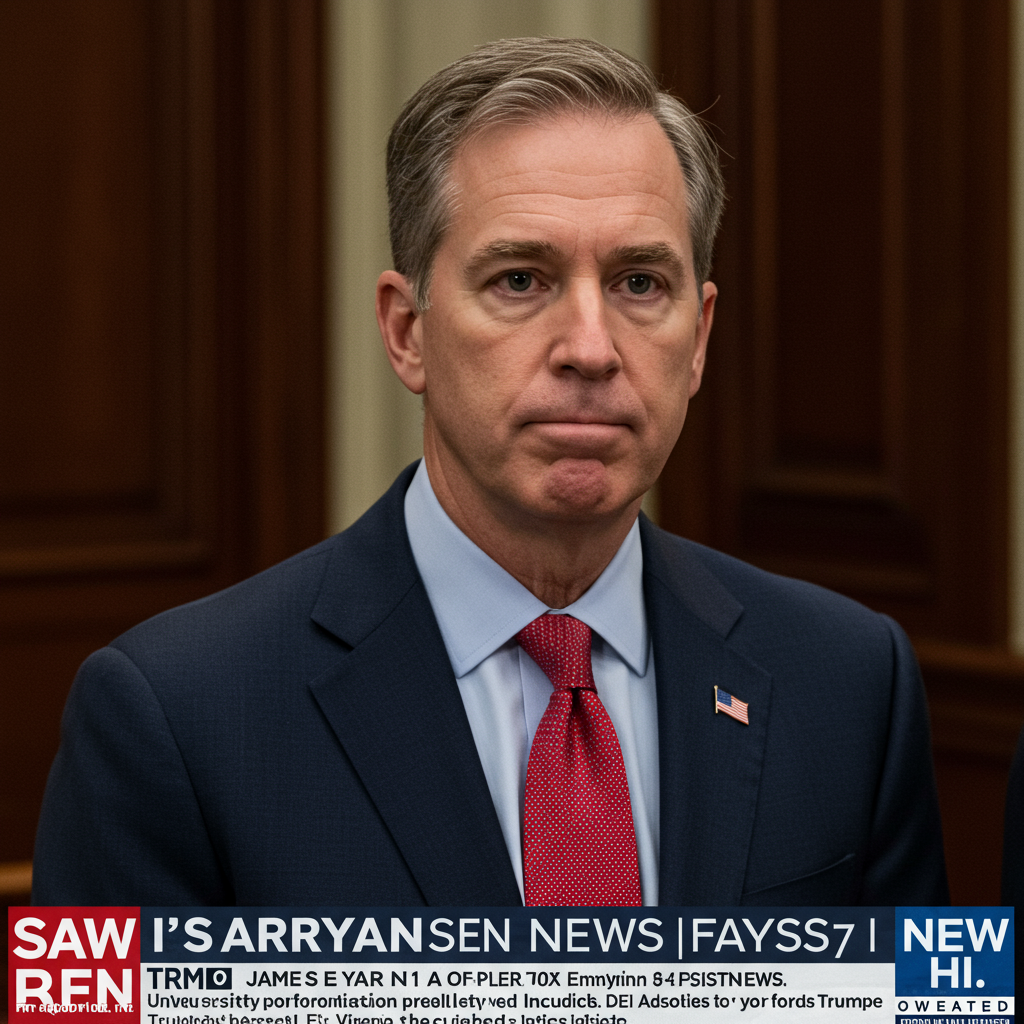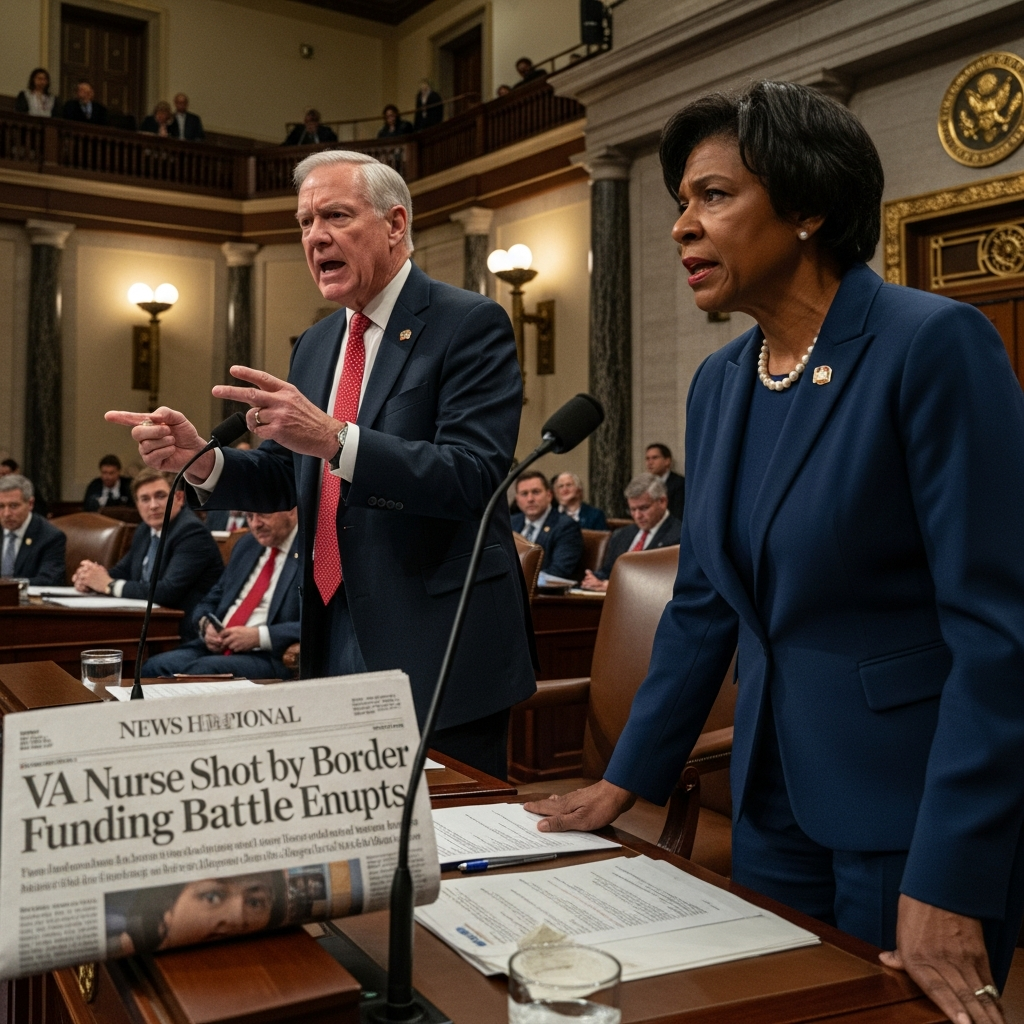
The tragic fatal shooting of a dedicated Department of Veterans Affairs (VA) nurse by a Border Patrol agent has ignited a fierce political battle in the U.S. Senate, imperiling a crucial government spending package. Lawmakers are now deeply divided over funding for the Department of Homeland Security (DHS), with Democrats demanding a pause in appropriations following widespread outrage over the incident and growing concerns about federal immigration enforcement tactics. This high-stakes standoff threatens to trigger a partial government shutdown as a critical January 30th deadline looms.
The Tragic Loss of Alex Pretti
On a recent Saturday in Minneapolis, the life of Alex Pretti, a 37-year-old intensive care unit nurse at the Minneapolis VA Medical Center, was senselessly cut short. Pretti was fatally shot by a Border Patrol agent during a tense altercation between federal immigration officials and protestors. His death sent shockwaves through the VA community and beyond, prompting an outpouring of grief and anger. Coworkers remembered Pretti as a compassionate professional who deeply cared for his patients, a sentiment echoed by an internal “VA gratitude” email from his supervisors, praising him for assisting veterans on his day off.
Alex Pretti, an American citizen, was known for his dedication. Daniel Amyx, a rehab and extended care nurse at the Minneapolis VA Medical Center, described him as “very kind and gentle” and “science-minded,” having transitioned from research into nursing. Doug Massey, president of the American Federation of Government Employees Local 17, representing VA Central Office employees, called the shooting “senseless,” suggesting Pretti was trying to help a protester on the ground moments before he was shot. Sharda Fornnarino, a VA registered nurse and secretary of the VA division for National Nurses United, unequivocally labeled Pretti’s death a “blatant attack on federal workers,” capturing the shock and anger permeating the VA workforce.
Conflicting Accounts and Escalating Tensions
The circumstances surrounding Pretti’s death remain a flashpoint of contention. Immediately following the shooting, DHS issued a statement claiming Pretti was shot after he “approached” Border Patrol officers with a handgun. However, bystander videos circulating online depict Pretti holding a phone, with no gun visible in his hand. Federal law enforcement personnel are heard shouting, “he’s got a gun,” and videos show a handgun being removed from Pretti’s waistband moments before the fatal shot. It was later confirmed that Pretti possessed a license to carry a concealed weapon.
This incident unfolded amidst heightened tensions in Minnesota, exacerbated by the Trump administration’s “Operation Metro Surge,” an immigration crackdown that deployed thousands of federal agents from ICE and U.S. Customs and Border Protection. This operation had already been linked to another fatal shooting on January 7th in South Minneapolis, where an ICE officer killed Renee Good, another American citizen. Democratic Minnesota Governor Tim Walz publicly condemned these federal actions as an “absolute abomination” and called for the withdrawal of ICE agents, citing escalating tensions between federal agents and residents.
Political Fallout and the Spending Bill Standoff
The fatal shooting of Alex Pretti immediately transformed the debate around the comprehensive fiscal year 2026 spending deal. This package, which included funding for DHS and several other key departments (Defense, Treasury, Labor, HHS, State, Transportation, HUD), had already passed the House and was awaiting a full Senate vote. However, Pretti’s death spurred Senate Democrats to call for the DHS funding bill to be extracted from the larger six-bill package.
Senate Minority Leader Chuck Schumer (D-N.Y.) became a leading voice in this opposition, announcing that Democrats would withhold necessary votes to advance a bill that included DHS funding. He deemed the Minneapolis events “appalling — and unacceptable in any American city,” criticizing the DHS bill as “woefully inadequate to rein in the abuses of ICE” due to Republicans’ perceived reluctance to challenge President Trump. Schumer proposed breaking up the package, allowing the Senate to pass the non-DHS portions to fund 96% of the federal government, while negotiations continue to “rewrite the DHS bill.”
Senate Divisions: Arguments For and Against Separate Funding
The call to separate the DHS funding garnered widespread support among Senate Democrats. Senators like Jacky Rosen (D-Nev.), Catherine Cortez Masto (D-Nev.), and Tim Kaine (D-Va.) — who had previously voted to end a government shutdown — explicitly stated their opposition to the DHS funding. Independent Senator Angus King (I-Maine), who caucuses with Democrats, also declared he “can’t vote for a bill that includes ICE funding under these circumstances.” Senators Elizabeth Warren, Mark Kelly, Chris Murphy, Brian Schatz, Mark Warner, Tammy Baldwin, Andy Kim, Alex Padilla, and Jon Ossoff further amplified the resistance.
Senator Chris Van Hollen (D-Md.) articulated that separating the DHS bill would enable lawmakers to “dive in and make necessary changes to the Department of Homeland Security budget,” accusing Republicans of holding other vital bills “hostage.” This approach, Democrats argue, is essential to reforming and reining in parts of DHS. Conversely, Senate Appropriations Committee Chairwoman Susan Collins (R-Maine) urged her colleagues to vote for the entire six-bill package. She stressed the importance of bipartisan cooperation to avoid “another harmful, unnecessary and disastrous government shutdown,” highlighting that over 80% of the DHS spending bill covers critical non-immigration and non-border security functions, such as cybersecurity, FEMA, and TSA.
Broader Context: Immigration Enforcement and Federal Overreach
The intensity of the Democratic opposition to DHS funding is deeply rooted in long-standing concerns about the Trump administration’s immigration enforcement policies. House Democrats had previously denounced the DHS bill, arguing it failed to adequately restrain “mass deportation efforts” carried out by ICE, which they claimed targeted American citizens and law-abiding immigrant families rather than just violent felons. Figures like Rep. Betty McCollum (D-Minn.) described “racial profiling on a mass scale” and “masked federal agents seizing parents in front of terrified children.” Rep. Jerrold Nadler (D-N.Y.) famously declared he would “not fund an agency that acts like an American gestapo.”
These concerns are amplified by the scale of past and proposed funding for immigration enforcement. Earlier legislative efforts by the Trump administration included substantial allocations for Homeland Security, with a significant portion earmarked for mass deportation efforts, including the hiring of thousands of additional ICE officers. While not directly part of the current FY2026 appropriations, this history informs Democratic fears about how DHS funding might be leveraged to expand aggressive enforcement tactics. Despite their limited leverage, Democrats did manage to secure some oversight provisions in the House-passed bill, including flatlining ICE’s annual spending, restricting the Homeland Security Secretary’s ability to unilaterally shift funds, allocating $20 million for body cameras for ICE and CBP officers, and requiring monthly spending updates from DHS.
The Road Ahead: Navigating the Funding Deadline
With the January 30th deadline fast approaching, the Senate faces immense pressure. Failure to pass the spending package will result in a partial government shutdown, a scenario both parties claim they want to avoid, especially after a record 43-day shutdown the previous fall. Senate Republicans would likely need at least eight Democratic votes to advance the legislation, a challenge given the widespread Democratic opposition to the DHS component.
While Republicans assert that the House has completed its appropriations work, focusing responsibility on the Senate, Democrats, led by Schumer, are resolute. The situation has become a critical political standoff, intertwining the tragic consequences of federal immigration enforcement actions with the highly contentious process of funding the government. The coming days will reveal whether lawmakers can bridge this divide or if the nation will face another disruptive government shutdown.
Frequently Asked Questions
What were the circumstances surrounding Alex Pretti’s death and the conflicting accounts?
Alex Pretti, a VA intensive care nurse, was fatally shot by a Border Patrol agent in Minneapolis during a confrontation between federal immigration officials and protestors. DHS stated Pretti “approached” officers with a handgun, but bystander videos show him holding a phone, with no gun visible in his hand. Federal agents were heard shouting about a gun, and a handgun was reportedly removed from Pretti’s waistband moments before the shooting. He was licensed to carry a concealed weapon.
How has the Alex Pretti shooting impacted the Congressional process for the DHS spending bill?
The shooting has led to a significant political impasse in the Senate, with Democrats refusing to support the Department of Homeland Security (DHS) spending bill as part of a larger appropriations package for fiscal year 2026. Senate Minority Leader Chuck Schumer and numerous other Democrats are calling for the DHS funding to be separated from other bills, citing outrage over the incident and concerns about federal immigration enforcement, thereby risking a partial government shutdown.
What are the broader political implications and risks of the current DHS funding standoff?
The standoff highlights deep divisions over federal immigration enforcement and the scope of DHS operations, particularly concerning agencies like ICE and Border Patrol. Beyond the immediate legislative gridlock, failure to pass the spending bill by January 30th could result in a partial government shutdown. This situation risks not only disruptions to federal services but also further politicizes law enforcement actions and ongoing debates about government accountability and oversight.