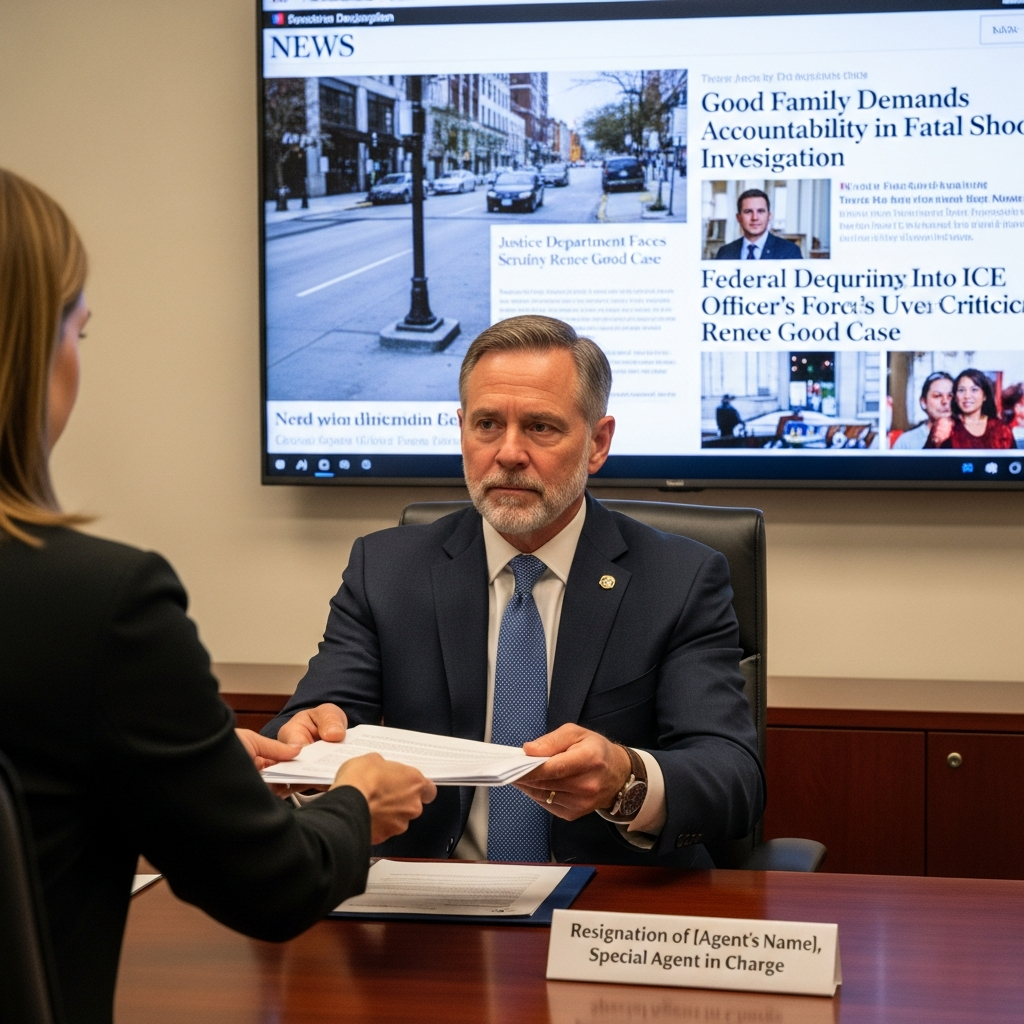
The unexpected resignation of a senior FBI agent in Minneapolis has ignited a firestorm, casting a harsh spotlight on the controversial federal investigation into the fatal shooting of Renee Good by an Immigration and Customs Enforcement (ICE) officer. This unfolding scandal, marked by allegations of political interference and a fundamental shift in investigative priorities, raises critical questions about federal oversight and civil rights protections. At its heart lies the abrupt departure of Tracee Mergen, a respected FBI supervisor, who reportedly refused to bow to immense pressure to discontinue a civil rights inquiry into the officer involved.
The Unfolding Scandal: FBI Agent Tracee Mergen’s Resignation
Tracee Mergen, who served as the acting supervisor of the Public Corruption Squad in the FBI’s Minneapolis field office, resigned in January 2026 amidst significant internal dissent. Sources close to the situation reveal Mergen faced intense pressure from Justice Department leadership to either reclassify or outright discontinue the investigation into the fatal shooting of Renee Good. Her squad typically handles civil rights cases, aligning perfectly with the initial classification of the Good shooting. However, directives from higher echelons pushed for a drastically different approach.
Mergen’s resignation wasn’t an isolated incident. Six federal prosecutors, including Assistant U.S. Attorney Joe Thompson, also resigned from the U.S. attorney’s office in Minnesota, expressing similar grave concerns about the investigation’s controversial direction. These departures collectively underscore a deep-seated apprehension within federal law enforcement regarding the independence and integrity of the probe.
A Controversial Shift: From Officer’s Actions to the Victim
The core of the controversy stems from a dramatic reorientation of the investigation. Following Renee Good’s death, the probe, which initially involved local Minnesota Bureau of Criminal Apprehension (BCA) officials, was reportedly cut off from state collaboration. Instead of focusing on the actions of ICE Officer Jonathan Ross, who fired the fatal shot, the investigation was reclassified from a civil rights inquiry to an “assault on a federal officer.” This shift dramatically altered the scope, directing scrutiny towards Renee Good herself and her partner, Becca Good.
Trump administration officials and high-ranking Justice Department figures reportedly characterized Renee Good as a “domestic terrorist” and alleged she attempted to ram Officer Ross with her vehicle. However, a video analysis conducted by The New York Times found no evidence to substantiate this claim. Deputy Attorney General Todd Blanche further solidified this new direction, stating there was “currently no basis” for a criminal Civil Rights Division investigation into Ross. An FBI spokesman, Ben Williamson, echoed this sentiment, asserting that “The facts on the ground do not support a civil rights investigation,” though without elaborating on the “violent criminal actors” his office was now pursuing.
Broader Repercussions: Local Officials and Public Outcry
Renee Good, an unarmed 37-year-old mother, was fatally shot by Officer Jonathan Ross on January 7, 2026, while in the driver’s seat of her SUV in Minneapolis. This tragic incident immediately ignited widespread public outcry and protests across Minnesota, decrying the presence and tactics of federal immigration officers. Local leaders quickly joined the chorus of disapproval.
Minnesota Governor Tim Walz, Minneapolis Mayor Jacob Frey, and St. Paul Mayor Kaohly Her publicly called for an immediate end to federal immigration operations within the state. They articulated concerns that such operations were disrupting communities and undermining local trust. Their strong stance, however, soon drew federal attention, escalating the tensions between state and federal authorities.
Minnesota Leaders Under Federal Scrutiny
In a striking development, the Justice Department launched an investigation into Governor Walz, Mayor Frey, and Mayor Her. Citing allegations that these officials conspired to impede federal immigration agents through their public statements, subpoenas were issued to their respective offices. Both Governor Walz and Mayor Frey vehemently denounced this federal inquiry, with Walz branding it “political” and Frey describing it as a blatant attempt at intimidation. This federal investigation into elected state and local officials is highly unusual and adds another layer of complexity to the already contentious situation.
Protests and Judicial Pushback
The broader crackdown on dissent against federal immigration policies in Minnesota also saw an increase in federal actions against protesters. For instance, three individuals — Nekima Levy-Armstrong, Chauntyll Louisa Allen, and William Kelly — faced conspiracy charges for interrupting a church service in St. Paul. The protest specifically targeted a pastor believed to be working as an Immigration and Customs Enforcement official. Prosecutors alleged the defendants “intimidated, harassed, oppressed and terrorized the parishioners.” Despite these charges and prosecutors’ requests for pre-trial detention, federal magistrate judges overseeing the case denied these motions. The judges ultimately found no probable cause to charge two of the protesters under the FACE Act, a federal statute designed to protect access to houses of worship. This judicial pushback highlights a significant legal challenge to the Justice Department’s aggressive stance.
What This Means for Federal Oversight and Civil Rights
The events surrounding the Renee Good investigation, Tracee Mergen’s resignation, and the subsequent federal actions against local leaders and protesters paint a troubling picture. They suggest potential challenges to the independence of federal investigations, particularly when politically sensitive issues or high-profile cases are involved. The reclassification of the shooting, the refusal to conduct a civil rights probe into the officer, and the focus on the victim rather than the shooter raise serious questions about accountability for federal agents. This incident underscores the delicate balance between federal enforcement and local governance, emphasizing the critical importance of transparency and impartial investigations to maintain public trust. The outcome of these ongoing events will likely shape the future of federal-local relations and civil rights protections in Minnesota and beyond.
Frequently Asked Questions
1. Who was Renee Good and what led to her death?
Renee Good was an unarmed 37-year-old mother who was fatally shot by Immigration and Customs Enforcement (ICE) Officer Jonathan Ross on January 7, 2026, in Minneapolis. She was in the driver’s seat of her SUV at the time of the incident. Her death sparked significant public outrage and protests, drawing national attention to federal immigration enforcement practices in Minnesota.
2. Which federal agencies are involved in the investigation and why is it controversial?
The FBI, ICE, and the Justice Department (DOJ) are the primary federal agencies involved. The investigation is highly controversial because it has been reclassified from a civil rights inquiry into Officer Ross’s actions to an “assault on a federal officer,” focusing instead on Renee Good and her partner. This shift, coupled with the resignation of FBI supervisor Tracee Mergen and six federal prosecutors over alleged political pressure, has fueled concerns about investigative integrity and a lack of transparency. Federal officials have also refused to collaborate with Minnesota state agencies on the probe.
3. What are the broader implications of this investigation for civil rights and federal-local relations?
The investigation raises significant concerns about political influence potentially overriding independent law enforcement and civil rights protections. The shift in focus from the federal officer to the victim, combined with the Justice Department’s investigation into Minnesota’s Governor Walz and Mayor Frey for allegedly impeding federal agents, points to escalating tensions between federal and local authorities. This case highlights critical issues of accountability for federal officers and the integrity of civil rights investigations nationwide.