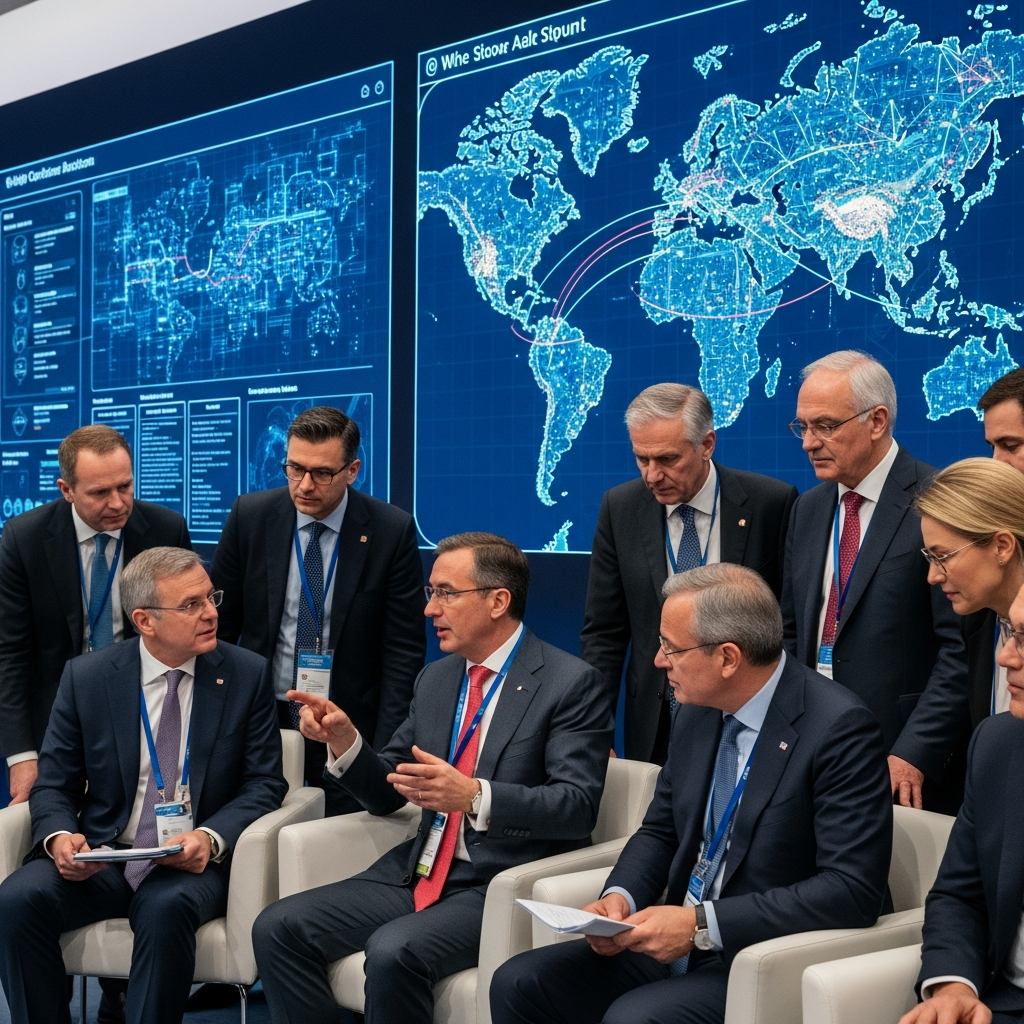
The World Economic Forum in Davos, Switzerland, has historically served as a critical platform for global leaders to address humanity’s most pressing challenges. However, the 2026 gathering transcended traditional dialogue, becoming a stark arena for geopolitical confrontation, economic anxiety, and profound questions about technology’s future. Far from a mere discussion among AI leaders, the summit became a flashpoint where the established global order seemed to crack under the weight of escalating unilateralism and the looming shadow of artificial intelligence. This year, Davos didn’t just discuss change; it visibly embodied a world in seismic rupture.
A World in Rupture: Trump’s Davos Offensive
US President Donald Trump’s presence at Davos 2026 cast a long, polarizing shadow over the proceedings. His arrival with an unprecedented delegation underscored his intent to reshape global dynamics, triggering widespread alarm and denunciation from international leaders. The central theme wasn’t just policy debates, but a direct challenge to the post-World War II international framework.
The Greenland Ultimatum & NATO’s Crisis
At the heart of the geopolitical storm was Trump’s aggressive push to acquire Greenland from Denmark. Citing national security and the need to prevent rivals like China and Russia from gaining an Arctic foothold, Trump reiterated his desire for the territory. He explicitly stated he “won’t use force” for acquisition, a shift from earlier refusals to rule out military options. He even envisioned a “golden dome” missile defense system there, dismissing claims that the US sought Greenland primarily for rare earth minerals.
This demand quickly spiraled into a full-blown crisis for the NATO alliance. Trump lambasted allies as unreliable and unfair partners, threatening eight close NATO members—Denmark, Norway, Sweden, France, Germany, the UK, the Netherlands, and Finland—with 10% tariffs if they did not support his Greenland bid. His actions plunged the alliance into unprecedented disarray, causing significant dips in US stock indexes and prompting furious international condemnation. The global order faced its most direct test.
Trade Wars, Tariffs, and a Crumbling Order
Trump’s use of tariffs wasn’t limited to the Greenland dispute. US Trade Representative Jamieson Greer defended tariffs as a “legitimate geopolitical instrument,” signaling a fundamental shift in US policy. Greer explicitly warned European nations against retaliatory measures, declaring that “The US market is never going to be permanently available to everyone all the time forever.” This statement effectively dismantled decades of established trade relations, leaving Europe on edge and considering retaliatory tariffs amounting to $100 billion. The notion of economic integration as a weapon became a grim reality, further destabilizing international cooperation.
European leaders reacted with alarm. UK Prime Minister Keir Starmer called the tariff threats “completely wrong.” European Commission President Ursula von der Leyen described the international order’s shift as “seismic” and “permanent,” driven by “raw power.” She warned of a “dangerous downward spiral between allies” that would embolden adversaries. French President Emmanuel Macron reportedly texted Trump, expressing confusion over his Greenland strategy and publicly warned about a world “without rules” where “international law is trampled underfoot.”
Middle East & Ukraine: Trump’s Assertions
Beyond Greenland, Trump made several controversial claims regarding global conflicts. He declared “peace in the Middle East” had been achieved following a US attack on Iran’s nuclear facilities months prior, describing it as “total obliteration.” He linked this action to any potential peace deal between Israel and Hamas, stating Iran’s removal as “the bully” cleared the path. He demanded Hamas disarm within weeks or face dire consequences and proposed a “Board of Peace” for Gaza, with himself as chairman and offering permanent membership for a $1 billion contribution.
Regarding Ukraine, Trump announced a meeting with President Volodymyr Zelenskyy, expressing his belief that both Zelenskyy and Russian President Vladimir Putin wanted to end the nearly four-year conflict. He urged them to make a deal, calling them “stupid” if they failed to do so. These pronouncements, delivered without clear diplomatic process, further highlighted a unilateral approach to global crises.
Domestic Policy & Economic Views
Domestically, Trump addressed the soaring US national debt, which had surpassed $38 trillion, confidently asserting the US would “grow our way out” of it—a strategy historically met with skepticism. He touted his tariffs for “radically reduc[ing] the ballooning trade deficit” and driving stock market booms. He also announced plans to soon name a new Federal Reserve chairman, hinting at a “very respected” figure. His comments on the US economy underscored a focus on nationalistic economic policies, often at odds with global integration.
International Reaction: Denunciation and Defiance
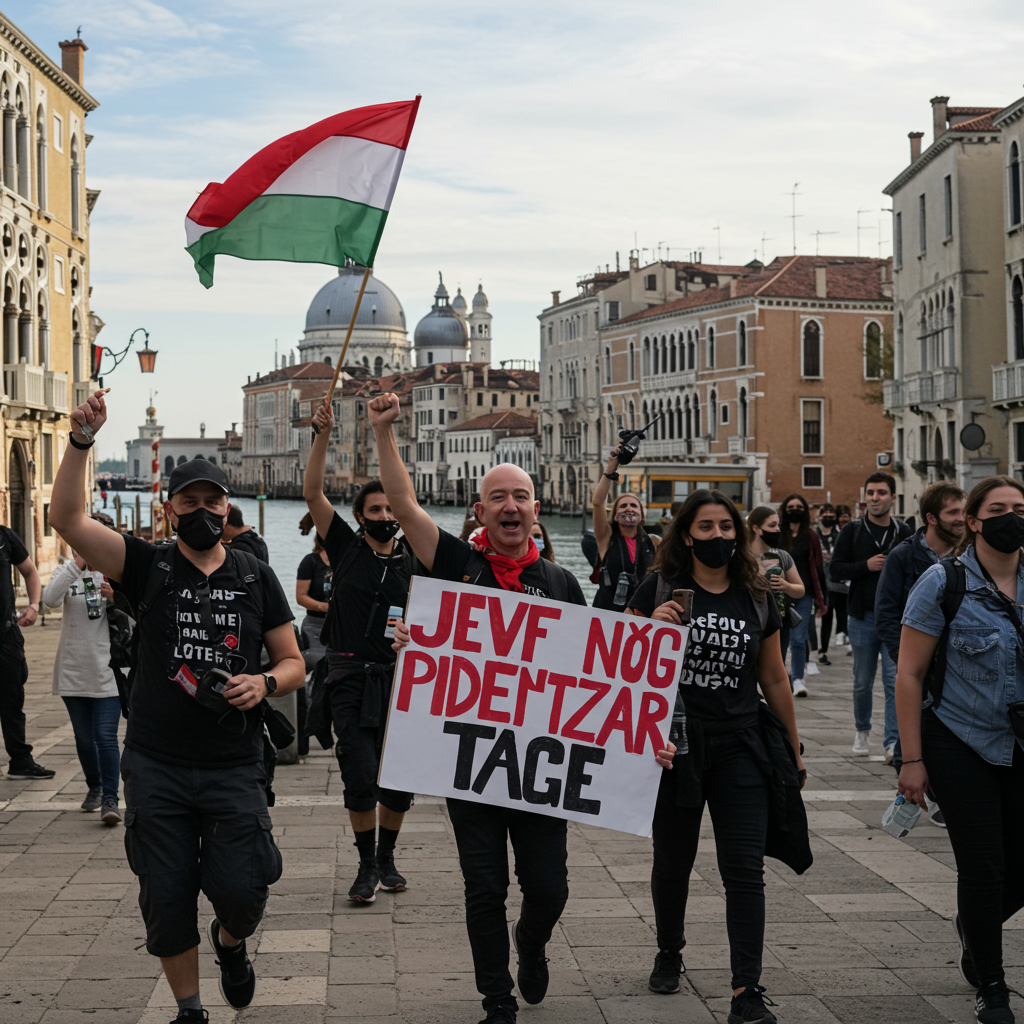
The collective response from international leaders ranged from stern warnings to outright defiance. Canadian Prime Minister Mark Carney criticized the weaponization of “economic integration” and “tariffs as leverage,” advocating for “middle powers” to unite against coercive “great powers.” California Governor Gavin Newsom urged European leaders to “stop being complicit” and “have a backbone” against Trump’s demands. Local Davos residents also protested, carrying torches spelling “No Kings.”
Robert Reich’s commentary highlighted the moral imperative for leaders at Davos to collectively repudiate Trump’s “tyrannous assault on international laws.” Reich, however, acknowledged the significant obstacles, including Trump’s intimidating tactics and explicit threats. He noted Trump’s lawsuit threat against JPMorgan Chase CEO Jamie Dimon, a prominent Davos attendee, as a clear attempt to silence potential criticism. Many leaders, Reich suggested, would be hesitant to “poke the bear” and risk further tariffs or punitive measures.
The AI Revolution: Reshaping the Global Workforce
Amidst the geopolitical storm, discussions on Artificial Intelligence (AI) offered a glimpse into another seismic shift: its profound impact on the global workforce. While political dramas dominated headlines, tech leaders and economists grappled with the implications of accelerating AI adoption, painting a picture of both immense potential and stark disruption.
Leaders’ Warnings: Job Devastation & Inequality
Larry Fink, CEO of BlackRock and co-chair of the WEF, opened the forum with a sobering reflection on capitalism’s past failures, warning that AI could replicate them. He cautioned that early gains from AI would disproportionately benefit “owners of models, owners of data and owners of infrastructure,” potentially devastating white-collar jobs. This perspective highlighted concerns about widening economic inequality and the societal challenges of mass job displacement, particularly in sectors previously thought immune to automation.
Palantir CEO Alex Karp offered an even starker prediction: AI “will destroy humanities jobs.” He emphasized that those with liberal arts backgrounds would likely face the most significant challenges, while vocational training might offer more robust career paths. These insights from key AI figures underscored a critical question for global leaders: how to manage a technological revolution that promises immense productivity but also threatens widespread employment disruption and social unrest.
Europe’s AI Lag and Future Outlook
A recurring theme in the AI discussions was Europe’s lagging position compared to the US and China. Alex Karp specifically warned that Europe was “significantly lagging behind” in AI adoption. This concern extended beyond economic competitiveness, raising questions about Europe’s strategic autonomy and its ability to shape the ethical and regulatory frameworks for AI on a global scale. The calls for European unity and a “third path” in geopolitics found a parallel in the urgent need for a cohesive European strategy on AI. The speed of AI integration directly impacts national security, economic prosperity, and societal resilience, making Europe’s position a critical factor in the evolving global landscape.
Beyond Geopolitics & AI: The Broader Davos Debate
While Trump’s actions and AI’s future dominated, other critical discussions unfolded, reflecting the multifaceted nature of global challenges.
The “Board of Peace” Initiative
Trump’s “Board of Peace” initiative, intended for a signing ceremony during Davos, drew significant attention. Membership reportedly required a $1 billion contribution for permanent inclusion, with invitations extended even to authoritarian leaders like Russian President Vladimir Putin. French President Macron, however, stated his intention to decline, advocating for the United Nations as the appropriate forum for international dispute resolution. Trump, while acknowledging the UN “hasn’t been very helpful,” still considered its “potential great.” This initiative highlighted a perceived attempt to bypass existing multilateral institutions.
Populism, Trust, and the Elite Gathering
Larry Fink’s opening remarks also acknowledged the elite meeting might feel “out of step” in an era of surging populism and institutional distrust. This self-reflection underscored a growing awareness among the Davos attendees of the disconnect between global elites and the anxieties of ordinary citizens, many of whom feel left behind by globalization and technological change. The intense focus on unilateral power plays and the threat of AI to jobs only amplified these underlying societal tensions.
Navigating a New Era: Implications for Global Leaders
Davos 2026 served as a powerful reminder that the comfortable certainties of the past are rapidly eroding. The convergence of aggressive unilateralism, the breakdown of international norms, and the disruptive force of AI demands a new kind of leadership.
The Call for Collective Action and a “Third Path”
In response to the perceived vacuum of principled leadership, several voices called for collective action. Canadian Prime Minister Mark Carney urged “middle powers” to combine forces, creating a “third path” to avoid exploitation by “great powers” pursuing interests through coercion. This sentiment resonated with the broader desire for a renewed commitment to multilateralism and the rule of law. The challenge, however, remains forging unity in a fractured world.
The Path Forward: Avoiding a “Dangerous Downward Spiral”
European Commission President Ursula von der Leyen’s appeal for de-escalation, warning against a “downward spiral” in US-Europe relations, encapsulated the urgent need for restraint and diplomacy. NATO Secretary General Mark Rutte underscored the importance of not diverting attention from Russia’s ongoing war in Ukraine, reminding leaders that sustained support for Ukraine remained “the main issue.” The path forward requires a delicate balance of assertive defense of international principles and pragmatic efforts to prevent further global instability. The choices made by leaders in the wake of Davos 2026 will profoundly shape the international landscape for decades to come.
Frequently Asked Questions
What were the main controversies surrounding Donald Trump at Davos 2026?
Donald Trump’s presence at Davos 2026 was largely defined by his aggressive push to acquire Greenland from Denmark, leading to threats of 10% tariffs against eight NATO allies if they refused to support his demand. He also lambasted NATO partners as unreliable. Additionally, Trump made controversial claims about achieving “peace in the Middle East” through military action against Iran and proposed a “Board of Peace” for Gaza requiring a $1 billion buy-in for membership. These actions and statements sparked widespread condemnation from global leaders and were seen as a direct challenge to international law and established alliances.
How did European leaders propose countering rising unilateralism discussed at Davos 2026?
European leaders expressed strong opposition to the rising unilateralism, particularly from the US. French President Emmanuel Macron warned against a “world without rules,” while European Commission President Ursula von der Leyen urged de-escalation to avoid a “dangerous downward spiral” that would benefit adversaries. Canadian Prime Minister Mark Carney called for “middle powers” to unite and create a “third path” to resist coercion from “great powers.” California Governor Gavin Newsom also encouraged European leaders to “have a backbone” and actively oppose aggressive demands. The consensus was a call for renewed commitment to multilateralism and the rule of law.
What impact did AI leaders predict for the global workforce at Davos 2026?
AI leaders at Davos 2026 predicted a significant, and potentially devastating, impact on the global workforce. BlackRock CEO Larry Fink cautioned that AI would disproportionately benefit “owners of models, owners of data and owners of infrastructure,” potentially leading to widespread job losses, particularly in white-collar sectors. Palantir CEO Alex Karp stated that AI “will destroy humanities jobs,” suggesting that those with liberal arts backgrounds would be most affected, while vocational training might offer more job security. Concerns were also raised about Europe lagging significantly behind the US and China in AI adoption, which could further exacerbate economic disparities.