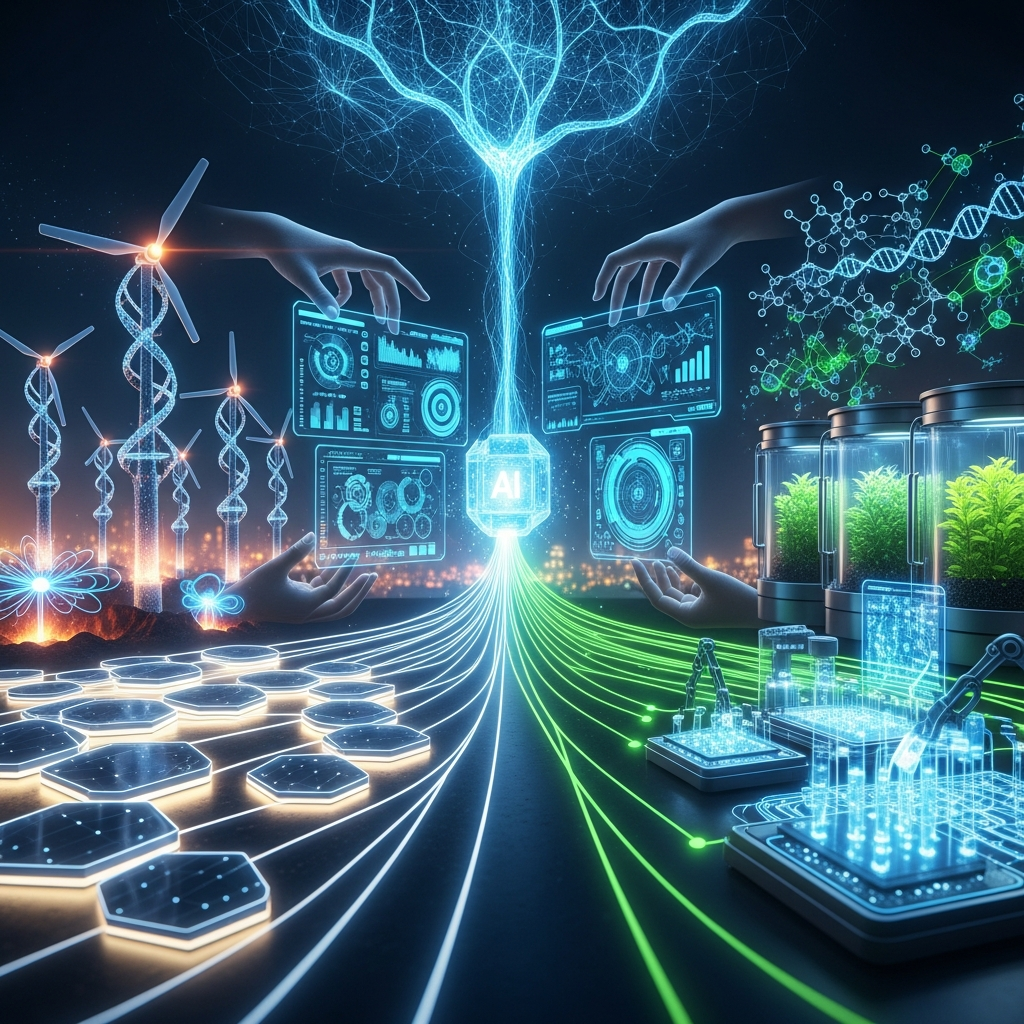
Every year, innovators push the boundaries of what’s possible, introducing technologies that redefine our existence. The MIT Technology Review’s esteemed “10 Breakthrough Technologies” list, now in its 25th year, consistently spotlights the innovations poised to reshape our lives and work by 2026. From sustainable energy solutions to groundbreaking advancements in AI and biotech, these curated selections promise to drive progress or incite profound change, for better or worse. This article delves into these pivotal advancements, offering unique insights and contextualizing them with real-world applications and historical lessons from the tech landscape.
The Future Is Now: Criteria for Transformative Tech
Selecting the technologies that will truly define the future is no small feat. Editors and reporters engage in extensive debate, scrutinizing dozens of ideas. The goal is to identify breakthroughs with broad societal impact, capable of making meaningful differences in daily routines and global challenges. This meticulous process ensures the list represents technologies truly worth our attention, whether their impact is anticipated to be overwhelmingly positive or presents significant new considerations.
10 Breakthrough Technologies Redefining 2026
The 2026 list highlights innovations across critical domains, promising profound shifts in how we live, work, and interact.
Powering a Sustainable Tomorrow: Energy & Climate Solutions
Our planet’s future hinges on cleaner, more efficient energy. Two groundbreaking technologies are leading this charge.
Sodium-Ion Batteries: The Abundant Power Source
Imagine batteries made from salt. Sodium-ion batteries are rapidly emerging as a safer, more affordable alternative to traditional lithium-ion cells. Leveraging globally abundant materials, these new batteries offer a cost-effective solution for large-scale energy storage. Major players and significant public investment are backing this shift, poised to power global energy grids and accelerate the adoption of affordable electric vehicles (EVs) worldwide. This breakthrough democratizes energy storage, easing reliance on scarce resources.
Next-Gen Nuclear Power: A Greener Core
Nuclear power already provides consistent, greenhouse-gas-free electricity. However, new designs are revolutionizing this established technology. Modern reactors incorporate alternative fuels and innovative cooling systems. Some designs even feature smaller footprints, allowing for faster deployment. Technologies like molten salt reactors and TRISO fuel aim to move beyond 20th-century blueprints, offering safer, more efficient, and more rapidly deployable nuclear energy solutions. This advancement promises to significantly boost global decarbonization efforts.
Beyond the List: Aluminum as a Zero-Carbon Fuel
While not on the official top 10, a startup called Found Energy is pioneering the use of aluminum as a zero-carbon fuel. They aim to harness the energy in aluminum scrap to power industrial processes, eliminating fossil fuel reliance. Found Energy has successfully activated the largest aluminum-water reactor ever built, with plans for real-world deployment at a tool manufacturing facility. This circular energy economy transforms industrial waste into a clean power source, offering a significant pathway to decarbonization.
The AI Revolution Continues: Artificial Intelligence Unleashed
Artificial intelligence continues its rapid evolution, bringing both revolutionary tools and complex ethical questions.
Generative Coding: Accelerating Software Development
AI coding tools are transforming software development, making the process faster and more accessible. These tools can write, test, and deploy code, simplifying the creation of sophisticated applications, websites, and games. Developers can build complex systems with unprecedented speed and efficiency. However, a crucial caveat remains: human oversight is essential to meticulously double-check AI-generated outputs for accuracy and potential errors. The power lies in careful collaboration.
AI Companions: Bonds and Boundaries
Millions of people now interact daily with AI chatbots, forming what often feel like close, personal bonds. This trend, while offering companionship, raises mounting evidence of potential dangers, prompting politicians and ethicists to address the implications. The lines between human and artificial interaction are blurring, necessitating careful consideration of psychological and societal impacts. Products like Lenovo Motorola Qira, a hybrid AI assistant, and Tombot Jennie, a realistic robot puppy designed for seniors, showcased at CES 2026, highlight this burgeoning field.
Mechanistic Interpretability: Unveiling the AI’s Black Box
The exact internal workings of large language models (LLMs) remain a mystery, leading to unclear limitations. However, a burgeoning field called mechanistic interpretability is changing this. Clever research techniques are offering unprecedented glimpses inside the “black box.” Some scientists are even approaching LLMs “as if they were living things” to uncover their secrets. This research is vital for understanding, trusting, and ultimately controlling increasingly powerful AI systems.
Hyperscale AI Data Centers: Powering the Future
The intense global race for AI supremacy has fueled an explosion in hyperscale AI data centers. These colossal facilities pack powerful computer chips into synchronized clusters, functioning as giant, high-speed supercomputers. These “sizzling hot, power-hungry behemoths” are pushing existing infrastructure to its absolute limits, demanding innovative solutions for energy and cooling. Intel’s Core Ultra 300 Series “Panther Lake” processors, launched at CES 2026, exemplify the deep computing power driving these centers, bringing desktop-level graphics to laptops and hinting at future portable AI processing.
Reshaping Life: Biotechnology’s Next Frontier
Biotechnology continues to offer profound advancements in human health and environmental solutions.
Base-Edited Baby: Personalized Gene Editing
Baby KJ made history as the first person to receive a personalized gene-editing treatment at just seven months old. This pioneering step marks a new era in medicine, where bespoke gene-editing drugs could gain approval within the next few years. While promising revolutionary cures for genetic diseases, the extremely high cost of such individualized treatments remains a significant ethical and accessibility challenge that society must address.
Gene Resurrection: Learning from the Extinct
Growing banks of gene information from extinct creatures are providing invaluable clues for new medical treatments. This genetic treasure trove also suggests innovative solutions to combat climate change, offering insights into resilient biological systems. Furthermore, the knowledge gained holds the potential to aid in the conservation of critically endangered species, helping to reverse biodiversity loss by understanding genetic adaptations from the past.
Embryo Scoring: Predicting Future Traits
Screening embryos for genetic diseases is a common practice in fertility clinics, offering prospective parents peace of mind. However, new startups are making controversial claims about using similar techniques to predict complex traits, including intelligence. This development raises profound ethical questions about the future of genetic selection, sparking debates about designer babies and the limits of scientific intervention in human development.
Cosmic Journeys: Ventures into Space
Humanity’s reach is extending further into the cosmos, moving beyond governmental missions to commercial enterprises.
Commercial Space Stations: Rooms with a Galactic View
What once seemed like science fiction is fast becoming reality. 2026 could be the year paying customers finally “check into a room with a galactic view” on commercial space stations. These shiny new modules are designed not only for tourism but also to support vital research missions by scientists and space agencies. This signifies a major shift towards a privatized and accessible space economy.
Beyond the Top 10: What Didn’t Make the Cut (and Why)
The selection process for breakthrough technologies is rigorous, and many worthy innovations narrowly miss the final list. Understanding these “leftovers” offers crucial context and highlights other important areas of development.
Male Contraceptives: Awaiting Broader Availability
Significant progress in male contraceptive options, beyond condoms or vasectomies, is underway. Companies like Contraline are conducting clinical trials for a daily gel and a sperm-blocking device. YourChoice Therapeutics is also in early-stage trials for a once-a-day pill. However, these promising solutions were excluded from the 2026 list primarily due to their projected timeline; they are still several years away from widespread availability and completing trials.
World Models: Still in Early Stages
“World models”—AI systems trained on video or spatial data to generate 3D virtual worlds—are a hot new area in AI research. These models aim to incorporate fundamental physical principles, offering potential enhancements for game design and robotic understanding of physical environments. While gaining considerable traction with top AI researchers, editors deemed them “premature” for breakthrough status in 2026, advising continued observation of this evolving space.
Proof of Personhood: The Quest for Digital Identity
The ease of generating hyperrealistic AI content and autonomous AI agents has created a growing challenge online: verifying human identity. “Personhood credentials” aim to solve this by creating a digital token, issued after government ID verification, to confirm authentic human identity for critical online interactions like banking. Despite being crucial for the future internet, the current landscape features many competing identity verification projects, lacking a clear, universally accepted standard. This fragmentation kept it off the 2026 list.
The World’s Oldest Baby: A Societal, Not Purely Technical, Milestone
The record-setting birth of a baby from an embryo stored for over 30 years in July 2026 was a remarkable event. This achievement was supported by advancements in IVF technology and safer embryo thawing methods. However, the editors concluded this was driven as much by “changing norms” and societal acceptance—like the rise of “embryo adoption” agencies—as by “sudden technological improvements.” Thus, it didn’t meet their strict definition of a technology breakthrough.
Lessons from the Past: Why Breakthroughs Sometimes Flop
Predicting the future of technology is inherently challenging. As Fabio Duarte, an MIT research scientist, highlights, examining past “flops” is as crucial as envisioning future advances. Success hinges on factors beyond narrow technological prowess, including cultural context, social acceptance, market competition, and impeccable timing.
Consider “Social TV” (2010), which envisioned integrated social platforms with live television. While prescient about the desire for shared viewing, it bet on a declining medium. Similarly, “The DNA App Store” (Helix, 2016) faltered due to privacy concerns and doubts about unregulated health apps. These examples demonstrate that groundbreaking ideas require the right commercial path, user trust, and alignment with prevailing societal values to truly thrive. Even today, challenges like “model collapse” in synthetic data for AI (a 2022 pick) and the harms of TikTok’s recommendation algorithm (a 2021 pick) are being debated as potential future flops, showing that critical evaluation is ongoing.
CES 2026: Real-World Glimpses of the Future
The Consumer Electronics Show (CES) 2026 in Las Vegas offered a tangible look at many emerging technologies, reinforcing several themes from this year’s breakthrough list. Mashable’s “Best of CES 2026 Awards” showcased several innovations that align with these trends:
Samsung Galaxy Z TriFold won Best Overall/Best Mobile Tech, showcasing the continued evolution of flexible displays into practical, two-in-one devices.
Lenovo ThinkPad X1 Carbon Gen 14 Aura Edition received Best Laptop for its modular design emphasizing serviceability and sustainability, a growing concern across all tech.
Willo’s alignment-free wireless power was awarded Best Energy Tech, demonstrating breakthroughs in untethered charging, a critical aspect for future energy solutions.
Intel Core Ultra 300 Series “Panther Lake” won Best Deep Computing Tech, signaling the immense processing power needed for hyperscale AI data centers.
Lenovo Motorola Qira was recognized as Best AI, highlighting hybrid AI assistants that leverage both on-device and cloud processing for a personalized experience, echoing the rise of AI companions.
Tombot Jennie, a realistic robot puppy for seniors, won Best Age Tech, another example of AI companions designed to combat loneliness.
These CES highlights demonstrate that the themes identified as breakthroughs are already manifesting in consumer products and industrial applications, pushing the boundaries of what’s commercially available.
Navigating the Ethical Landscape
As technology advances, so too do the ethical complexities. The rise of AI companions prompts serious questions about human-AI relationships and potential psychological impacts. Gene editing and embryo scoring, while offering immense medical potential, also open Pandora’s Box concerning genetic selection and the definition of humanity. It is crucial for policymakers, ethicists, and society at large to engage in thoughtful dialogue to guide these powerful technologies responsibly, ensuring they serve humanity’s best interests.
Frequently Asked Questions
What are the key ethical concerns surrounding the 2026 breakthrough technologies?
The 2026 breakthroughs, particularly in AI and biotechnology, present significant ethical considerations. AI companions raise concerns about psychological dependence and the nature of human-AI bonds. Personalized gene editing, while promising cures, sparks debate over accessibility and the potential for unintended long-term genetic alterations. Embryo scoring, especially if used for trait prediction like intelligence, leads to complex discussions about “designer babies” and potential societal inequalities based on genetic selection.
Where can I find more detailed information on a specific breakthrough technology?
For comprehensive details on any of the 10 breakthrough technologies for 2026, the primary source is the MIT Technology Review’s annual list. Their articles often provide in-depth explanations, expert interviews, and background on the science and implications of each innovation. Additionally, reputable scientific journals, industry reports (such as those from CES 2026 participants), and academic research papers can offer further technical insights into specific areas like sodium-ion batteries or mechanistic interpretability.
How might these 2026 breakthroughs impact daily life or investment decisions?
These 2026 breakthroughs could profoundly impact daily life by making electric vehicles more affordable (sodium-ion batteries), streamlining software development (generative coding), offering new medical treatments (gene editing), and even providing companions (AI chatbots). For investors, these areas represent high-growth sectors. Companies involved in sustainable energy, advanced AI research, biotechnology, and commercial space ventures are poised for significant investment, though ethical considerations and market adoption timelines remain crucial factors to evaluate.
The Horizon of Innovation
The 10 Breakthrough Technologies of 2026 paint a vivid picture of a future brimming with innovation and complex challenges. From redefining our energy sources to augmenting human capabilities and exploring new frontiers, these advancements underscore technology’s profound capacity to shape our world. While some technologies will undoubtedly face hurdles, reflecting on past “flops” provides valuable lessons for navigating the unpredictable path of innovation. Engaging with these emerging trends critically and proactively is essential as we collectively step into a future continuously reshaped by human ingenuity.