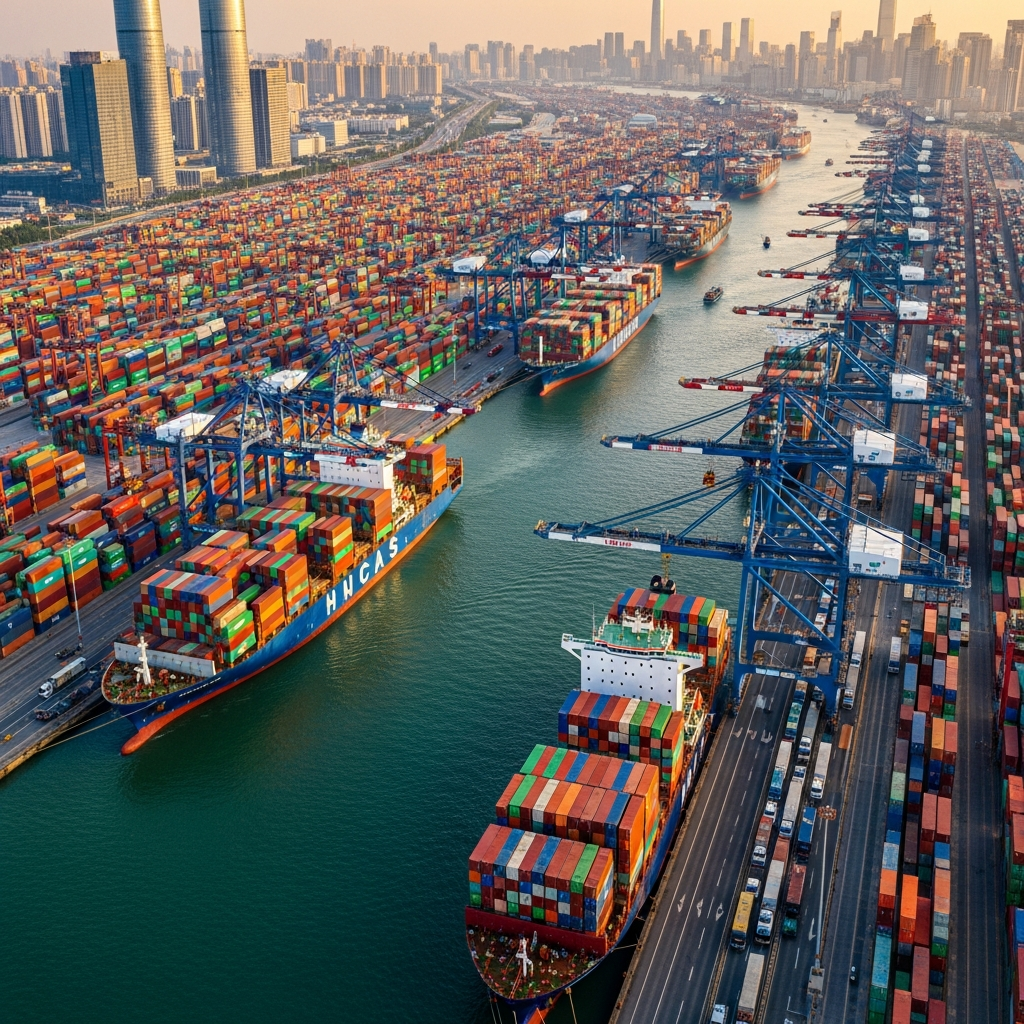
China made economic history in 2025, recording an unprecedented $1.2 trillion trade surplus. This remarkable achievement, a 20% increase from the previous year, underscores Beijing’s economic resilience and strategic adaptability in the face of persistent US trade pressure. Despite a challenging global environment and ongoing tariffs, China, the world’s largest manufacturer, successfully reoriented its export strategies, significantly boosting trade with emerging global markets. This pivotal shift has profound implications for international trade dynamics and geopolitical relationships, reshaping global supply chains and economic partnerships.
Unpacking China’s Historic Trade Performance
The $1.2 trillion China trade surplus marks the largest ever recorded by any nation, signaling a potent demonstration of the country’s manufacturing prowess and export-driven growth model. A trade surplus fundamentally measures how much more a nation exports than it imports, and China’s 2025 figures highlight its dominant position in global commerce. This massive surplus emerged despite a backdrop of escalating trade tensions with the United States. Chinese enterprises proactively deepened their engagement with burgeoning economies across Southeast Asia, Africa, and Latin America. This strategic pivot significantly reduced their reliance on traditional markets, particularly the US consumer base.
Within China, this economic triumph is widely celebrated as a testament to the nation’s ability to “forge ahead” despite a “complex and challenging external environment,” as noted by customs bureau deputy administrator Wang Jun. This resilience is a key narrative for Beijing, showcasing the country’s economic durability even as exports to the US experienced a steep 16.9% decline in the first eleven months of 2025. The tit-for-tat trade confrontation between the world’s two largest economies throughout the year underscored the necessity of China’s diversification strategy.
The Strategic Pivot: New Markets, New Technologies
The impressive China trade surplus was not merely a volume game; it also reflected a significant shift in export composition. High-tech goods, encompassing sophisticated machine tools and industrial robots, saw a robust 13% year-on-year increase in exports. Even more striking were the gains in nascent sectors: exports for electric vehicles (EVs), lithium batteries, and photovoltaic products like solar panels surged by an impressive 27%. This data highlights China’s growing capacity to innovate and compete in advanced manufacturing, moving beyond traditional low-cost goods.
This strategic reorientation builds upon lessons learned during the initial phase of the US-China trade war under former President Donald Trump. Instead of succumbing to tariff pressures, Chinese companies utilized their global economic footprint to drive products deeper into a wider array of international markets. This proactive approach has not only sustained but also amplified China’s export volume. The burgeoning demand from emerging economies has proven crucial in offsetting reduced trade with the US and some European partners.
Global Repercussions and Mounting Frictions
While China hails its record trade surplus as a victory, the global community views it with a mix of awe and apprehension. The massive inflow of low-cost Chinese imports risks further inflaming existing trade tensions among nations. Many countries fear their domestic industries could be overwhelmed, leading to job losses and economic destabilization. This concern is often encapsulated by the term “industrial overcapacity,” where China’s vast production capabilities exceed its domestic demand, leading to a surplus of goods that are then aggressively exported.
European policymakers, for instance, have voiced increasing concern about mounting trade imbalances. French President Emmanuel Macron, during a visit to Beijing, described his country’s trade deficit with China as unsustainable. This sentiment echoes throughout Europe, where leaders are urging Beijing to stimulate domestic consumption and curb its export-heavy growth model. These calls reflect a growing desire for a more balanced global trade environment, mitigating what many perceive as unfair trade practices that disadvantage local industries.
Navigating Tariff Tensions and Geopolitical Shifts
The persistence of a substantial China trade surplus has provided Beijing with significant leverage and confidence in navigating complex trade negotiations. This was evident during the months-long trade discussions with the US, which culminated in an October truce between Trump and Chinese leader Xi Jinping. This agreement saw new tariffs on Chinese goods reduced to 20%, a notable de-escalation from earlier peaks that had briefly reached as high as 145%.
However, the truce remains fragile. Recent announcements by Trump, indicating new 25% tariffs on countries doing business with Iran, introduce a fresh layer of complexity. China, a critical economic lifeline for the Iranian regime, could find itself subject to these elevated duties, potentially reigniting significant trade frictions. Exporters are preparing for an uncertain future, as reducing dependence on China and bolstering American manufacturing remain core tenets of Trump’s broader economic policy.
Internal Challenges and Future Outlook
China’s reliance on exports as a primary engine for growth is closely intertwined with significant challenges within its domestic economy. The ongoing property sector crisis continues to drag on the national economy, creating headwinds that impact internal demand. Authorities have been striving to boost domestic consumption and shift towards a more balanced economic model. Ideally, this model would see China’s vast manufacturing sector powered by robust demand from both its domestic market and international partners.
Analysts are closely scrutinizing whether China can sustain its impressive export levels into the coming year. The global sentiment around “industrial overcapacity” is hardening, with more countries exploring protective measures for their domestic markets. This could lead to increased trade barriers and a more fragmented global trade landscape. The future trajectory of China’s trade surplus will depend not only on its continued strategic adaptability but also on its ability to foster stronger domestic demand and address internal economic imbalances.
Frequently Asked Questions
What factors contributed to China’s record $1.2 trillion trade surplus in 2025?
China’s record $1.2 trillion trade surplus in 2025 was primarily driven by its strategic pivot away from traditional markets like the US towards emerging economies in Southeast Asia, Africa, and Latin America. Additionally, a significant increase in exports of high-tech goods, including electric vehicles, lithium batteries, and solar panels, contributed substantially. This demonstrated the country’s manufacturing resilience and its ability to diversify both its export destinations and product offerings despite ongoing US trade pressure.
How has China’s export strategy shifted to mitigate the impact of US tariffs?
To mitigate the impact of US tariffs, China’s export strategy has undergone a significant geographical and technological shift. Chinese companies actively expanded their trade relationships with emerging markets, effectively reducing their dependence on the US. Concurrently, there was a concerted effort to increase the export of high-value, high-tech products, such as advanced machinery, EVs, and renewable energy components, rather than solely relying on lower-cost manufactured goods. This dual strategy helped maintain high export volumes even as trade with the US declined.
What are the global implications of China’s growing trade surplus and industrial overcapacity?
China’s growing trade surplus, especially coupled with its industrial overcapacity, has significant global implications. While it showcases China’s economic strength, it also risks exacerbating trade tensions with other nations, particularly in Europe and the US, who fear being overwhelmed by low-cost Chinese imports. Concerns about unfair trade practices and the potential harm to domestic industries are rising, leading to calls for China to boost internal consumption and potentially implement more protectionist measures globally. This situation could foster a more fragmented and competitive international trade environment.
In conclusion, China’s record-breaking $1.2 trillion trade surplus in 2025 is a powerful indicator of its evolving economic strategy and remarkable adaptability. By strategically redirecting exports to new markets and focusing on high-tech goods, Beijing has managed to defy external pressures, particularly from US tariffs. However, this success comes with its own set of challenges, both domestically in boosting consumption and internationally in managing growing trade frictions. The coming years will undoubtedly test China’s ability to balance its export-driven growth with global trade harmony and internal economic stability.