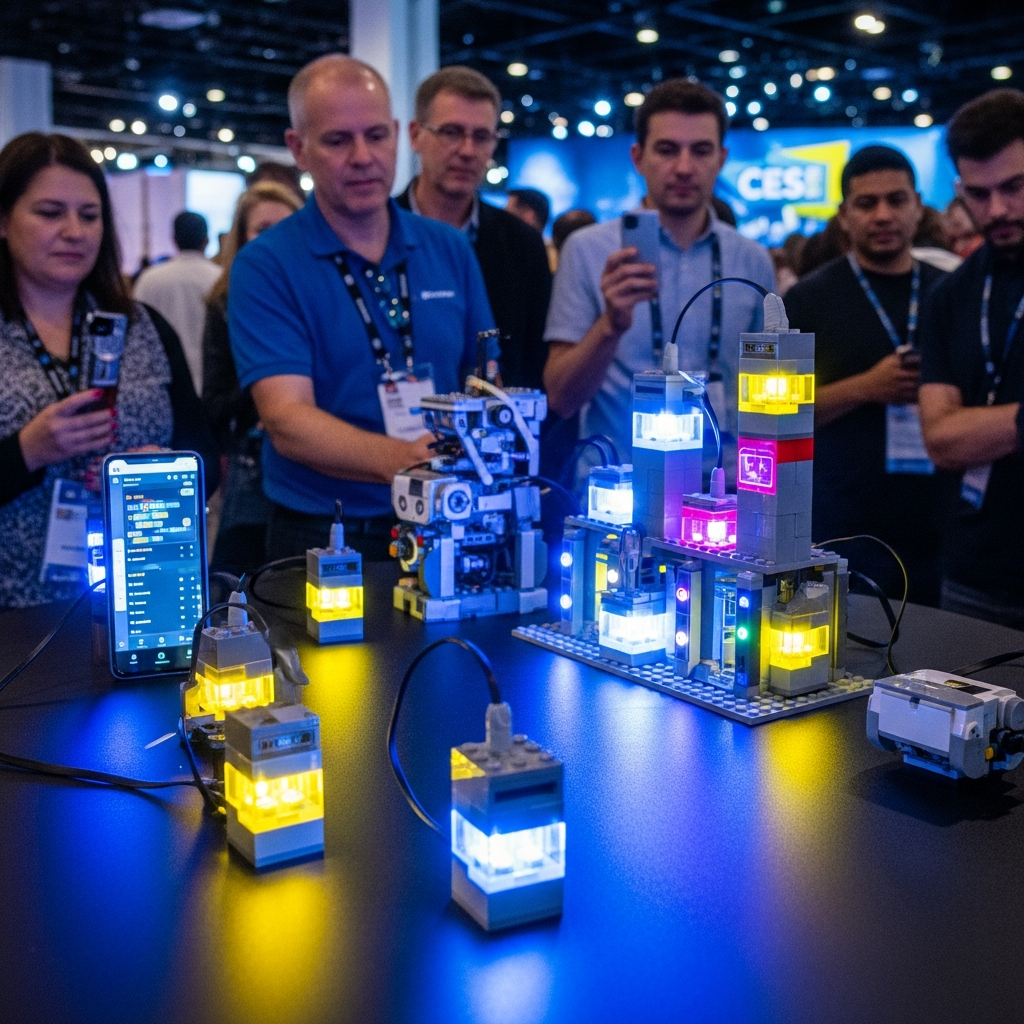
The Consumer Electronics Show (CES), a global stage for technological breakthroughs, frequently unveils innovations that reshape our world. Among these, the integration of beloved brands with cutting-edge tech often captures significant attention. One such transformative development is the emergence of Lego Smart Bricks at CES, signaling a remarkable evolution in how we think about play, learning, and creativity. This article delves into how Lego’s programmable components are revolutionizing interactive experiences, blending physical construction with digital capabilities to inspire a new generation of builders and coders. Prepare to explore the fascinating world where classic bricks meet intelligent technology.
Unlocking the Potential of Lego Smart Bricks at CES
For decades, Lego bricks have been synonymous with imaginative construction. Now, with the introduction of Lego Smart Bricks, this iconic toy takes a monumental leap into the digital age. These aren’t just plastic blocks; they are miniature technological marvels. Lego Smart Bricks integrate motors, sensors, lights, and programmable hubs directly into the familiar brick system. This allows creations to move, react, and even communicate with users through connected apps. The concept transforms static models into dynamic, interactive robots, vehicles, or imaginative contraptions. This fusion of tangible building and digital programming was a highlight at CES, showcasing the vast potential for interactive play.
What Are Lego Smart Bricks?
At their core, Lego Smart Bricks are programmable electronic components designed to seamlessly integrate with traditional Lego elements. Key components typically include:
Hubs: These are the brains of the operation, containing processors, Bluetooth connectivity, and ports for sensors and motors. They power and control the entire system.
Motors: Small electric motors allow Lego creations to move, spin, or perform various actions.
Sensors: These can detect distance, color, tilt, or even sound, enabling the Lego model to react to its environment.
Lights: Integrated LED lights add visual flair and can be programmed for specific effects.
Users typically connect these Smart Bricks to a tablet or smartphone app. The app provides an intuitive, often block-based coding interface. This makes programming accessible even for young children. They can drag and drop commands to make their Lego car drive, their robot pick up objects, or their dinosaur roar. The result is a powerful learning tool disguised as engaging play.
A Legacy of Innovation: Lego’s Tech Journey
Lego’s journey into smart technology isn’t new. The company has a rich history of integrating electronics and programming into its play systems. The legendary Lego Mindstorms series, first launched in the late 1990s, pioneered this concept. Mindstorms introduced programmable bricks, motors, and sensors, empowering enthusiasts to build complex robots. This platform has seen several iterations, including the NXT and EV3, each pushing the boundaries of what’s possible with Lego. These early ventures laid the groundwork for the more accessible and consumer-friendly Smart Brick systems we see today. Lego Boost further democratized this technology. It offered a simpler entry point for younger builders to experience coding and robotics. These progressive steps culminated in the sophisticated systems showcased by Lego at major tech events like CES, demonstrating a consistent commitment to innovation.
The CES Stage: Showcasing Interactive Brilliance
CES serves as the ultimate platform for companies to unveil their most exciting advancements. When Lego Smart Bricks take center stage in Las Vegas, they don’t just present new toys; they showcase a vision for the future of interactive play. Presentations often highlight:
Live Demonstrations: Attendees witness Smart Brick creations come to life. Robots navigate obstacle courses, interactive animals respond to commands, and complex machines perform programmed tasks.
Educational Potential: Lego emphasizes how these systems foster crucial STEM (Science, Technology, Engineering, Mathematics) skills. Children learn problem-solving, logical thinking, and basic coding principles in a fun, hands-on environment.
- Creative Freedom: Unlike traditional electronic toys with predefined functions, Lego Smart Bricks offer open-ended creativity. Builders design their own models and then program them, making each creation truly unique.
How Smart Bricks Redefine Play
The integration of smart technology fundamentally changes the play experience. No longer are Lego models static displays. They become active participants in a child’s imaginative world. A child can build a race car, then program it to speed up when it “sees” a green light sensor. They can construct a robot and code it to deliver messages across a room. This dynamic interaction keeps children engaged for longer periods. It also encourages iterative design and problem-solving as they refine their programs and models. The digital layer adds a new dimension, extending the lifespan and replayability of physical Lego sets. This blend of tangible and digital is a powerful driver for creativity and sustained interest.
Empowering Future Innovators: STEM and Education
Lego Smart Bricks are invaluable educational tools. They bridge the gap between abstract coding concepts and concrete physical outcomes. Children grasp computational thinking by seeing their code directly influence their brick creations. They learn about mechanical engineering as they design sturdy robots. Principles of physics come alive when they experiment with gear ratios and motor speeds. Products like LEGO Education SPIKE Prime, utilizing similar Smart Brick technology, are specifically designed for classroom settings. These kits provide structured lessons that align with educational standards. They prepare students for a world increasingly driven by technology. The hands-on, playful approach removes intimidation often associated with complex subjects like robotics and programming.
The Technology Behind the Bricks
The sophistication of Lego Smart Bricks lies in their accessible yet powerful underlying technology. Most modern Smart Brick systems utilize Bluetooth Low Energy (BLE) for wireless communication. This allows hubs to connect seamlessly with tablets or smartphones without cumbersome cables. The programming interfaces are typically visual, block-based languages, often inspired by Scratch. This intuitive drag-and-drop method allows users to build sequences of commands without needing to memorize complex syntax. Firmware updates for the hubs ensure continued compatibility and introduce new features. Battery management is also critical, with rechargeable lithium-ion batteries often powering the main hubs. These technological choices ensure a smooth, user-friendly experience that doesn’t overwhelm young builders but still delivers robust functionality.
The Road Ahead: What’s Next for Lego’s Smart Ecosystem
The innovation seen with Lego Smart Bricks at CES is just the beginning. The future promises even deeper integration of artificial intelligence, more sophisticated sensors, and enhanced connectivity. Imagine Lego creations that can learn from their environment or interact with other smart home devices. Increased cross-compatibility between different Lego Smart Brick systems could also unlock new levels of complexity and creativity. As technology advances, Lego is well-positioned to continue leading the way in merging physical play with digital innovation. The focus will likely remain on making advanced concepts approachable and fun for all ages, fostering a lifelong love for building and discovery.
Frequently Asked Questions
What exactly makes Lego Smart Bricks “smart”?
Lego Smart Bricks are considered “smart” because they integrate electronic components like programmable hubs, motors, and sensors directly into the familiar Lego system. These elements allow Lego creations to perform actions, react to their environment, and be controlled through digital coding. Unlike traditional bricks, Smart Bricks enable movement, light effects, and sensory input, transforming static models into interactive robots or dynamic machines that can be programmed via a connected app, such as those demonstrated at CES.
Where can I find Lego Smart Bricks products like Boost or Mindstorms?
Lego Smart Bricks are available through various official and retail channels. You can typically find complete sets, such as LEGO Boost Creative Toolbox, LEGO Mindstorms Robot Inventor, or LEGO Education SPIKE Prime, on the official LEGO website. Major online retailers like Amazon, as well as electronics stores and toy shops, also stock these products. Checking these outlets will provide options for purchasing these innovative programmable brick kits.
How do Lego Smart Bricks help children learn STEM skills?
Lego Smart Bricks are exceptional tools for developing STEM (Science, Technology, Engineering, Mathematics) skills in children. They teach basic coding principles through intuitive, block-based programming interfaces, demonstrating cause and effect. Engineering skills are honed as children design and build stable, functional models that incorporate motors and sensors. They learn about mechanics, physics (like motion and force), and problem-solving by troubleshooting their designs and code. This hands-on, engaging approach makes complex STEM concepts accessible and fun.
Conclusion: Building Tomorrow, Brick by Smart Brick
The presence of Lego Smart Bricks at CES truly underscores Lego’s enduring commitment to innovation. By seamlessly blending the tactile joy of traditional brick building with the immense possibilities of digital technology, Lego has created something truly special. These intelligent components are not just advanced toys; they are powerful educational platforms that cultivate critical thinking, creativity, and essential STEM skills. As we look to the future, the ongoing evolution of Lego Smart Bricks promises to keep play vibrant, engaging, and deeply relevant for generations to come. Embrace the future of building and programming, one smart brick at a time.