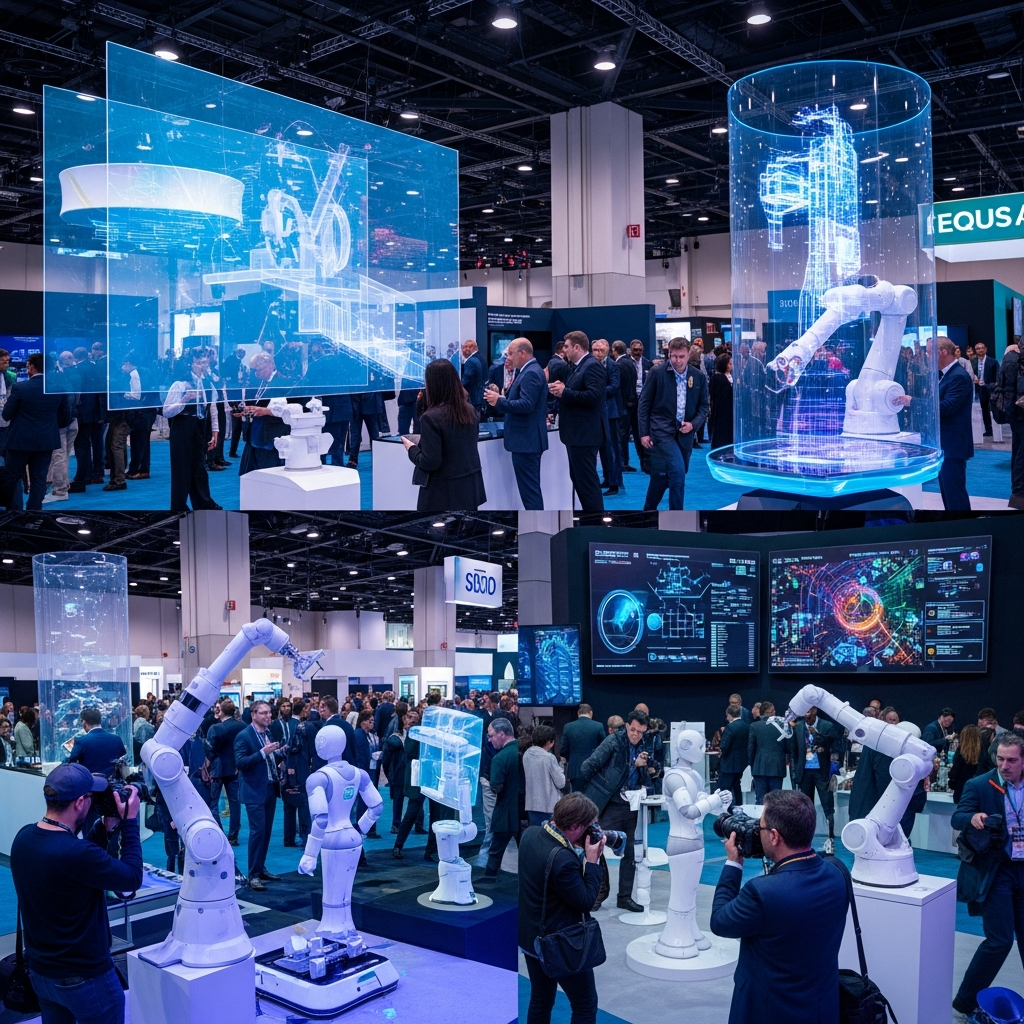
Las Vegas just concluded another groundbreaking CES 2026, the world’s premier consumer electronics show, leaving a profound mark on the future of technology. From January 4th to 9th, the convention halls buzzed with electrifying reveals. This year, the overarching narrative was clear: the seamless integration of Artificial Intelligence into virtually every facet of our lives, alongside remarkable advancements in robotics and cutting-edge display technologies. Our team was on the ground, sifting through hundreds of announcements to bring you the most impactful innovations from titans like Samsung, NVIDIA, Intel, and countless inventive startups.
The show floor, officially opening on January 6th after a bustling press day, unveiled a landscape where “AI for all” is rapidly becoming a tangible reality. Attendees witnessed a shift towards more intelligent, interactive, and personalized tech experiences. Whether you’re a tech enthusiast, a professional, or simply curious about what’s next, this guide compiles the essential breakthroughs and insights from CES 2026.
The AI Revolution: Intelligence Beyond the Screen
Artificial intelligence wasn’t just a buzzword at CES 2026; it was the foundational layer of nearly every major announcement. Companies showcased AI moving from abstract algorithms to tangible, physical forms, revolutionizing everything from computing to home appliances.
NVIDIA, for instance, reinforced its position as an “AI infrastructure juggernaut.” CEO Jensen Huang highlighted the company’s focus on “physical AI” in data centers, robotics, and autonomous vehicles. A key reveal was DLSS 4.5, an advanced image-upscaling technology. This innovation promises up to 4K 240Hz path-traced performance through Dynamic Multi Frame Generation. It also boasts sharper visuals, better temporal stability, and reduced ghosting, courtesy of its 2nd Generation Super Resolution Transformer.
Intel’s presence also underscored the AI trend. Its new Core Ultra 3 laptop line, the first made with the 18A manufacturing process, demonstrated impressive AI capabilities. A Lenovo IdeaPad Pro 5, powered by an Intel Core Ultra X9 388H with its built-in Arc B390 GPU, remarkably ran “Battlefield 6” at up to 190 fps in 1080p on high settings. This was achieved using Intel’s XeSS3 AI upscaling and 4X frame generation, delivering smooth gameplay without needing dedicated graphics. Lenovo’s own press conference heavily leaned into AI, emphasizing “Agentic AI” and the broader vision of “Smarter AI for all.”
Beyond pure computing, AI found its way into companion devices. Motorola teased Qira, an AI assistant worn as a camera pendant, designed as an “AI personal twin.” While intriguing, it sparked discussions around privacy. Similarly, Razer showcased Project Ava, an AI gaming co-pilot, and Lepro Ami introduced “Ami,” a physical desk device for emotional intimacy simulation.
Robotics Unleashed: From Chore Helpers to Companion Bots
Robotics took center stage at CES 2026, showcasing a diverse range of machines designed to assist, entertain, and even challenge our perceptions of companionship. The “convergence of AI and the physical world” was nowhere more evident than in the bustling robotics zone.
LG debuted CLOiD, a humanoid home robot conceptualized for chores. This intelligent machine features a wheeled base, articulated arms, and an AI hub head. It uses “Physical AI” to learn user habits and effortlessly control smart appliances, demonstrating its ability to carefully handle tasks like laundry. This highlights a broader industry move toward specialized home robots, rather than a single “robot butler.” SwitchBot’s Onero H1 was another notable multi-purpose home robot with a tangible release plan.
Hyundai’s keynote surprised many by featuring Boston Dynamics’ Atlas robot. This humanoid marvel is slated to begin building cars for Hyundai by 2028, signaling a significant industry shift towards AI and robotics in manufacturing. Even Mobileye, traditionally known for automotive chips, announced a strategic pivot into humanoid robotics with its “Mobileye 3.0” initiative, including a major acquisition in the space.
The show floor presented a vibrant spectacle of robots:
Unitree Robotics’ quadruped robots entertained with their dancing.
Sharpa Robotics demonstrated impressive dexterity with Ping-Pong playing robots.
Roborock showcased the Saros Rover, a robot vacuum with legs capable of climbing stairs.
Perhaps the most talked-about, and certainly controversial, robotic reveal came from sex toy maker Lovense, which presented “Emily.” This AI-equipped sex doll aims to address the “global loneliness crisis” through “human-like cognition, emotional awareness, and expressive behavior,” adapting to user needs over time. This sparked wide-ranging conversations about the ethical implications of advanced AI companionship.
Next-Gen Computing & Displays: Visuals That Amaze
CES 2026 continued its tradition of pushing the boundaries of computing hardware and display technologies, offering innovations that promise stunning visuals and enhanced productivity.
Lenovo unveiled ambitious concept devices, including the ThinkPad Rollable XD and Legion Pro Rollable laptops. These feature flexible OLED screens that can expand vertically (ThinkPad) or horizontally (Legion Pro) for increased screen real estate. The ThinkPad XD even includes a “world-facing” secondary display on its lid. Beyond concepts, Lenovo’s Yoga Pro 9i creator laptop featured a 16-inch 4K tandem OLED display with 1,600 peak nits, powered by Intel Panther Lake chips and up to an RTX 5070 GPU.
Dell refreshed its XPS lineup, with the XPS 14 featuring Intel’s new Core Ultra Series 3 processors, and the XPS 16 offering formidable power. Qualcomm also made waves with its Snapdragon X2 Plus, positioning it as a highly efficient CPU for lightweight laptops. For gamers, ASUS and Xreal introduced the ROG Xreal R1 AR Glasses. These build on the Xreal One Pros but offer a higher 240Hz max refresh rate and a versatile dock to connect various gaming consoles.
Display technology saw remarkable advancements:
Samsung expanded its ultra-premium Micro RGB TV lineup, including a massive 130-inch model and transparent OLEDs.
LG debuted its Micro RGB evo, a flagship RGB TV featuring the smallest individual RGB LEDs for brighter, clearer visuals in sizes up to 100 inches.
A new trend saw CPU coolers like the ASUS RYUO IV 360 ARGB Edition and MSI CoreLiquid E15 360 integrate curved displays, adding aesthetic flair to performance hardware.
Smart Home & Lifestyle: Tech for Everyday Living
The smart home category at CES 2026 offered a blend of practicality and ingenuity, showcasing gadgets designed to simplify daily routines and enhance personal well-being.
Lego made its CES debut with an innovation hailed as its “most significant evolution” in 50 years: Smart Bricks. These standard 2×4 bricks embed tiny silicon chips, sensors (for sound, light, color, direction, distance), accelerometers, and mini-speakers. This technology allows physical Lego creations to interact with their environment and come alive with sounds and responses, launching with Disney Star Wars partnership sets.
Home security saw significant updates. Ring relaunched its suite of Ring Sensors, adding AI features like “Unusual Event Alerts” that learn home patterns to flag anomalies, and “Active Warnings” using computer vision to identify threats. Ugreen unveiled its SynCare Series, an AI-infused all-in-one surveillance platform that stands out by requiring no monthly subscription, prioritizing user privacy with local footage storage.
Other notable lifestyle and personal tech included:
Shokz OpenFit Pro earbuds, featuring active noise cancellation for open-ear headphones, ideal for moderately noisy environments.
The Victrola Soundstage speaker, designed to sit discreetly under turntables, streaming audio via Bluetooth and eliminating the need for complex stereo setups.
Hyperkin x Gamesir X5 Alteron, presented as the world’s first fully modular mobile games controller, compatible with phones, tablets, and even the Switch via a highly accommodating vice grip.
Clicks Power Keyboard, a physical keyboard accessory that attaches to smartphones, offering tactile feedback for typing.
Skylight Calendar 2, a redesigned 15-inch WiFi-connected family calendar, now thinner and brighter.
Ambient Dreamie, a sunrise alarm clock designed to replace smartphones by the bed, offering music and podcasts to combat “doomscrolling.”
- Jackery’s Solar Mars Bot, an autonomous roving power station with retractable solar panels that intelligently seek sunlight, part of their expanded portable power solutions.
- www.engadget.com
- mashable.com
- techcrunch.com
- gizmodo.com
- www.theverge.com
Automotive & Mobility: Driving Towards an Autonomous Future
While some reports suggested a pivot away from pure EVs, the automotive sector at CES 2026 emphasized the advanced integration of AI and future mobility solutions. Autonomous systems and electric vehicles with unique features were key attractions.
NVIDIA continued to advance its AI models for autonomous vehicles, with Alpamayo leveraging data from its Cosmos world model for predictive decisions. A partnership with Mercedes-Benz confirmed its integration into the 2025 CLA model. Waymo maintained a strong presence, showcasing its Jaguar I-Pace and Zeekr robotaxis, signaling a commitment to self-driving services.
In terms of electric vehicles, the “adorable” Zeekr X electric car captivated many with its modern interior and design. Evotrex introduced the Evotrex-PG5 RV, billed as the “world’s first power-generating RV,” combining a 43kWh battery, solar panels, and a gas generator to charge electric trucks. Rictor, an e-bike company, showcased two single-seater eVTOL quadcopters, pushing the boundaries of personal aerial mobility.
The demand for clean energy to power these advancements, especially for “AI factories and data centers,” was a recurring theme. Commonwealth Fusion Systems (CFS) highlighted its pursuit of fusion power as a clean energy source, announcing a partnership with Nvidia to create a digital twin of its Sparc reactor. This collaborative effort underscores the critical need for sustainable energy solutions to support the burgeoning AI infrastructure.
Frequently Asked Questions
What were the most significant AI advancements showcased at CES 2026?
CES 2026 was dominated by AI, with major advancements across computing, robotics, and smart home devices. NVIDIA unveiled DLSS 4.5, an image-upscaling technology utilizing Dynamic Multi Frame Generation for enhanced gaming visuals up to 4K 240Hz. Intel’s Core Ultra 3 processors demonstrated discrete-class graphics performance for gaming via AI upscaling. Robotics like LG’s CLOiD integrated “Physical AI” for home chores, and concept devices like Motorola’s Qira proposed AI personal twins. These innovations highlight AI’s rapid transition from software to intelligent, interactive physical applications.
Which major brands unveiled new hardware innovations at CES 2026?
Numerous leading brands introduced groundbreaking hardware at CES 2026. Samsung expanded its Micro RGB TV line and showcased innovative home appliances. NVIDIA debuted DLSS 4.5 and advanced autonomous vehicle AI. Intel launched its Core Ultra 3 laptop processors, featuring integrated Arc B390 GPUs. Lenovo revealed rollable laptop concepts and powerful Yoga Pro 9i creator laptops. Dell refreshed its XPS series, and ASUS partnered with Xreal for new ROG Xreal R1 AR glasses. Lego also made headlines with its Smart Bricks, embedding chips and sensors into classic building blocks for interactive play.
How might the robotics and smart home tech from CES 2026 impact daily life soon?
The robotics and smart home innovations from CES 2026 suggest a near-future where daily life is more automated, personalized, and connected. Smart home devices, bolstered by AI from companies like Ring and Ugreen, will offer more proactive security and privacy features without monthly fees. Specialized home robots, exemplified by LG’s CLOiD, could become common for assistance with chores, freeing up personal time. Lego’s Smart Bricks hint at interactive toys that blend physical and digital play. These advancements aim to simplify routines and create more intuitive living spaces.
Shaping Tomorrow’s Tech Landscape
CES 2026 delivered on its promise, showcasing a future where technology is deeply embedded and intelligently integrated into our lives. From the pervasive influence of AI across every category to the burgeoning sophistication of robotics and the breathtaking evolution of displays, the innovations presented in Las Vegas set a clear trajectory for the tech industry. The emphasis on practical applications, enhanced user experience, and the pursuit of smarter, more efficient solutions ensures that the discussions and discoveries from this event will continue to resonate throughout the year and beyond. As these groundbreaking concepts transition from prototypes to products, consumers can look forward to an era of truly intelligent and intuitive technology.