A devastating assault on Kasuwan-Daji village in Nigeria’s Niger State has left at least 30 people dead and an entire community in terror. Armed criminal gangs, commonly known as “bandits,” stormed the bustling market town, torching stalls, looting businesses, and abducting numerous residents, including children. This horrific incident, reported in early January 2026, marks another grim chapter in the escalating wave of violence plaguing Nigeria’s North-West and Central regions. The attack highlights the urgent and persistent security challenges faced by vulnerable communities, intensifying calls for more robust government intervention against these increasingly brazen groups.
The Night Kasuwan-Daji Burned: A Brutal Account
On a fateful Saturday evening, around 4:30 PM, the quiet rhythm of Kasuwan-Daji village was shattered. Gunmen, emerging from the dense National Park Forest near Kabe district, descended upon the community. They arrived on motorcycles, heavily armed, initiating an indiscriminate attack that lasted for up to three hours. Witnesses described a scene of sheer chaos and terror. The assailants rounded up villagers, brutally slaughtering some and shooting others dead.
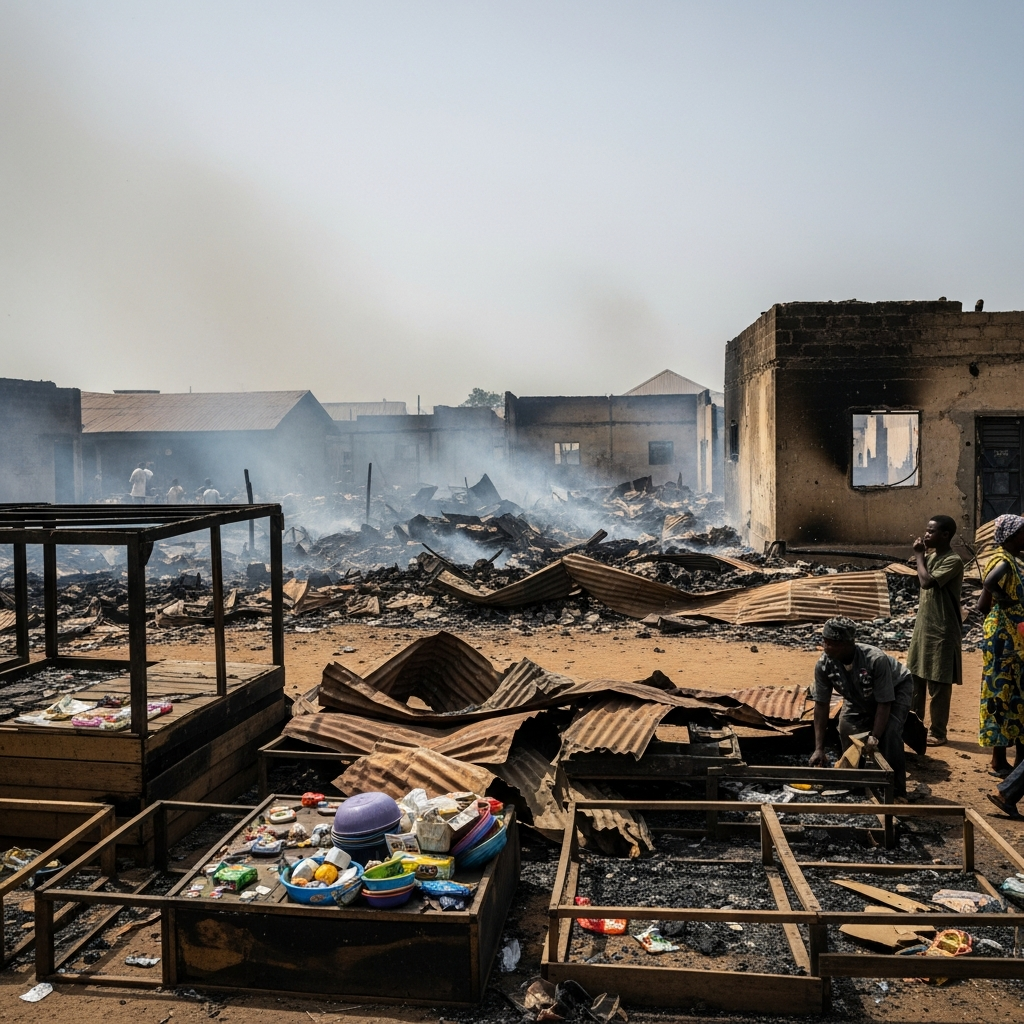
Police initially confirmed over 30 fatalities in this tragic Niger State attack. However, local residents paint an even grimmer picture, with some reporting a death toll of at least 37, fearing it could be much higher due to missing individuals. Rev. Fr. Stephen Kabirat, a spokesman for the Catholic Church of Kontagora Diocese, stated that over 40 people had been killed. These figures include women and children, mercilessly targeted in the brutal raid. The gunmen set the local market ablaze, destroying livelihoods, and looted essential food items and goods from shops. An unspecified number of people were abducted, taken to an unknown location, further deepening the community’s anguish.
Eyewitnesses Speak of Unspeakable Horror
A local journalist, recounting details to BBC Hausa, described how the attackers “rounded up people and then proceeded to slaughter them, while others were shot dead.” This account was corroborated by Abdullahi Rofia, an official with the Niger State Emergency Management Agency (SEMA), who also confirmed the rounding up and killing of villagers. Dauda Shakulle, a wounded survivor, grimly stated that “women and children were not spared.” The coordinated savagery of the attack left an indelible scar on the survivors.
A Community Paralysed by Fear and Abandonment
In the immediate aftermath of the Kasuwan-Daji assault, a profound sense of terror gripped the surviving community. “They are hiding, they are too afraid to talk to anybody,” Abdullahi Rofia told the BBC, explaining that villagers feared retaliation if they spoke out. This pervasive fear meant that, even hours after the attack, survivors were too scared to venture out to recover the bodies of their loved ones. The absence of security forces in the village during and immediately after the three-hour ordeal was a critical point of concern for residents.
“We want the government to help us,” a witness implored BBC Hausa, highlighting the stark contrast between official assurances and on-ground reality. “In the past, we used to hear about this problem in other places, but now it is happening in our villages.” Villagers expressed a desperate sense of abandonment. “We are dying like chickens, and does the government care about us?” one distraught resident questioned. “The government hears and sees what is happening, but it is not doing anything about it. What can we do as ordinary people?” This feeling of helplessness is driving people from their ancestral homes, forced to abandon their birthplaces in search of safety.
Nigeria’s Escalating Banditry Crisis
Attacks and mass kidnappings by armed criminal gangs, widely referred to as “bandits,” have long plagued Nigeria. However, reports indicate a significant spike in violence across the country’s western and central regions in recent months. The Nigerian government has officially classified these criminal groups as terrorists, a designation that underscores the severity of the threat they pose to national security and civilian life. These groups often operate from vast, ungoverned forest reserves, which serve as strategic hideouts and bases for their operations. The Kabe district’s National Park Forest, from which the Kasuwan-Daji attackers emerged, is one such example.
The violence in Niger State is part of a broader, deeply entrenched crisis. Rogue gangs, often seeking control and operating with apparent impunity, frequently target remote communities with limited security and government presence. This allows them to execute their deadly raids, loot resources, and conduct abductions for ransom. The law explicitly forbids paying ransom to these groups, yet claims persist that this prohibition is often ignored in practice, further complicating efforts to curb the crisis.
A Cycle of Violence and Abductions
The attack on Kasuwan-Daji is not an isolated incident. It occurred just one day after Niger State authorities announced the phased reopening of schools. These schools had been closed as an emergency security measure following a previous mass kidnapping in November. In that incident, over 250 students and staff were abducted from St Mary’s Catholic school in Papiri, Niger State. While officials confirmed the rescue of all missing students and teachers just before Christmas, the latest Niger State village attack tragically demonstrates the ongoing vulnerability and the persistent threat of mass abductions in the region.
Official Responses and Lingering Frustrations
Following the assault, Niger State police spokesperson Wasiu Abiodun stated that an emergency team had been deployed to aid the injured. He added that security forces were actively working to rescue those kidnapped. However, these claims were met with skepticism by local residents who reported a continued absence of security personnel in the immediate aftermath of the attack. Nigerian President Bola Tinubu officially condemned the attack, describing it as a test of the nation’s resolve. He issued directives to special services, instructing them to track down the terrorists and work towards the release of hostages. President Tinubu asserted that the perpetrators “must bear full responsibility for their criminal actions.”
Despite these official condemnations and deployments, public frustration remains palpable. Villagers question the effectiveness of government responses, feeling abandoned and exposed to relentless violence. The ongoing struggle to contain these armed groups reflects systemic challenges in security provision, intelligence gathering, and effective enforcement across vast, rural territories. While international attention has sometimes focused on the crisis, with reports from early 2026 even mentioning past US military actions against ISIS fighters in northwest Nigeria in cooperation with the Nigerian government, the core struggle for safety and stability remains a local one for communities like Kasuwan-Daji.
Frequently Asked Questions
What happened in the Kasuwan-Daji village attack?
On a Saturday evening in early January 2026, armed bandits raided Kasuwan-Daji village in Nigeria’s Niger State. The attackers, arriving on motorcycles from a nearby forest, spent up to three hours shooting and slaughtering villagers, setting the local market ablaze, and looting shops. Official police reports confirmed over 30 fatalities, though local residents and clergy reported higher numbers, estimating 37 to over 40 deaths, including women and children. An unspecified number of people were also abducted during the horrific assault.
Where is Kasuwan-Daji village located, and what is the broader security situation in Niger State?
Kasuwan-Daji village is located in Nigeria’s Niger State, specifically within the Kabe District of the Borgu Local Government Area. The attackers reportedly emerged from the nearby National Park Forest, a common hideout for armed gangs. Niger State, like many regions in North-West and Central Nigeria, is grappling with a severe security crisis characterized by widespread banditry, mass kidnappings, and violent raids on communities. These groups exploit remote areas with limited government presence, leading to a persistent climate of fear and insecurity for residents.
Why are armed bandit attacks increasing in Nigeria’s Niger State, and what is the government’s approach?
Armed bandit attacks in Niger State and surrounding regions have spiked due to several factors, including the exploitation of vast forest reserves as hideouts, limited security infrastructure in remote areas, and the lucrative nature of kidnappings for ransom. The Nigerian government has officially classified these bandits as terrorists, reflecting the grave threat they pose. While authorities, including President Bola Tinubu, condemn the attacks, deploy emergency teams, and commit to rescuing abductees and apprehending culprits, communities often report a lack of immediate security presence and feel a deep sense of abandonment, questioning the effectiveness of government efforts to protect them. The recent Kasuwan-Daji attack occurred just after schools were set to reopen following another mass kidnapping incident in November, highlighting the ongoing cycle of violence despite official interventions.
Conclusion: A Call for Lasting Solutions
The tragic events in Kasuwan-Daji serve as a harrowing reminder of the profound human cost of Nigeria’s escalating banditry crisis. The loss of life, the destruction of livelihoods, and the pervasive fear experienced by communities underscore the urgent need for comprehensive and effective security solutions. Beyond immediate response, addressing the root causes of this violence—including poverty, lack of governance in remote areas, and the operational freedom of these armed groups—is paramount. For the people of Niger State, their calls for greater government protection are not just pleas for help, but demands for their fundamental right to live in safety and peace. The international community, alongside the Nigerian government, must prioritize efforts to dismantle these criminal networks and restore stability to a region scarred by relentless violence.