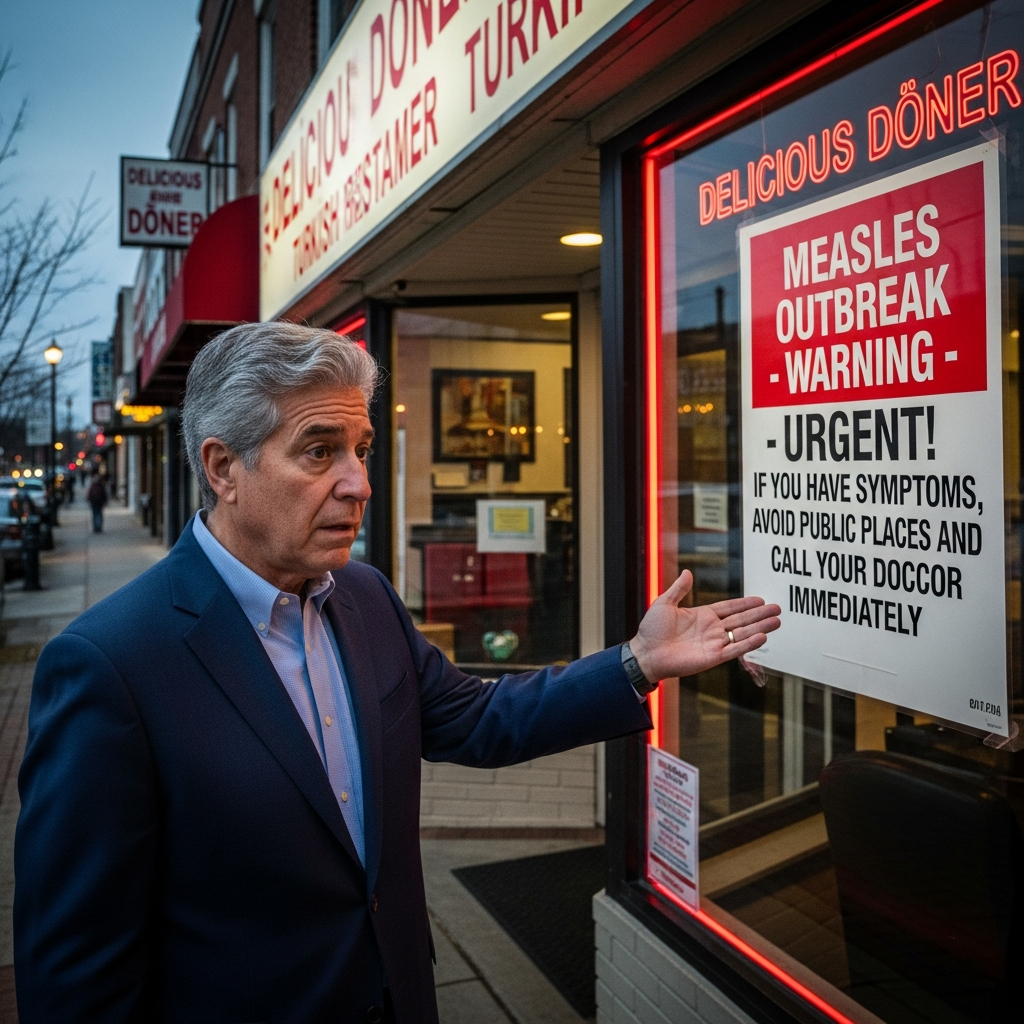
A critical health alert has been issued for Gastonia, North Carolina, following a potential measles exposure North Carolina residents need to be aware of. State health officials confirmed that diners at a popular Turkish restaurant may have been exposed to the highly contagious virus. This incident underscores a concerning trend of increasing measles cases across the U.S. and highlights the vital importance of vaccination. If you visited the specified location during the exposure window, understanding the risks and knowing what steps to take is crucial for your health and community safety.
Urgent Alert: Potential Measles Exposure in Gastonia
North Carolina health authorities recently announced a traveler might have exposed patrons at Constantine’s Restaurant in Gastonia to measles. This popular eatery, known for its Turkish, Greek, and Italian cuisine, is at the center of a public health advisory. The potential exposure occurred after 8:30 p.m. on December 26. Individuals who were at the restaurant during this time should monitor themselves for symptoms until January 16. This timeline accounts for the virus’s typical incubation period.
Officials stress the need for vigilance. Anyone experiencing symptoms should contact their local health department immediately. It is essential to stay home unless seeking medical attention. If a doctor’s visit or emergency room trip is necessary, call ahead. This allows healthcare providers to implement measures that prevent further spread to others.
Understanding Measles: A Highly Contagious Threat
Measles, or rubeola, is an extremely contagious respiratory virus. It spreads easily through the air when an infected person coughs or sneezes. The virus can remain suspended in the air for up to two hours after an infected person has left a room. It can also spread through indirect contact, like touching contaminated surfaces. This airborne transmission makes measles one of the most infectious diseases known.
The Centers for Disease Control and Prevention (CDC) describe measles as a serious illness. It can lead to severe health complications. These are particularly risky for young children, pregnant women, and individuals with weakened immune systems. Complications can include pneumonia, ear infections (potentially leading to hearing loss), brain infections, and even death. The danger is so high because an infected person can spread the virus before they even show any symptoms. This silent spread makes containing outbreaks incredibly challenging.
Recognizing the Key Symptoms of Measles
Knowing the signs of measles is vital for early detection and prevention. Symptoms usually appear 7 to 21 days after exposure. They typically begin with general cold-like indicators.
Here are the critical symptoms to watch for:
High Fevers: Often reaching 103°F or higher.
Runny Nose: Persistent and often severe.
Cough: A dry, hacking cough.
Red, Watery Eyes: Conjunctivitis, or “pink eye.”
Koplik Spots: Tiny white spots inside the mouth on the inner cheeks, gums, and roof of the mouth. These often appear a few days before the rash.
Distinctive Rash: A red, raised, and blotchy rash. It typically starts on the face and behind the ears, then spreads downward over the entire body.
If you suspect measles, do not delay. Contact a healthcare provider promptly.
Taking Action: If You Think You Were Exposed
If you were at Constantine’s Restaurant on December 26 after 8:30 p.m., or believe you had other potential measles exposure North Carolina related, here’s what to do:
- Monitor for Symptoms: Watch carefully for any of the symptoms listed above until January 16.
- Contact Health Officials Immediately: If symptoms develop, call your local health department or healthcare provider. Describe your potential exposure and symptoms over the phone first. This helps them prepare and prevent spread in waiting rooms.
- Isolate Yourself: Stay home to avoid exposing others. Do not go to work, school, or public places.
- Confirm Vaccination Status: Check your MMR (measles, mumps, and rubella) vaccination record. Those who are unvaccinated face a significantly higher risk of infection.
Even if you are vaccinated, rare breakthrough cases can occur. While typically milder, prompt action is still important.
The Critical Role of Vaccination in Preventing Measles
Health officials consistently emphasize that vaccination remains the most effective protection against measles. The MMR vaccine offers powerful immunity. Two doses of the MMR vaccine are approximately 97% effective at preventing measles. One dose is about 93% effective.
Dr. Zack Moore, an epidemiologist for the N.C. Department of Health and Human Services (DHHS), recently stated, “Getting vaccinated against measles continues to be the most important step we can take to protect ourselves and our loved ones.” He urged everyone to check their vaccination records.
Widespread vaccination creates “herd immunity.” This protects vulnerable individuals who cannot be vaccinated due to age (infants) or medical conditions. When vaccination rates decline, even slightly, the risk of outbreaks increases dramatically.
Broader Context: Measles on the Rise Across the U.S.
The potential measles exposure North Carolina is experiencing is not an isolated incident. The Centers for Disease Control and Prevention (CDC) reported over 2,000 measles cases in 44 states nationwide by the end of December. This marks one of the largest U.S. outbreaks in decades. International and domestic travel by unvaccinated individuals often sparks these localized incidents.
Across the country, other states have issued similar warnings:
Kentucky: Unvaccinated travelers led to exposures at the Holiday Inn & Suites in Dry Ridge and the Ark Encounter in late December. Kentucky health officials highlighted that measles can persist in the air for up to two hours.
Massachusetts: Boston saw potential exposures at the Westin Boston Seaport District Hotel, the Museum of Fine Arts, and Logan Airport Terminal C in June. Officials expressed particular concern for vulnerable populations, such as pregnant women.
California: Los Angeles International Airport (LAX) and the Hilton Los Angeles Airport were identified as exposure sites in July after an out-of-county traveler tested positive. Health officers noted that individuals can transmit the virus before symptoms appear.
Idaho: The Mini-Cassia area confirmed a case from an international business traveler in May. Interestingly, this individual was vaccinated, emphasizing that while rare, breakthrough cases can happen. Vaccinated individuals often experience milder symptoms and may be less infectious.
These widespread incidents underscore a concerning national trend. Summer travel further exacerbates the risk, creating more opportunities for transmission.
Other Recent North Carolina Measles Cases
Beyond the Gastonia restaurant measles incident, North Carolina has faced other recent challenges:
Polk County: A child contracted measles late in December. This case is believed to be linked to an ongoing outbreak in upstate South Carolina. That outbreak has seen 179 measles cases since July, according to the N.C. DHHS.
Raleigh-Durham International Airport (RDU): In December, a traveler passing through Terminal 2 at RDU tested positive for measles, potentially exposing others nearby.
These cases serve as stark reminders that measles exposure North Carolina remains a significant public health concern. Health officials continually warn that an outbreak similar to South Carolina’s is a matter of time without widespread vaccination.
Protecting Your Community: Beyond Personal Risk
The collective effort to maintain high vaccination rates is crucial for community health. While personal immunity protects you, herd immunity protects everyone. This is especially important for infants too young to be vaccinated, individuals with compromised immune systems, and others who cannot receive the vaccine. Each vaccination contributes to a protective shield around the entire community.
Public health organizations, like the N.C. DHHS, work tirelessly to track and mitigate these threats. However, community cooperation is paramount. Staying informed, getting vaccinated, and acting responsibly if exposed are key steps everyone can take. Your actions contribute directly to the health and safety of your neighbors, friends, and family.
Frequently Asked Questions
What should I do if I was at Constantine’s Restaurant in Gastonia on December 26?
If you were at Constantine’s Restaurant, located at 1825 S. New Hope Road in Gastonia, after 8:30 p.m. on December 26, you should immediately begin monitoring yourself for measles symptoms. These include high fever, runny nose, cough, red watery eyes, white spots inside the mouth, and a red, blotchy rash. Continue monitoring until January 16. If any symptoms appear, contact your local health department or healthcare provider by phone before visiting to prevent potential spread.
How does measles spread, and how long can the virus survive in the environment?
Measles is a highly contagious respiratory virus that spreads primarily through the air when an infected person coughs or sneezes. The virus can remain viable and infectious in the air and on surfaces for up to two hours after the infected person has left an area. This extended airborne viability makes it exceptionally easy to transmit, even in briefly shared spaces, and contributes to its rapid spread among unvaccinated populations.
Is the MMR vaccine still effective if I’ve been exposed to measles?
The MMR (measles, mumps, and rubella) vaccine is highly effective at preventing measles, with two doses offering about 97% protection. If you are fully vaccinated, your risk of infection is low. If you are unvaccinated or unsure of your status and believe you’ve been exposed, contacting your healthcare provider immediately is crucial. In some cases, a post-exposure vaccination or immune globulin may be recommended within a specific timeframe to prevent or lessen the severity of the illness.
Conclusion
The recent North Carolina measles exposure at a Gastonia restaurant serves as a critical reminder of measles’ ongoing threat. With cases rising across the U.S. and locally in Polk County and RDU Airport, vigilance and proactive measures are more important than ever. Understanding how measles spreads, recognizing its symptoms, and knowing what steps to take if exposed are essential. The single most powerful tool against this highly contagious virus is vaccination. Ensure you and your loved ones are up-to-date on your MMR shots. Stay informed through official health channels, and together, we can protect our communities from preventable outbreaks.