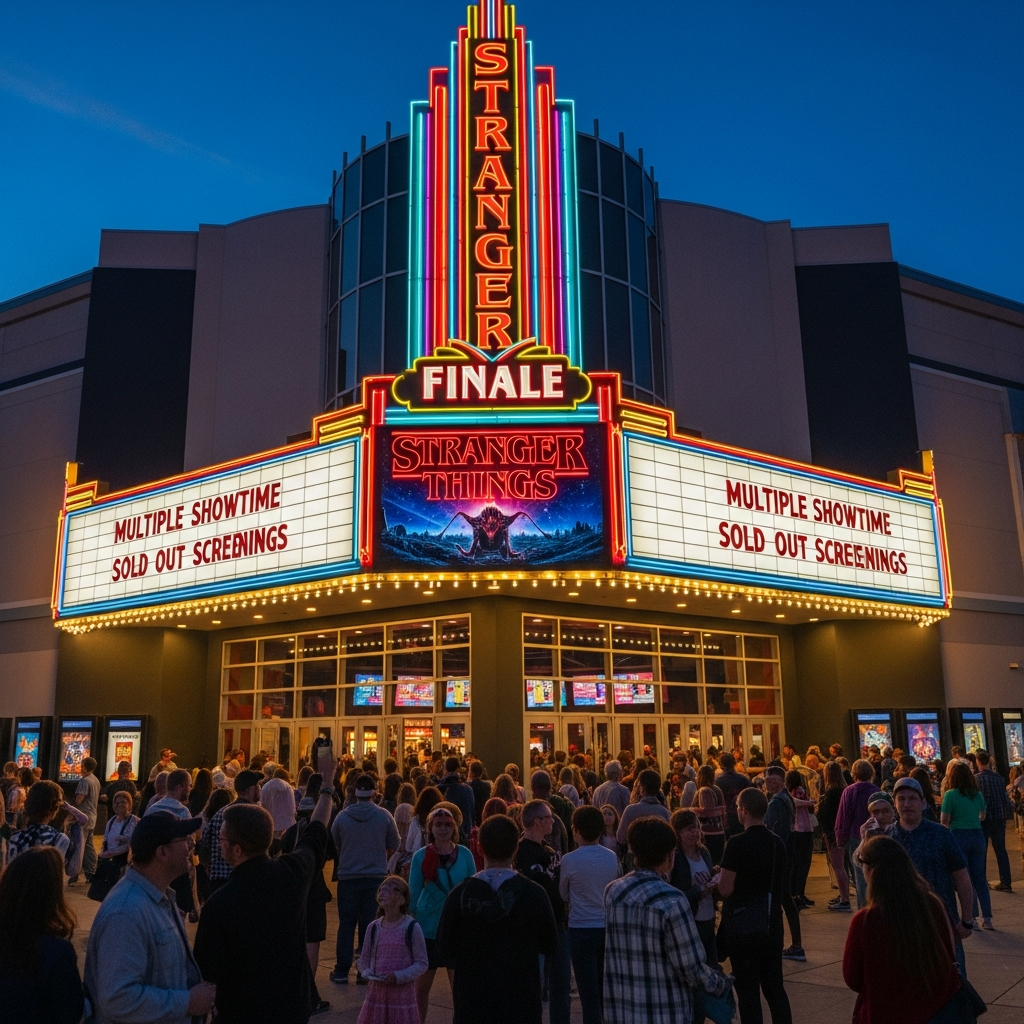
The highly anticipated Stranger Things finale delivered an unexpected jolt to the struggling movie theater industry, raking in an estimated $25 million to $30 million from its unique theatrical run. This groundbreaking event, which saw the conclusion of Netflix’s megahit series simultaneously debut on streaming and in cinemas, offered a rare win for exhibitors during a challenging holiday season. Far from a traditional box office release, the revenue was generated exclusively through concession sales, marking a significant and potentially transformative moment for how streaming giants interact with the big screen.
The Unprecedented Theatrical Debut of a Streaming Finale
On New Year’s Eve 2025, the Duffer Brothers’ supernatural thriller, Stranger Things: The Finale, premiered in approximately 600 cinemas across the U.S., with encore showings extending through New Year’s Day. This simultaneous release on Netflix and in theaters was a first for the series and a bold move by the streaming titan. Creators Matt and Ross Duffer expressed their long-held dream of seeing the epic conclusion on the big screen, celebrating the “incredible sound, picture and a room full of fans” as the perfect way to cap off the beloved show. This move signaled a pragmatic “frenemy” collaboration, benefiting both the streamer and traditional cinema chains.
A Revolutionary Revenue Model: Mandatory Concession Vouchers
Unlike standard movie releases, theaters could not sell traditional tickets for the Stranger Things finale. This unusual restriction stemmed from contractual terms with the cast regarding residuals, which would have complicated conventional revenue sharing. Instead, cinemas implemented an innovative workaround: fans reserved seats by purchasing mandatory food and beverage vouchers. This meant every dollar collected directly contributed to the theaters’ bottom line, free from the typical studio rental fees or revenue-sharing agreements.
Major chains like AMC and Cinemark Theatres priced these concession vouchers at $20 (sometimes with additional fees). Regal Cinemas opted for an $11 charge, a deliberate homage to the show’s protagonist, Eleven, played by Millie Bobby Brown. This unique financial model proved incredibly lucrative for exhibitors, transforming the event into a direct cash infusion based purely on food and beverage purchases.
AMC Theatres: Leading the Charge to the Upside Down
AMC Theatres, the world’s largest cinema chain, played a pivotal role in the finale’s theatrical success. The company screened the Stranger Things finale in 231 of its locations nationwide, accounting for over one-third of all participating theaters. Over the two-day period, AMC alone reported hosting more than 753,000 viewers, generating an impressive $15 million in revenue from these concession vouchers.
AMC’s CEO, Adam Aron, expressed immense satisfaction, tweeting about “packed” theaters and “many sellouts” just before the screenings. He highlighted the “easy, creative, and seamless” working relationship with Netflix, noting that approximately two-thirds of AMC Stubs loyalty program members are also Netflix subscribers. This strong alignment in customer base underscored the event’s potential for mutual benefit.
The event set a new record for a Netflix title shown in cinemas, surpassing the previous high of $18 million earned by a sing-along version of KPop Demon Hunters. AMC had not participated in the KPop Demon Hunters run but, driven by consumer demand, significantly expanded its initial seating capacity for Stranger Things, ultimately providing nine times the originally envisioned capacity.
A Much-Needed Victory for a Lagging Box Office
The success of the Stranger Things finale offered a rare beacon of hope for a domestic box office that has been grappling with significant challenges. In 2025, revenue in the U.S. and Canada was projected to reach $8.87 billion, a marginal improvement over 2024 but still more than 20% down from pre-pandemic levels. Data from EntTelligence revealed that as of December 25, 2025, only an estimated 760 million tickets had been sold, a decline from over 800 million in 2024. This trend indicated that moviegoers, with few exceptions, were largely staying home.
The Stranger Things event dramatically bucked this trend. Its $25 million to $30 million concession haul even outstripped the combined ticket sales of 20th Century Studios’ top-grossing film, Avatar: Fire and Ash, which earned $23.7 million over the same two holiday days. This stark comparison emphasized the extraordinary impact of the finale’s unique theatrical engagement.
Strategic Implications: Netflix’s Evolving Cinema Strategy
The theatrical release of the Stranger Things finale is more than just a successful one-off event; it signals a notable shift in Netflix’s strategic approach to traditional Hollywood. Netflix Co-CEO Ted Sarandos, who previously prioritized first-run movies for the streaming platform, has recently adopted a more theatrical-friendly stance. This evolving perspective is particularly relevant as Netflix reportedly explores acquiring legacy movie studio Warner Bros., which comes with long-standing theatrical obligations.
The Duffer Brothers themselves have signed a separate four-year exclusive deal with Paramount for feature films once their Netflix contract concludes, further blurring the lines between streaming and traditional studios. Discussions regarding theatrical window lengths are ongoing, with Netflix reportedly pushing for a 17-day window, while major circuits like AMC advocate for a 45-day period to safeguard the theatrical ecosystem. This event serves as an “experiment and gesture of goodwill,” demonstrating a new potential model for streamers to engage with the theatrical experience, allowing cinemas to significantly benefit without Netflix directly reporting traditional box office grosses.
The Power of Fandom and Communal Viewing
Beyond the financial numbers, the Stranger Things finale highlighted the immense power of dedicated fandom and the enduring appeal of communal viewing experiences. Two days before the screenings, the Duffer Brothers announced that an astounding 1.1 million seats had already been reserved. This figure soared past the 700,000 RSVPs recorded for Netflix’s prior theatrical event, KPop Demon Hunters, underscoring the exceptional pre-release interest.
Fans flocked to theaters to experience the climactic battle against Vecna with “electric” atmospheres, proving that a shared big-screen moment for a beloved series can still generate substantial excitement and profit. This success indicates that given the right event and timing, movie theaters can transform into vibrant community hubs, even when not selling traditional tickets.
Frequently Asked Questions
How did the Stranger Things finale generate revenue without selling traditional tickets?
The Stranger Things finale employed a unique financial model due to cast contractual terms regarding residuals. Instead of selling traditional tickets, participating theaters required fans to purchase mandatory food and beverage vouchers to reserve their seats. For example, AMC and Cinemark charged $20 per voucher, while Regal Cinemas charged $11. This innovative approach meant that 100% of the funds collected stayed with the theaters, effectively making every dollar direct profit for exhibitors, free from typical studio revenue-sharing fees.
Which cinema chains participated in the Stranger Things finale theatrical screenings?
Major cinema chains across the U.S. participated in the Stranger Things finale theatrical event. The world’s largest theater chain, AMC Theatres, was a significant participant, screening the finale at 231 of its locations. Other prominent exhibitors included Cinemark Theatres and Regal Cinemas. In total, the finale was shown in approximately 600 cinemas nationwide, providing a wide reach for fans to experience the conclusion on the big screen.
What does the success of the Stranger Things finale mean for the future of streaming and movie theaters?
The success of the Stranger Things finale‘s theatrical run signals a potential shift in the relationship between streaming platforms like Netflix and traditional movie theaters. It demonstrates a viable model for “event cinema,” where highly anticipated streaming content can offer a mutually beneficial theatrical experience. This event could encourage more experimental collaborations, especially as Netflix explores acquiring traditional studios like Warner Bros. and faces evolving discussions about theatrical window lengths. It highlights that both streamers and exhibitors can profit from shared fan engagement.
Conclusion
The Stranger Things finale proved to be a groundbreaking event, not only for its narrative conclusion but also for its unprecedented impact on the box office. By generating an estimated $25 million to $30 million solely through concession sales, it offered a much-needed boost to struggling cinemas and showcased an innovative revenue model. This “monstrous smash hit” underscored the immense power of a dedicated fanbase and the enduring appeal of communal viewing experiences. As Netflix continues to evolve its strategy in the entertainment landscape, this unique collaboration with theatrical exhibitors could pave the way for future “event cinema” and reshape how we consume our favorite stories, blending the best of both streaming and the big screen.
References
- www.latimes.com
- www.hollywoodreporter.com
- geektyrant.com
- www.dreadcentral.com
- <a href="https://m.imdb.com/fr/news/ni65641570/?ref=nwcart_perm”>m.imdb.com