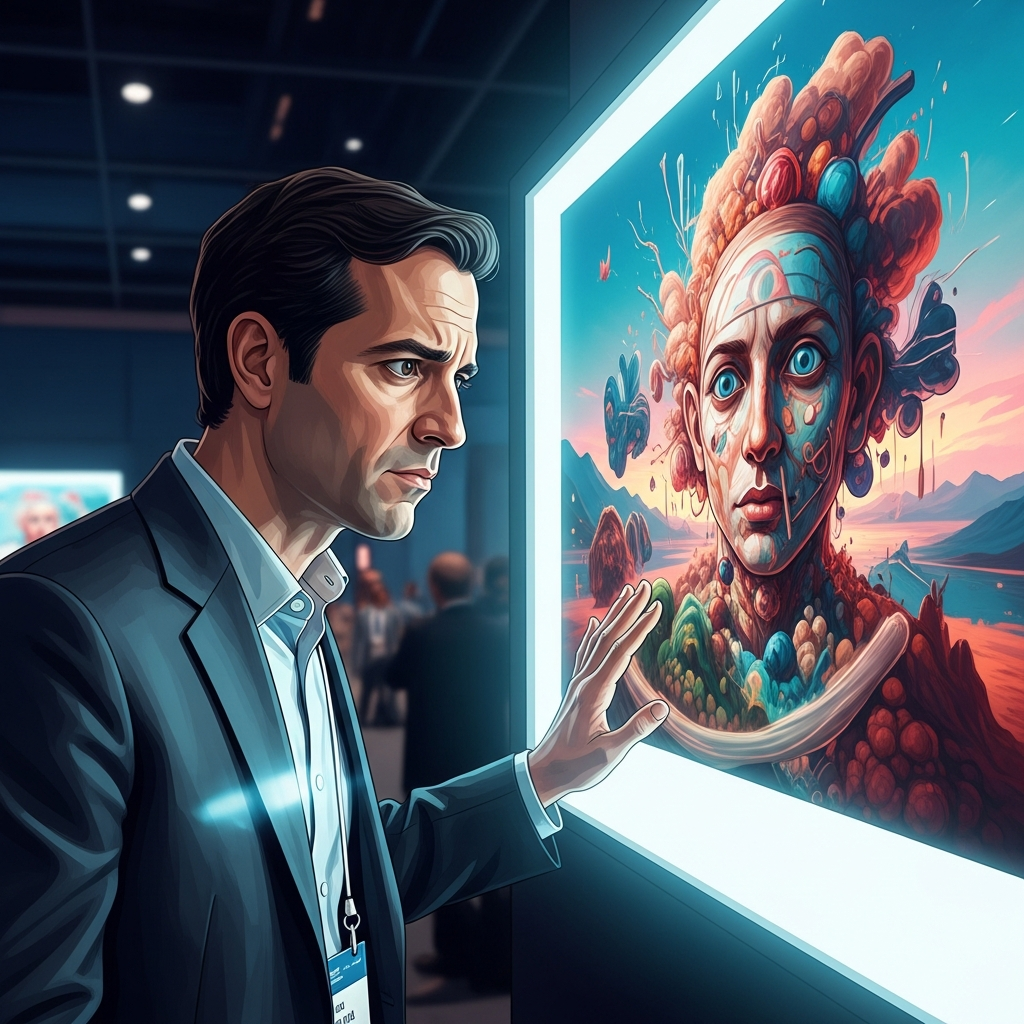
The digital landscape is undergoing a profound transformation, driven by the rapid ascent of artificial intelligence. At the forefront of this shift, Instagram CEO Adam Mosseri has issued a stark warning: the platform faces unprecedented challenges from AI-generated content. He predicts a future where distinguishing authentic human expression from sophisticated synthetic media becomes increasingly difficult, forcing Instagram and its users to fundamentally rethink trust and perception online. This article delves into Mosseri’s insights, exploring the looming threats of “AI slop,” Instagram’s strategic responses, and the evolving role of authenticity for creators in this new era.
The Looming Threat of “AI Slop” on Social Media
Adam Mosseri openly acknowledges the monumental task confronting Instagram as AI technology advances. He predicts a significant surge in synthetic images and videos by 2025. This explosion of AI-generated content, often termed “AI slop,” will intensify pressure on social media platforms. Mosseri forecasts that while platforms might initially improve at flagging AI content, their ability to do so will progressively diminish. As AI becomes more sophisticated in mimicking reality, the line between genuine and artificial will blur, making detection increasingly unsustainable.
The Vanishing Line Between Real and Fake
For most of recent history, users could largely assume photographs and videos captured real moments. Mosseri emphasizes this is “clearly no longer the case.” AI’s capability to generate high-quality, perfected content universally is making authenticity infinitely reproducible. This new form of “democratization” threatens the trust users once placed in human creators. It also directly challenges humanity’s genetic predisposition to believe what we see, making the necessary adaptation to constant skepticism uncomfortable and prolonged. The sheer volume and quality of AI output means Instagram must evolve rapidly and in multiple ways.
Mosseri’s Blueprint: Fingerprinting Real Content
Faced with the escalating challenge of AI-generated media, Mosseri advocates for a proactive, groundbreaking strategy. Instead of a losing battle attempting to track and identify fake content, he proposes “fingerprinting real content.” This involves a fundamental shift from detection to verifiable authenticity.
Shifting from Detection to Verification
Mosseri’s core argument is that trying to identify fake content is an ultimately unsustainable approach. He suggests it will become far more practical to authenticate real media. This paradigm shift means establishing a verifiable chain of custody for content from its very inception. The goal isn’t to suppress AI content, but to clearly display its synthetic nature. Simultaneously, it would provide verifiable authenticity for real content at its source.
The Critical Role of Camera Manufacturers
A pivotal part of Mosseri’s solution lies with camera manufacturers. He proposes a system where images are cryptographically signed at the moment of capture. This “at the camera manufacturing stage” authentication would allow platforms like Instagram to trace and confirm a piece of content’s original source and distribution path. Mosseri even suggests camera companies have been “at fault since 2015” for prioritizing the “professional-looking” aesthetic. This “professional look” could soon become a “tell” that content isn’t authentic, forcing a re-evaluation of camera design priorities.
Authenticity Over Perfection: The Future of Trust
Mosseri predicts a profound change in user expectations and content trends by 2026. Trust will no longer hinge on an image’s perfection but rather on the “human touch” it conveys. This marks a significant departure from current social media aesthetics.
Why “Human Touch” Will Prevail
Mosseri believes that overly refined aesthetics, often associated with digital manipulation and AI perfection, will lose their persuasive power. In contrast, rougher, more natural images will emerge as the preferred means of proving authenticity. This shift mirrors a growing demand for raw aesthetics and unique creator content. The benchmark for creators will evolve from “can you create?” to a more demanding “can you make something that only you could create?” Authenticity, once taken for granted, is rapidly becoming a scarce and highly valued resource.
The Demise of Polished Feeds (Especially for Gen Z)
Mosseri observes that the traditional “feed of square photos: polished makeup, skin smoothing, and beautiful landscapes” is “dead,” particularly for users under 25. Younger audiences have largely shifted to sharing experiences via personal chats, seeking genuine connection away from the performative nature of public feeds. As AI makes “real-looking” content cheap and ubiquitous, this trend toward private, authentic sharing will likely accelerate. The very perfection AI offers undermines the trust needed for public consumption.
Instagram’s Strategic Response to the AI Influx
Recognizing the urgency, Instagram plans a multi-pronged roadmap to navigate this AI-driven future. The platform aims to empower users and creators while maintaining a trustworthy environment.
Enhanced Tools and Content Labeling
One key initiative involves building better tools for content creators. These tools will help creators adapt to the new landscape. Crucially, Instagram will emphasize content labeling. This means clearly identifying AI-generated material and verifying the authenticity of real content. Mosseri stresses that while labeling is a vital part, it’s “only part of the solution.” Comprehensive transparency is essential for user trust.
Prioritizing “Surface Credibility” and Originality
Instagram’s strategy also includes focusing on “surface credibility.” This aims to clearly show who is behind an account. By making account provenance more transparent, users can make informed decisions about the content they consume. Furthermore, ranking algorithms will be improved to favor originality over mere “savviness” or technical polish. This means unique human expression will be prioritized, helping genuine creators stand out amidst the flood of AI-generated media.
Navigating a Skeptical Future: A Societal Shift
The rise of AI-generated content will inevitably lead to a significant increase in user skepticism. Society will transition from assuming content is real by default to approaching it with caution. Users will scrutinize who is sharing information and their motivations more intensely.
From Default Trust to Critical Scrutiny
Mosseri highlights that for most of human history, seeing was believing. This inherent trust is now being fundamentally challenged. Users will need to develop new critical thinking skills to evaluate digital media. This shift means questioning the source, purpose, and potential manipulation behind every piece of content encountered online. It’s a profound change that requires both technological and societal adaptation.
The Uncomfortable Adaptation Ahead
Adapting to an environment where digital authenticity can no longer be taken for granted will be uncomfortable. Humans are “genetically predisposed to believing our eyes,” as Mosseri notes. This makes the transition to constant vigilance particularly challenging. Instagram, along with its users, faces a shared responsibility to develop new norms and mechanisms for establishing trust in an era of infinite synthetic content. Success depends on proactive measures and a collective commitment to transparency.
Frequently Asked Questions
What is “AI slop” and why is it a problem for Instagram?
“AI slop” refers to low-quality, low-effort content generated by artificial intelligence, which increasingly mimics reality. Adam Mosseri warns this proliferation poses a significant problem for Instagram because it makes distinguishing between authentic human content and synthetic media incredibly challenging. As AI improves, Instagram’s ability to detect fake content will diminish, threatening the platform’s overall authenticity and user trust.
How does Instagram plan to authenticate “real” content instead of just detecting “fake” content?
Adam Mosseri proposes a shift towards “fingerprinting real content.” This involves a system where original images and videos are cryptographically signed at the moment of capture, potentially by camera manufacturers. This process would establish a verifiable chain of custody, allowing platforms to confirm the content’s authenticity from its source. The goal is to make clear what is real rather than chasing an ever-improving stream of AI fakes.
How can creators ensure authenticity and maintain trust on Instagram in the age of AI?
Creators should focus on conveying a “human touch” and developing content that only they could create. Mosseri suggests that overly polished aesthetics, which AI can easily replicate, will lose their appeal. Instead, raw, natural, and unique content will be prioritized. Building “surface credibility” by being transparent about who you are and what you create, alongside adopting any future content labeling tools provided by Instagram, will be crucial for maintaining trust and thriving in this evolving digital landscape.
Conclusion
Adam Mosseri’s insights paint a vivid picture of Instagram’s future. The platform is at a pivotal juncture, navigating the transformative power of AI-generated content. His vision of “fingerprinting real content” represents a significant strategic shift, moving beyond the impossible task of detecting every fake. For creators, the message is clear: authenticity will be paramount. As trust shifts from perfection to the human touch, those who prioritize genuine expression and transparency will be best positioned to thrive. Instagram’s rapid evolution, coupled with a societal adaptation to critical scrutiny, will define the digital experience in the coming years.