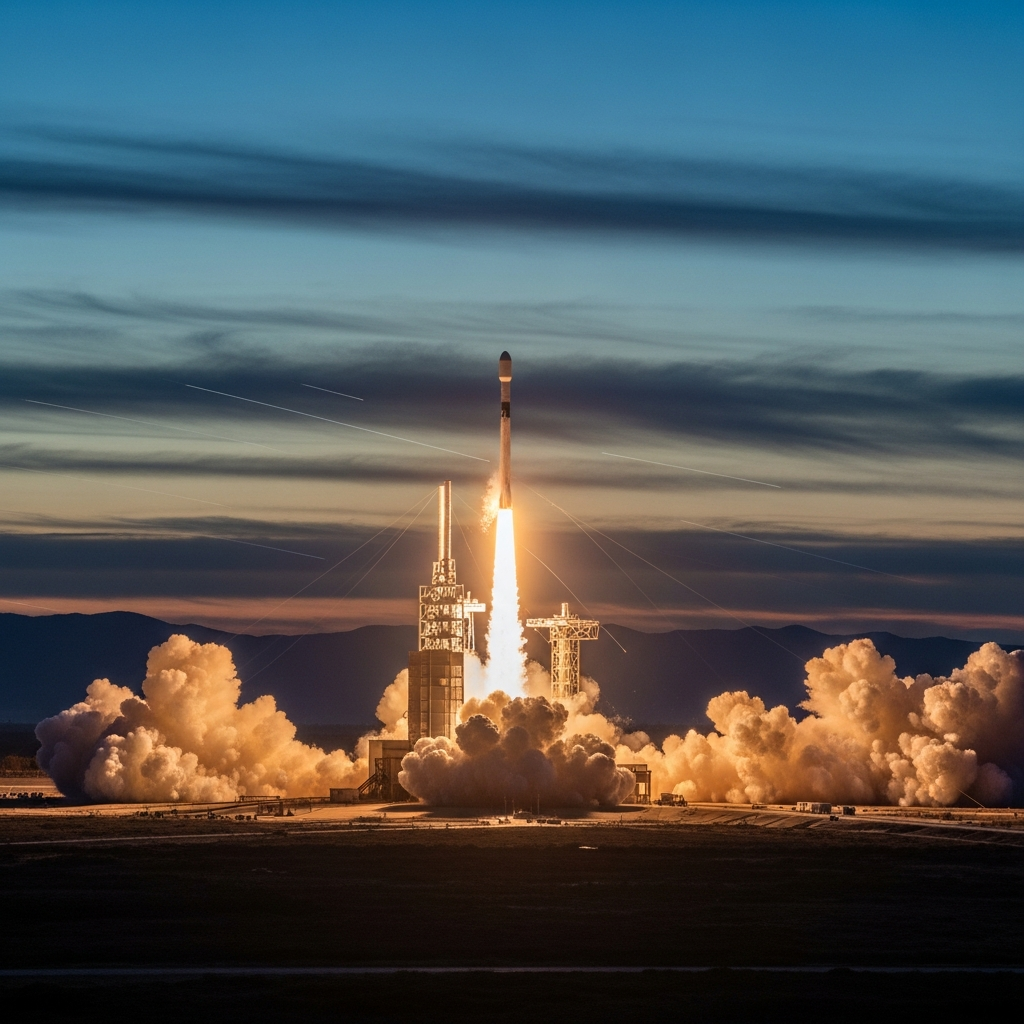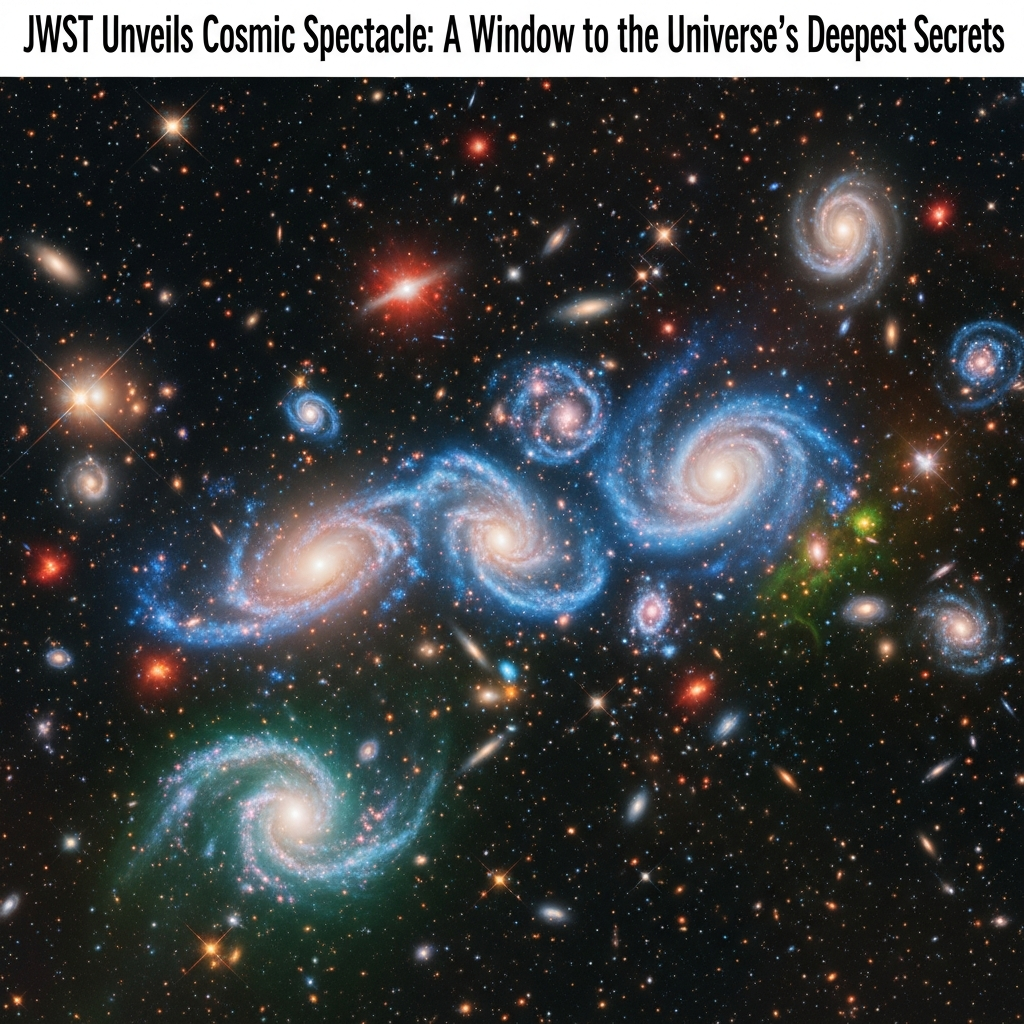
The James Webb Space Telescope (JWST) has rapidly transformed our understanding of the cosmos since its launch on December 25, 2021. This monumental achievement in space exploration, a generation in the making, has truly begun its mission to redefine how we perceive the universe. Valued at $9.7 billion, JWST isn’t just a telescope; it’s humanity’s most powerful eye on the universe, ushering in an era of unprecedented discovery.
As JWST moves beyond its initial commissioning phase, it’s now deeply immersed in groundbreaking research. Scientists are leveraging its unparalleled capabilities to answer fundamental questions about cosmic origins and evolution. The telescope is dramatically extending the observable universe, revealing phenomena and objects that were previously beyond our reach.
Unveiling the Infrared Universe: A New Vision
The James Webb Space Telescope builds upon the incredible legacy of the Hubble Space Telescope. Launched in 1990, Hubble primarily observes the universe in visible light, the spectrum our eyes are designed to see. JWST, however, operates mainly in the infrared spectrum. This crucial difference allows it to pierce through thick cosmic dust clouds, observe cooler celestial bodies, and, most importantly, peer far deeper into the early universe.
Due to the finite speed of light, observing distant objects means looking back in time. The expansion of space itself stretches the visible light from the most ancient, distant objects into the infrared. This unique infrared capability enables JWST to search for the very first sources of light, estimated to have appeared around 100 million years after the Big Bang. It’s like having a cosmic time machine, granting us a direct view of the universe’s infancy.
Tracing Our Cosmic Roots: The Solar System Frontier
Inspired by astronomer Edwin Hubble’s concept of “receding horizons,” NASA, in collaboration with the European and Canadian Space Agencies, designed JWST to explore four profound frontiers. One such frontier lies right in our cosmic backyard: the deep history of our own solar system. Just as Galileo centuries ago bridged the gap between Earth and the heavens, JWST is now shedding light on how our planetary neighborhood formed.
By studying the surface chemistry of numerous icy objects far beyond Neptune, JWST researchers are meticulously tracing the solar system’s emergence and evolution. Fascinatingly, the discovery of water among asteroids, nestled between Jupiter and Mars, suggests that comets might not have been the sole providers of life-essential ingredients to Earth’s primordial atmosphere. This opens new avenues for understanding the origins of life on our planet.
Beyond Our Sun: Exploring Alien Worlds & Exoplanets
Beyond our familiar solar system lies the vast expanse of the Milky Way, home to billions of other stars, many hosting their own planetary systems. Astronomers are utilizing JWST to sample these exoplanetary systems at various stages of their development. From primitive “protostars” — still gathering the gas and dust that will eventually form orbiting disks — to fully mature systems like our own, JWST is revealing the incredible diversity of worlds.
A groundbreaking discovery has been the identification of planet types entirely alien to our solar system. While our system features either gas giants (like Jupiter) or rocky planets (like Earth), JWST has unveiled “mini-Neptunes” (rocky cores enveloped in gas) and “super-Earths” (potentially former mini-Neptunes that have shed their atmospheres). These findings are dramatically reshaping our understanding of how planets form and evolve across the galaxy.
Galactic Tapestry: From Clouds to Cosmic Monsters
Our Milky Way is just one among billions of galaxies in the universe. Edwin Hubble himself discovered this grand scale in the 1920s. Today, JWST is sampling galaxies across the cosmos, observing them in all their evolutionary phases. From clouds of gas to spectacular galactic collisions, from the birth of stars to their dramatic deaths as supernovae, JWST is capturing it all.
These observations are helping resolve long-standing astronomical puzzles, such as the mysterious abundance of cosmic dust. Supernovae, which rip apart matter to create heavier elements, are now strong candidates for being the primary source of this dust. In a striking example, JWST’s Mid-infrared Instrument (MIRI) recently observed a “Jekyll and Hyde” galaxy named Virgil. This seemingly ordinary young, star-forming galaxy in visible light was revealed by MIRI to host a supermassive black hole disproportionately large for its host. This “overmassive” black hole, previously hidden by thick dust, challenges current models of how galaxies and black holes co-evolve, suggesting black holes often “get ahead of the galaxies” in their growth. This discovery also offers clues about “Little Red Dots,” mysterious early universe objects, by showing what they might evolve into.
Peering into the Dawn: The Early Universe & Reionization
JWST’s ultimate goal is to explore the early universe, seeking the “pristine” galaxies composed solely of hydrogen and helium that existed before heavier elements formed. This requires looking beyond the limit of Hubble’s visible-light capabilities, which could only see back to about one billion years after the Big Bang. JWST has already made incredible strides, observing galaxies, supernovae, and black holes as far back as 300 million years after the Big Bang — a mere cosmic “blip” in the universe’s 13.7-billion-year history.
New findings from JWST also point to tiny galaxies playing a crucial role in a cosmic transformation known as the “Era of Reionization.” During the universe’s first billion years, these small galaxies emitted powerful ultraviolet (UV) light, stripping electrons from pervasive neutral hydrogen gas and clearing the “cosmic fog.” Scientists observed these “tiny but mighty” starburst galaxies, akin to present-day “green pea” galaxies, in a cluster called Abell 2744 using gravitational lensing. Their collective UV output was immense, proving they were abundant and powerful enough to drive this universe-altering event.
The Art of Astronomy: Sonification & Public Engagement
Beyond captivating images, JWST’s data is inspiring entirely new forms of engagement. NASA’s innovative “Universe of Sound” initiative, in collaboration with composer Sophie Kastner and System Sounds, transforms complex astronomical data into orchestral music. This groundbreaking project translates raw telescope data from JWST, Chandra, Hubble, and Spitzer into “sonic signatures” through precise mathematical mappings.
Each pixel in an astronomical image corresponds to a unique sound, generating tangible sheet music for musicians worldwide. A primary goal is to democratize access to space research, particularly for those who are visually impaired. Composer Sophie Kastner has created musical movements illustrating stellar life cycles, including the Pillars of Creation and the Crab Nebula, blending data from different telescopes to create rich auditory experiences. These scores are freely accessible, fostering a deep connection between scientific discovery and artistic expression.
Connecting Humanity to the Cosmos: Exhibitions & Wonder
The awe-inspiring images from JWST are also forming the core of significant cultural initiatives. The “Wonder Bound” exhibition, a collaboration between Johns Hopkins University, the Space Telescope Science Institute, and the Vatican Observatory, showcases cosmic imagery and scientific insights. Hosted at the Vatican Observatory’s new Specola Gallery, the exhibition highlights how gazing at the night sky universally connects humanity, sparking curiosity and driving both philosophical and scientific quests.
As JHU Provost Ray Jayawardhana notes, these “spectacular images transform particles of dust and gas into cathedrals of wonder and knowledge,” reminding us that “we, too, are made of the same ancient light.” Even Pope Leo XIV has found these immersive images to “fill us with wonder, and indeed a mysterious joy.” The exhibition, featuring 12 large-scale prints, celebrates scientific advancements while acknowledging the enduring mysteries of the cosmos, echoing Carl Sagan’s sentiment of being “made of star stuff.”
Frequently Asked Questions
How does the James Webb Space Telescope differ fundamentally from Hubble?
The primary difference between the James Webb Space Telescope and the Hubble Space Telescope lies in their observational capabilities. Hubble primarily observes in visible and ultraviolet light, similar to what human eyes perceive. In contrast, JWST is optimized for infrared light. This allows JWST to penetrate cosmic dust clouds, observe cooler objects like newly forming stars and exoplanets, and most crucially, peer much farther back in time to the early universe, where light from the first galaxies has been stretched into infrared wavelengths by the universe’s expansion.
What groundbreaking discoveries has JWST made in the early universe?
JWST has made remarkable strides in exploring the early universe. It has observed galaxies, supernovae, and black holes as far back as 300 million years after the Big Bang, pushing the boundaries of what was previously observable. One significant discovery highlighted in the article is the identification of numerous tiny, “starburst” galaxies that are believed to have driven the “Era of Reionization.” These galaxies emitted powerful ultraviolet light, clearing the universe’s pervasive hydrogen fog and fundamentally transforming the cosmos during its first billion years.
How can the public experience or engage with JWST’s discoveries beyond just images?
Beyond stunning visuals, the public can engage with James Webb Space Telescope discoveries through innovative initiatives like NASA’s “Universe of Sound.” This project translates complex astronomical data into orchestral music, making scientific research accessible, especially for individuals who are visually impaired. Musical scores derived from JWST and other telescope data are freely available, encouraging musicians to interpret and perform cosmic wonders. Additionally, exhibitions like “Wonder Bound” (a collaboration with the Vatican Observatory) offer immersive experiences, connecting scientific insights with philosophical and spiritual reflection.
The Future is Bright: Decades of Discovery Ahead
The James Webb Space Telescope has already delivered unprecedented insights, challenging existing models and sparking new questions. Researchers anticipate the JWST project will continue well into the 2040s, promising many more groundbreaking discoveries. Its ongoing mission to unlock the secrets of cosmic origins, exoplanetary diversity, and galactic evolution ensures that every future anniversary will be a cause for celebration, further cementing its legacy as a truly transformative scientific instrument.