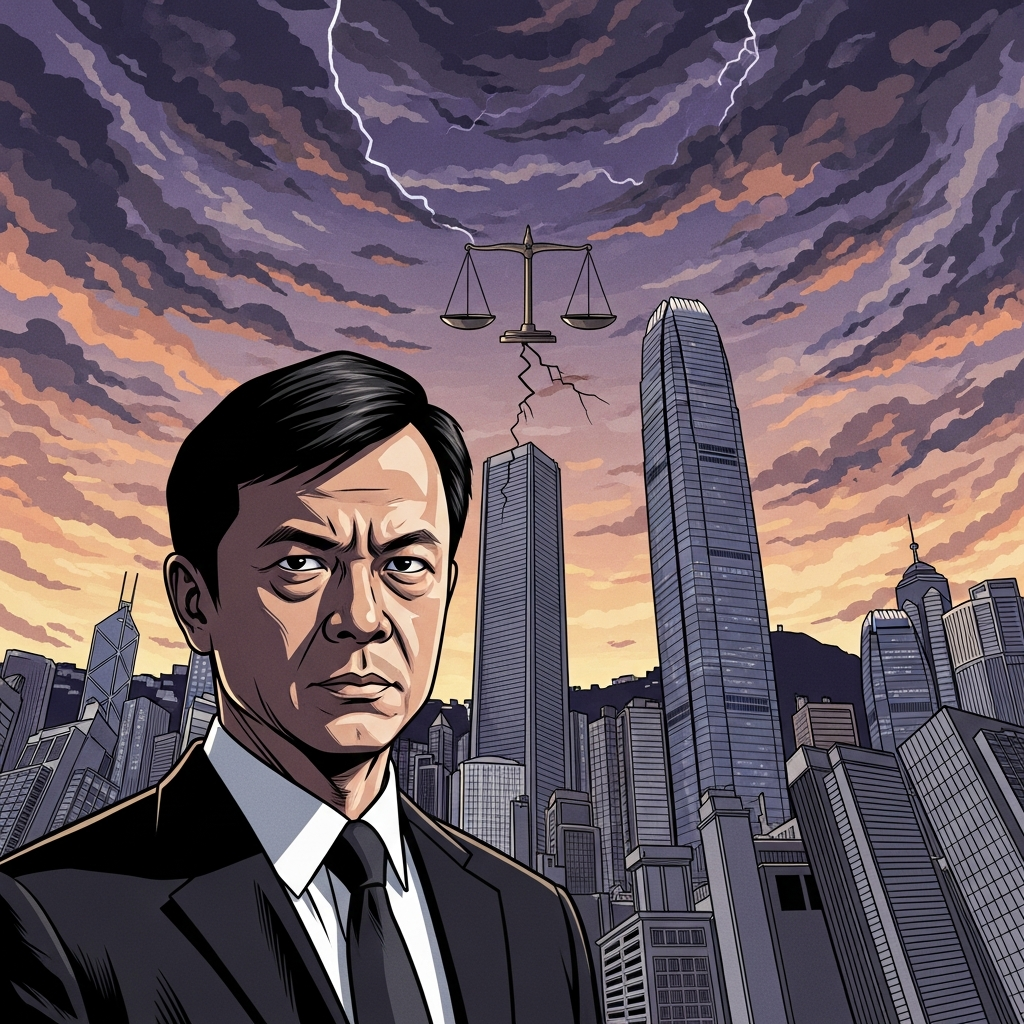
The landmark conviction of Hong Kong media tycoon Jimmy Lai has sent shockwaves globally, highlighting a critical juncture for the city’s shrinking freedoms and judicial independence. Lai, a prominent 78-year-old pro-democracy advocate and British citizen, was found guilty on charges of colluding with foreign forces and sedition, offenses under Beijing’s sweeping National Security Law (NSL) and a colonial-era statute. This verdict, delivered after a two-year trial, carries a potential life sentence, marking a profound shift in Hong Kong’s legal landscape.
Lai’s legal battle has been widely viewed as a crucial measure of Hong Kong’s autonomy under Chinese rule. His case epitomizes Beijing’s intensified crackdown on dissent, following the massive 2019 pro-democracy protests. The judgment against the self-made billionaire underscores the severe consequences for those perceived as challenging the Chinese Communist Party’s authority in the semi-autonomous city.
Understanding the Charges Against Jimmy Lai
Jimmy Lai faced three charges, stemming primarily from his actions as the founder of the fiercely pro-democracy tabloid, Apple Daily. The core accusations revolved around:
Collusion with Foreign Forces: Prosecutors alleged Lai used his influence and media platform to lobby foreign governments, particularly the United States, for sanctions against Hong Kong and China. He was accused of orchestrating a campaign to “bring down” the Chinese government, citing meetings with US officials like then-Vice President Mike Pence and then-Secretary of State Mike Pompeo before the NSL was enacted. WhatsApp messages and a New York Times opinion piece were also presented as evidence.
Sedition: This charge, under a separate colonial-era law, focused on Apple Daily‘s publications. Prosecutors argued these articles were intended to incite hatred against the Hong Kong and Chinese governments and “stir up opposition.”
Judge Esther Toh, delivering the 855-page verdict, stated there was “no doubt” Lai “harboured hatred” for the People’s Republic of China for many years. She concluded that Lai was the “mastermind of the conspiracies” and that his “only intent” was to seek the downfall of the Chinese Communist Party.
A Life Dedicated to Democracy: From Refugee to Tycoon
Lai’s remarkable journey began as a child refugee from mainland China, arriving in British-ruled Hong Kong at age 12. He built a fortune in the fast-fashion industry with Giordano before pivoting to media. Inspired by the 1989 Tiananmen Square crackdown, Lai launched Apple Daily in 1995, two years before Hong Kong’s handover to China. The newspaper quickly became known for its strong pro-democracy stance and often encouraged readers to join protests, with Lai himself participating in the 2019 demonstrations.
Apple Daily was a powerful voice against Beijing, publishing blistering broadsides against the Chinese Communist Party. Its forced closure in 2021, following raids and asset freezes, symbolized the swift erosion of press freedom in Hong Kong. Lai’s defense maintained he merely relayed events and asked US officials to “say something,” not “do something,” to voice support for Hong Kong. He denied advocating for independence, calling the idea “too crazy to think about.”
Hong Kong’s National Security Law: A Tool for Stability or Control?
The National Security Law (NSL), imposed by Beijing in 2020 without consulting Hong Kong’s legislature, grants authorities extensive powers. Critics argue the law has been weaponized to crush dissent, transforming the once-freewheeling city into one ruled by “patriots only.” Hong Kong and China’s leaders contend the law has “restored stability” after the 2019 protests, ensuring national security.
Under the NSL, judicial processes have undergone significant changes. National security trials are heard by a panel of specially selected judges, bypassing traditional jury trials, a departure from Hong Kong’s common-law tradition. The law boasts a nearly 100% conviction rate, and bail is frequently denied, even for individuals like Lai, despite his advanced age and deteriorating health. Lai has spent over 1,800 days in a maximum-security prison, much of it in solitary confinement, since his arrest in late 2020. He also previously received sentences for unrelated fraud and protest-related charges.
Global Outcry and Divergent Reactions
The Jimmy Lai conviction has ignited a storm of international condemnation. Governments and human rights organizations worldwide have labeled the verdict as “politically motivated persecution” and a “cruel judicial farce.”
International Response: The UK government, whose citizen Lai is, called for his release and the repeal of the NSL, with Foreign Secretary Yvette Cooper condemning the verdict. Lai’s son, Sebastian, implored the UK to make his father’s release a precondition for closer ties with China. US officials, including former President Donald Trump, who once vowed to “get him out,” also expressed sorrow and reportedly urged Chinese leader Xi Jinping to consider Lai’s release. Human Rights Watch and the Committee to Protect Journalists condemned the ruling as a severe blow to press freedom and judicial independence.
Hong Kong and Beijing’s Stance: Conversely, Hong Kong Chief Executive John Lee welcomed the conviction, asserting that Lai’s actions “damaged the country’s interests.” China’s foreign ministry expressed “strong dissatisfaction” with external criticism, maintaining that the central government “firmly supports” Hong Kong in safeguarding national security. They view external interference as an attempt to undermine the city’s rule of law.
This stark contrast in reactions underscores the deep geopolitical divisions surrounding Hong Kong’s future. The trial’s procedural aspects, including the barring of Lai’s chosen UK-based lawyer due to national security risks, further fueled international concern about the erosion of due process.
Health Concerns and an Uncertain Future
Concerns about Lai’s health have been a recurring theme throughout his incarceration and trial. His lawyers reported palpitations and light-headedness, while his son, Sebastien, highlighted his father’s advanced diabetes and deteriorating condition in solitary confinement. His daughter, Claire Lai, noted the family’s limited knowledge of his medical care. The Hong Kong government, however, stated Lai received “adequate and comprehensive” medical services and was placed in solitary confinement “at his own request.”
Lai’s sentencing date will be announced later, with his next court appearance scheduled for a mitigation hearing. The conviction means he could spend the rest of his life in prison, a stark outcome for a figure many Hong Kongers still view as a leading voice for democracy. Observers noted that while the verdict was dismaying, it was not entirely unexpected given the NSL’s track record. The Jimmy Lai conviction solidifies the severe consequences for perceived challenges to Beijing’s authority in Hong Kong.
Frequently Asked Questions
What was Jimmy Lai convicted of and why is his case significant?
Jimmy Lai was convicted of two charges of colluding with foreign forces under Hong Kong’s National Security Law and one charge of publishing seditious material under a colonial-era law. His case is highly significant because it targets one of Hong Kong’s most prominent pro-democracy voices and media moguls, marking a crucial test of judicial independence and press freedom in the city. The verdict reflects Beijing’s tightening control over Hong Kong following the 2019 protests and demonstrates the broad reach and severe penalties under the NSL.
How has Hong Kong’s legal system changed under the National Security Law?
Under the National Security Law (NSL), Hong Kong’s legal system has seen notable changes. National security trials are now heard by specially selected judges rather than juries, deviating from the city’s common-law tradition. The NSL also grants authorities extensive powers, often leading to denials of bail for defendants. Critics argue these changes bring Beijing’s authoritarian legal norms to Hong Kong, undermining its previously distinct judicial autonomy and ensuring a high conviction rate for national security offenses.
What are the broader implications of the Jimmy Lai conviction for press freedom in Hong Kong?
The Jimmy Lai conviction carries profound implications for press freedom in Hong Kong. As the founder of Apple Daily, a fiercely pro-democracy newspaper that was forced to close, Lai’s case symbolizes the silencing of outspoken media. The ruling sends a chilling message to journalists and publishers, suggesting that critical reporting or perceived lobbying of foreign entities could lead to severe legal repercussions. This outcome further accelerates the erosion of media diversity and independent journalism, transforming Hong Kong’s once-vibrant press landscape into one under stricter state control.
Conclusion
The conviction of Jimmy Lai stands as a stark testament to the ongoing transformation of Hong Kong. It underscores Beijing’s unwavering resolve to enforce its National Security Law and consolidate control over the semi-autonomous city. While international outcry continues, the verdict sends a clear signal within Hong Kong that dissent, particularly perceived “collusion” with foreign powers, will be met with severe legal consequences. As the world watches, the fate of Jimmy Lai remains a powerful symbol of the ongoing struggle for civil liberties and democratic ideals in a city once celebrated for its freedoms.